When You’re Stranded on the Side of the Road, Does Your Coverage Have You Covered?
Roadside assistance coverage is an optional protection that pays for emergency services when your vehicle breaks down — including towing, battery jump-starts, flat tire changes, fuel delivery, and lockout help.
Here’s a quick snapshot of what it typically includes:
| Service | What It Does | Typical Limit |
|---|---|---|
| Towing | Hauls your vehicle to a shop | 15–100 miles depending on plan |
| Battery boost | Jump-starts a dead battery | Per-incident, counts toward annual limit |
| Flat tire change | Swaps in your spare tire | Per-incident |
| Fuel delivery | Brings gas when you run dry | 1–2 gallons |
| Lockout service | Unlocks your car if keys are inside | Per-incident, sometimes dollar-capped |
| Winching | Pulls your vehicle out of a ditch or mud | Within a set distance from the road |
Most plans allow 3 to 5 service calls per year, and coverage can come from three main sources:
- Your auto insurance policy — added as an endorsement
- Your vehicle manufacturer — often included free for 3–5 years on new vehicles
- A standalone motor club — offering dedicated roadside memberships
Picture this: it’s a January evening on the Mass Pike, temperatures are below freezing, and you hear that unmistakable thud of a flat tire. Whether you’re a daily commuter or taking a summer road trip through New Hampshire, breakdowns don’t wait for a convenient moment. That’s exactly why understanding your roadside assistance options before you need them matters so much.
I’m Geoff Stanton, President of Stanton Insurance Agency, and after more than two decades helping Massachusetts families navigate their auto coverage, I’ve seen how often roadside assistance coverage is misunderstood — or simply overlooked until it’s too late. In this guide, I’ll walk you through everything you need to know to make a confident, informed decision.
Roadside assistance coverage terms simplified:
What is Roadside Assistance Coverage and What Does It Cover?
When your vehicle experiences a mechanical or electrical failure, it rarely happens in your driveway. More often, it happens when you are miles away from home, rushing to work on Route 128 or heading up to the White Mountains for a weekend getaway. This is where roadside assistance coverage acts as your safety net.
At its core, this coverage is designed to address minor, non-accident-related emergencies that prevent your vehicle from being driven safely. It is important to note the distinction: roadside assistance is for mechanical breakdowns and minor mishaps, whereas your standard collision or comprehensive insurance handles physical damage resulting from accidents, vandalism, or severe weather.
To understand exactly what you are paying for, let us break down the standard suite of services included in most high-quality plans:
1. Emergency Towing
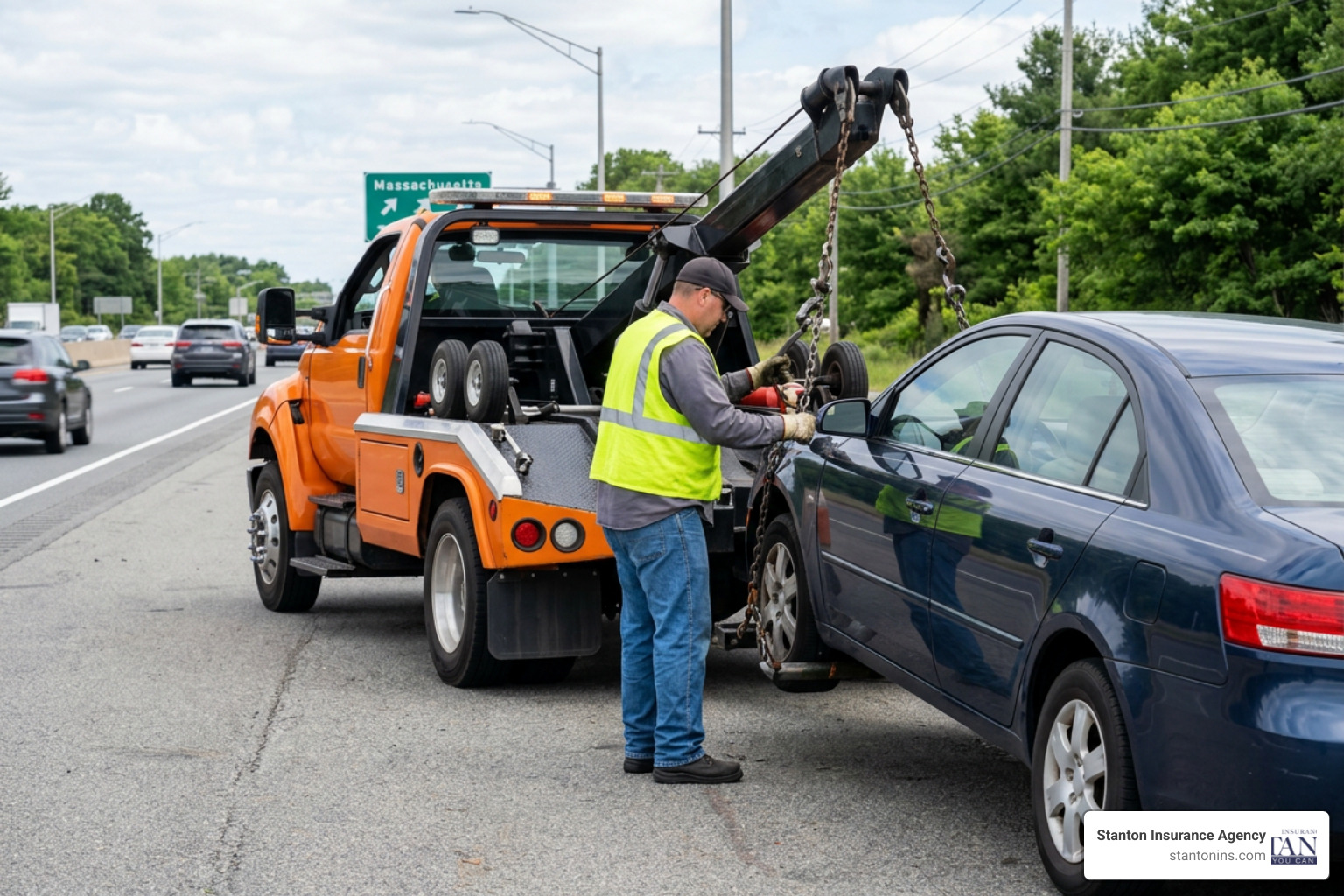
If your vehicle cannot be repaired on the spot, towing services will haul your car to the nearest qualified repair shop or your preferred mechanic. However, limits vary significantly. Basic plans may only cover towing up to 5 or 15 miles, while premium plans can extend this limit up to 100 miles or more. If you exceed your plan’s mileage limit, you will be responsible for paying the tow operator an out-of-pocket rate, which typically runs between $8 and $10 per additional mile.
2. Battery Boost (Jump-Start)
Cold New England winters are notoriously harsh on car batteries. If you walk out to your car on a freezing morning and hear nothing but a disheartening click, a roadside technician will be dispatched to give your battery a jump-start. Many modern programs also offer mobile battery testing and replacement services on the spot, though you will have to pay for the cost of the physical battery itself. If you want to handle minor issues yourself, you can read our guide on How to Jump Start a Car.
3. Flat Tire Change
If you run over a nail or experience a sudden blowout, a roadside professional will come to your location to remove the flat tire and install your vehicle’s inflated spare tire. It is a common misconception that the technician will provide a new tire; they are only there to install your functional spare. If you do not have a working spare tire, the vehicle will need to be towed. For those who want to be prepared to handle this situation independently, we have put together a comprehensive tutorial on How to Change a Tire.
4. Lockout Service
We have all been there: you close the door only to realize your keys are sitting right on the driver’s seat. Lockout service dispatches a locksmith or roadside technician to safely unlock your vehicle door. Most plans cover the labor required to gain entry, but if you have lost your keys entirely and need a brand-new key cut or programmed, there is usually a strict dollar limit (often around $50 to $100) on key replacement services.
5. Fuel Delivery
Running out of gas is embarrassing, but it is also dangerous if you are stranded on a busy highway. With fuel delivery service, a technician will bring enough gasoline or diesel directly to your stranded vehicle so you can safely drive to the nearest service station. While the delivery service itself is covered under your plan, you will typically be charged for the actual cost of the fuel delivered.
6. Winching Service (Extrication)
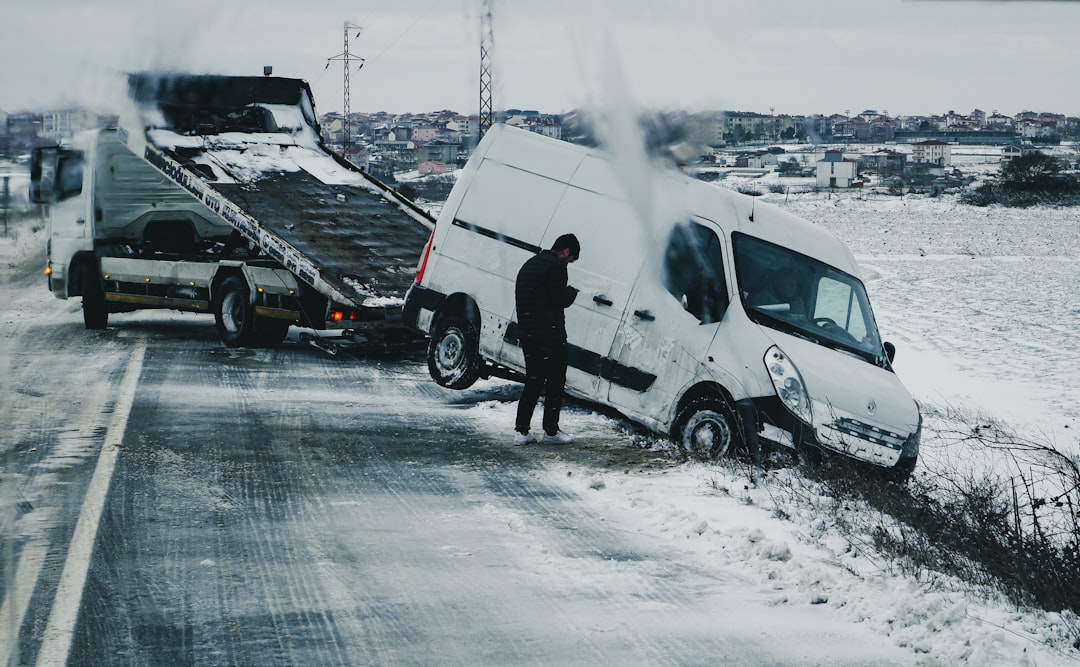
If your vehicle slides off a snowy road into a ditch or gets stuck in deep mud, winching services will pull your vehicle back onto solid ground. This service typically covers one operator and one truck for a set amount of time (usually 30 minutes). However, the vehicle must be accessible from a publicly maintained road; if you go off-roading in a state forest, standard winching coverage will not apply.
To help you visualize how these services compare across standard and premium tiers, look at this breakdown of typical coverage structures:
| Feature | Standard Coverage Tiers | Premium/Plus Coverage Tiers |
|---|---|---|
| Towing Distance | 5 to 15 miles | 100 miles or more |
| Fuel Delivery | Delivery service covered; fuel cost extra | Delivery service covered; small amount of fuel included |
| Winching Limits | 1 truck/operator; within 50 feet of road | Multiple trucks/operators; up to 100 feet of road |
| Locksmith Limit | Up to $50 for door entry only | Up to $100+; covers key replacement assistance |
| Trip Interruption | Not included | Up to $500–$600 for lodging, meals, and transport |
Comparing Roadside Assistance Providers: Insurers vs. Manufacturers vs. Motor Clubs
When looking to secure roadside assistance coverage, drivers in Massachusetts and New Hampshire generally choose between three distinct paths. Each option has its own pros, cons, and financial implications.
To make an informed choice, you must compare how these programs operate in terms of cost-efficiency, convenience, and coverage limits. If you want to learn more about state-level resources, you can also explore the official Roadside Assistance – Mass.gov page to see how public safety programs interact with private coverage.
Let us look at how these three main options stack up:
- Auto Insurance Add-Ons: This is an endorsement added directly to your existing policy. It is incredibly cost-efficient, often costing as little as $15 to $35 per year per vehicle.
- Manufacturer Warranties: If you purchased a brand-new vehicle recently, there is a high probability that you already have complimentary roadside assistance. Most manufacturers bundle this coverage into their New Vehicle Limited Warranty or powertrain warranty for the first 3 to 5 years or up to a certain mileage limit (such as 36,000 to 60,000 miles).
- Independent Motor Clubs: Standalone memberships are purchased independently of your vehicle or insurance policy. While they offer robust benefits, they are also the most expensive option, with annual fees ranging from $60 to over $150 per year.
Understanding Roadside Assistance Coverage from Auto Insurers
Adding roadside assistance coverage to your auto insurance policy with us is one of the most convenient and budget-friendly ways to secure peace of mind. Instead of paying a massive annual membership fee to an outside club, you pay a small, prorated amount alongside your regular insurance premium.
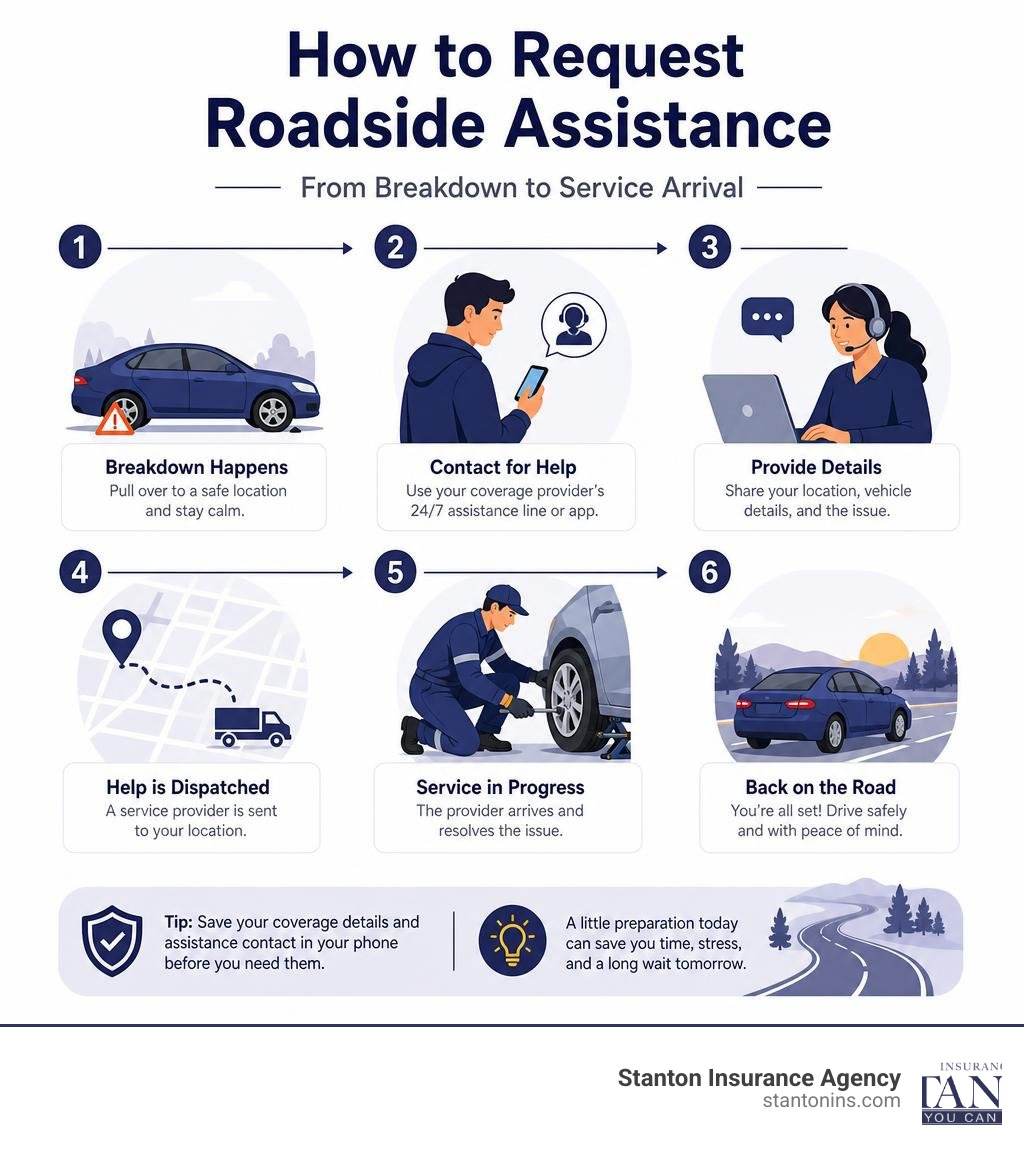
When you need assistance, the process is streamlined. Most modern insurance carriers offer dedicated mobile apps that allow you to request service with a few taps. Because the app is linked directly to your policy, it automatically pinpoints your GPS location and pulls your vehicle details, sending a local tow provider to your exact spot without you having to explain where you are.
One question we often get at Stanton Insurance Agency is: “Will using my roadside assistance endorsement raise my auto insurance premiums?”
Generally, the answer is no. Roadside assistance requests are classified as administrative or non-fault service claims, meaning they do not carry the same premium penalties as an at-fault collision. However, if a driver abuses the policy by making an excessive number of calls (such as 6 or 7 requests in a single year for a vehicle with chronic mechanical issues), the insurer may choose to remove the endorsement at your next policy renewal.
Manufacturer and Independent Roadside Assistance Coverage Options
If you drive a newer vehicle, your manufacturer’s warranty might already have you covered. For example, brands like Ford, GM, Toyota, and Honda provide complimentary roadside services during the initial warranty period.
However, manufacturer programs have two major limitations:
- Vehicle-Centric Limitations: The coverage is tied strictly to that specific vehicle. If you are driving a friend’s car, renting a vehicle, or riding as a passenger in a family member’s truck, your manufacturer’s roadside plan cannot help you.
- Towing Restrictions: Manufacturer plans almost always stipulate that your vehicle must be towed to the nearest authorized dealership of that specific brand. If you break down 80 miles away from home, they will not tow the car to your trusted local mechanic down the street; they will take it to the closest branded dealership, where labor and parts costs may be significantly higher.
In contrast, independent motor clubs offer “driver-centric” coverage. This means the membership belongs to you as an individual. Whether you are driving your own car, riding in a coworker’s vehicle, or renting a car for a weekend trip to New Hampshire, your benefits follow you.
Additionally, if you are driving on major New Hampshire highways during peak hours, you may be eligible for basic emergency aid through public services like the Motor Service Patrol – New Hampshire Department of Transportation, which works to clear highway breakdowns quickly to keep traffic moving safely.
Common Exclusions and Limitations to Keep in Mind
While roadside assistance coverage is incredibly valuable, it is not a blank check for unlimited free maintenance. To avoid frustrating surprises during an emergency, it is vital to understand what these programs do not cover.
Here are the most common exclusions and limitations found across the industry:
- Pre-Existing Conditions and Driveway Abuse: Roadside assistance is designed for sudden, unexpected emergencies. If your car has been sitting in your driveway with a blown transmission for three weeks, you cannot call roadside assistance to get a free tow to the scrap yard. Similarly, using your battery boost service every single morning because you refuse to buy a new battery can result in your service being suspended.
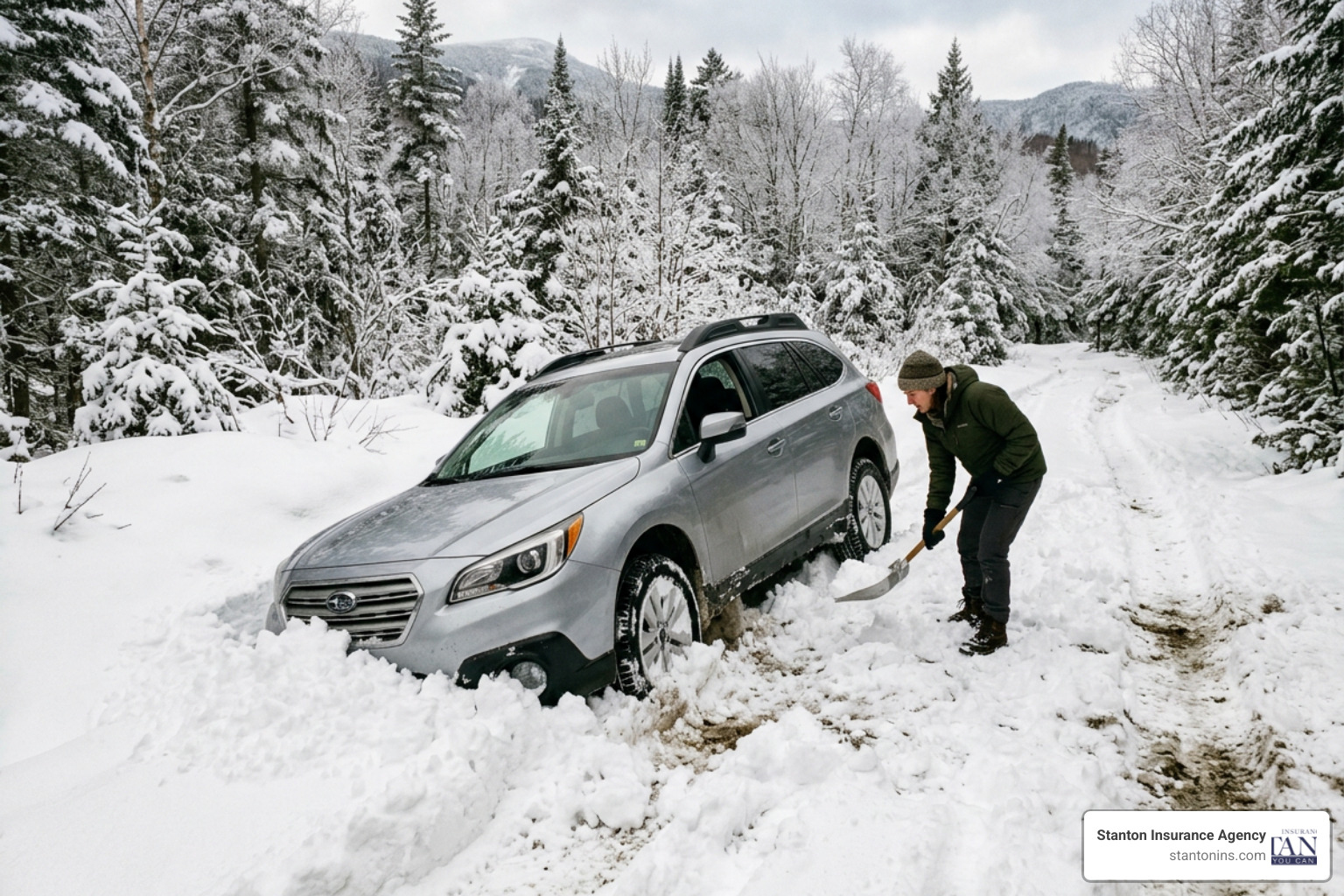
- Off-Road and Unpaved Road Recovery: If you decide to take your vehicle off-roading in the muddy backwoods of New Hampshire or get stuck on an unplowed seasonal road in the middle of winter, standard roadside programs will not cover the cost of extricating your vehicle. Technicians are legally and contractually restricted to operating on publicly maintained, paved roads.
- Commercial Vehicle Exclusions: Standard personal auto roadside endorsements do not cover vehicles used for commercial purposes, such as delivery vans, heavy-duty construction trucks, or ride-sharing vehicles (unless you have a specific commercial policy add-on).
- Extreme Weather Delays: During a major New England nor’easter, tow companies are overwhelmed with emergency calls from local police and state authorities. In these situations, response times will be significantly longer, and non-emergency roadside requests (like a lockout in your own driveway) will be deprioritized.
To minimize the chances of finding yourself stranded in the cold, preparation is your best defense. We highly recommend reviewing our Winterize Your Car Checklist and assembling a Winter Emergency Car Kit to keep in your trunk throughout the colder months.
Specialized Coverage: Motorcycles, RVs, and Electric Vehicles
Not all vehicles are created equal, and a standard roadside assistance plan designed for a compact sedan may leave you completely unprotected if you drive something more specialized.
If you own a motorcycle, a recreational vehicle (RV), or an electric vehicle (EV), you must ensure your plan is tailored to your specific ride:
Electric Vehicles (EVs)
EVs present unique challenges when they run out of power or experience a system failure. You cannot simply pour two gallons of electricity into an EV on the side of the highway. If your EV battery drains completely, you need a roadside plan that covers flatbed towing to the nearest compatible charging station.
Furthermore, because EVs are incredibly heavy and have complex electric drivetrains, they must be towed on a flatbed trailer rather than being pulled with a traditional tow hook, which can cause catastrophic damage to the vehicle’s regenerative braking system. To keep your battery in top shape, check out our guide on how to Maintain Car Battery Winter.
Motorcycles
Towing a motorcycle requires specialized equipment, including flatbed trucks equipped with dedicated wheel chocks and heavy-duty tie-down straps. If a standard tow truck attempts to haul a motorcycle, it can easily tip over and sustain severe cosmetic and structural damage. Always verify that your policy specifically covers motorcycle transport.
Recreational Vehicles (RVs)
RVs are massive, heavy, and require specialized commercial tow rigs to move safely. Standard roadside towing limits of $100 or 15 miles are completely inadequate for an RV, where a single heavy-duty tow can easily cost upwards of $500.
Additionally, because RV breakdowns often occur far from home during family vacations, look for plans that offer robust trip interruption benefits. These benefits can reimburse you for unexpected hotel stays, meals, and alternative transportation costs while your RV is in the shop. To make sure your motorhome is ready for the journey, take a look at our guide on how to Prepare Vehicle for Winter.
Frequently Asked Questions About Roadside Assistance
Navigating the details of roadside coverage can raise a lot of questions. Here are detailed answers to some of the most common questions we hear from drivers in Massachusetts and New Hampshire:
How many roadside assistance calls can I make per year?
Most standard roadside assistance plans limit you to 3 to 5 service calls per calendar year. These limits are put in place to prevent policy abuse and keep membership costs affordable for everyone.
Your annual call limit resets on your policy or membership anniversary date, not necessarily on January 1st. If you exceed your annual limit, you do not lose access to help entirely; rather, the provider will still dispatch a technician to assist you, but you will be charged for the service at a discounted pay-per-use rate.
Does roadside assistance cover me in both the US and Canada?
Yes, the vast majority of comprehensive roadside assistance plans cover you across both the United States and Canada. This cross-border protection is incredibly valuable for New Englanders planning road trips up to Quebec, Nova Scotia, or other Canadian destinations.
However, always double-check your specific policy terms before crossing the border. Some basic insurance-based endorsements may limit coverage strictly to the state in which the policy was written or exclude international travel unless premium tiers are selected.
What is the difference between on-demand pay-per-use and subscription plans?
- Subscription Plans (Pre-paid): You pay a flat, predictable annual fee (either through your insurance premium or a motor club membership) regardless of whether you ever use the service. If you experience a breakdown, the dispatch and labor are covered up to your plan’s limits, meaning you pay $0 out-of-pocket at the time of service.
- On-Demand Pay-Per-Use: You do not pay any upfront fees. Instead, you only pay when you actually need a service. While this saves you money annually if you never break down, a single tow can easily cost $150 to $300+, making it a much more expensive gamble if you experience an unexpected mechanical failure.
Conclusion
At the end of the day, roadside assistance coverage is about one thing: peace of mind. Knowing that you, your spouse, or your teenage driver won’t be left stranded on a dark, freezing highway is worth far more than the few dollars a month the coverage costs.
At Stanton Insurance Agency, we believe in providing personalized protection that fits your unique lifestyle, budget, and driving habits. We are proud to serve families across Massachusetts and New Hampshire, helping you navigate the complexities of auto insurance so you can hit the road with absolute confidence.
If you are ready to review your current auto policy or want to explore adding reliable, low-cost roadside protection to your coverage, we are here to help. Explore our Stanton Insurance Agency Car Insurance solutions today, or reach out to our team directly to get a personalized quote. Safe travels!