
Why Auto Coverage Insurance Is Something You Can’t Afford to Skip
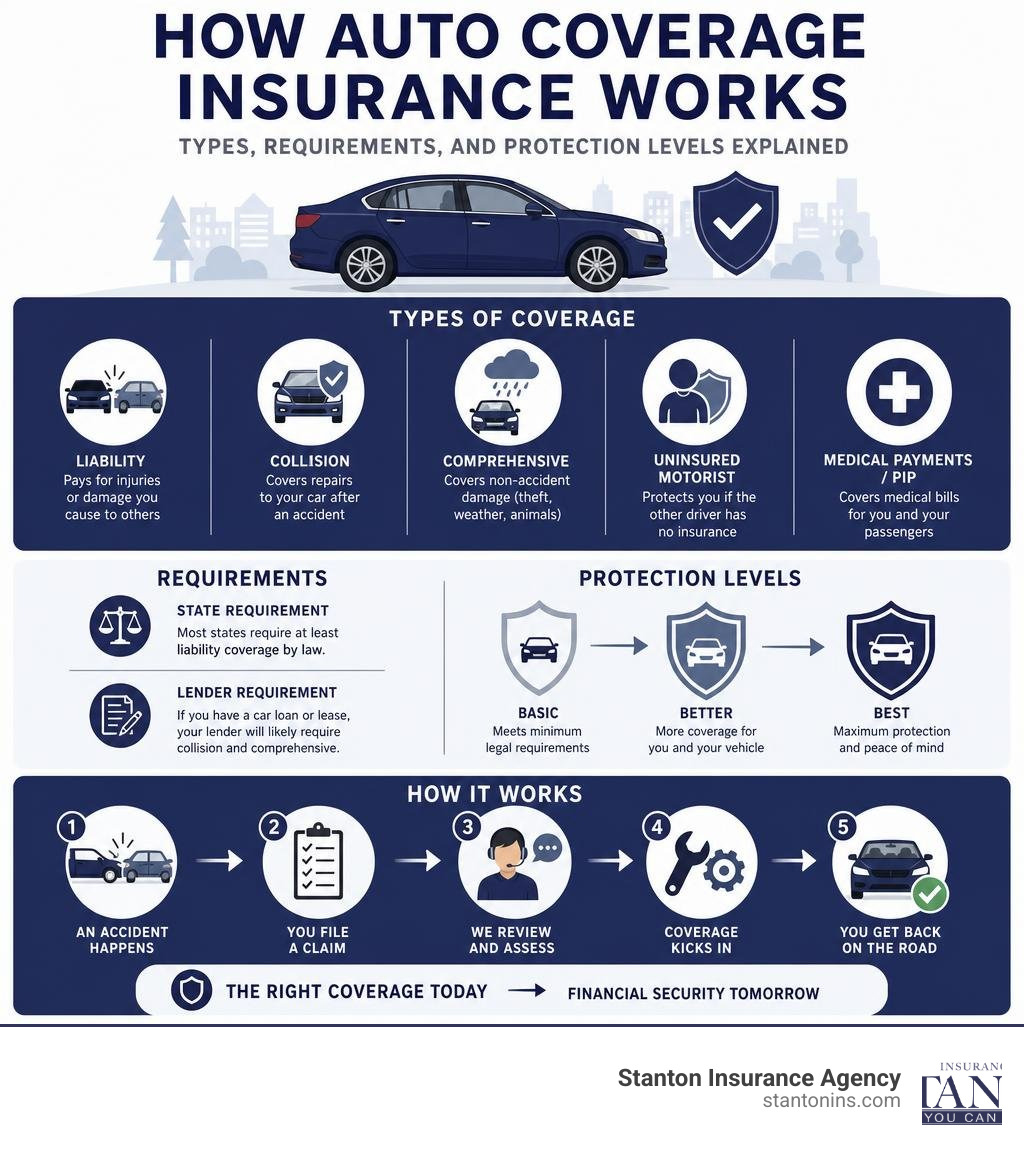
Auto coverage insurance is a financial safety net that protects you, your vehicle, and others on the road if an accident happens. Here’s a quick breakdown of what it typically includes:
| Coverage Type | What It Does |
|---|---|
| Liability | Pays for injuries or damage you cause to others |
| Collision | Covers repairs to your car after an accident |
| Comprehensive | Covers non-accident damage (theft, weather, animals) |
| Uninsured Motorist | Protects you if the other driver has no insurance |
| Medical Payments / PIP | Covers medical bills for you and your passengers |
Most states require at least liability coverage by law. If you have a car loan or lease, your lender will likely require collision and comprehensive as well.
Most drivers know they need car insurance. But few know exactly what they’re paying for — or whether they have enough protection when it really counts.
A single accident can result in tens of thousands of dollars in medical bills, legal fees, and repair costs. Without the right coverage, those costs come out of your pocket. That’s not a risk worth taking.
This guide breaks down everything you need to know — from the basic coverage types to state rules, discounts, and what to do after a crash.
I’m Geoff Stanton, President of Stanton Insurance Agency in Waltham, Massachusetts, and a Certified Insurance Counselor (CIC) with over 25 years of experience helping individuals and families find the right auto coverage insurance for their needs. I’ve seen how the wrong policy — or a gap in coverage — can leave people financially exposed at the worst possible moment.
Quick auto coverage insurance definitions:
Understanding the Basics of Auto Coverage Insurance
When you purchase auto coverage insurance, you are entering into a legally binding policy contract with an insurance provider. In exchange for your regular premium payments, the insurer agrees to pay for specific financial losses as outlined in your policy, up to defined coverage limits.
Think of it as a customized shield. You pay a set price to keep the shield active, and if something strikes your vehicle, the shield absorbs the financial blow. However, if the blow is larger than the shield’s strength—meaning the damage exceeds your chosen coverage limits—you are responsible for the remaining balance.
Understanding these limits and how they interact with your daily driving habits is the first step toward securing your financial well-being. For a deeper dive into how these foundational elements function, check out our comprehensive guide on Car Insurance 101: Your Complete Guide to Coverage.
What is Auto Liability Coverage?
If you are found at fault in a car crash, auto liability coverage is what stands between you and financial ruin. This coverage is divided into two primary parts:
- Bodily Injury Liability: This pays for the medical bills, rehabilitation, and lost wages of the other driver and their passengers. It also covers legal defense costs if the injured party decides to sue you.
- Property Damage Liability: This pays to repair or replace property belonging to others that you damage with your car. This usually means the other driver’s vehicle, but it also applies to lamp posts, mailboxes, storefronts, and garden fences.
When you look at your policy, liability limits are often written as three split numbers, such as 100/300/50. This means:
- Up to $100,000 for bodily injury per person.
- Up to $300,000 for bodily injury per accident (across all injured parties).
- Up to $50,000 for property damage per accident.
If you carry only the bare minimum limits required by your state, a major accident can easily exhaust those funds, leaving your personal assets—such as your savings, home, or future wages—vulnerable to lawsuits. Learn more about choosing the right thresholds with our Auto Liability Coverage Complete Guide.
Collision vs. Comprehensive Coverage
While liability insurance pays for the damage you cause to other people, collision and comprehensive coverages are designed to protect your own vehicle.
- Collision Coverage: This pays to repair or replace your vehicle if you collide with another car, a tree, a guardrail, or even if you experience a single-vehicle rollover. It focuses strictly on physical damage resulting from an impact.
- Comprehensive Coverage: Often referred to as “other than collision,” comprehensive coverage protects your vehicle from environmental hazards and unpredictable events. This includes theft, vandalism, fire, hail, windstorms, flood damage, and animal strikes (such as hitting a deer).
Understanding the balance between these two is vital for maintaining the right level of protection. To explore how these coverages interact and protect your vehicle’s value, read our detailed comparison: Comprehensive vs. Full Coverage Complete Guide.
What Does Full Coverage Include?
The term “full coverage” is widely used in the insurance industry, but it is actually a bit of a misnomer. There is no single policy called “full coverage.” Instead, when people refer to full coverage, they mean a combination of comprehensive protection, collision protection, and liability protection packaged together.
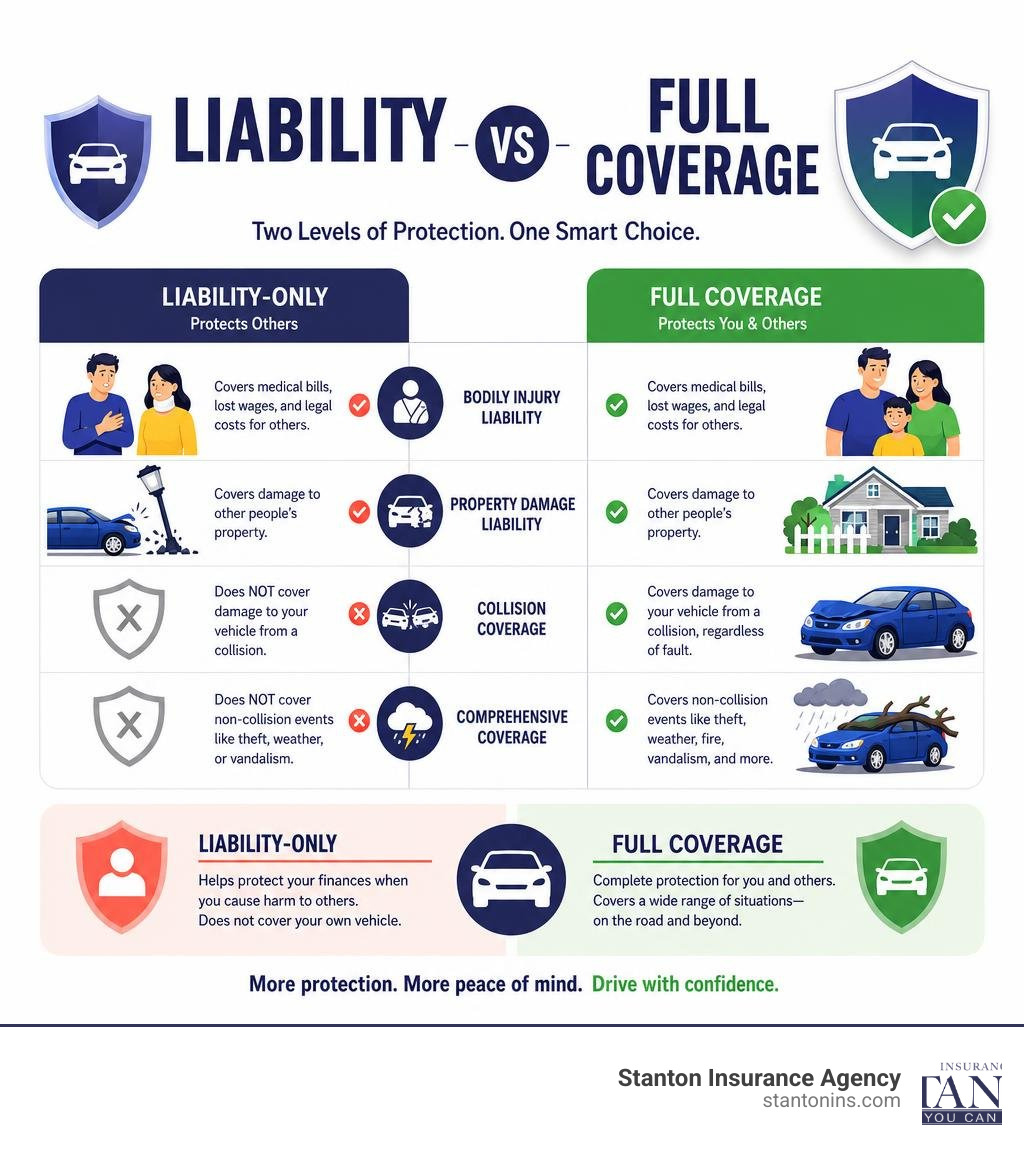
A true full coverage package ensures that no matter who is at fault, and no matter what happens to your vehicle—whether it’s T-boned at an intersection or damaged by a falling tree branch—you have a policy in place to handle the costs. To understand the exact mechanisms of these combined coverages, read our resource on what Full Coverage Includes.
To help visualize the differences, here is a direct comparison of liability-only versus a complete full coverage package:
| Feature / Protection | Liability-Only Policy | Full Coverage Policy |
|---|---|---|
| Injuries to others (at-fault) | Yes (up to limits) | Yes (up to limits) |
| Damage to other vehicles | Yes (up to limits) | Yes (up to limits) |
| Your car’s repairs (accident) | No | Yes (after deductible) |
| Theft or Vandalism | No | Yes (after deductible) |
| Weather & Animal Damage | No | Yes (after deductible) |
| Lender Requirement | Rarely accepted | Mandatory for loans/leases |
Determining Your Auto Coverage Insurance Needs
Choosing the right level of auto coverage insurance requires balancing your budget with your risk tolerance and your personal net worth. If you have significant personal assets, carrying low liability limits is highly risky. A single lawsuit could wipe out years of hard work.
On the other hand, if you drive an older vehicle with a low actual cash value, maintaining collision and comprehensive coverage might not make financial sense. If your annual premium plus your deductible is close to the total value of the car, you might be better off carrying liability only and self-insuring the vehicle itself.
If you are financing or leasing your car, the decision is usually made for you; lenders almost always mandate full coverage to protect their financial stake in your vehicle. For a step-by-step approach to evaluating your financial exposure, check out our guide: How Much Liability Insurance Do I Need for My Car.
Optional Add-ons for Complete Auto Coverage Insurance
To truly customize your protection, we recommend looking beyond the standard packages and considering specialized add-ons:
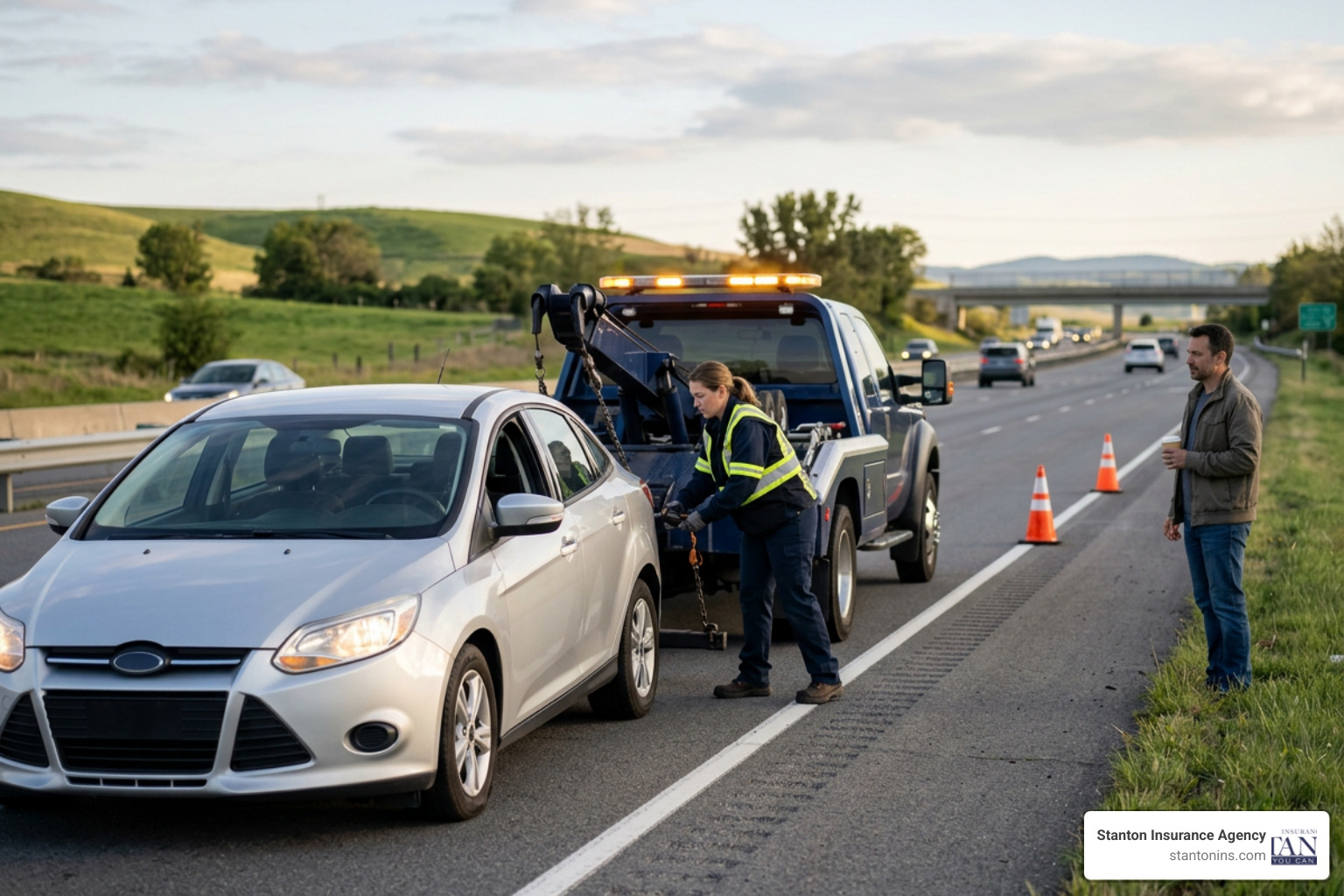
- Roadside Assistance: Provides peace of mind if you get a flat tire, run out of gas, need a jumpstart, or require a tow.
- Rental Reimbursement: Pays for a rental car while your primary vehicle is in the shop undergoing repairs covered by a collision or comprehensive claim.
- Gap Insurance: If your vehicle is totaled, standard insurance pays the actual cash value of the car. Because new cars depreciate rapidly, you might owe more on your loan than the car is worth. Gap insurance covers this difference so you aren’t left paying for a car you can no longer drive.
State-Specific Requirements and Cost Factors
Every state establishes its own minimum auto insurance requirements. However, these state minimums are rarely enough to provide true financial security.
Your premium cost is calculated using a variety of personalized factors, including your driving record, the make and model of your vehicle, where you park the car overnight, and your chosen deductibles. A higher deductible (the amount you pay out-of-pocket before insurance kicks in) will lower your premium, while a lower deductible will increase it.

Massachusetts and New Hampshire Insurance Rules
As a local agency operating in Massachusetts and New Hampshire, we understand the distinct legal landscapes of both states.
Massachusetts
In the Bay State, auto insurance is compulsory. You cannot register a vehicle without meeting the state’s strict minimum requirements, which include Bodily Injury to Others, Personal Injury Protection (PIP), Bodily Injury Caused by an Uninsured Auto, and Damage to Someone Else’s Property.
To explore the official guidelines, you can read the Basics of Auto Insurance | Mass.gov. Local drivers should carefully review these requirements to understand how rates are structured under state laws.
New Hampshire
The Granite State is unique because it does not legally mandate auto insurance for most drivers. However, New Hampshire operates under strict financial responsibility laws. If you choose not to buy insurance, you must prove you have sufficient funds to cover the costs of an accident you cause.
If you do choose to purchase a policy (which we highly recommend to protect your assets), the state requires minimum liability and medical payments coverage. You can read more about these unique rules directly from the Automobile Insurance | New Hampshire Insurance Department.
How to Lower Your Insurance Costs
You don’t have to sacrifice high-quality protection to get affordable rates. Here are some of the most effective ways to lower your premiums:
- Bundling Policies: Combining your auto insurance with your home, renters, or condo insurance with a single carrier can earn you multi-policy discounts of 10% to 15% or more.
- Safe Driver Discounts: Maintaining a clean driving record free of accidents and moving violations is the single best way to keep your rates low.
- Good Student Discounts: If you have a high school or college student on your policy who maintains a “B” average or higher, most insurers will offer a discount.
- Multi-Car Discounts: Insuring more than one vehicle on the same policy almost always reduces the cost per vehicle.
To see how adjusting your coverage limits and deductibles can impact your monthly bill, check out our comparison guide: Full Coverage vs. Liability Car Insurance.
What to Do After a Car Accident
If you are involved in a collision, the moments immediately following the impact can be overwhelming. Knowing what to do can protect your safety and preserve your ability to file a successful insurance claim.
- Safety First: Move your vehicle to a safe area out of traffic if possible. Turn on your hazard lights and check yourself and your passengers for injuries.
- Call the Police: Even for minor accidents, having an official police report is invaluable when filing a claim.
- Document the Damage: Use your phone to take clear photos of the accident scene, including vehicle positions, road conditions, and all physical damage.
- Exchange Information: Collect names, contact details, driver’s license numbers, and insurance policy information from all drivers involved. Do not admit fault or argue about who caused the crash at the scene.
Frequently Asked Questions about Auto Insurance
What is the difference between a premium and a deductible?
Your premium is the recurring payment you make to your insurance company to keep your policy active (usually paid monthly, semi-annually, or annually). Your deductible is the specific out-of-pocket amount you must pay toward repairs before your insurance coverage pays the remaining balance on a claim. For example, if you have a $500 deductible and a covered accident causes $2,500 in damage, you pay $500 and your insurer pays $2,000.
Does auto insurance cover the car or the driver?
In most cases, auto insurance follows the vehicle rather than the driver. If you lend your car to a friend (a permissive driver) and they get into an accident, your insurance policy will still act as the primary coverage for the incident. However, the exact rules can vary depending on your policy language and state regulations, so it is always wise to confirm before letting others get behind the wheel.
How does bundling home and auto insurance save money?
Bundling simplifies your life by putting your policies under a single carrier with one point of contact. Because insurance companies value long-term, multi-policy relationships, they reward this loyalty with a substantial multi-policy discount. This not only lowers your overall premium costs but also simplifies your billing cycle.
Conclusion
Navigating auto coverage insurance doesn’t have to be a stressful or confusing process. By understanding the core components of your policy and tailoring your coverage limits to match your real-world risks, you can drive with confidence knowing your hard-earned assets are protected.
At Stanton Insurance Agency, we pride ourselves on delivering personalized service and trusted asset protection to our neighbors throughout Massachusetts and New Hampshire. We don’t believe in one-size-fits-all policies. Instead, we take the time to understand your unique situation and build a plan that fits your life and budget perfectly.
Ready to secure the peace of mind you deserve? Get an Auto Insurance Quote with us today, and let our family protect yours.
