
Why Finding the Best House Insurance Matters More Than Ever
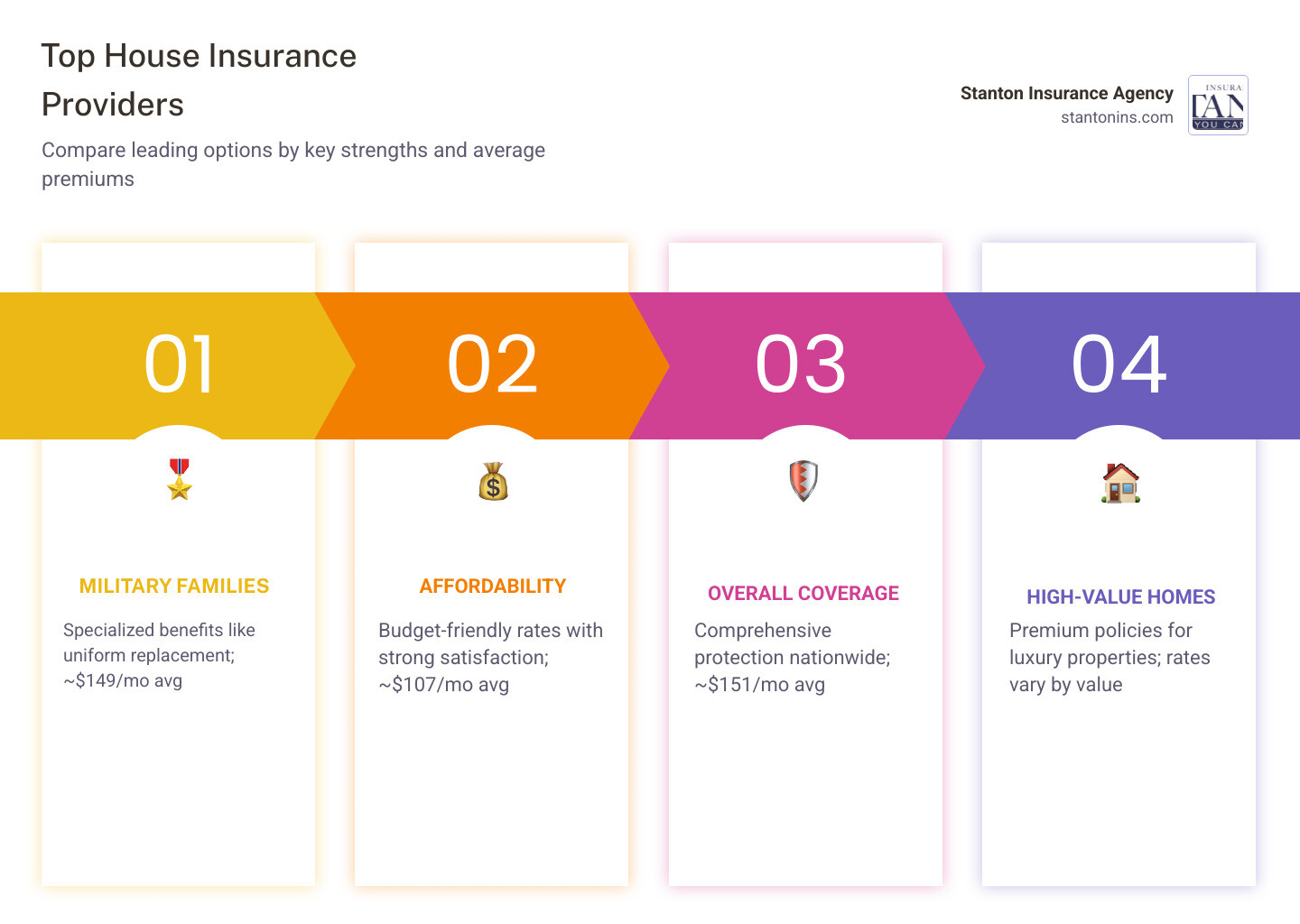
The best house insurance protects the most valuable thing most families own — their home. Top-rated providers in today’s market are often distinguished by their specific focus, whether they offer specialized benefits for military families, streamlined digital experiences for new homeowners, or robust coverage for high-value estates.
The average homeowner now pays $2,802 per year for coverage — and that number keeps climbing. Natural disaster losses have grown more than tenfold since the 1980s, and replacement costs jumped 55% between 2020 and 2022 alone.
That means choosing the wrong policy isn’t just inconvenient. It can leave you financially exposed when you need help most.
Shopping for home insurance can feel overwhelming. There are dozens of providers, confusing coverage terms, and rates that vary wildly based on where you live and what your home is worth.
This guide cuts through the noise.
I’m Geoff Stanton, President of Stanton Insurance Agency and a Certified Insurance Counselor (CIC) with over 25 years of experience helping Massachusetts and New Hampshire homeowners find the best house insurance for their needs. I’ll walk you through what actually matters when comparing providers — so you can make a confident, informed decision.
To start your journey, it is important to find homeowners insurance agencies and learn how to pick a good homeowners insurance agency that understands the unique needs of New England residents.
What Defines the Best House Insurance in Today’s Market?
In an era of rising premiums and unpredictable weather, the “best” policy isn’t just the one with the lowest price tag. According to leading industry evaluations of the Best Home Insurance of 2024, top-tier insurers are defined by a combination of financial stability, customer service, and claims efficiency.
When we evaluate the homeowners insurance landscape, we look at several key metrics:
- J.D. Power Scores: These reflect real-world customer satisfaction with the claims process and billing.
- AM Best Ratings: This measures a company’s financial “muscle”—their ability to pay out even after a massive regional disaster.
- Claims Handling Speed: Waiting weeks for an adjuster is no longer acceptable. The best providers use technology to settle simple claims in days, or even minutes.
Finding the Best House Insurance for Military and High-Value Homes
Different homeowners have vastly different needs. For our neighbors in the military, certain providers offer specialized benefits that standard policies lack. For example, some insurers waive deductibles for lost or damaged military gear and uniforms.
On the other end of the spectrum, high-value homes in areas like the Massachusetts coast or New Hampshire’s Lakes Region require a different level of care. Standard policies often cap liability or personal property limits too low. The best house insurance for these properties often includes:
- Extended Replacement Cost: Paying 125% to 150% of the policy limit to rebuild if construction costs spike.
- Cash Settlement Options: If a total loss occurs, some elite policies allow you to take a cash payout instead of rebuilding on the same site.
- High Liability Limits: Coverage that can reach up to $100 million to protect significant personal assets.
Top-Rated Features of Leading National Providers
The industry is currently undergoing a massive digital transformation. Over 90% of insurance companies are now investing in AI to streamline their operations. For you, this means 24/7 customer support and digital-first interfaces where you can manage your policy from a smartphone.
Some companies have even introduced dividend-paying policies, which return a portion of your premium if the company performs well and you remain claim-free. When you are looking for home insurance quotes, keep an eye out for these modern perks that add value beyond basic coverage.
Key Factors Influencing Your Homeowners Insurance Premiums

Why does your neighbor pay less for insurance than you do? It’s rarely a coincidence. With the national average annual premium sitting at $2,802, insurers use complex algorithms to determine your specific risk level.
One of the biggest points of confusion we see is Replacement Cost vs. Market Value. Your home’s market value includes the land and the “desirability” of the neighborhood. Insurance, however, only cares about what it costs to buy lumber, hire a contractor, and rebuild the physical structure.
| Factor | Replacement Cost | Market Value |
|---|---|---|
| Includes Land? | No | Yes |
| Labor & Materials? | Yes | Indirectly |
| Market Trends? | No (Inflation-based) | Yes (Demand-based) |
| Goal? | Rebuild the structure | Sell the property |
This is why replacing your roof is so critical. An aging roof is the number one reason for claim denials or premium hikes in New England.
The Impact of Location and Home Condition
In Massachusetts and New Hampshire, your “micro-location” matters. Being close to a fire station or a fire hydrant can lower your rates. Conversely, waterfront properties face surcharges due to the increased risk of wind and water damage.
Insurers also look at your home’s “bones.” Updated electrical systems (no knob-and-tube, please!) and modern plumbing materials reduce the chance of a fire or a burst pipe. If your home is older, the availability of original building materials can also influence the rate, as specialized craftsmanship is more expensive to replace.
How Deductibles and Credit Scores Affect Rates
Your deductible is the amount you pay out of pocket before insurance kicks in. Choosing a higher deductible is a proven way to find affordable house insurance. By taking on a bit more risk yourself, you can significantly lower your monthly premium.
Additionally, in many states, your credit-based insurance score plays a role. Insurers have found a statistical link between financial responsibility and home maintenance. Maintaining a solid credit score can actually help you secure the best house insurance rates available.
Essential Coverage: What Your Policy Protects (and What It Doesn’t)
A standard homeowners policy (often called an HO-3) is divided into several parts:
- Dwelling: The physical structure of your house.
- Other Structures: Fences, sheds, or detached garages.
- Personal Property: Your furniture, clothes, and electronics.
- Additional Living Expenses (ALE): Pays for a hotel if your home is uninhabitable after a fire.
- Liability: Protects you if someone is injured on your property.
However, there is a major trap: Standard policies do not cover floods.
According to the National Flood Insurance Program, even a few inches of water can cause tens of thousands of dollars in damage. If you live near the coast or in a low-lying area in NH or MA, you need a separate flood policy.
Common Exclusions and Necessary Add-Ons
Beyond floods, standard policies usually exclude:
- Earthquakes: While rare in New England, they do happen. You’ll need a specific rider for this.
- Sewer Backup: If your sump pump fails or a drain backs up, you aren’t covered unless you’ve added “Water Backup” coverage.
- Mold: Usually only covered if it results from a “sudden and accidental” event like a burst pipe.
- Wear and Tear: Insurance is for accidents, not for a 30-year-old water heater that finally gave up.
For more details on tailoring these protections, check our guide on personal home insurance.
Understanding the 80% Rule and Replacement Value
Most insurers follow the “80% Rule.” This means you must insure your home for at least 80% of its total replacement value. If you insure it for less, the insurance company may only pay a portion of your claim, even for minor damages.
We always recommend Replacement Value over Actual Cash Value (ACV). ACV factors in depreciation. If your 10-year-old TV is stolen, ACV might only give you $50. Replacement Value gives you enough to buy a new, similar model.
Strategic Ways to Secure the Best House Insurance Rates
You don’t have to just accept high rates. There are proactive steps you can take to lower your costs. Between 2020 and 2022, replacement costs rose by 55%, making it more important than ever to find savings on home insurance.
The most effective strategy? Bundling. Combining your home and auto insurance with the same carrier can often save you 20% to 30% across both policies.
Maximizing Discounts for Safety and Loyalty
Insurers love a safe home. You can often snag discounts by installing:
- Deadbolt locks and smoke detectors (Basic savings).
- Centrally monitored burglar and fire alarms (Significant savings).
- Automatic water shut-off valves (Prevents the #1 cause of non-weather claims).
Many carriers also offer “New Home” discounts if you’ve purchased your house in the last 12 months, or “Claim-Free” incentives if you haven’t filed a claim in several years.
Why Local Expertise Leads to the Best House Insurance in MA and NH
National websites are great for a quick look, but they don’t understand the specific risks of living in New England. Massachusetts homeowners face unique coastal risks and high construction costs. In New Hampshire, ice dams and heavy snow loads are a constant winter threat.
A local agent understands MA homeowner insurance regulations and local building codes. We know which companies are pulling back from certain coastal zip codes and which ones are offering the most aggressive rates for multi-family homes or historic properties.
Frequently Asked Questions about Home Insurance
Is homeowners insurance required by law?
No state law in Massachusetts or New Hampshire requires you to have home insurance. However, if you have a mortgage, your lender will absolutely require it. They want to ensure their investment is protected. If you let your policy lapse, the bank may “force-place” insurance for you, which is significantly more expensive and provides less coverage.
How do I file a homeowners insurance claim?
- Safety First: Ensure everyone is safe and prevent further damage (like tarping a hole in the roof).
- Document Everything: Take photos and videos of the damage before you clean up.
- Contact Your Agent: We can help you determine if the claim is worth filing (considering your deductible).
- Inventory: Prepare a list of damaged items with their approximate age and original cost.
- Meet the Adjuster: They will inspect the damage and provide an estimate for repairs.
What is the role of an insurance broker?
An insurance broker like Stanton Insurance Agency works for you, not the insurance company. We shop multiple carriers to find the best house insurance that fits your specific needs and budget. Because we represent many different companies, we can provide unbiased advice and help you switch carriers if your rates go up—all at no extra cost to you.
Conclusion
Finding the best house insurance isn’t just about checking a box for your mortgage lender. It’s about ensuring that if the worst happens, your family has a path to recovery without financial ruin. From understanding the 80% rule to maximizing bundling discounts, being an informed consumer is your best defense against rising costs.
At Stanton Insurance Agency, we pride ourselves on providing trusted protection for our neighbors across Massachusetts and New Hampshire. We don’t just sell policies; we provide peace of mind.
Ready to see how your current coverage stacks up? Explore our home insurance services or reach out for a personalized review today. Let’s make sure your most valuable asset is protected by the best.