
What Is Collision Insurance? A Quick, Clear Answer
Collision insurance explained in plain terms: it’s the part of your auto insurance policy that pays to repair or replace your vehicle after a crash — whether you caused it or not.
Here’s a fast breakdown:
| What It Is | What It Does | What It Doesn’t Do |
|---|---|---|
| Optional auto coverage | Pays for damage to your car from crashes | Doesn’t cover theft, vandalism, or weather |
| Fault-independent | Covers you even if you caused the accident | Doesn’t pay for the other driver’s repairs |
| Deductible-based | You pay a set amount first, insurer covers the rest | Doesn’t cover medical bills or personal items |
| Often lender-required | Required for financed or leased vehicles | Not required by state law |
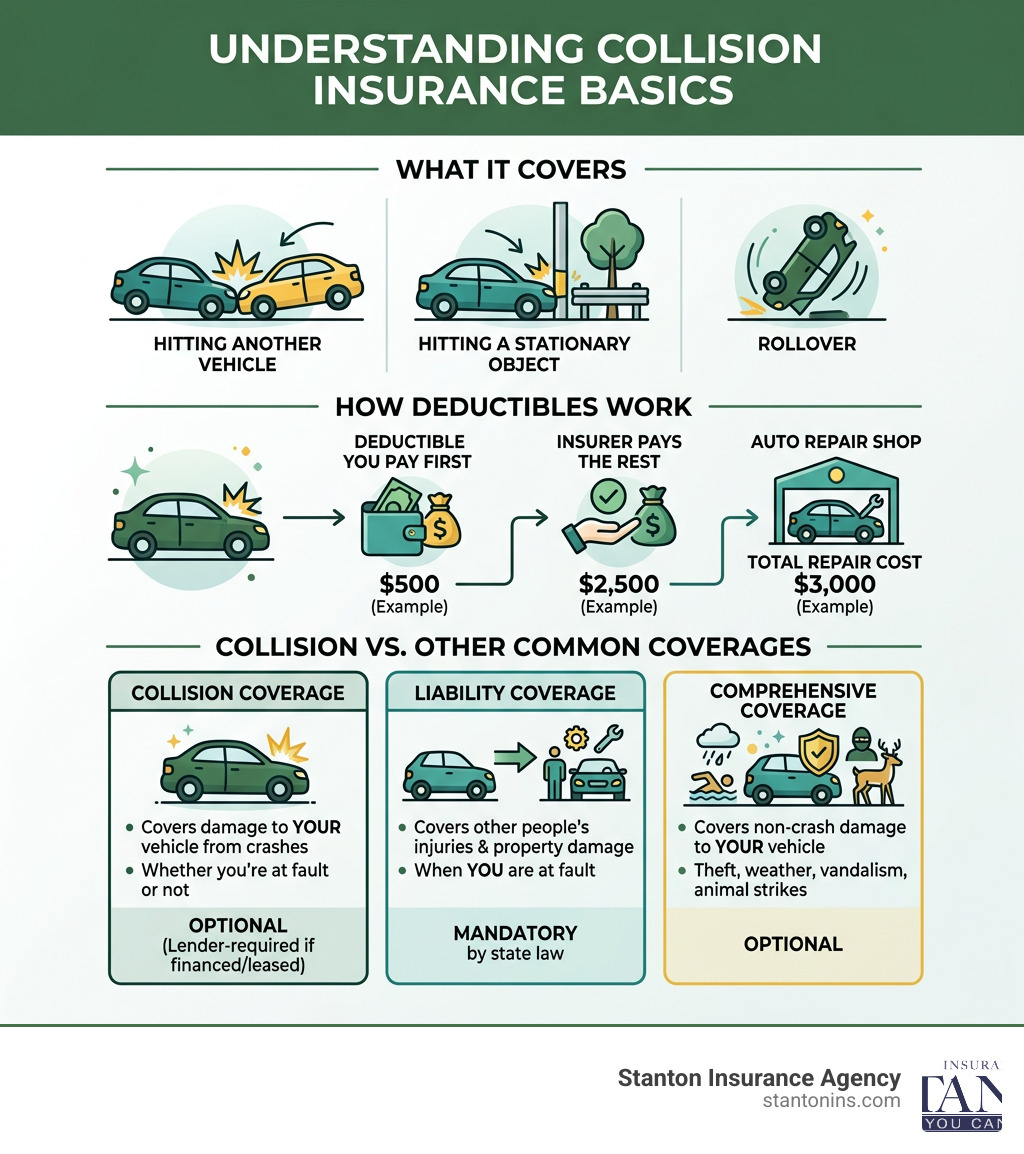
Collision coverage kicks in when you:
- Hit another vehicle
- Crash into a stationary object (pole, guardrail, curb)
- Experience a rollover
- Get hit by an uninsured driver and need repairs fast
It does not replace comprehensive insurance — that’s a separate coverage for theft, hail, floods, and other non-crash events.
The average cost is around $290 per year, and nearly 4 out of 5 drivers choose to carry it — for good reason.
I’m Geoff Stanton, President of Stanton Insurance Agency and a Certified Insurance Counselor with over 25 years helping Massachusetts and New Hampshire drivers navigate decisions exactly like this — including getting collision insurance explained in a way that actually makes sense for their situation. In this guide, I’ll walk you through everything you need to know to decide if collision coverage is right for you.
Simple guide to collision insurance explained terms:
Collision Insurance Explained: What Does It Actually Cover?
When we talk about auto collision insurance, we are talking about the physical protection of your investment. While liability insurance is there to protect your bank account from the other guy’s lawyers, collision insurance is there to make sure you still have a car to drive to work on Monday morning.
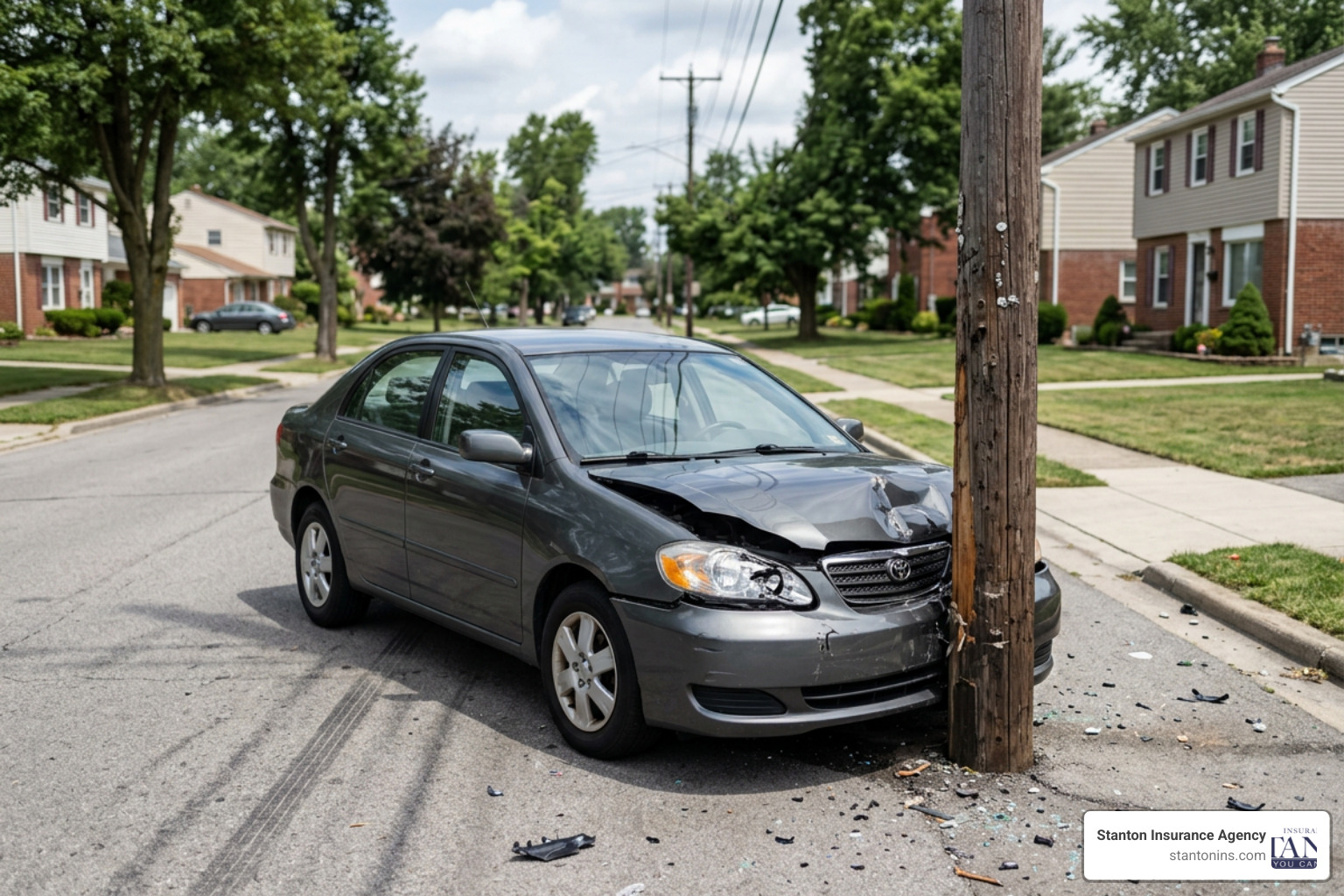
At its core, what collision insurance covers includes the repair or replacement of your vehicle when it makes physical contact with another object. This isn’t just limited to high-speed highway pile-ups. It covers a wide range of “oops” moments that happen to even the best drivers in Massachusetts and New Hampshire.
The primary areas of coverage include:
- Vehicle-to-Vehicle Crashes: Whether you rear-end someone in stop-and-go traffic on I-93 or someone T-bones you at a local intersection, collision insurance pays for your repairs.
- Stationary Objects: If you misjudge a turn and scrape a telephone pole, back into a mailbox, or hit a guardrail on a slippery New England road, this coverage applies.
- Rollovers: If your vehicle tips over or flips—perhaps after swerving to avoid an obstacle—collision insurance handles the damage.
- Pothole Damage: This is a big one for our local drivers! If hitting a massive pothole damages your car’s suspension or wheels, collision coverage is often the only way to get reimbursed for the fix.
Common Scenarios for Collision Insurance Explained
To really get collision insurance explained, it helps to see how it stacks up against the “standard” insurance everyone is required to have. Many drivers confuse collision with Property Damage Liability.
| Feature | Collision Coverage | Property Damage Liability |
|---|---|---|
| Whose car is covered? | Your car | The other person’s car |
| Who is at fault? | Doesn’t matter (Fault-independent) | You must be at fault |
| Is there a deductible? | Yes, you choose the amount | Usually no |
| Is it required by law? | No | Yes (in MA and most states) |
Statistics show that 77% of drivers maintain collision coverage because they realize that accidents happen regardless of how careful they are. Common real-world examples include:
- The Parking Lot Mystery: You come out of the grocery store to find your bumper dented. No note, no witnesses. Collision insurance covers this hit-and-run damage.
- The Winter Slide: You hit a patch of black ice in New Hampshire and slide into a stone wall. Since no other car was involved, your liability won’t help, but collision will.
- The Uninsured Scuffle: If an uninsured driver hits you, you don’t have to wait for a legal battle to fix your car. You can use your collision coverage to get back on the road immediately.
What is Excluded from Collision Insurance Explained?
While collision is powerful, it isn’t “everything” insurance. We often see confusion around specific incidents, particularly regarding wildlife and weather.
- Animals: Does hitting a deer fall under collision coverage? Surprisingly, no. Hitting an animal is considered an “Act of Nature” and falls under Comprehensive coverage. However, if you swerve to avoid the deer and hit a tree instead, that is a collision claim.
- Theft and Vandalism: If your car is stolen or keyed, collision won’t pay a dime. You need Comprehensive for that.
- Medical Bills: Collision only fixes the metal and glass. For injuries to yourself or passengers, you need Personal Injury Protection (PIP) or Medical Payments coverage.
- Personal Property: If your laptop was in the passenger seat during a crash and broke, auto insurance usually won’t cover it (though your homeowners or renters insurance might).
- Other Driver’s Repairs: As noted in the uninsured motorist coverage vs collision debate, collision is strictly for your vehicle.
Collision vs. Comprehensive: Understanding the Difference
If you want the “full picture” of collision insurance explained, you have to look at its sibling: Comprehensive coverage. We like to tell our clients that the easiest way to remember the difference is “Control vs. Chaos.”
Collision vs comprehensive essentially divides risks into two categories:
- Collision (The “Control” Category): These are usually incidents involving driving or maneuvers—hitting cars, poles, or flipping over. Even if the accident was caused by a loss of control on ice, it’s still a “collision” event.
- Comprehensive (The “Chaos” Category): These are often called “Acts of God.” Think of things that happen to your car while it’s sitting still or things you can’t possibly steer away from, like a hailstorm, a falling tree limb, or a fire.
There is a clear difference between collision and comprehensive in terms of cost, too. Collision is typically more expensive (averaging $290–$463 annually) because traffic accidents are more frequent and costly than “Acts of God” (which average a little over $134 per year).
When You Need Both for “Full Coverage”
You’ve likely heard the term “full coverage.” In the insurance industry, that isn’t actually a technical term, but most people use it to mean a policy that includes Liability, Collision, and Comprehensive.
If you are financing or leasing your car, your lender will almost certainly require you to carry comprehensive and collision coverage. They want to protect their asset. If you total the car, they want to make sure the insurance company sends a check to pay off the loan.
For a deeper dive, check out our comprehensive collision coverage complete guide. It explains how these two work together to ensure that no matter what happens—whether a thief takes your car or you take out a guardrail—you aren’t left with a massive financial hole.
Managing Costs: Deductibles and Premiums
One of the most important parts of getting collision insurance explained is understanding how you can control the price. Your collision coverage comes with a deductible—the amount you pay out of pocket before the insurance company pays the rest.
Common deductible amounts are $500 and $1,000. Here is how that choice impacts your wallet:
- The $500 Deductible: This is the most popular choice. It provides a balanced safety net. If you have $3,000 in damage, you pay $500, and we (the insurer) pay $2,500.
- The $1,000 Deductible: This is a great way to lower your monthly or annual premium. Research shows that increasing deductibles can save up to 20% annually on your collision premium.
However, you should only choose a higher deductible if you have that much cash sitting in a savings account. If you can’t afford a $1,000 surprise, stick with the lower deductible.
It is also vital to understand auto insurance collision coverage limits. Unlike liability, which has a set dollar limit (like $100,000), collision coverage is limited by the Actual Cash Value (ACV) of your car. If your car is worth $15,000, that is the most the policy will ever pay out, minus your deductible.
Is Collision Insurance Worth It for Your Vehicle?
This is the question we get most often at Stanton Insurance Agency. “Geoff, my car is getting older. Do I still need this?”
The answer depends on a few factors, but a good rule of thumb is the 10% Rule: If the annual cost of your collision and comprehensive coverage exceeds 10% of your car’s total value, it might be time to drop it.
Ask yourself these questions when deciding do you need collision coverage:
- What is the car worth? Use Kelley Blue Book to find your car’s ACV. If your car is only worth $2,000 and you have a $1,000 deductible, the most you’d ever get from a claim is $1,000. Is that worth the $300+ annual premium?
- Can you afford to replace it? If your car is totaled tomorrow, do you have the cash to buy a replacement? If the answer is no, keeping collision insurance is a smart safety net, even for an older car.
- Is it a “Limited” policy? In some states like Massachusetts, you might see “Limited Collision.” You should ask yourself is limited collision worth it? Limited collision only pays if you are not at fault. It’s cheaper, but it leaves you unprotected if you make a mistake.
Considerations for Massachusetts and New Hampshire Drivers
Living in the Northeast brings unique challenges that make collision insurance explained even more relevant.
- Massachusetts Drivers: In the Bay State, we deal with some of the highest traffic density in the country. Between the “Rotaries” and the aggressive Boston commutes, the chance of a fender bender is statistically higher. You can find more details in the Basics of Auto Insurance in Massachusetts.
- New Hampshire Drivers: New Hampshire is unique because it doesn’t technically mandate auto insurance by law for most drivers. However, if you are at fault in an accident and can’t pay, you could lose your license. The New Hampshire Automobile Insurance Guide highlights that while it’s not “required,” it is highly recommended to protect your assets from winter driving hazards and wildlife.
Whether you’re navigating the White Mountains or the Mass Pike, having what is collision insurance clearly defined in your policy ensures that a patch of ice doesn’t result in a total financial loss.
Frequently Asked Questions about Collision Insurance Explained
Is collision insurance required by law?
No state law in the U.S. requires collision insurance. State mandates only focus on Liability, which pays for the other person’s damage. However, while the law doesn’t require it, your bank does. If you have a loan or a lease, your contract likely mandates “Full Coverage” to protect the lender’s investment. If you’re unsure about your requirements, you can find an agent to discuss requirements and ensure you’re compliant with your loan.
Does collision insurance cover hit-and-run accidents?
Yes, it generally does. If someone hits your parked car or strikes you on the road and flees, collision insurance will pay for the repairs to your vehicle (minus your deductible).
According to Forbes advisor on hit-and-run coverage, collision is your primary path to repair if you can’t identify the other driver. It covers the car, but not your medical injuries—that’s where Uninsured Motorist Bodily Injury coverage comes in.
How do I choose the right deductible?
Choosing a deductible is a balance of “now vs. later.” A higher deductible ($1,000) means a cheaper premium now, but a bigger bill later if you crash. A lower deductible ($250 or $500) costs more now but makes a crash less stressful later.
You might also hear about “Broad Form Collision” in certain states. What is broad collision coverage? This is a special type of coverage where your deductible is waived if you are less than 50% at fault in the accident. It’s a fantastic option for drivers who want to save money but don’t want to be penalized for someone else’s mistake.
Conclusion
At the end of the day, collision insurance explained simply means peace of mind. It’s the difference between being stranded after a mistake and having a professional team ready to get your car back in the driveway.
At Stanton Insurance Agency, we pride ourselves on being more than just a policy provider. We are your local experts in Massachusetts and New Hampshire, dedicated to trusted protection for your most valuable assets. We don’t just sell insurance; we manage your risk so you can focus on the road ahead.
Ready to see how affordable real protection can be? Get a personalized car insurance quote today and let us help you find the “sweet spot” between coverage and cost.