Replacement Cost vs Market Value in Home Insurance
Market value includes the land; replacement cost is what it takes to rebuild the house. Here is why the gap matters for your dwelling…
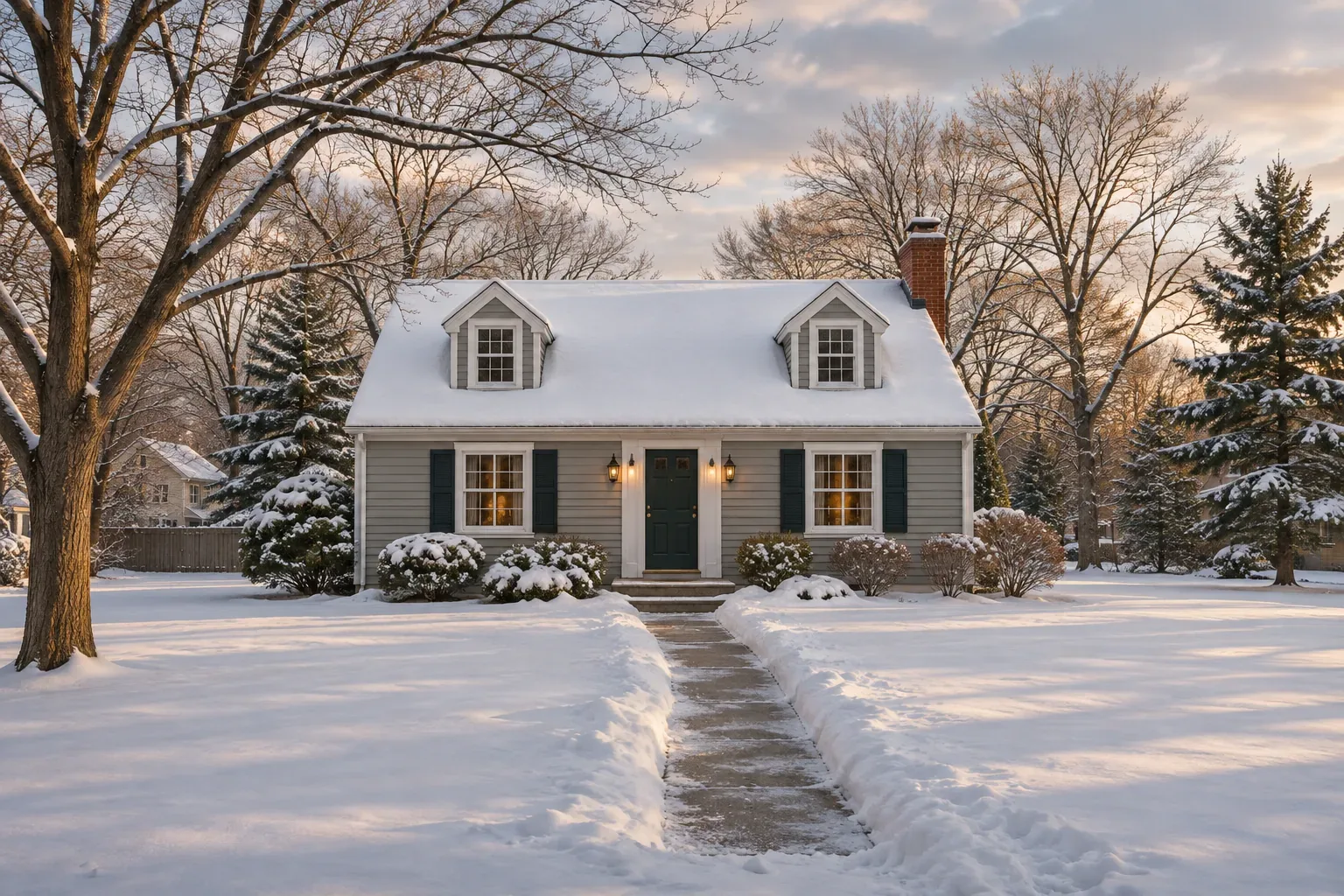
Most winter home insurance claims turn on one question: was the damage sudden and accidental, or did it build up slowly or come from water outside the house? A standard Massachusetts homeowners policy usually pays for the first kind and excludes the second. Below we walk through each winter peril, the exclusions that catch people off guard, and how to handle a claim. Coverage always depends on your policy form and your carrier, so use this as a list of the right questions, not a promise of how any claim will be paid.
Most homeowners in Massachusetts carry an HO-3 policy. It covers the house itself against any cause of loss that is not specifically excluded, and covers your belongings for a list of named perils. Freezing of plumbing, weight of ice and snow, falling objects, windstorm, fire, smoke and sudden discharge of water all appear in the standard forms. Flood, surface water, wear and tear, and damage from neglected maintenance are excluded. If you are not sure what form you have, the declarations page will say, and our post on broad form insurance policies explains named perils versus open perils.
| What happened | Usually covered? | What decides it |
|---|---|---|
| Pipe froze and burst | Usually yes | Heat was kept on, or the water was shut off and drained |
| Slow drip or seepage over weeks | Usually no | Gradual leaks fall under wear and tear or maintenance exclusions |
| Ice dam water stains ceilings and walls | Usually yes, for the interior damage | Removing the ice and fixing an old roof may not be covered |
| Roof or porch gives way under snow and ice | Usually yes | The policy's collapse wording and the structure's condition |
| Wind strips shingles or siding | Usually yes | Your deductible, and any wind or named storm deductible |
| Tree falls on the house | Usually yes, for the house | Debris removal has its own limit |
| Fire or smoke from a furnace, fireplace or space heater | Usually yes | Sudden smoke damage is a named peril |
| Snowmelt or rain floods the basement from outside | No | Needs a flood policy |
| Sewer or drain backup, sump pump overflow | Not unless endorsed | Water backup endorsement and its limit |
| Boiler or furnace breaks down | Not the equipment itself | Equipment breakdown endorsement |
A pipe that freezes and splits releases water suddenly, which is why the resulting damage to floors, ceilings and belongings is generally covered. Policies commonly include the cost of opening a wall or floor to reach the break and putting it back. The broken pipe itself may be treated differently from the water damage, so ask how your form handles it.
The big condition is heat. Standard forms exclude freeze damage while the home is vacant, unoccupied or under construction unless you used reasonable care to keep heat in the building, or shut off the water and drained the system. A pipe that froze because the power went out during a storm, while you were keeping the house heated, is usually covered. A pipe that froze in a house left without heat for a month usually is not.
A slow leak is a different story. Water that seeps from a fitting for weeks and rots the subfloor is typically excluded as continuous or repeated leakage, even in January.
When an ice dam pushes water under the shingles and it drips through the ceiling, the interior damage (drywall, insulation, paint, flooring, belongings) is generally covered as sudden water damage. Two things often are not: the cost of removing the ice itself, and repair of a roof that was already worn out. If the adjuster finds the leak came from deteriorated shingles or flashing rather than the ice, the claim can be reduced or denied. Policies do expect you to take reasonable steps to prevent further damage, so if water is actively coming in, call us before hiring an ice removal crew and keep the invoice. Roof age plays a large part in these claims; see why replacing your roof matters for homeowners insurance.
Collapse caused by the weight of ice, snow or sleet is a covered cause in the standard forms, though the wording is specific and some structures (awnings, fences, patios and similar) get narrower treatment. Wind damage to the roof, siding and windows is covered, subject to your deductible and any separate wind deductible.
When a tree comes down on your house, your own policy responds, even if the tree stood on a neighbor's lot. Your carrier may try to recover from the neighbor if the tree was obviously dead and they ignored it, but you do not have to wait on that. Removing a tree that fell and hit nothing is often not covered, and debris removal has a limit. A tree that lands on your car is an auto claim, handled under the other than collision part of your auto policy; see our car insurance page.
Fire is covered by every standard homeowners form. Sudden smoke damage is covered too, including the soot that spreads through a house when an oil burner misfires (often called a puffback), subject to your policy's wording. Damage that builds up slowly, such as soot from a poorly maintained fireplace over a season, is harder to claim.
If a guest falls on your icy front steps, the liability and medical payments parts of your homeowners policy are what respond, not the property coverage. Medical payments can pay small injury bills regardless of fault; personal liability covers your legal defense and damages if you are sued. Many homeowners carry $300,000 or $500,000 of liability, and a personal umbrella can add more above that. Read more in what personal liability covers on a home policy and what personal umbrella insurance is.
Compare the repair estimate with your deductible. If the damage is only a little more than the deductible, a claim may not be worth it, since claim history can affect pricing and eligibility at renewal. Call us before you decide and we will talk it through with no pressure either way.
Additional living expense coverage pays for temporary housing when a covered loss makes the home unlivable, such as a burst pipe that floods the first floor. A power outage by itself, with no damage to the house, usually does not trigger it.
Some policies include a small amount of food spoilage coverage, and some carriers offer it as an endorsement. Check your policy or ask your account representative.
Seasonal homes often have stricter heat and water shutoff conditions, or are written on a different form. Ask before the home is closed up for the winter.
Prevention keeps most of these claims from happening; our checklist on how to prepare your home for winter covers the fall to-do list. For the coverage side, Stanton is an independent agency, so we can compare home policies and endorsements from several carriers. See our home insurance page, call 781-893-3200, or ask for a home insurance quote.
Market value includes the land; replacement cost is what it takes to rebuild the house. Here is why the gap matters for your dwelling…
Massachusetts handles proof of insurance through registration, not SR-22 filings. Here is when a Massachusetts driver may still need one, and how to handle…
Your driving record, your car, where it is garaged, how far you drive and the coverage you pick all shape your premium. Here is…
Our Waltham agents compare policies from several carriers and explain the differences in plain terms.