Um insurance meaning: Essential 2025 Protection
Why Understanding UM Insurance Meaning Is Critical for Every Driver
Um insurance meaning refers to Uninsured Motorist coverage—a vital protection that pays for your injuries and damages when you’re hit by a driver who has no insurance or flees the scene. Here’s what you need to know:
UM Insurance Quick Facts:
- Uninsured Motorist (UM): Covers you when hit by drivers with no insurance or in hit-and-run accidents.
- Underinsured Motorist (UIM): Covers you when the at-fault driver’s insurance limits are too low to pay for your damages.
- Coverage includes: Medical bills, lost wages, pain and suffering, and sometimes property damage.
- Protects: You, your family members, and passengers in your vehicle.
You never know when you might get in an auto accident. According to the Insurance Research Council, the risk is real in our area. While Massachusetts has one of the nation’s lowest rates of uninsured drivers at 3.5%, New Hampshire’s rate is significantly higher at 9.3%. This means nearly 1 in 10 drivers on New Hampshire roads could be uninsured.
If an uninsured driver causes an accident that leaves you with $50,000 in medical bills, you could be stuck paying those costs yourself without UM coverage. Even drivers who do carry insurance often have minimal coverage that may not be enough to cover serious injuries.
I’m Geoff Stanton, President of Stanton Insurance Agency. With over two decades in both claims and sales, I’ve seen how UM/UIM coverage can be the difference between financial recovery and devastating out-of-pocket expenses after an accident. My goal is to help Massachusetts families understand the true um insurance meaning and importance of this coverage.
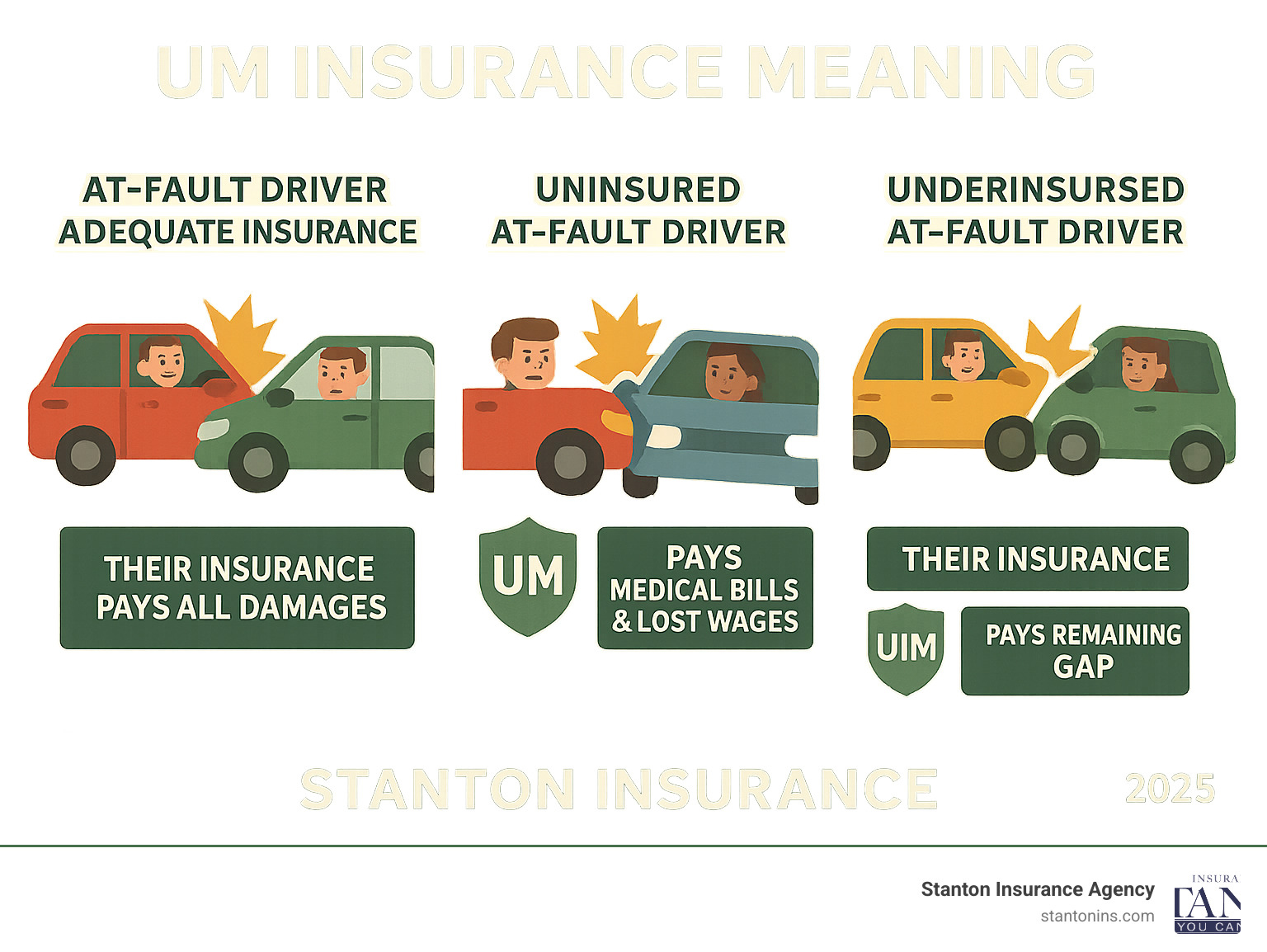
Easy um insurance meaning word list:
Understanding the Core Concepts: What Are UM and UIM?

Think of UM and UIM coverage as your financial bodyguard against irresponsible drivers. While often bundled together, Uninsured Motorist (UM) and Underinsured Motorist (UIM) coverages protect you in distinctly different situations. The um insurance meaning becomes clear when you see they exist to protect you when other drivers can’t or won’t take financial responsibility for accidents they cause.
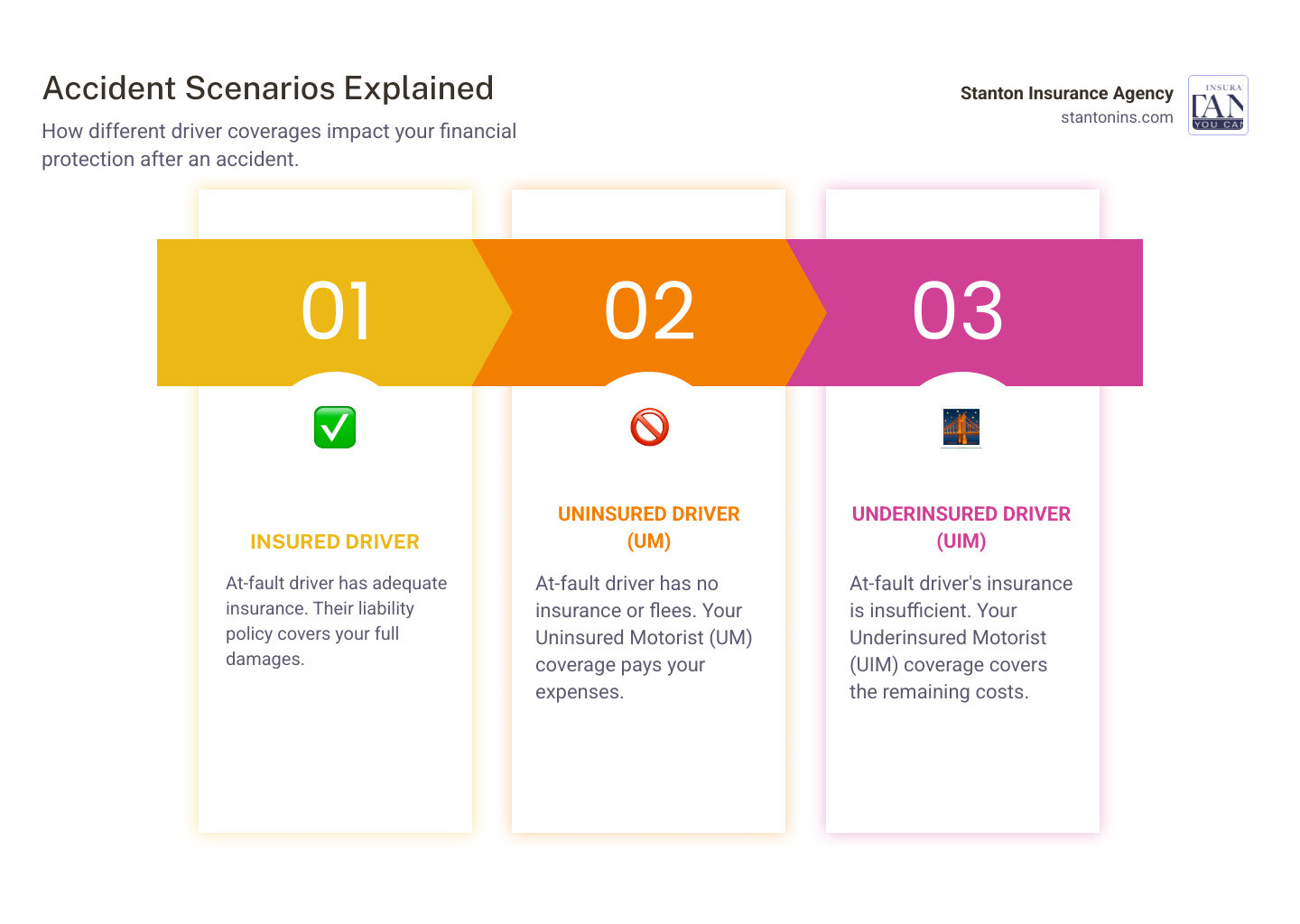
What is Uninsured Motorist (UM) coverage?
Uninsured Motorist (UM) coverage steps in when you’re hit by a driver who has no insurance. It also covers you in hit-and-run situations where the at-fault driver flees the scene.
If an uninsured driver hits you, you would normally be stuck with your own medical bills and repair costs. With UM coverage, your own insurance company steps in. You file a claim with your insurer, and your UM coverage pays for your medical expenses, lost wages, and pain and suffering, as if the at-fault driver had proper insurance.
This protection extends beyond just your car. If you’re a pedestrian or a passenger in someone else’s car and are hit by an uninsured driver, your UM coverage still protects you.
What is Underinsured Motorist (UIM) coverage?
Underinsured Motorist (UIM) coverage handles a different problem: the at-fault driver has insurance, but their coverage limits are too low to cover all your damages.
For example, imagine your medical bills are $60,000, but the at-fault driver only has the state minimum liability coverage. In Massachusetts, that could be as low as $20,000 per person. Their insurance pays the $20,000 maximum, leaving you with a $40,000 shortfall.
This is where UIM coverage saves the day. After the other driver’s insurance pays its limit, your UIM coverage kicks in to cover the remaining expenses, up to your policy’s limit. It’s a financial safety net for when someone else’s insurance isn’t enough.
How do UM and UIM coverages differ?
The key difference is whether the at-fault driver has any insurance at all.
-
UM coverage applies when the other driver is completely uninsured or it’s a hit-and-run. It covers the “insurance ghosts” who should have coverage but don’t.
-
UIM coverage applies when the other driver has insurance, but their policy limits are insufficient to cover your damages. It’s a backup plan for when someone else’s coverage falls short.
Both serve the same purpose: ensuring you don’t suffer financially because of another driver’s poor choices. Having both means you’re covered in virtually any scenario involving an irresponsible driver, giving you valuable peace of mind.
The Financial Protection of UM/UIM: What’s Covered?

When you’re trying to understand the um insurance meaning, knowing what these coverages actually pay for is where the rubber meets the road. They are financial lifelines that cover the costs an at-fault driver should have been responsible for.
What specific expenses can UM/UIM coverage pay for?
The core of UM and UIM coverage is protecting you from bodily injury expenses. This includes:
- Medical bills: From the emergency room visit to long-term physical therapy, hospital stays, prescriptions, and rehabilitation.
- Lost wages: This covers income you’ve already lost and may lose in the future if your injuries have lasting effects on your ability to work.
- Pain and suffering: This compensates for the physical pain, emotional distress, and change in your quality of life resulting from the accident.
- Funeral expenses: In the most tragic cases, this coverage can help families with unexpected costs after a fatal accident.
Does UM/UIM coverage apply to property damage or only bodily injury?
This is where the um insurance meaning can vary by state. Most often, UM/UIM refers to bodily injury protection. However, some states also offer Uninsured Motorist Property Damage (UMPD) as a separate coverage to pay for repairs to your vehicle when damaged by an uninsured driver.
In Massachusetts, for example, damage to your car from an uninsured driver is typically covered by your optional Collision coverage. If you don’t have Collision, you may be out of luck unless the driver can be identified and sued. In New Hampshire, Uninsured Motorist Property Damage (UMPD) is available as a separate, optional coverage to pay for repairs to your vehicle.
What is the difference between UM/UIM property damage coverage and collision coverage?
These two coverages are related but serve different purposes. Understanding the difference can save you money and headaches.
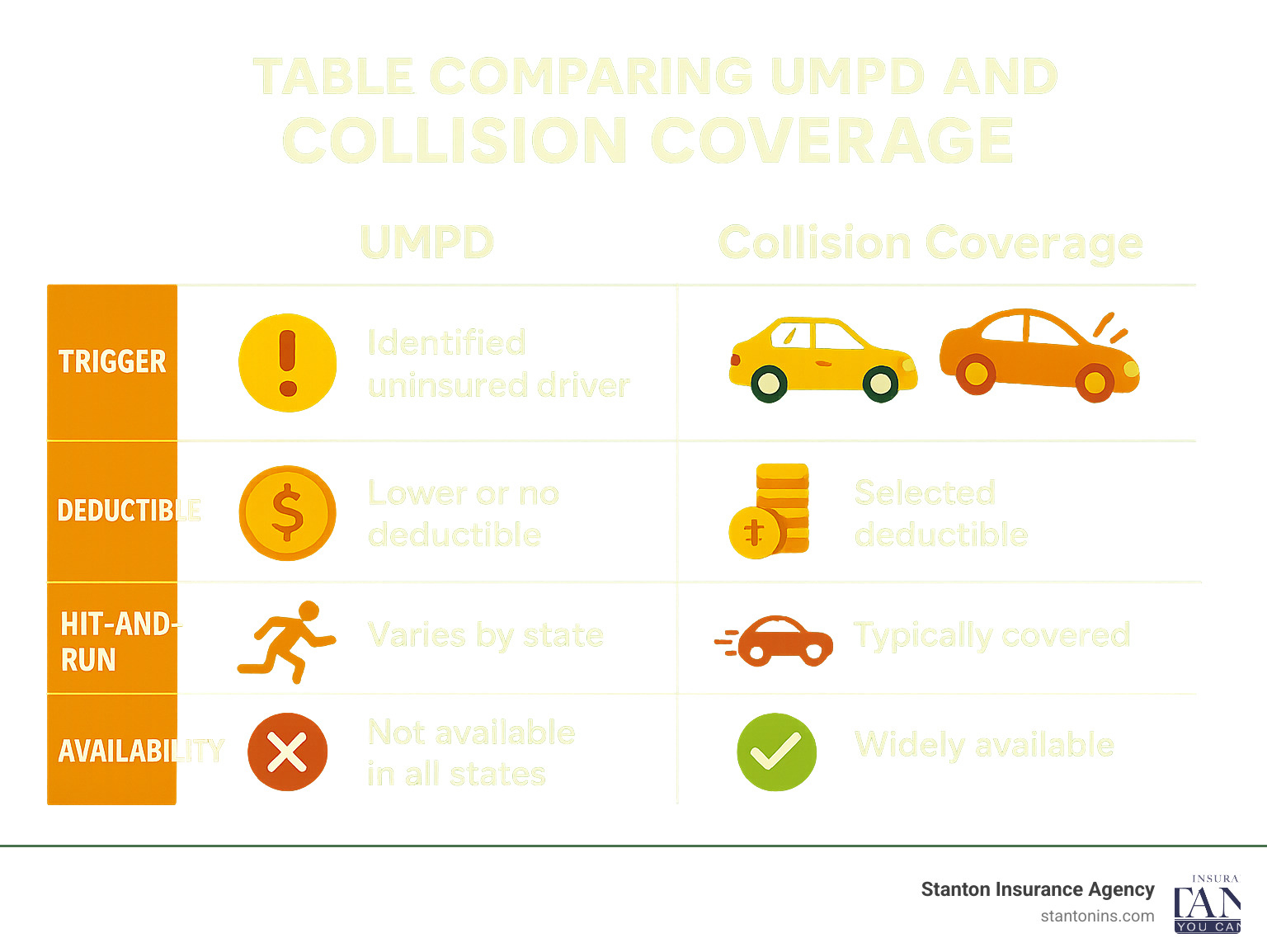
| Feature | Uninsured Motorist Property Damage (UMPD) | Collision Coverage |
|---|---|---|
| Trigger | Pays for damages caused by an identified, at-fault, uninsured driver. | Pays for damages to your car from a collision with another object or vehicle, regardless of fault. |
| Deductible | Often has a lower deductible than collision, or sometimes no deductible. | You must pay your selected deductible before coverage kicks in. |
| Hit-and-Run | Coverage for hit-and-run accidents varies by state; some states exclude it from UMPD. | Typically covers hit-and-run damage to your vehicle. |
| Availability | Not available in all states. | Widely available as an optional coverage. |
UMPD is a specialist, only handling damage from identified uninsured drivers, often with a lower deductible. Collision coverage is a generalist, handling damage from most crashes, whether the other driver is insured, uninsured, or you hit a fixed object.
Does UM/UIM coverage extend to pedestrians or passengers?
Yes, and this is one of its most valuable aspects. The coverage follows you and your family like a protective umbrella.
- As the policyholder, you’re covered whether you’re driving, a passenger in another car, or even as a pedestrian or cyclist.
- Your resident family members get the same protection. If your child is hit by an underinsured driver while riding with friends, your UIM can help.
- Passengers in your vehicle are also protected under your UM/UIM coverage. If an uninsured driver causes an accident, your coverage can help with their medical bills.
This broad protection makes UM/UIM incredibly valuable. It’s not just about protecting your car; it’s about protecting the people who matter most.
Navigating Legal and Policy Details: The UM Insurance Meaning in Practice
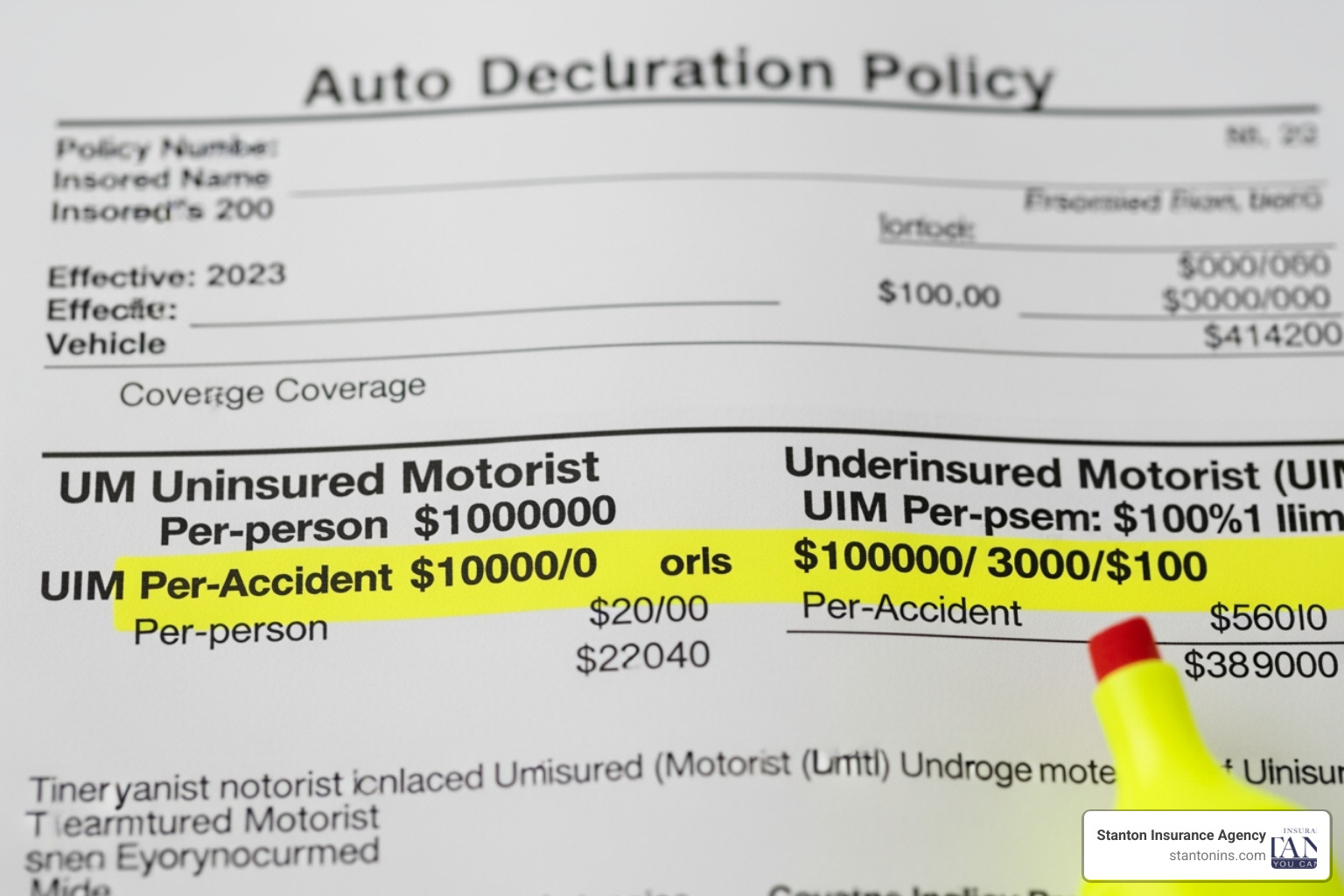
Understanding how UM/UIM fits into insurance laws and policy decisions is the next step. The rules can seem complex, but they are designed to protect drivers from the growing problem of uninsured motorists.
Are UM/UIM coverages required by law? The state-by-state um insurance meaning
The requirements for UM/UIM coverage vary dramatically from state to state. About 20 states and Washington D.C. require this protection, while others simply require that insurers offer it to you. In those states, you can reject it, but usually must do so in writing.
- Massachusetts: Uninsured Motorist Bodily Injury (UMBI) and Underinsured Motorist (UIM) coverage are both mandatory. However, coverage for property damage to your vehicle caused by an uninsured driver is typically handled by your optional Collision coverage, not a separate mandatory UMPD coverage.
- New Hampshire: The state doesn’t require auto insurance. However, if you choose to buy a policy, you must include both Uninsured and Underinsured Motorist coverage.
These requirements exist for good reason. The Insurance Information Institute reports that nearly 13% of drivers nationwide are uninsured, and in some states, the rate is over 20%. The chance of encountering an uninsured driver is a statistical likelihood over your driving lifetime.
How much UM/UIM coverage do I need?
A smart rule of thumb is to match your UM/UIM limits to your liability limits. If you carry $100,000/$300,000 in liability coverage to protect others, it makes sense to give yourself and your family that same level of protection from the mistakes of others. Your medical bills, lost wages, and pain and suffering can easily exceed state minimums.
When you match these limits, you’re ensuring you are protected from others as well as you protect them. For those with significant assets, an umbrella insurance policy can provide an additional layer of protection that often extends to your UM/UIM coverage.
How does UM/UIM interact with health insurance? A key part of the um insurance meaning
Some people think good health insurance means they don’t need much UM/UIM coverage, but this thinking has dangerous gaps. Health insurance is for medical bills only. It does not cover lost wages or pain and suffering.
Even for medical expenses, health insurance has deductibles, copays, and network restrictions. Your health plan might also seek reimbursement from any settlement you receive (a process called subrogation), which can reduce your final payout. Furthermore, what about your passengers? Your UM/UIM coverage can step in to cover their medical bills if they are injured in your car and have poor health insurance.
Health insurance and UM/UIM coverage work best as a team, each covering different, critical aspects of your financial recovery.
What factors influence the cost of UM/UIM coverage?
The good news is that this coverage delivers tremendous value for a relatively small cost. The premium is influenced by:
- Your coverage limits: Higher limits cost more, but the increase is often modest for a substantial gain in protection.
- Your location: Areas with more uninsured drivers have a higher risk and slightly higher premiums.
- Your driving record: Safe drivers typically pay less across all coverages.
UM/UIM is often one of the most affordable parts of an auto policy, yet it protects against one of the most financially devastating scenarios on the road.
Taking Action: What to Do After an Accident and How to Get Coverage

Knowing the right steps to take after an accident and how to manage your policy can make a stressful situation much more manageable.
What should I do if I’m involved in a hit-and-run accident?
A hit-and-run is a crime, but your UM coverage is designed for this exact situation. Knowing the right steps can help your claim process go smoothly.
- Prioritize Safety: Check yourself and your passengers for injuries. If anyone is hurt, call 911. If possible, move your vehicle to a safe location and turn on your hazard lights.
- Call the Police: Report the accident immediately, even for minor damage. A police report is almost always required to file a UM claim for a hit-and-run. It provides official documentation of the incident. Get the report number from the officer.
- Gather Details: While the memory is fresh, note everything you can about the other vehicle: color, make, model, partial license plate, and direction of travel. Look for witnesses or nearby security cameras.
- Document the Scene: Take photos of your vehicle’s damage, the accident location, debris, and any skid marks. This is crucial evidence for your claim.
- Contact Your Agent: Report the claim to your insurance company as soon as possible. Your agent can explain what your UM coverage will handle and guide you through the next steps.
How can I obtain or adjust UM/UIM coverage on my policy?
Adding or adjusting UM/UIM coverage is simple. You can make changes at any time by contacting your insurance agent.
- When buying a new policy, discuss UM/UIM options with your agent to choose limits that fit your budget and needs.
- To adjust an existing policy, just call your agent. We recommend an annual review of your limits, especially after life changes like a new car, a teen driver, or a change in your financial situation.
The process is straightforward. Your agent will review your options and can often make changes effective immediately or at your next renewal. There’s no lengthy application—just a conversation about what level of protection is right for you.
At Stanton Insurance Agency, we make this process painless. We can review your policy and ensure you’re not left vulnerable. Visit our car insurance page or give us a call to better understand what the um insurance meaning is for your unique situation.
Frequently Asked Questions about UM/UIM Coverage
Let’s tackle some of the most common questions we hear from our clients about UM/UIM coverage.
If I use my UM/UIM coverage, will my rates go up?
Your insurance rates should not increase for filing a UM/UIM claim, as you were not at fault for the accident. Insurance companies typically don’t surcharge for “not-at-fault” accidents. In both Massachusetts and New Hampshire, a non-fault accident involving an uninsured driver generally won’t result in a premium increase. Don’t let worry about rate increases prevent you from using the coverage you pay for.
Is UM/UIM coverage the same as Personal Injury Protection (PIP)?
No, they are quite different, though both can help with medical expenses.
-
Personal Injury Protection (PIP) is “no-fault” coverage required in Massachusetts. It kicks in immediately to pay for your initial medical expenses and some lost wages, regardless of who caused the accident.
-
Medical Payments (MedPay) is required if you buy insurance in New Hampshire. It is also no-fault coverage for medical bills, but it does not cover lost wages.
-
UM/UIM coverage is fault-based and applies when an uninsured or underinsured driver causes your injuries. It covers the bigger picture, including pain and suffering, medical costs that exceed PIP or MedPay limits, and long-term financial impacts.
Think of PIP/MedPay as your immediate first aid kit and UM/UIM as your comprehensive long-term recovery plan.
Can I “stack” UM/UIM coverages?
If you have multiple vehicles on your policy, you might be able to “stack” your UM/UIM limits, which can be a game-changer for your protection level.
Stacking means combining the coverage limits from each vehicle to create a higher total limit for a single claim. For example, if you have two cars, each with $50,000 in UM coverage, stacking could give you access to $100,000 in coverage for one accident.
In both Massachusetts and New Hampshire, stacking is generally permitted unless you specifically reject it in writing. It’s a powerful way to maximize your protection, and it’s worth discussing with your agent to see if it makes sense for your policy.
Secure Your Peace of Mind on the Road
Understanding the um insurance meaning is the first step toward comprehensive protection. Uninsured and Underinsured Motorist coverages are not just another line item on your policy; they are a fundamental safeguard against the financial chaos that irresponsible drivers can cause. They ensure an accident caused by someone else’s poor choices doesn’t become your financial nightmare.
The reality is that a significant number of drivers on the road lack proper insurance. This makes UM/UIM coverage more important than ever.
The beauty of this coverage lies in its affordability relative to the protection it provides. For what often amounts to a small addition to your premium, you are buying yourself immense financial security. This investment can mean the difference between a manageable recovery and a devastating financial blow from medical bills that should have been someone else’s responsibility.
UM/UIM coverage works to protect not just you, but your entire family and any passengers in your vehicle. It’s a financial bodyguard that follows you whether you’re driving, walking down the street, or riding in a friend’s car.
At Stanton Insurance Agency, we’ve seen how this coverage transforms potentially devastating situations into manageable ones. The peace of mind alone is worth the modest premium. It’s an insurance decision you hope you’ll never need to use, but you’ll be incredibly grateful to have if that day ever comes.
If you have questions about your current coverage or want to ensure you’re adequately protected, our team is here to help. We can review your policy and help you find the right balance of coverage to fit your needs and budget. Contact us today for a personalized car insurance review and let’s make sure you’re truly protected on Massachusetts and New Hampshire roads.