What Is Commercial Insurance and Why Every Business Owner Needs It
What is commercial insurance is one of the most important questions any business owner can ask. In short, it’s a type of coverage that protects your business from financial loss due to unexpected events like lawsuits, property damage, accidents, and more. Whether you are a startup in Boston or an established manufacturing plant in Manchester, the risks you face are real and ever-present.
Here’s a quick answer:
| What It Covers | Examples |
|---|---|
| Property damage | Fire, theft, storms |
| Legal liability | Lawsuits, injuries on-site |
| Employee-related risks | Workplace injuries, errors |
| Business interruption | Lost income after a disaster |
| Vehicles and equipment | Damage, cargo loss |
Without commercial insurance, a single lawsuit or accident could wipe out a business entirely. That’s not a risk worth taking. In the Northeast, we face unique challenges, from severe winter weather that can damage roofs to a complex legal environment where liability claims are common.
Most small and medium-sized businesses are more exposed than they realize. The right coverage acts as a financial safety net — so you can keep running no matter what happens. It provides the peace of mind necessary to focus on growth rather than worrying about potential catastrophes.
I’m Geoff Stanton, President of Stanton Insurance Agency and a Certified Insurance Counselor (CIC) with over two decades of hands-on experience helping small and medium-sized businesses understand what is commercial insurance and how to use it to protect what they’ve built. As a 4th generation owner of Stanton Insurance, I’ve seen how the right coverage can mean the difference between recovery and financial ruin. Our agency has been a part of the local community for decades, and we understand the specific needs of businesses operating in Massachusetts and New Hampshire.
What is Commercial Insurance?
To dive a bit deeper, what is commercial insurance exactly? It is a legally binding contract between a business owner and an insurance provider designed to mitigate the risks that come with running a company. Whether you are operating a boutique in Massachusetts or a construction firm in New Hampshire, your business faces daily threats. These range from natural disasters like a harsh New England winter storm to a customer slipping on a wet floor or an employee making a costly professional error.
Commercial insurance steps in to cover the costs associated with these “what if” scenarios. Instead of paying out of pocket for a legal settlement or a new roof after a fire, the insurance policy handles the financial burden, minus your deductible. This allows businesses to maintain liquidity and continue operations even when faced with significant setbacks.
Key Components of Commercial Insurance
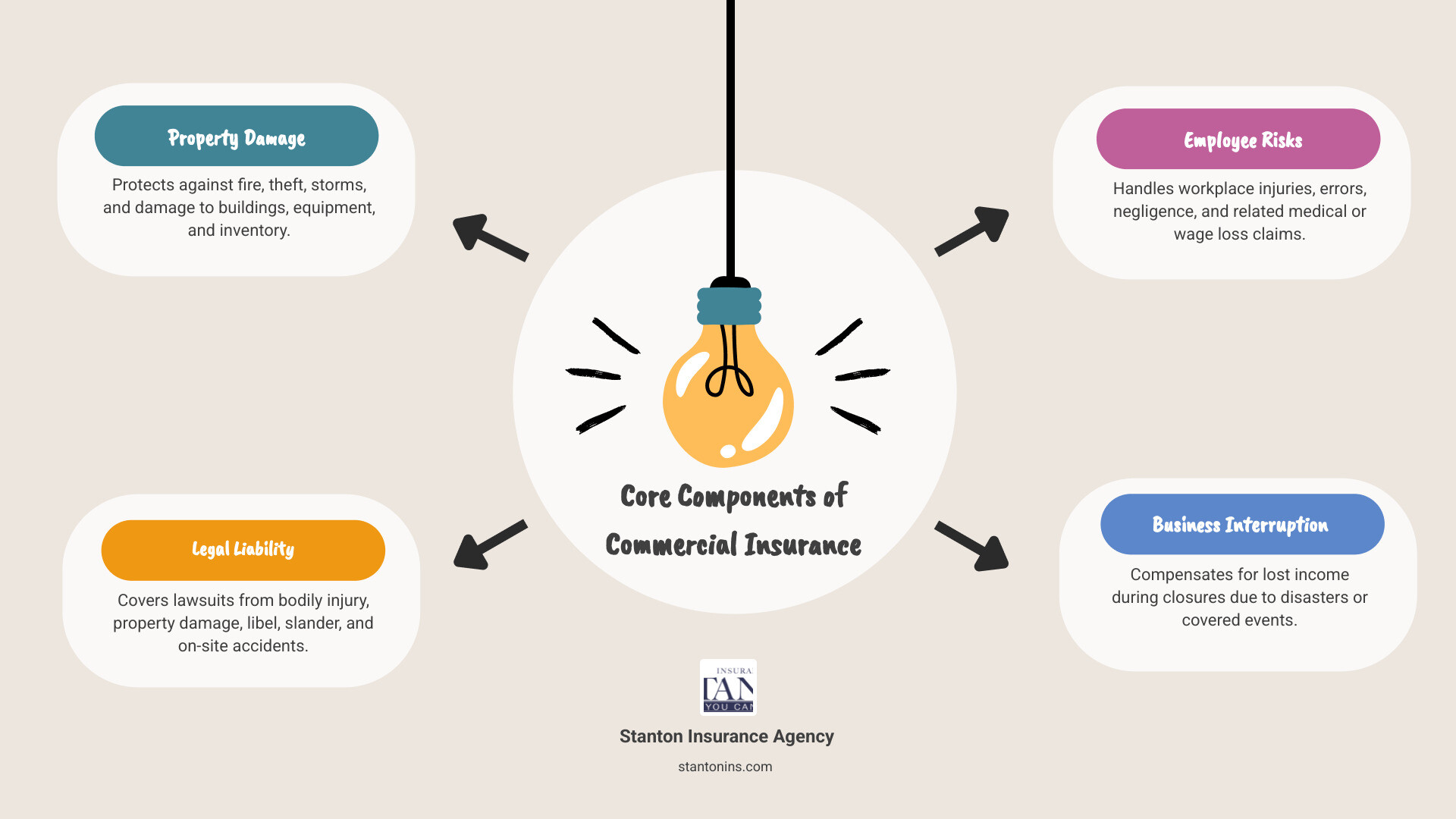
While every policy is different, most commercial coverage focuses on three main pillars:
- Property Damage: Protection for your physical building, tools, and inventory. This includes coverage for assets inside the building as well as the structure itself.
- Legal Liability: Coverage for when your business is held responsible for injury or damage to others. This is critical in today’s litigious society where legal defense costs alone can reach tens of thousands of dollars.
- Employee-Related Risks: Protection against claims involving workplace injuries or employment practices. This ensures that both the business and its staff are protected in the event of an accident.
How Commercial Insurance Works
The process begins with a comprehensive risk evaluation. We look at your business to see where you are most vulnerable. For example, a restaurant has high foot traffic (liability risk), while a consultant has high professional stakes (error risk). We also consider your location, as a business near the coast in NH may have different property risks than one in central MA.
Working with an insurance broker is vital because we help you understand your financial exposure. Once we identify the risks, we match you with a policy. It is important to remember that policies differ significantly; a “one size fits all” approach rarely works in the commercial world. We analyze the fine print to ensure there are no gaps in your coverage that could leave you vulnerable.
Common Types of Commercial Insurance
Not every business needs every type of insurance, but most need a combination of the following to stay protected. According to the Small Business Administration (SBA), choosing the right insurance is a fundamental step in the business planning process.
General Liability Insurance
This is the “foundation” of business protection. It covers claims of bodily injury, property damage, and even personal injury like libel or slander. If a visitor trips at your office and sues, general liability covers the medical expenses and the cost of defending the lawsuit. It also covers “advertising injury,” which protects you if your marketing materials unintentionally infringe on a competitor’s copyright or reputation.
Professional Liability Insurance
Often called “Malpractice” in the medical field or “Errors and Omissions” in other sectors, this is essential for service-based businesses. If a client claims your advice or service caused them financial loss due to negligence or an error, this policy covers your defense and any resulting settlements.
Property Insurance
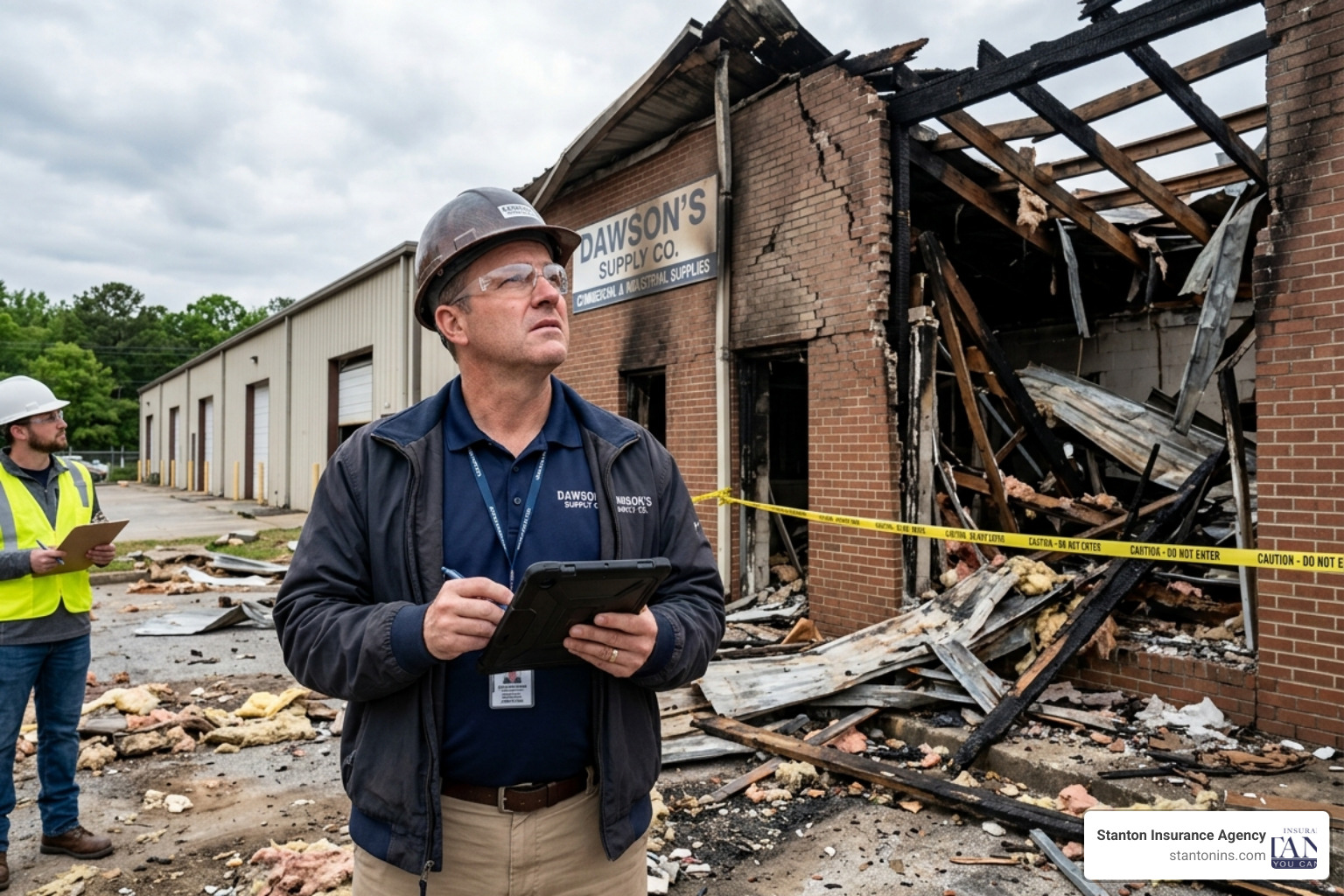
Think of this as protection for your “stuff.” It covers your physical property, specialized equipment, outdoor signage, and inventory against perils like fire, windstorms, and theft. For businesses in the Northeast, this often includes coverage for damage caused by heavy snow loads or burst pipes during a deep freeze.
Home-Based Business Insurance
Many owners in MA and NH assume their homeowner’s policy covers their business. Usually, it doesn’t. You often need a rider or a separate policy to cover business equipment and inventory kept at home, as well as liability for clients who might visit your home office.
Product Liability Insurance
If you manufacture, wholesale, or retail physical goods, you need this. It protects you if a defective product causes bodily injury or property damage to a consumer. This is vital for maintaining your reputation and financial stability if a product recall or lawsuit occurs.
Vehicle Insurance
If you use vehicles for work—whether it’s a single van or a fleet—personal auto insurance won’t cut it. Commercial vehicle insurance covers damage, injuries, and cargo loss during business operations. It is designed to handle the higher liability limits often required for business use and meets specific state requirements in Massachusetts and New Hampshire.
Business Interruption Insurance
If a fire forces you to close your retail store or manufacturing facility for a month, how do you pay the bills? This insurance replaces lost income and covers operating expenses, such as rent and payroll, while your physical location is being repaired. It can be the difference between reopening your doors and going out of business permanently.
Specialized Commercial Insurance Policies
Beyond the basics, specialized policies address modern and specific threats that standard plans might overlook.
Workers’ Compensation Insurance
In both Massachusetts and New Hampshire, this is generally a legal requirement if you have employees, even if they are part-time. It provides medical expenses, rehabilitation, and lost wages for workers injured on the job. In MA, the Department of Industrial Accidents (DIA) oversees this, while in NH, it is managed by the Department of Labor. Failing to carry this coverage can lead to massive fines and legal penalties.
Cyber Insurance
Data breaches are a massive threat to small businesses today. Cyber insurance helps cover legal fees, notification costs for customers, and data recovery efforts after a hack or ransomware attack. As more businesses move their operations online, this coverage has transitioned from “optional” to “essential” for protecting sensitive customer data.
Management Liability Insurance (D&O)
Directors and Officers (D&O) insurance protects the leaders of a company from allegations of “wrongful actions.” This covers legal fees and settlements if leadership is sued for their management decisions, such as breach of fiduciary duty or mismanagement of funds. It is crucial for attracting and retaining high-quality board members.
Errors and Omissions Insurance (E&O)
Very similar to professional liability, E&O is common for real estate agents, accountants, and legal professionals. It protects against claims of inadequate work or negligent actions. Even if a claim is groundless, the cost of proving your innocence in court can be staggering without E&O coverage.
Crime Coverage
Unfortunately, internal and external theft happens. Crime coverage protects your business against employee theft, third-party robbery of money or securities, and property damage during a crime. This is particularly important for businesses that handle large amounts of cash or high-value inventory.
Factors Affecting Commercial Insurance Costs
Your premium—the amount you pay for coverage—isn’t a random number. Several factors influence the cost, and understanding them can help you manage your budget more effectively:
- Company Type: A high-risk industry like roofing or tree removal costs more to insure than a florist or a bookstore due to the higher likelihood of accidents.
- Number of Employees: More people usually means a higher risk of injury or employment claims, which increases your Workers’ Comp and liability premiums.
- Location: Your physical zip code in MA or NH affects rates based on local crime statistics, proximity to fire departments, and weather risks.
- Payroll & Operation Years: Established businesses with stable payrolls and a clean claims history often see lower rates than brand-new startups.
Premiums, Deductibles, and Limits
- Premiums: This is your total cost, which can often be paid upfront or monthly. We work with various carriers to find competitive rates that don’t sacrifice coverage quality.
- Deductibles: This is the amount you are responsible for paying when you file a claim. Choosing a higher deductible can lower your premium, but you must ensure you have the cash on hand if something goes wrong. We can help you find the “sweet spot” between monthly savings and out-of-pocket risk.
- Policy Limits: This is the maximum amount the insurance company will pay out. We help you determine a cap that actually covers your potential losses, ensuring you aren’t underinsured in the event of a total loss.
- Exclusions: No policy covers everything. Exclusions are specific events or causes of loss (like intentional acts or certain types of water damage) that the policy will not cover. It is vital to review these with your agent so you aren’t surprised during a claim.
Frequently Asked Questions about Commercial Insurance
What is an example of a commercial insurance plan?
A common example is a Business Owners Policy (BOP). This bundles general liability, property insurance, and business income insurance into one convenient package. It is specifically designed for small to medium-sized businesses and is often more affordable than purchasing each coverage separately.
What makes an insurance commercial?
Insurance is “commercial” when it is designed for a business entity rather than an individual. It is provided by private companies to protect against business-specific risks like professional errors, fleet accidents, and workplace injuries. Unlike personal insurance, commercial policies often have higher limits and more complex terms to account for the scale of business operations.
What are the most common types of commercial insurance?
For most small businesses in our area, the “big three” are General Liability, Commercial Property, and Workers’ Compensation. These provide a solid baseline of protection against the most frequent risks encountered in the Massachusetts and New Hampshire business environments.
What is the difference between occurrence and claims-made policies?
An occurrence policy covers claims for incidents that happen during the policy period, regardless of when the claim is filed. A claims-made policy only covers claims if both the incident and the claim occur while the policy is active. Understanding this distinction is crucial when switching providers or retiring from a business.
Conclusion
Understanding what is commercial insurance is the first step toward securing your legacy. Whether you are just starting out or have been a staple in your community for decades, having the right protection is non-negotiable. At Stanton Insurance Agency, we pride ourselves on providing trusted protection for your most valuable assets. We are a local business, just like you, and we are committed to exceeding your expectations.
Don’t leave your hard work to chance. Contact us today at https://stantonins.com/ to discuss a customized plan that fits your unique needs.