
Why Your Rental Needs Specialized Protection
If you need a landlord insurance agency to protect your rental properties, the right agency will help you secure three vital pillars of protection:
- Dwelling Coverage: Protects the physical structure of your rental home, condo, or multi-family building from fire, storms, and sudden water damage.
- Premises Liability: Covers your legal defense and medical payouts if a tenant or guest is injured on your property.
- Loss of Rental Income: Reimburses your lost rent while the building is being rebuilt or repaired after a covered disaster.
To get the best rates, work with an independent landlord insurance agency that can shop your policy across multiple A-rated carriers rather than relying on a single brand.
Renting out a property is a great way to build wealth in 2026. However, it also comes with big financial risks that standard homeowners policies simply do not cover.
If you try to use a standard homeowners policy for a tenant-occupied property, your insurance carrier will likely deny your claim when disaster strikes. That is because tenant occupancy introduces entirely different risks, from liability claims to lost rental revenue.
My name is Geoff Stanton, and as the President of Stanton Insurance in Waltham, Massachusetts, I have spent over two decades helping property owners navigate the complex world of commercial and residential real estate coverage. As a Certified Insurance Counselor (CIC) and a fourth-generation owner, I use my deep experience as a specialist at our landlord insurance agency to design custom portfolios that keep your investments safe and your cash flow steady.
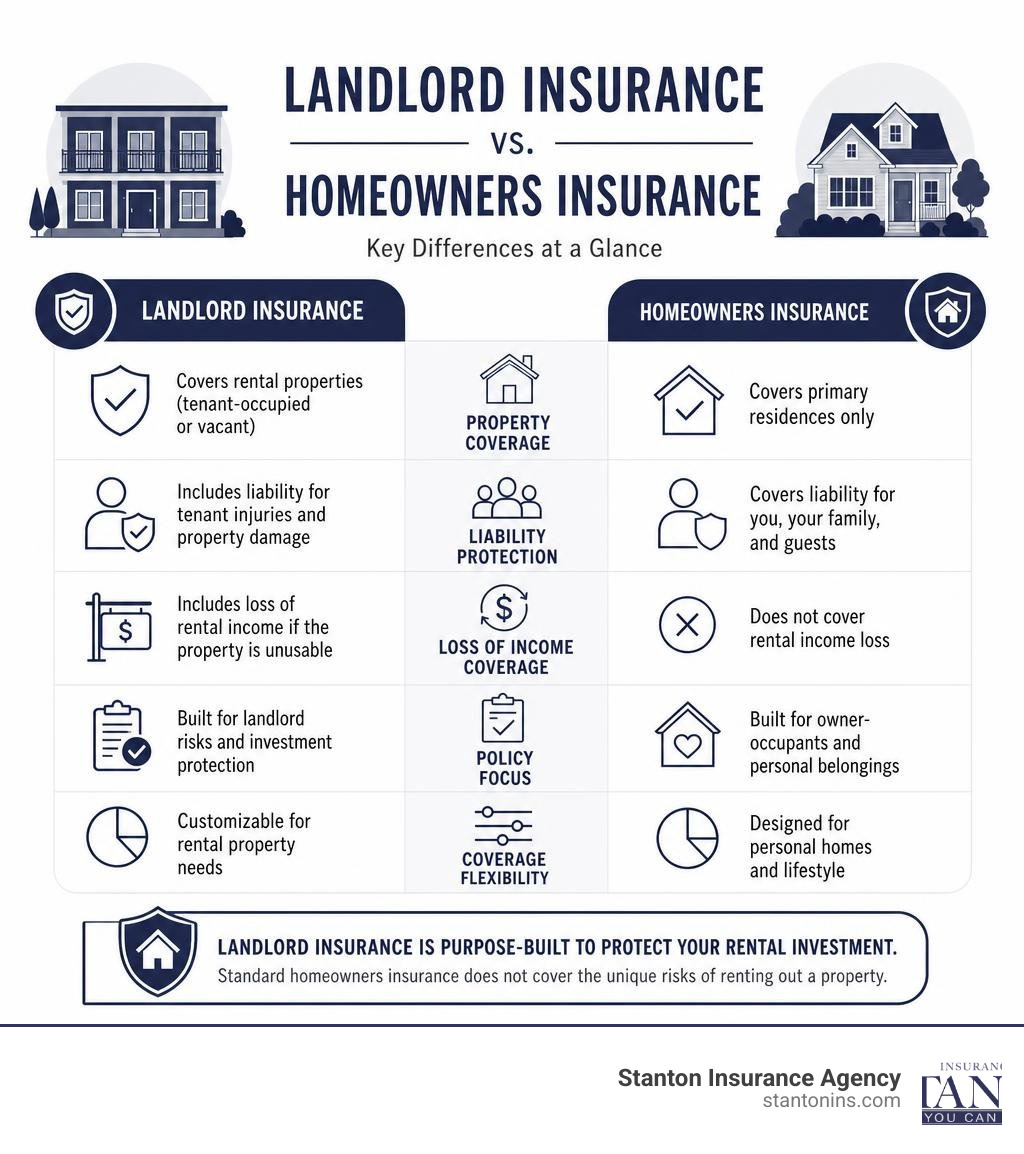
Basic landlord insurance agency terms:
Why You Need a Dedicated Landlord Insurance Agency

When you transition a property from owner-occupied to renter-occupied, your risk profile completely changes. A standard homeowners policy requires the owner to live in the home. The moment you hand over the keys to a tenant, that policy is essentially void for any rental-related losses.
A dedicated landlord insurance agency understands these occupancy requirements. We know that as a landlord, you are running a business. Your policy needs to protect not just the physical structure, but also your business liability and your rental income stream.
If a severe winter storm causes a pipe to burst, making your multi-family home in Massachusetts temporarily uninhabitable, who pays for your lost cash flow while the building is undergoing repairs? A homeowners policy certainly won’t. But a tailored policy from a specialized agency will include loss of rental income protection, keeping your mortgage payments on track even when the rent checks stop coming. To truly understand how these policies protect your business, read through our Insurance for Landlords Complete Guide.
How a Landlord Insurance Agency Evaluates Your Rental Property
When we look at a rental property in Massachusetts or New Hampshire, we don’t just see a building; we see a unique set of risk variables. Understanding these variables is key to getting accurate coverage.
Our evaluation process focuses on several critical factors:
- Property Valuation: Calculating the true replacement cost of the building, which is often very different from its market value.
- Building Age and Systems: Older New England properties with outdated knob-and-tube wiring, historical plumbing, or aging roofs present higher risk profiles.
- Construction Materials: Brick, wood frame, and specialized siding materials all impact fire risk ratings and rebuilding costs.
- Regional Weather Risks: From heavy winter snow loads in New Hampshire to coastal windstorms in Massachusetts, regional weather dictates the types of deductibles and coverages you need.
For an in-depth look at how carriers evaluate these risks to price your policy, check out our resource on The Landlord’s Guide: How Apartment Building Insurance is Rated. Understanding these ratings helps you make smarter choices when reviewing options with your agent. You can also explore how regional risks are evaluated on Landlord’s Insurance – Learn About Landlord Coverage.
Selecting the Right Landlord Insurance Agency for Your Portfolio
If you own multiple properties or plan to scale your real estate portfolio, working with a captive agent who only sells one brand is a major bottleneck. You need an independent landlord insurance agency that can shop across dozens of A-rated regional and national carriers.
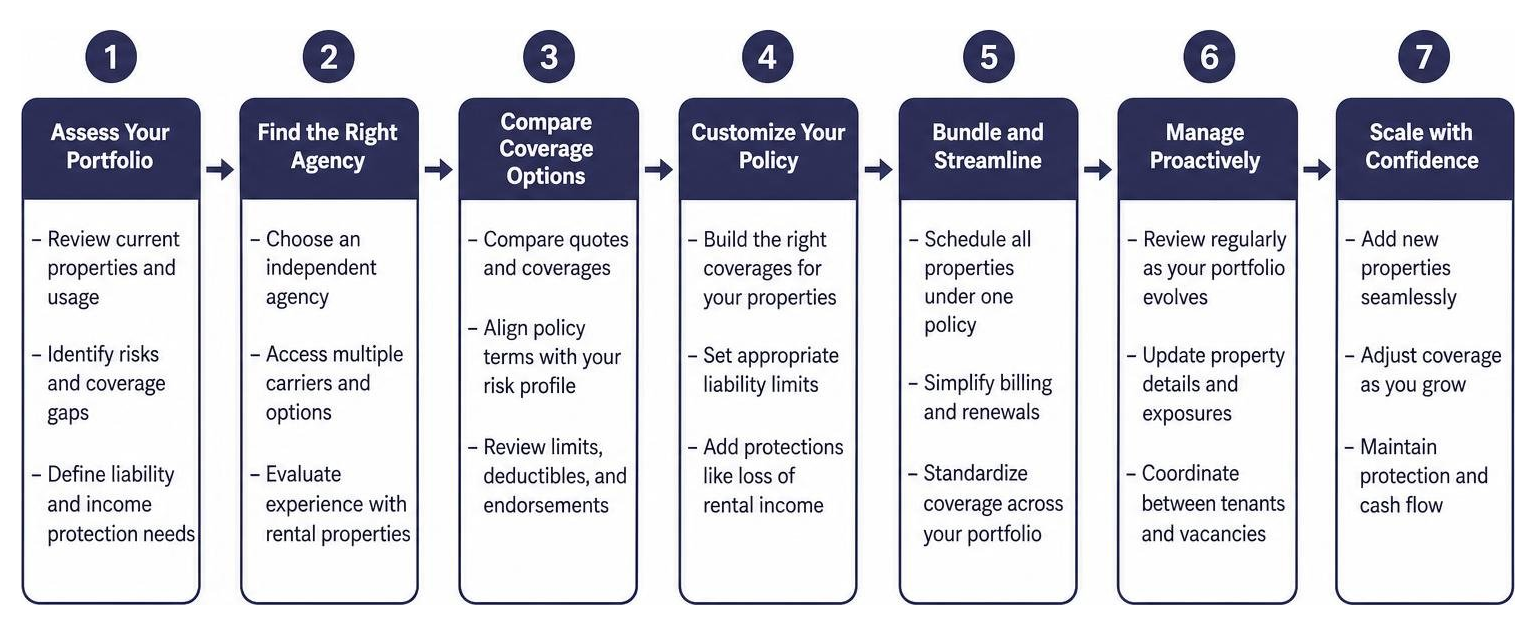
An independent agency can bundle your properties under a single scheduled billing cycle, customize liability limits across your entire portfolio, and seamlessly transition properties to vacant status between tenants without canceling and rewriting your policies. To learn how to identify the best insurance ally for your business, read our guide on Broker or Bust: How to Pick the Perfect Landlord Insurance Partner.
Core Coverages and Policy Types for Rental Properties
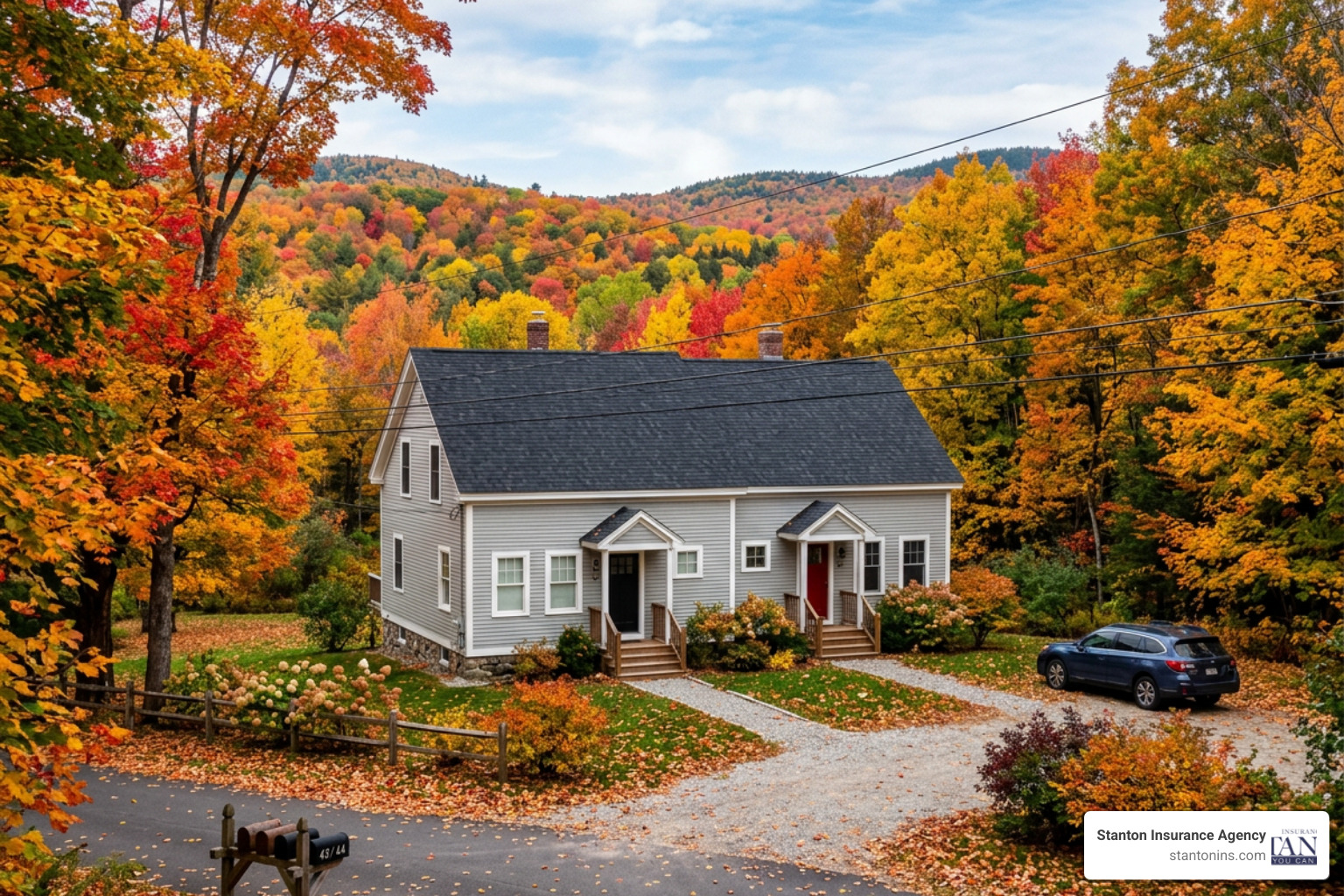
Whether you own a single-family home in Nashua or a multi-family brick building in Worcester, you must choose the right policy form. Most landlord policies are structured as Dwelling Fire (DP) policies, with DP-1 and DP-3 being the most common.
To protect your assets, you need to understand the fundamental differences between these policy forms:
| Policy Feature | DP-1 Policy (Basic Peril) | DP-3 Policy (Open Peril) |
|---|---|---|
| Coverage Scope | Named Perils Only (Only covers specific events listed in the policy, like fire or lightning) | Open Perils (Covers all risks of physical loss unless specifically excluded) |
| Settlement Method | Actual Cash Value (ACV) – Deducts depreciation from your payout | Replacement Cost Value (RCV) – Pays to rebuild without deducting depreciation |
| Vandalism & Malicious Mischief | Typically excluded unless added as an extra endorsement | Commonly included automatically |
| Loss of Rental Income | Often optional or highly restricted | Standard protection included |
For most active rental properties, we strongly recommend a DP-3 policy. It provides the robust protection required to safeguard your equity against unexpected disasters. To learn more about structuring these core coverages, read our detailed breakdown on Residential Landlord Insurance.
In New England, local carriers understand our unique regional risks. For example, Arbella Rental Property Insurance offers tailored packages specifically designed for Massachusetts landlords. Additionally, you can review state-specific guidelines via Landlord Insurance in Massachusetts and New Hampshire Landlord Insurance NH, Nashua, Manchester NH to ensure your properties meet all regional standards.
Optional Coverages to Safeguard Your Investment
While core coverages protect you against catastrophic fires and standard liability claims, they often leave gaps when it comes to everyday rental headaches. To build a truly bulletproof risk management plan, you should consider several optional endorsements:
- Equipment Breakdown Coverage: Standard property policies exclude mechanical breakdowns. This endorsement covers the repair or replacement of expensive HVAC units, boilers, and water heaters when they suffer sudden electrical or mechanical failures.
- Ordinance or Law Coverage: If an older building is damaged, local building codes in Massachusetts and New Hampshire may require you to upgrade undamaged portions of the structure (such as electrical wiring or handicap accessibility) during repairs. This coverage pays for those mandatory, expensive code upgrades.
- Sewer and Water Backup: Protects your property from damage caused by water backing up through sewers, drains, or sump pumps—a very common issue during wet New England springs.
To keep your appliances protected, consider adding Landlord Kitchen Appliance Cover. Furthermore, if you own high-value properties or multiple units, standard liability limits may not be enough to shield your personal assets from a major lawsuit. In those cases, securing Umbrella Policies for Rental Properties is the smartest way to add an extra layer of multi-million-dollar liability protection.
Frequently Asked Questions About Rental Property Protection
Is landlord insurance legally required in Massachusetts and New Hampshire?
No state law in Massachusetts or New Hampshire mandates that you carry landlord insurance. However, if you have a mortgage or any type of financing on the property, your lender will absolutely require a valid landlord policy before funding the loan.
Even if you own the property free and clear, going uninsured is an enormous financial risk. A single slip-and-fall lawsuit or a localized fire can wipe out your entire real estate investment and threaten your personal financial security. To learn more about why this protection is a non-negotiable part of smart property management, see our guide on Safeguarding Your Investment: A Landlord’s Guide to Building Insurance.
Does landlord insurance cover tenant-caused damage and belongings?
Standard landlord insurance covers accidental damage caused by a tenant (such as an accidental kitchen fire). However, it does not cover normal wear and tear, intentional damage, or neglect.
Additionally, your policy does not cover your tenant’s personal belongings. If a pipe bursts and ruins their furniture, their own renters insurance policy must cover that loss. As a best practice, we strongly advise landlords to require all tenants to carry renters insurance as a condition of their lease. For tips on managing these tenant dynamics without losing your sanity, read The Ultimate Guide to Insuring Your Rental Property Without Losing Your Mind.
How can landlords lower their annual insurance premiums in 2026?
There are several highly effective ways to lower your premiums without cutting vital coverages:
- Install Protective Systems: Equipping your rentals with hardwired smoke detectors, deadbolts, and security systems often earns you immediate premium discounts.
- Bundle Your Policies: Placing your landlord, primary home, auto, or commercial policies with the same carrier can yield substantial multi-policy savings.
- Screen Tenants Rigorously: Some specialty insurers offer discounts if you utilize professional tenant screening services, as reliable tenants reduce the likelihood of claims.
- Increase Your Deductibles: Choosing a higher deductible shifts some of the minor risk to you but can dramatically lower your ongoing monthly or annual premium costs.
For more practical strategies on keeping your overhead low, check out our tips on securing Affordable Rental Property Insurance.
Conclusion
Your rental properties represent years of hard work, strategic planning, and significant financial investment. Protecting those assets requires more than an off-the-shelf insurance policy. It requires a relationship with a trusted, independent landlord insurance agency that understands the unique regulatory and weather landscapes of Massachusetts and New Hampshire in 2026.
At Stanton Insurance Agency, we specialize in helping property owners design comprehensive, cost-effective portfolios that defend against property damage, liability claims, and lost rental income. Let us do the heavy lifting of shopping your coverage so you can focus on growing your business.
Ready to secure your investments? Contact Stanton Insurance Agency today for a customized quote tailored to your portfolio.
