
Why So Many Seniors Are Searching for Affordable Dental and Vision Coverage
Affordable dental and vision insurance for seniors is one of the most common coverage gaps facing retirees today — and for good reason.
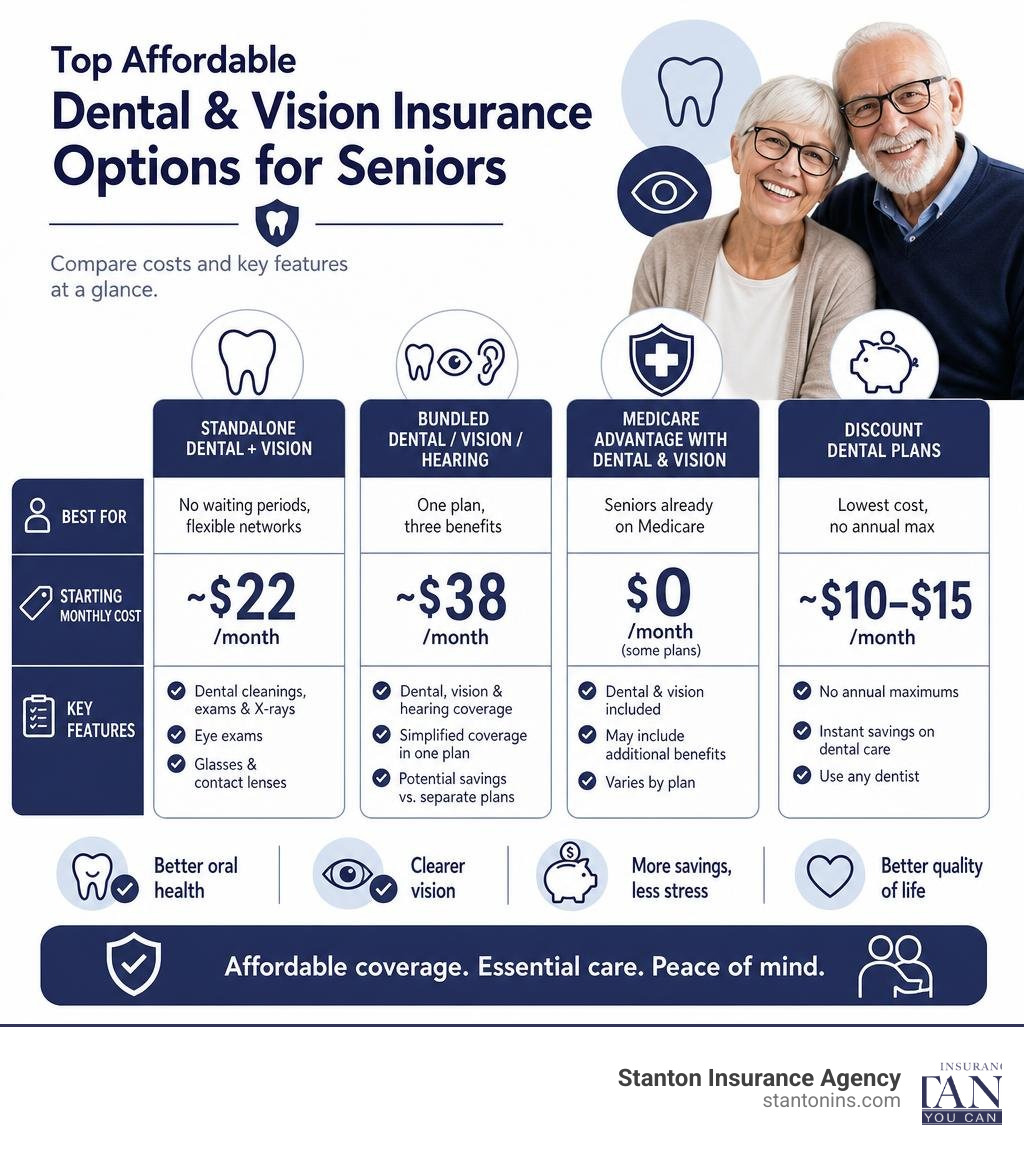
Here are the best options at a glance:
| Plan Type | Best For | Starting Monthly Cost |
|---|---|---|
| Standalone Dental + Vision (e.g., Spirit Dental) | No waiting periods, flexible networks | ~$22/month |
| Bundled Dental/Vision/Hearing (e.g., Cigna DVH) | One plan, three benefits | ~$38/month |
| Medicare Advantage with Dental & Vision | Seniors already on Medicare | $0 (some plans) |
| Discount Dental Plans | Lowest cost, no annual max | ~$10–$15/month |
The numbers paint a sobering picture. According to the CDC, 96% of seniors have had cavities, 20% have untreated tooth decay, and 68% have gum disease. Meanwhile, 65% of Medicare beneficiaries have no dental coverage at all — and 75% of all adults need some form of vision correction.
Yet Original Medicare (Parts A and B) covers almost none of this.
No routine cleanings. No eye exams. No glasses. No dentures. The result? Many seniors on fixed incomes face hundreds — sometimes thousands — of dollars in unexpected out-of-pocket costs every year.
The good news: affordable options do exist. You just need to know where to look.
I’m Geoff Stanton, President of Stanton Insurance Agency in Waltham, Massachusetts, and I’ve spent years helping individuals and families in Massachusetts and New Hampshire navigate their coverage options — including affordable dental and vision insurance for seniors who are transitioning off employer plans or trying to stretch a fixed retirement income. In this guide, I’ll walk you through exactly what to look for so you can make a confident, informed choice.
Why Original Medicare Leaves Seniors with Major Coverage Gaps
Many seniors are surprised to learn that enrolling in Original Medicare (Part A and Part B) does not mean their routine health needs are fully covered. While Medicare is excellent for major medical events, hospitalizations, and doctor visits, it treats dental and vision care as “supplemental” or non-essential.
Medicare Part A (Hospital Insurance) will only pay for dental services if they are an integral part of a covered clinical procedure—such as reconstructing your jaw after an accident. Medicare Part B (Medical Insurance) operates under strict exclusion rules: it does not cover routine cleanings, fillings, extractions, dentures, routine eye exams, or eyeglasses. This exclusion leaves a massive financial gap for retirees.

The Reality of Out-of-Pocket Costs for Older Adults
When you no longer have employer-sponsored dental or vision coverage, the bills for basic maintenance can pile up rapidly. With 20% of older adults living with untreated tooth decay and 68% experiencing gum disease, skipping the dentist is not a safe option. Poor oral health is directly linked to systemic conditions like cardiovascular disease and diabetes—issues that become increasingly common as we age.
Without a quality plan, the out-of-pocket costs for common procedures in 2026 can be eye-watering:
- Routine Cleanings and Exams: $150 to $300 per visit.
- Periodontal Scaling and Root Planing: $210 to $330 per quadrant.
- Crowns: $900 to $1,500 per tooth.
- Removable Dentures: $1,050 to $2,500 per arch.
For seniors living in Massachusetts, navigating these costs requires looking at localized solutions. The Health & Dental Insurance Carriers – Massachusetts Health Connector program provides access to individual dental carriers, while specialized regional plans like the Delta Dental Individual and Family PPO Value for Seniors offer tailored networks and cost structures designed specifically for MA retirees.
Finding Affordable Dental and Vision Insurance for Seniors to Fill the Gaps
Because oral and vision health are so critical to your overall well-being, finding supplemental private insurance is often the smartest financial move. A dedicated policy turns unpredictable, high-cost medical bills into a predictable monthly premium.
By paying a manageable monthly fee, you unlock wellness benefits that cover preventive exams at 100%, while significantly lowering your share of the bill for vision correction, fillings, and major restorative work.
Comparing Standalone Policies vs. Medicare Advantage Bundles
When shopping for affordable dental and vision insurance for seniors, you will generally choose between two pathways: purchasing a standalone private policy or enrolling in a Medicare Advantage (Part C) plan that bundles these benefits.
| Feature | Standalone Dental & Vision Policies | Medicare Advantage Bundles (Part C) |
|---|---|---|
| Provider Network | Typically larger, dedicated networks with more specialist options | Often restricted to HMO or PPO networks managed by the plan |
| Coverage Limits | Higher annual maximums dedicated solely to dental or vision care | Shared limits or lower caps integrated into overall health benefits |
| Plan Flexibility | High; can keep the policy even if you change your primary medical plan | Low; benefits are tied directly to your specific Medicare Advantage plan |
| Out-of-Network Care | Often allowed (especially with PPOs), though at a higher cost share | Frequently not covered, or requires high out-of-pocket copays |
How Standalone Affordable Dental and Vision Insurance for Seniors Works
Standalone policies are dedicated insurance products purchased directly from private insurers. You pay a monthly premium specifically for dental and vision benefits. These plans typically feature an annual maximum (the most the plan will pay for your care in a year, often between $1,000 and $3,000) and a deductible (usually around $50 to $100).
Some policies require waiting periods of 6 to 12 months before they will cover major procedures like bridges or dentures. However, many carriers offer prior coverage waivers if you can prove you recently transitioned from a continuous employer plan.
If you live in New Hampshire, you have excellent local standalone options to choose from. You can explore the New Hampshire Dental Insurance: 2026 Guide – Healthinsurance.org to see how local regulations shape your choices. Additionally, carriers like Anthem offer dedicated Individual Dental Insurance Plans in New Hampshire | Anthem policies, and Humana provides robust regional alternatives through Dental plans available in New Hampshire – Humana.
Medicare Advantage and Supplemental Riders
Medicare Advantage plans (Medicare Part C) are an alternative to Original Medicare. As of 2025 and continuing into 2026, roughly 97% of Medicare Advantage plans offer some form of coverage for dental, vision, and hearing care. These plans often feature $0 monthly medical premiums and include routine preventative care.
However, for comprehensive coverage, many Medicare Advantage plans require you to add an optional supplemental rider. For example, the AARP Medicare Advantage Essentials from UHC provides routine preventive care, but allows members to add a comprehensive dental rider for an additional monthly fee to access higher annual maximums.
Other specialized options, such as the AARP Medicare Advantage Patriot No Rx TC-MA01 (HMO-POS), are designed for veterans or those who receive drug coverage elsewhere, offering significant dental allowances and Part B premium givebacks in Massachusetts.
Choosing the Right Plan: PPOs, HMOs, and Discount Programs
Understanding how insurance networks operate is key to keeping your costs low.

- Dental PPOs (Preferred Provider Organizations): These plans offer the greatest flexibility. You can see any licensed dentist, though you will save the most money by staying within the network. PPOs are ideal if you have a trusted family dentist you want to keep seeing.
- Dental HMOs (Health Maintenance Organizations): DHMOs require you to choose a single primary care dentist from a restricted network. You must get referrals for specialists, and out-of-network care is generally not covered. The trade-off is lower monthly premiums and no annual maximum limits.
- Discount Dental Plans: These are not insurance policies. Instead, you pay an annual or monthly membership fee to access a network of dentists who have agreed to provide services at pre-negotiated, discounted rates (often 20% to 40% off). There are no claim forms, deductibles, or waiting periods.
Key Factors to Evaluate When Shopping for Affordable Dental and Vision Insurance for Seniors
Before signing up for any policy, make sure you evaluate these essential details to avoid unpleasant surprises at the doctor’s office:
- Network Size and Accessibility: Ensure your preferred local dentists and optometrists are in-network. If you live on the border of Massachusetts and New Hampshire, verify that your plan covers providers in both states.
- Waiting Periods vs. Immediate Needs: If you need a root canal or crown next week, look for plans like Spirit Dental that advertise no waiting periods, or check if you qualify for a waiver based on prior coverage.
- Bundling Savings: Some carriers offer comprehensive bundles that combine dental, vision, and hearing (DVH) coverage under a single premium. For example, the Cigna Dental Vision Hearing 2000 Insurance Plan | Cigna Healthcare bundles these three essential services into one convenient package, saving you the hassle of managing multiple policies. You can also explore general Affordable Dental Insurance Plans for Individuals – Cigna Healthcare options to compare standalone dental benefits.
- Specialized Senior Benefits: Look for plans designed specifically to fill Medicare gaps, such as those modeled after the Dental & Vision Plans | DentalVision Silver | Farm Bureau Health Plans, which offer coordinated dental and vision benefits tailored specifically for Medicare-eligible individuals.
Frequently Asked Questions About Senior Dental and Vision Coverage
Does Medicare cover routine dental exams and eyeglasses?
No. Original Medicare (Part A and Part B) does not cover routine dental exams, cleanings, fillings, dentures, routine eye exams, or eyeglasses. The only exception for vision is if you undergo cataract surgery; in that case, Medicare will cover one pair of corrective lenses or glasses from an approved supplier.
What is the average monthly cost for senior dental and vision plans?
For standalone dental and vision plans, premiums typically range from $20 to $50 per month per person, depending on the level of coverage and your location in MA or NH. Bundled dental, vision, and hearing policies generally cost between $35 and $55 per month.
Are there waiting periods for major dental procedures like dentures?
Yes, many traditional dental policies impose a 6- to 12-month waiting period for major restorative procedures like crowns, bridges, and dentures. To bypass this, look for “no-waiting-period” plans, consider a dental discount card, or check if your new policy will waive the waiting period because you recently had employer-sponsored dental insurance.
Conclusion
Your retirement years should be spent enjoying your favorite activities, not stressing over the cost of a dental crown or a new pair of reading glasses. Finding affordable dental and vision insurance for seniors is one of the most effective ways to protect both your physical health and your retirement savings.
At Stanton Insurance Agency, we are dedicated to helping our neighbors in Massachusetts and New Hampshire secure the trusted protection they deserve for all of life’s transitions. Whether you are looking to understand your options, protect your hard-earned assets, or need help estimating your overall healthcare costs, we are here to provide personalized, friendly service.
To learn more about managing your healthcare expenses in retirement, check out our comprehensive personal health insurance cost guide, or contact us today to find a plan that keeps you smiling.