Ordinance or law coverage can help address certain increased costs created when a covered property loss triggers enforcement of current building codes or ordinances. It is not a blanket promise to pay for every upgrade. The trigger, covered cause of loss, limits, exclusions, valuation, and specific coverage parts depend on the policy.
Why ordinary property coverage may leave a gap
A building can contain older materials or systems that were lawful when installed. After a covered loss, the authority having jurisdiction may require parts of the repair or reconstruction to comply with current rules. Standard property coverage may limit or exclude costs arising solely from enforcement unless ordinance or law coverage applies.
Use three cost buckets to review the exposure
| Scenario bucket | Example question | Policy review |
|---|---|---|
| Undamaged portion | If code enforcement requires demolition of an undamaged section, is its value addressed? | Limit, trigger, valuation, and exclusions for the undamaged part |
| Demolition and debris | Does the endorsement address the cost to demolish and clear an affected undamaged section? | Separate or shared limits and covered expenses |
| Increased construction cost | Which additional work is required solely to meet current code? | Eligible upgrades, limit, waiting or time conditions, and documentation |
Names and structures vary by insurer and form. The three-bucket model is a conversation tool, not a statement that a particular policy includes all three.
A hypothetical commercial loss
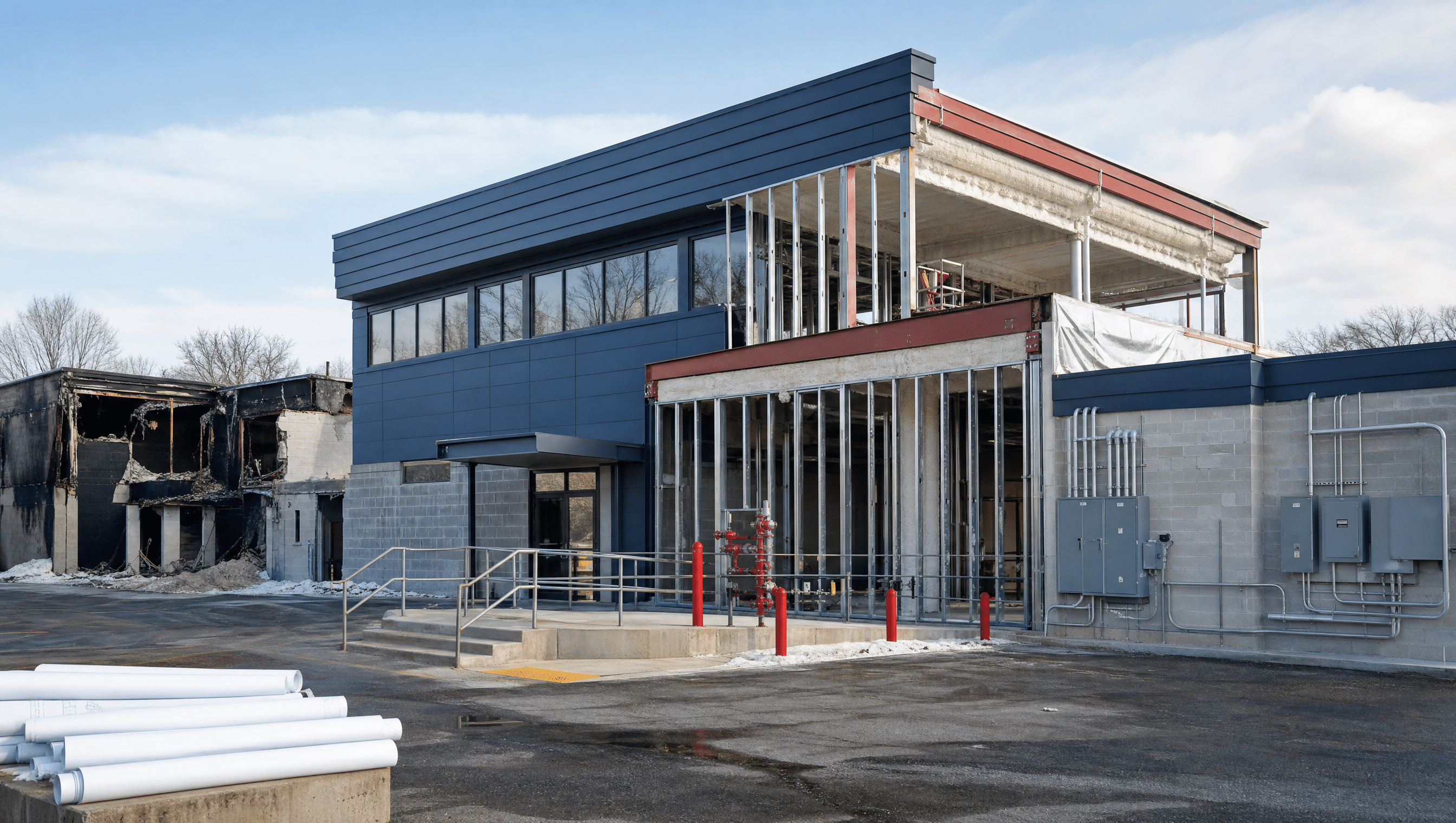
Suppose a covered fire damages one part of an older mixed-use building. The code official requires additional work during reconstruction and may require removal of an adjoining section that was not directly burned. The owner could face damaged-property repair, undamaged-section value, demolition, debris handling, and increased construction costs.
Which costs are covered depends on the cause of loss, policy form, endorsements, limits, valuation, code action, and claim facts. The example should prompt a review before a loss, not predict a claim outcome.
Property facts that influence the exposure
- Building age and renovation history
- Occupancy and any change in use
- Electrical, plumbing, mechanical, fire-protection, and accessibility conditions
- Construction type and shared walls
- Historic or local-district requirements
- Permits and records for past work
- Tenant improvements and responsibility under leases
- Time needed for design, review, permits, and reconstruction
Questions for the insurance review
- What event must occur before ordinance or law coverage can respond?
- Which building and locations are scheduled?
- Are coverage parts separate, combined, or subject to one aggregate limit?
- How do property valuation and coinsurance provisions interact?
- Are demolition, debris, increased construction, and loss of income coordinated?
- What exclusions or sublimits matter?
- What records would support a claim?
- Have additions, use changes, or tenant improvements changed the exposure?
Stanton Insurance provides business insurance guidance in Massachusetts. Ordinance or law coverage is contract-specific, so review the actual declarations, forms, endorsements, limits, and current building information with a licensed insurance professional.