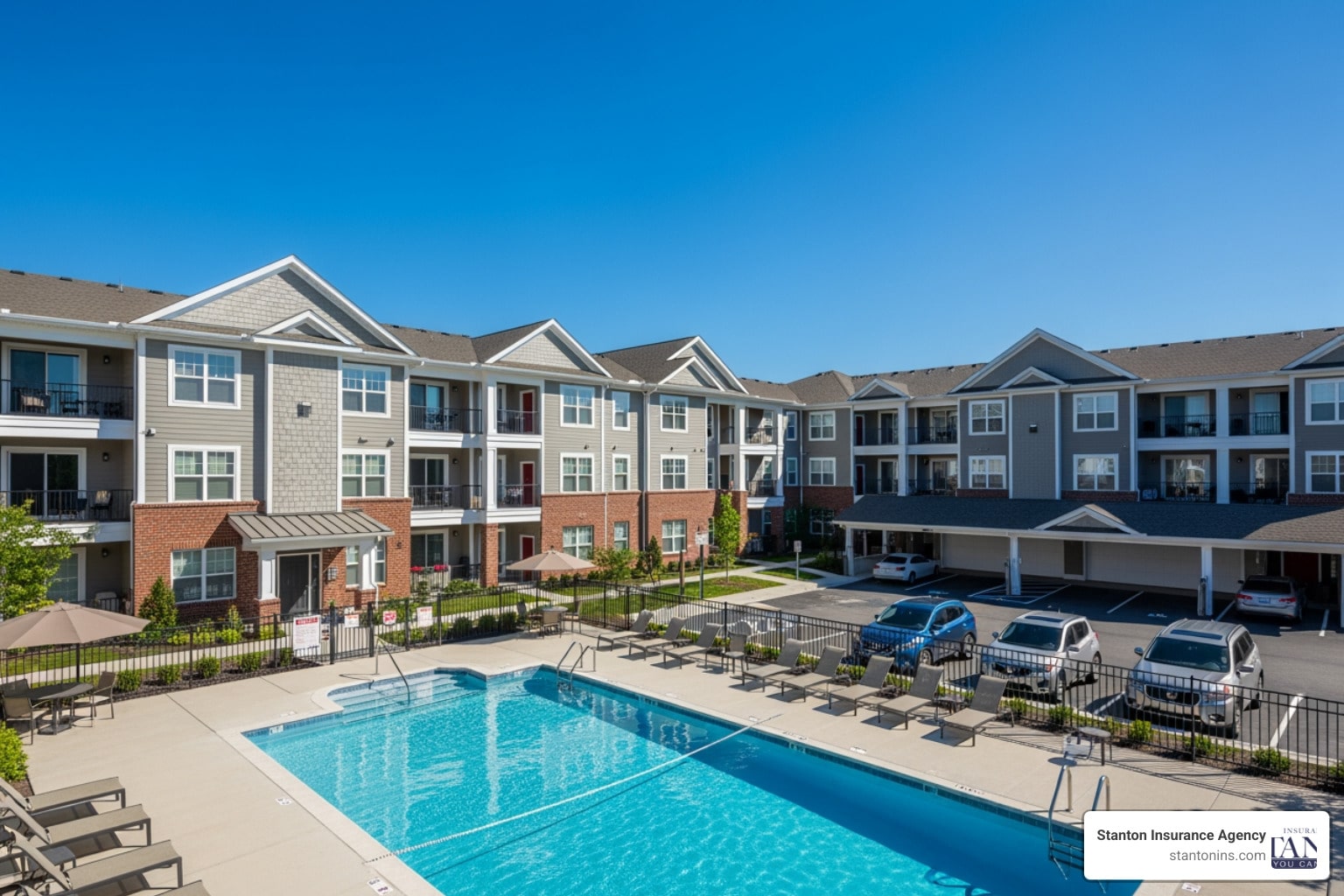
What a Condo Master Policy Actually Covers (And Why It Matters)
A condo master policy is the insurance policy held by a condominium association that covers the building’s shared structure and common areas — but it does not cover everything inside your individual unit.
Here is a quick breakdown of what it includes and what it does not:
| Condo Master Policy | Your Individual HO-6 Policy | |
|---|---|---|
| Building exterior & roof | Yes | No |
| Common areas (lobbies, pools, hallways) | Yes | No |
| General liability for shared spaces | Yes | No |
| Interior walls, floors, fixtures | Depends on policy type | Usually yes |
| Personal belongings | No | Yes |
| Personal liability inside your unit | No | Yes |
| Unit improvements and upgrades | No | Yes |
Understanding this split is essential for every condo owner and board member. Without the right coverage on both sides, a single event — a fire, a burst pipe, a slip-and-fall in the lobby — can leave someone with a serious financial gap.
Condo living means shared responsibility. The building you live in is partly yours and partly everyone else’s. That shared ownership is exactly what makes insurance more complicated than a standard homeowners policy. The master policy protects the collective. Your individual policy protects you.
I’m Geoff Stanton, President of Stanton Insurance in Waltham, Massachusetts, and over more than two decades in the industry I’ve helped countless condo associations and unit owners navigate the often confusing world of the condo master policy. In this guide, I’ll walk you through everything you need to know — from what the master policy covers, to Fannie Mae requirements, to why your HO-6 policy is still non-negotiable.
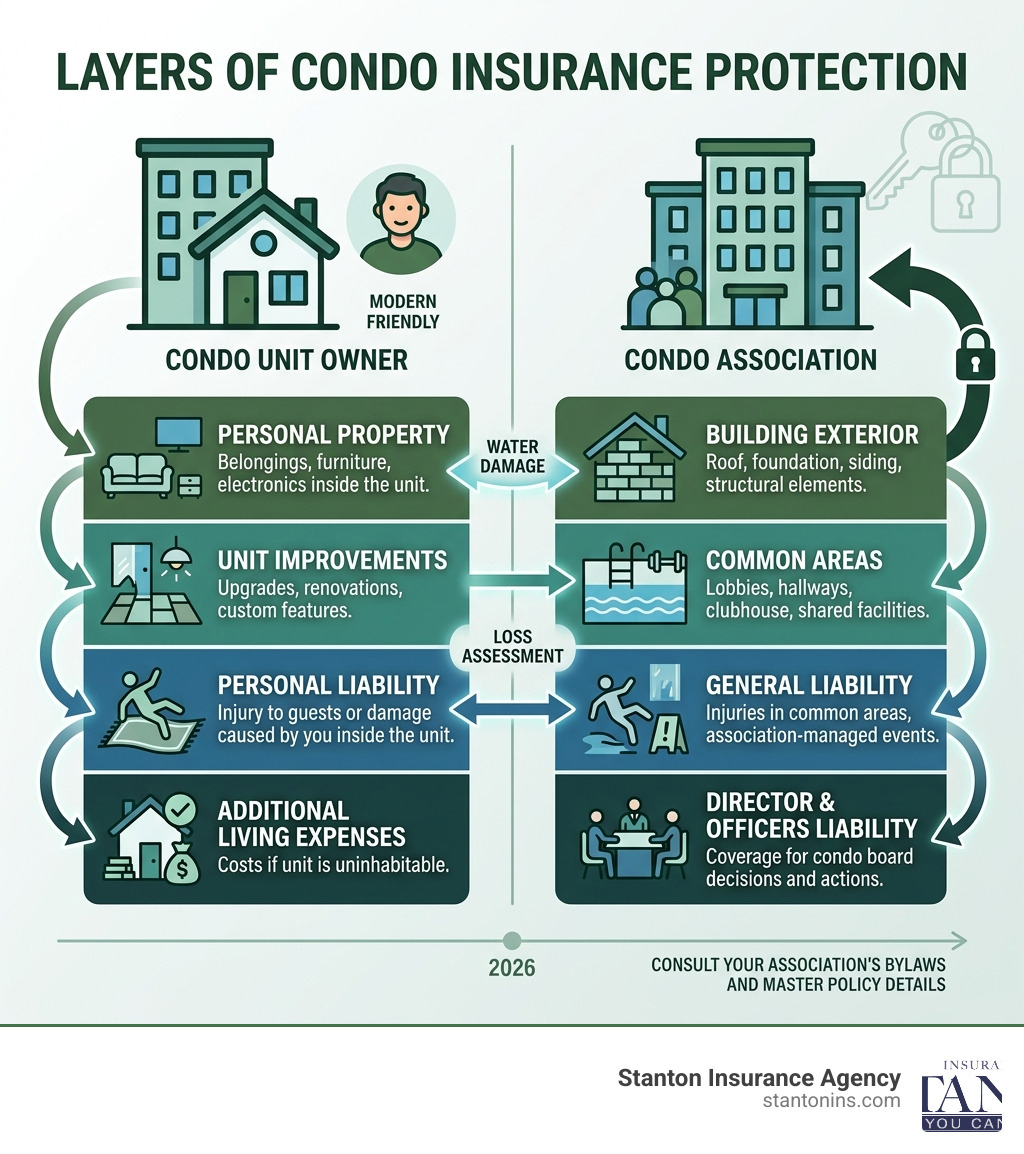
Condo master policy glossary:
What is a Condo Master Policy and What Does it Cover?
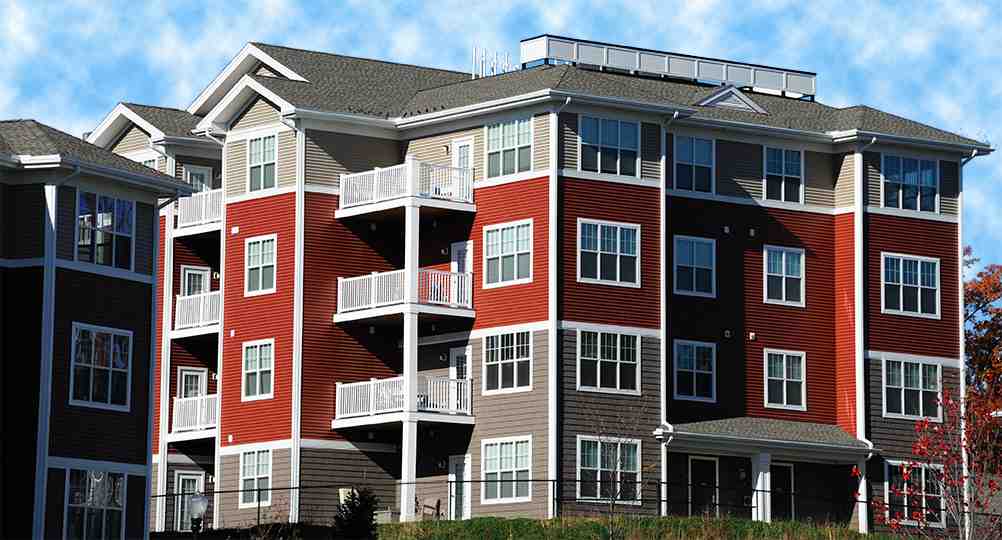
At its core, a condo master policy (also known as a master property insurance policy) is the collective shield for a condominium association. It is purchased by the Homeowners Association (HOA) or Board of Trustees to protect the physical assets that all unit owners own together.
When we talk about “common elements,” we aren’t just talking about the grass in the courtyard. In Massachusetts and New Hampshire, this typically includes the building’s roof, the exterior siding, the framing, and the foundation. It also extends to shared amenities like lobbies, elevators, fitness centers, hallways, and swimming pools. If a fire breaks out in the communal laundry room or a storm rips the siding off the building, the condo master policy is the primary source of funds for repairs.
Beyond physical property, this policy provides critical general liability coverage. Imagine a visitor slips on an icy walkway in front of your Boston brownstone or trips on a loose carpet in a Manchester hallway. If that visitor sues the association for their medical bills and pain and suffering, the master policy’s liability portion kicks in to cover legal defense costs and potential settlements.
Specifically, the Essential Guide to Condo Master Insurance Policies highlights that these policies aim to safeguard the structural integrity of the entire complex. To understand the full scope of what your specific community might need, it’s helpful to review what does condo insurance cover to see how the association’s responsibility stops where yours begins.
Common Areas and Elements Typically Covered:
- Roofs and Exterior Walls: Protection against wind, hail, and fire.
- Shared Mechanicals: HVAC systems, central boilers, and elevators.
- Lobbies and Hallways: Flooring, lighting, and shared furniture.
- Recreational Facilities: Pools, clubhouses, and tennis courts.
- Parking Structures: Underground garages or shared lots.
Understanding the Three Main Types of Condo Master Policy Coverage
Not all master policies are created equal. The level of protection provided to the inside of your unit depends entirely on which of these three types your association has chosen (or is required to have by its bylaws).
- Bare Walls-In: This is the most restrictive type. It covers the basic structure—the roofing, framing, and insulation—but stops at the “studs.” If you have a fire, the association replaces the drywall, but you are responsible for the flooring, the cabinets, the sinks, and the paint.
- Single Entity (Original Specifications): This is very common in New England. It covers everything in the Bare Walls policy plus the fixtures that were originally installed by the developer. If your unit originally came with laminate counters and you upgraded to granite, the policy only pays to put the laminate back. You can learn more about this in the Condo Insurance Explained: Individual vs. Master Policy guide.
- All-In Coverage: This is the “gold standard.” It covers the structure and all permanent fixtures within the unit, including improvements and betterments made by current or previous owners. While it’s more expensive for the association, it provides the most peace of mind for unit owners.
For a deeper dive into these nuances, check out our Condominium Insurance Coverage Guide.
Deductibles and Special Endorsements in a Condo Master Policy
Deductibles on a condo master policy have skyrocketed in recent years. While your personal auto policy might have a $500 deductible, a master policy for a 50-unit building in Massachusetts might have a $10,000, $25,000, or even $50,000 deductible. In coastal areas of New Hampshire, windstorm deductibles are often calculated as a percentage (1% to 5%) of the total building value, which can lead to massive out-of-pocket costs for the association.
To fill the gaps, associations often need special endorsements:
- Building Ordinance and Law: If an older building is damaged, current building codes might require expensive upgrades (like adding a sprinkler system) during the repair. Standard policies don’t cover these extra costs; this endorsement does.
- Boiler and Machinery (Equipment Breakdown): This covers the “sudden and accidental” breakdown of shared boilers, elevators, or electrical panels.
- Inflation Guard: Automatically increases coverage limits to keep up with the rising cost of construction materials in the MA/NH market.
Water damage is one of the most frequent claims we see. We often get asked, does condo insurance cover water damage? The answer usually depends on the source of the water and the specific deductible for ice dams or sewer backups.
Fannie Mae Requirements and Minimum Coverage Standards
If you are buying a condo with a conventional mortgage, your lender is going to scrutinize the association’s condo master policy. Fannie Mae and Freddie Mac have strict guidelines to ensure their investment is protected. If the association doesn’t meet these standards, your loan could be denied.
According to the Master Property Insurance for Condos and PUDs | Homebuyer.com guidelines, here are the non-negotiables:
- 100% Replacement Cost: The policy must cover the full cost to rebuild the structure from scratch. “Actual Cash Value” (which subtracts depreciation) is not acceptable.
- Special Form Coverage: The policy must cover all perils except those specifically excluded. This must include at least 14 mandatory perils, including fire, windstorm, hail, and explosion.
- Maximum Deductibles: Generally, the deductible cannot exceed 5% of the total coverage amount. However, there are exceptions for “per-unit” deductibles if the unit owner’s policy can bridge the gap.
- Specific Endorsements: For condos, the policy must include a “Condominium Association Coverage Form” which ensures the policy is primary and waives the insurer’s right to sue unit owners (waiver of subrogation).
Determining how much condo insurance do I need often starts with understanding what the lender requires the association to carry on your behalf.
Navigating Massachusetts and New Hampshire Condo Bylaws
In Massachusetts and New Hampshire, the “Master Deed” and “Declaration of Trust” are the bibles of your condominium. These legal documents dictate exactly who is responsible for what.
One of the most important clauses to look for is the Waiver of Subrogation. This prevents the association’s insurance company from suing a unit owner if they accidentally start a fire that damages the building. Without this, your personal life savings could be at risk for a building-wide disaster.
Another key role is the Insurance Trustee. In the event of a major loss (usually over a certain dollar threshold), the insurance check is paid to a trustee who ensures the funds are used correctly to rebuild the project according to the original plans.
We often see confusion regarding whether a unit owner needs their own policy. In Massachusetts, the answer is almost always a resounding “yes.” If you’re wondering, do I need home insurance for a condo, the master policy is designed to protect the group, not your personal assets or your specific interior finishes.
Bridging the Gap: Why You Still Need an HO-6 Policy
Even with the best condo master policy in place, you are far from fully protected. Think of the master policy as the shell and your HO-6 (individual condo) policy as the filling.
Here is why the HO-6 is vital:
- Personal Property: The master policy will never pay for your clothes, furniture, electronics, or that expensive Peloton. If your unit is robbed or ruined by a burst pipe, you need your own coverage.
- Loss Assessment: This is the “hidden hero” of condo insurance. If the association has a $50,000 deductible and a fire causes $100,000 in damage, they might “assess” each unit owner $1,000 to cover the gap. Your HO-6 policy can pay this assessment for you.
- Improvements and Betterments: If you spent $40,000 renovating your kitchen in a “Bare Walls” or “Single Entity” building, the master policy won’t cover those upgrades. Your HO-6 policy needs a high enough “Dwelling” limit to cover your investment.
- Unit Liability: If a guest burns themselves on your stove or trips over your dog inside your unit, the master policy will not help you. You need personal liability coverage.
For a complete breakdown of these “walls-in” protections, see our guide on Decoding Your Condo Insurance Policy Everything You Need To Know About Ho6. If you’re budgeting for a move, it’s also worth checking how much is homeowners insurance for a condo to see how affordable this essential protection can be.
Frequently Asked Questions about Condo Master Policies
Who pays the premiums for the master policy and how is it funded?
The condominium association is responsible for purchasing the policy and paying the premiums. These costs are funded collectively by the unit owners through their monthly HOA dues or annual assessments. A portion of every dollar you pay to your association goes directly toward keeping this master policy active.
Does the master policy cover the interior of my individual unit?
This depends on the specific policy type (Bare Walls vs. All-In) and the association’s bylaws. While “All-In” policies may cover original fixtures like cabinets and flooring, most master policies exclude personal belongings and any upgrades you have made to the unit. In “Bare Walls” scenarios, you are responsible for almost everything from the drywall inward.
What should an association do if the master policy excludes required perils?
If a master policy excludes mandatory perils such as windstorm or earthquake in high-risk areas, the association must obtain standalone policies or specific endorsements. Failing to do this can make the units un-mortgageable, effectively tanking the property values for every owner in the complex.
Conclusion
Navigating the complexities of a condo master policy doesn’t have to be a solo mission. At Stanton Insurance Agency, we specialize in helping Massachusetts and New Hampshire residents find the perfect balance between association requirements and personal protection. Whether you are a board member looking to secure a building or a new owner trying to figure out your HO-6 limits, we offer the local expertise and trusted protection you need.
Ready to make sure your home is truly protected? Get a personalized Condo Insurance Quote today and let us help you bridge the gap.