
Why Understanding How Apartment Building Insurance Is Rated Can Save You Thousands
How is an apartment building insurance rated comes down to a combination of property-specific risk factors that insurers weigh to calculate your premium. Here is a quick summary:
| Rating Factor | What Insurers Look At |
|---|---|
| Location | Crime rates, fire protection class, flood zone, coastal exposure |
| Building characteristics | Age, construction type, materials, number of units |
| Property condition | Roof, plumbing, electrical, HVAC systems |
| Claims history | Loss runs from the past 5 years, claim frequency and severity |
| Safety features | Sprinklers, smoke detectors, security cameras, smart sensors |
| Replacement cost | Full rebuild value, not market value |
| Carrier financial strength | A.M. Best rating of the insurer itself |
If you own or manage an apartment building in Massachusetts or New Hampshire, this matters a lot right now. Multifamily insurance premiums have surged 15–30% across the U.S. in recent years. Some owners in the Northeast are paying as much as $180 per unit per month. Without understanding how ratings work, you have no leverage to push back.
I’m Geoff Stanton, President of Stanton Insurance Agency and a Certified Insurance Counselor (CIC) with over two decades of commercial property experience — including helping landlords navigate exactly how apartment building insurance is rated to find the right coverage at a fair price. Let’s break it all down so you can walk into your next renewal fully prepared.
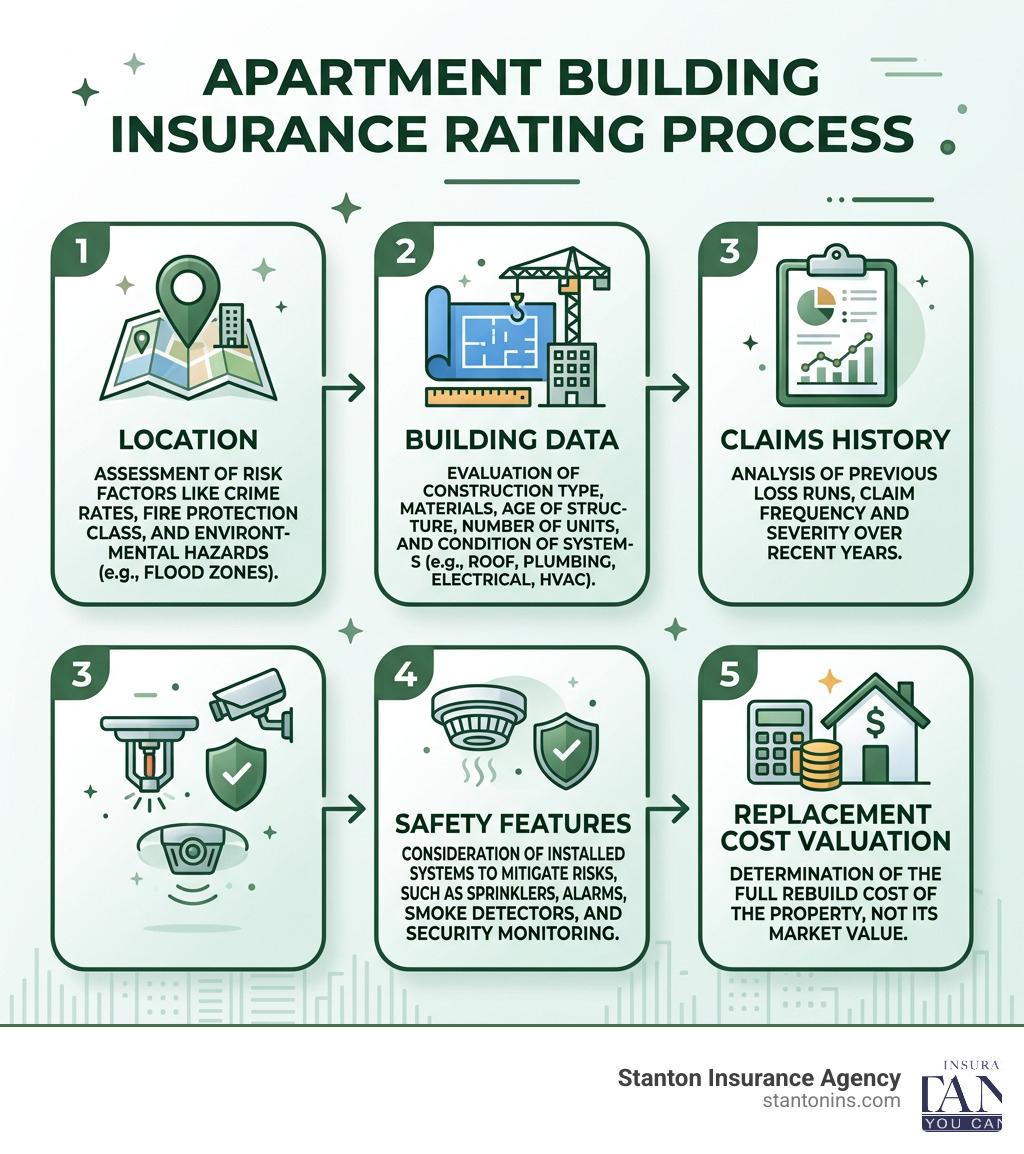
How is an apartment building insurance rated? Key terms explained:
Understanding the Foundation: How is an Apartment Building Insurance Rated by Carriers?
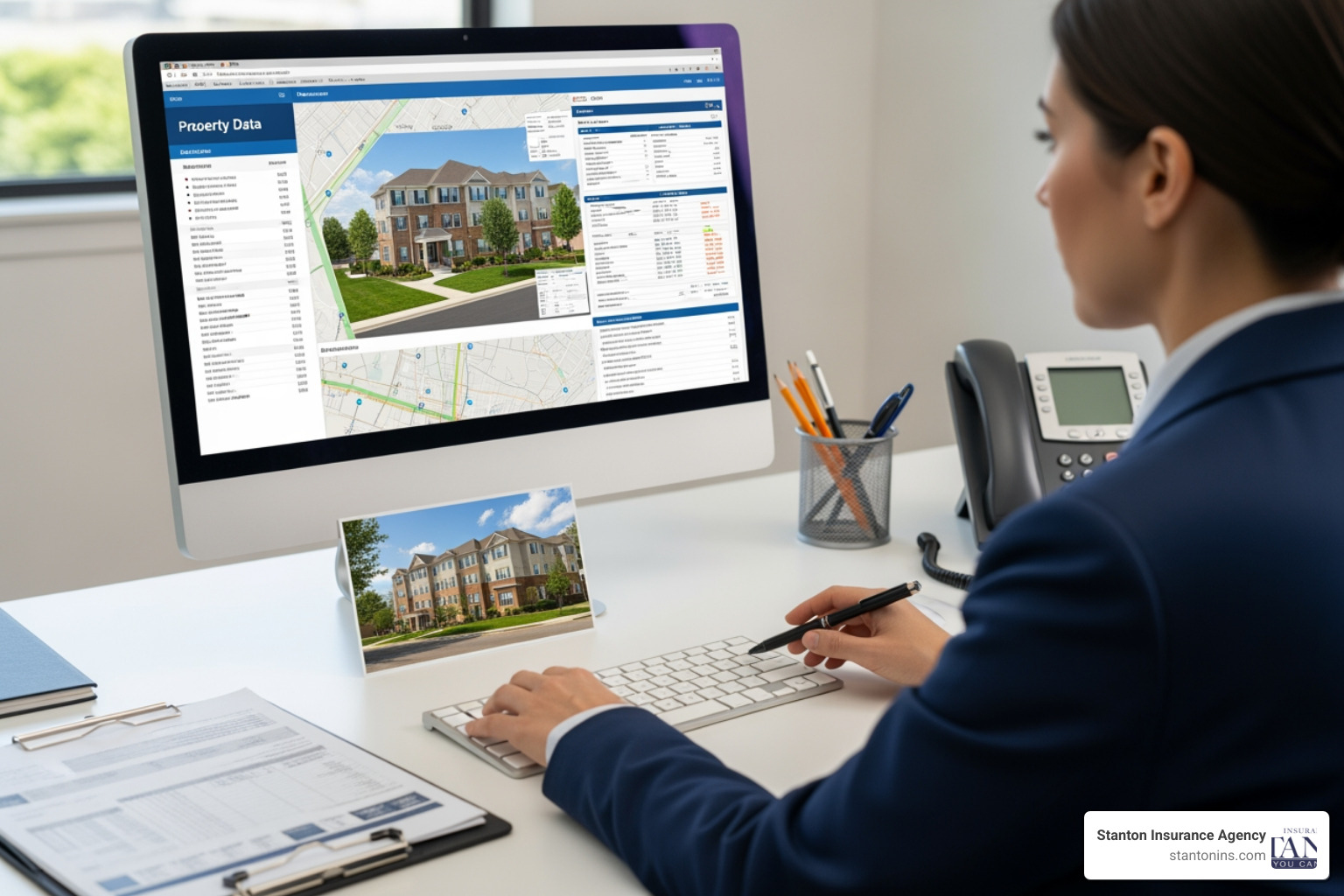
When we talk about how is an apartment building insurance rated, we are really talking about the underwriting process. Underwriters are the “gatekeepers” of the insurance company. Their job is to look at your building and decide two things: first, if they want to insure it at all, and second, what price (the rate) accurately reflects the risk of a future claim.
To keep things consistent across the country, many insurers use ISO classifications. The Insurance Services Office (ISO) provides standardized codes that help underwriters group similar buildings together. For example, a brick-and-mortar high-rise in Manchester, NH, is rated differently than a wood-frame garden-style complex in Worcester, MA.
The “holy grail” of apartment building insurance basics is an acronym called COPE. This is the framework underwriters use to dissect your property.
The COPE Framework for Apartment Ratings
| Factor | Description | Impact on Rating |
|---|---|---|
| Construction | What is the building made of? (Frame, Joisted Masonry, Non-Combustible, etc.) | Wood frames burn faster than steel; masonry usually gets a better rate. |
| Occupancy | Who lives there? Is there a restaurant on the first floor? | Mixed-use properties or student housing often carry higher risk ratings. |
| Protection | How close is the fire hydrant? Does the building have sprinklers? | Better fire protection leads to lower “loss costs” and lower premiums. |
| Exposure | What is next door? A vacant warehouse or a fire station? | External risks like nearby brush or high-hazard businesses affect your score. |
The Role of Financial Strength and Rating Agencies
While you are worried about how the insurance company rates you, we also need to look at how the industry rates them. This is where A.M. Best comes in. A.M. Best is the premier credit rating agency focused solely on the insurance industry.
Most lenders in Massachusetts and New Hampshire require your building to be covered by a carrier with an A.M. Best rating of “A-” or better. This is a “Financial Strength Rating” (FSR) that tells you if the company has enough cash in the bank to pay out a massive claim if a disaster hits.
Secure vs. Vulnerable Categories
A.M. Best grades companies on a scale from A++ (Superior) down to F (In Liquidation).
- Secure Ratings (A++ to B+): These are the carriers we typically recommend. They have a strong financial footing and are likely to be around for the long haul.
- Vulnerable Ratings (B and below): These carriers may offer lower premiums, but they carry a higher risk of insolvency. If they go bust, you might be left without coverage exactly when you need it.
We also distinguish between Admitted and Non-admitted carriers. An admitted carrier is backed by the state’s guarantee fund (like the MA or NH insurance departments). If they fail, the state steps in to help pay claims. Non-admitted carriers (often called Surplus Lines) are more flexible and can insure “tougher” risks, but they don’t have that same state safety net. You can find more about top-rated insurance companies on our carrier resource page.
Key Factors Influencing Your Property’s Risk Profile
When an underwriter looks at your specific building, they aren’t just looking at the address. They are looking at the “bones” of the investment.
Building Age and Systems
Older buildings aren’t necessarily “bad,” but they do require more scrutiny. If your building was built in 1920 but hasn’t had the wiring updated since the 1970s, you’re looking at a much higher risk rating. Underwriters look for the “Big Four” updates:
- Roofing: Most carriers want to see a roof that is less than 20 years old.
- Plumbing: Are the pipes copper, PVC, or old galvanized steel that is prone to leaks?
- Electrical: No more knob-and-tube or aluminum wiring! Federal Pacific breakers are also a major red flag.
- HVAC: Modern, well-maintained systems reduce the risk of fire and water damage.
Replacement Cost Valuation
One of the most common mistakes landlords make is confusing “Market Value” with replacement cost valuation. Your building might sell for $2 million on the open market, but in today’s economy, it might cost $3.5 million to rebuild it from scratch using modern materials and following current building codes.
Insurers rate your building based on this rebuild cost. If you underinsure your property, you could face a “co-insurance penalty,” where the carrier only pays a portion of your claim because you didn’t carry enough coverage. Knowing how much does it cost to insure an apartment building starts with an accurate appraisal.
Environmental and Pollution Risks
Don’t overlook “hidden” risks. Environmental hazards and pollution risks like mold, old oil tanks, or lead paint can lead to massive liability claims. Over 18 million rental units across the country are at risk from environmental factors. In Massachusetts and New Hampshire, this often includes lead paint compliance and aging oil tanks, and underwriters are increasingly factoring this into their rating models.
How is an apartment building insurance rated based on location and crime?
Location is often the single biggest factor in your rate. Insurers divide Massachusetts and New Hampshire into “Rating Territories.”
- Fire Protection Class: This is a score from 1 to 10. A “Class 1” means you are right next to a full-time fire station with plenty of hydrants. A “Class 10” means you are in a rural area with no hydrants nearby. The difference in premium can be thousands of dollars.
- Crime Scores: Insurers use data to track theft, vandalism, and assault in your neighborhood. Even if your building is safe, if the block has a high crime score, your liability rating will go up.
- Water and Weather Risks: Being near the coast in Portsmouth or the South Shore of MA brings windstorm concerns. Conversely, being in a floodplain (a critical check for properties in coastal MA or near NH rivers) is a major rating factor. Standard property insurance excludes flood damage, so you may need specific flood insurance for a multi-family building.
How is an apartment building insurance rated using claims history?
Your “Loss Run” report is essentially your property’s credit score. It shows every claim filed in the last 5 years.
- Frequency vs. Severity: Carriers actually hate frequency more than severity. One $50,000 fire claim caused by a lightning strike is “bad luck.” Five $5,000 water damage claims caused by leaky toilets are “bad management.”
- The $100,000 Threshold: A single large liability claim (like a slip-and-fall) can increase your premiums by 15–30% for several years.
- Water is King: Water damage (often from frozen pipes during New England winters) accounts for roughly 45% of all apartment claims. If you have a history of pipe bursts in your MA or NH property, expect a higher rate or a massive water damage deductible.
We always recommend tips for managing insurance costs such as “claims discipline.” If a tenant breaks a window that costs $600 to fix, pay for it out of pocket rather than filing a claim that will hike your rates for years.
Strategies to Improve Your Rating and Lower Premiums
You aren’t powerless! For property owners across Massachusetts and New Hampshire, there are several ways to “fix” your rating and secure better terms.
- Safety Upgrades: Installing a modern fire sprinkler system or a central-station fire alarm can earn you significant discounts.
- Smart Tech: Properties with smart water sensors and automated shut-off valves are the new favorites of underwriters. These can often qualify you for 5–15% discounts.
- Deductible Optimization: If you have the cash reserves, raising your deductible from $2,500 to $10,000 can slash your premium. Use our apartment building insurance calculator to see how different deductibles affect your bottom line.
- Professional Management: Carriers love seeing a professional property management firm in place. It suggests better maintenance and faster response times to risks.
- Tenant Screening: Implementing strict screening and requiring all tenants to carry Renters Insurance (with you named as an “Interested Party”) reduces your liability exposure.
For a deeper dive, check out our complete guide to apartment insurance.
Frequently Asked Questions about Apartment Insurance Ratings
What is the difference between high-rise and garden-style ratings?
High-rise buildings often face higher ratings due to complex life-safety systems, elevators, and increased fire department response difficulty. If a fire breaks out on the 12th floor, it is much harder to fight than in a two-story building. However, garden-style properties often have higher wind and exterior liability exposures because they have more roof surface area per unit and more sidewalks/parking lots where people can slip.
How do tenant profiles affect my insurance costs?
Insurers evaluate the “Occupancy” portion of COPE by looking at tenant demographics. For example, student housing or short-term rentals (like Airbnb) typically carry higher risk ratings because these tenants tend to be less careful with the property. On the other hand, senior living or long-term professional residencies often get “preferred” ratings because the tenants are statistically quieter and more stable.
Why are replacement costs rising so quickly in Massachusetts and New Hampshire?
Surging construction material costs and labor shortages in the Northeast have forced insurers to increase “Replacement Cost” valuations. In the last two years alone, material costs climbed over 20%. If it costs more for a contractor in Boston or Concord to rebuild your roof, the insurance company has to account for that in your total insured value, which directly raises the premium.
Conclusion
At Stanton Insurance Agency, we know that your apartment building is more than just a structure — it’s a vital asset and a source of income. Understanding how is an apartment building insurance rated gives you the power to make smart improvements that protect your investment and your wallet.
Whether you are in the heart of the Merrimack Valley or along the Seacoast, we are here to provide the trusted protection you deserve. Don’t wait for your renewal notice to arrive with a 20% increase. Let’s do an annual policy review and see if we can improve your risk profile today.
Ready to see where your building stands? Get an apartment building insurance quote from our team of experts today.