Understanding Your Non-Owner Car Insurance Options
If you’re searching for the best non owner car insurance, you need to know how to find competitive rates and reliable coverage for drivers without a vehicle. While many national and regional carriers offer these policies, they are not always advertised, making it difficult to compare options on your own.
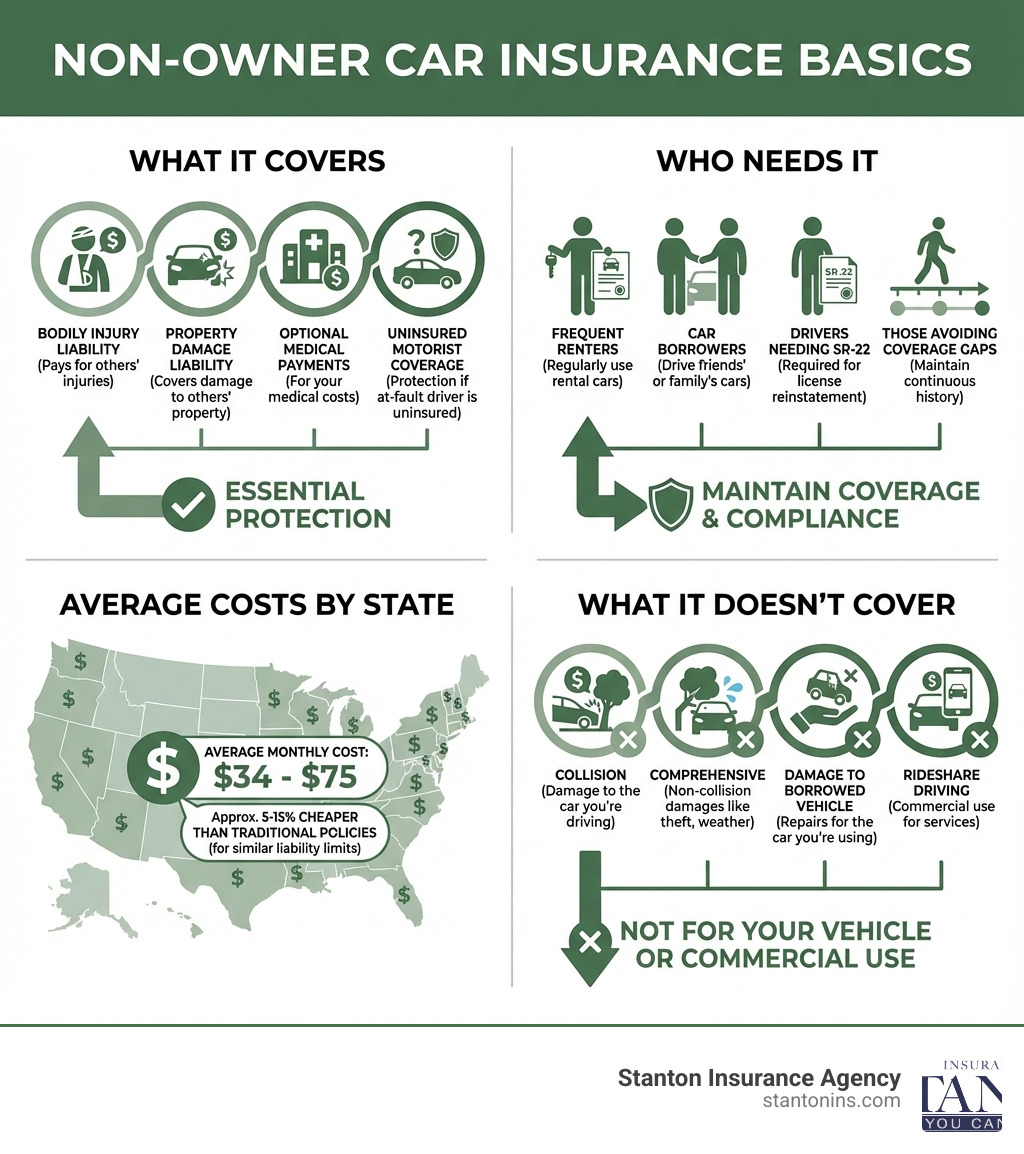
Average Cost: In Massachusetts and New Hampshire, the average cost for a non-owner policy is typically between $25 and $40 per month, which can be 5-15% cheaper than a traditional auto insurance policy with similar liability limits. The final price depends on your driving history, location, and the coverage limits you select.
Just because you don’t own a car doesn’t mean you don’t need car insurance. If you frequently borrow friends’ vehicles, rent cars regularly, or use car-sharing services, you’re exposed to significant financial risk every time you get behind the wheel. A non-owner car insurance policy provides essential liability coverage that protects you if you cause an accident while driving someone else’s vehicle. This specialized policy acts as secondary coverage, kicking in after the car owner’s insurance limits are exhausted, or as primary coverage if they have none.
Beyond financial protection, non-owner insurance helps you maintain continuous coverage history, which prevents the rate increases that come with insurance gaps. It’s also the most affordable way to meet SR-22 or FR-44 filing requirements if you need to reinstate a suspended license but don’t own a vehicle. The challenge is that not every insurance company offers these policies, and they’re rarely advertised online, making it difficult to compare your options.
I’m Geoff Stanton, President of Stanton Insurance Agency, and I’ve helped countless Massachusetts and New Hampshire drivers steer the complexities of finding the best non owner car insurance for their unique situations. Working with an independent agent who can compare multiple carriers is often the fastest way to secure the right coverage at the best price.
What Is Non-Owner Car Insurance?
Non-owner car insurance is a type of auto insurance policy that provides liability coverage for drivers who do not own a vehicle. Unlike traditional insurance that’s tied to a specific car, a non-owner policy is tied to you, the driver. It acts as secondary coverage, meaning it kicks in after the car owner’s primary insurance has been exhausted, or as primary coverage if the owner has no insurance. This ensures you meet state financial responsibility laws and are protected from costly claims if you’re found at-fault in an accident. It’s also a smart way to maintain continuous insurance history, which can help you get lower rates in the future.
This specialized policy is designed for individuals who drive regularly but don’t own a car, providing crucial liability protection. It’s not tied to any specific vehicle, but rather to you, the driver. Essentially, if you cause an accident while driving a borrowed or rented car, your non-owner policy will cover the damages you’re legally responsible for. In Massachusetts and New Hampshire, like most states, non-owner car insurance typically includes your state’s minimum required liability coverage, ensuring you’re always driving legally.
The Key Difference: Non-Owner vs. Traditional Car Insurance
| Traditional Insurance | Non-Owner Insurance |
|---|---|
| Vehicle-Specific | Driver-Specific |
| Covers Liability, Collision, Comprehensive | Covers Liability Only |
| Higher Cost | Lower Cost |
| Full Coverage vs Liability Car Insurance | Ideal for Occasional Drivers |
The fundamental difference lies in what is being insured: a specific vehicle versus the driver themselves. Traditional car insurance policies are linked to a particular car or cars that you own. They typically cover a broad range of perils, including liability, collision (damage to your own car in an accident), and comprehensive (damage from non-collision events like theft or weather). This comprehensive coverage often comes with a higher premium.
Non-owner car insurance, on the other hand, is all about you, the driver. It’s a personal liability policy that travels with you. Since it doesn’t cover damage to a specific vehicle, it doesn’t include collision or comprehensive coverage. This more focused approach usually results in a significantly lower cost compared to a traditional policy. It’s a perfect solution for those who need liability protection without the added expense of insuring a car they don’t possess.
Who Needs Non-Owner Car Insurance?
This type of policy isn’t for everyone, but it’s a perfect fit for certain situations. You should strongly consider a non-owner policy if you fall into one of these categories:
You Frequently Borrow or Rent Cars
If you frequently find yourself behind the wheel of a car you don’t own, whether it’s a friend’s SUV for a weekend trip or a rental car for business travel, a non-owner policy is an intelligent choice. While the car owner’s insurance is usually primary, it might not always be enough. If you cause an accident and the damages exceed the owner’s liability limits, you could be personally responsible for the difference. Our non-owner policy acts as a secondary safety net, stepping in to cover those costs. It’s ideal for people who frequently rent cars, use car-sharing services, or borrow vehicles from friends or family.
For instance, if you’re a regular renter, purchasing a non-owner policy can often be more cost-effective than buying the rental company’s liability coverage each time you rent. That while your non-owner policy covers liability, it typically won’t cover damage to the rental car itself. For more on that, see our guide on does liability insurance cover rental cars?. If you regularly borrow a car from a household member, however, it’s usually best for them to add you to their existing insurance policy as a named driver.
You Need to File an SR-22 or FR-44
Life happens, and sometimes a traffic violation can lead to a suspended license. If your license has been suspended due to serious convictions (like a DUI), the state of Massachusetts or New Hampshire may require you to file an SR-22 or FR-44 form to prove you have insurance before your driving privileges are reinstated. This isn’t an insurance policy itself, but a certificate of financial responsibility. If you don’t own a vehicle, a non-owner policy is often the most affordable and practical way to meet this requirement. It allows you to satisfy the state’s mandate without having to purchase a full, traditional policy for a car you don’t even own.
You Want to Avoid a Lapse in Coverage
Insurance companies are big fans of consistency. They prefer drivers who maintain continuous insurance coverage. If you sell your car and don’t immediately buy another, or if you temporarily stop driving, canceling your insurance entirely can create a “gap” in your coverage history. When you eventually go to buy a new policy, insurers often view these gaps as a risk indicator, which can lead to significantly higher premiums. Some individuals cancel their auto policy when they’re between vehicles, without realizing that gaps in insurance coverage might disqualify them from the benefit of certain discounts.
A non-owner policy is an affordable way to maintain continuous coverage, even when you don’t have a car. This ensures you qualify for better rates and loyalty discounts down the line, saving you money in the long run. A small investment in a non-owner policy now can prevent a much larger expense later.
What Does Non-Owner Car Insurance Cover (and Not Cover)?
Understanding the scope of your policy is crucial. A non-owner policy is designed for liability, not for protecting the vehicle you’re driving. Think of it as protecting your wallet from the financial fallout of an accident you cause, not protecting the car itself.
What’s Typically Included
The core of non-owner car insurance is liability coverage, which is mandated by law in Massachusetts and New Hampshire. This covers the costs you’re legally responsible for if you cause an accident while driving a non-owned vehicle.
- Bodily Injury Liability: This is the coverage that pays for medical expenses, lost wages, and other costs for the other party (the people you injure) if you are found at-fault in an accident.
- Property Damage Liability: This pays for repairs to the other party’s vehicle or other damaged property (like a fence, mailbox, or building) that you hit.
- Uninsured/Underinsured Motorist Protection: Depending on your specific policy and state regulations, some non-owner policies may offer this. This coverage helps pay for your medical expenses, property damage, and other costs if you’re involved in an accident with a driver who has no insurance or not enough insurance to cover your damages.
- Medical Payments (MedPay) / Personal Injury Protection (PIP): In certain states, including Massachusetts, you can add this to your non-owner policy. This optional coverage helps pay for your own medical bills and sometimes lost wages, regardless of who was at fault in the accident.
Non-owner insurance acts as secondary coverage, stepping in if the primary policy on the borrowed car limits are exceeded, providing an additional layer of financial protection.
What’s Typically Excluded
It’s equally important to understand what non-owner car insurance does not cover, as this is where it differs significantly from a traditional auto policy.
- Collision Coverage: This is a big one. Non-owner policies do not cover damage to the car you are driving, whether it’s a borrowed vehicle or a rental. If you ding your friend’s fender or total a rental, you’ll be responsible for those repair costs.
- Comprehensive Coverage: Similarly, this policy won’t cover theft, vandalism, or weather-related damage to the car you are driving. If the borrowed car is stolen while in your possession, your non-owner policy won’t pay for it.
- Personal Belongings: Your personal property inside the car, like your laptop or phone, is not covered by a non-owner policy. This would typically fall under your homeowners or renters insurance.
- Business Use: If you’re driving for rideshare services like Uber or Lyft, your non-owner policy generally will not cover you. Rideshare drivers require specialized commercial coverage. Coverage for rideshare drivers is typically excluded from non-owner policies.
- Household Vehicles: Non-owner car insurance does not cover vehicles owned by someone in your household. If you live with someone whose car you borrow frequently, you should be added to their policy as a primary driver instead of purchasing a non-owner policy. This ensures proper coverage and avoids potential headaches.
- Rental Car Coverage for the Rental Car Itself: While your non-owner policy provides liability coverage when you rent a car, it typically won’t cover physical damage to the rental car. For that, you usually need to purchase a collision damage waiver (CDW) from the rental company or rely on coverage provided by some credit cards. Non-owner policies usually do not include rental car insurance or roadside assistance.
How to Find the Best Non-Owner Car Insurance
Finding the best non owner car insurance involves more than just picking the cheapest option. It’s about finding the right balance of cost and coverage from a reliable provider. Because these policies are less common, not all companies offer them, and they often can’t be quoted online.
Understanding the Cost
One of the great advantages of non-owner car insurance is its affordability. It typically costs less than traditional auto insurance because it only provides liability coverage and assumes you drive less frequently than someone who owns a car. A non-owner policy can be 5% to 15% cheaper than a standard policy with similar liability limits.
For our Massachusetts and New Hampshire drivers, here’s what we typically see:
- In Massachusetts, the average non-owner car insurance rate is approximately $445 per year.
- In New Hampshire, where rates are often lower, the average non-owner car insurance rate is around $318 per year.
Your specific premium will depend on several factors, including your driving record (a clean record always helps!), your age, your location within Massachusetts or New Hampshire, and the amount of liability coverage you choose. Non-owner policies also typically do not include a deductible, which can be a pleasant surprise for many.
Steps to Get the Best Non-Owner Car Insurance Policy
Getting a non-owner car insurance policy might seem a bit obscure, but with the right approach, it’s straightforward.
- Assess Your Needs: Before you start shopping, think about how much liability coverage you truly need. Consider your state’s minimum requirements, but also think about your personal assets. If you were found at-fault in a serious accident, would the minimum coverage be enough to protect your savings and future earnings? We always recommend choosing limits that adequately protect your financial well-being.
- Gather Your Information: To get an accurate quote, you’ll need your valid driver’s license number and a clear picture of your driving history. Be prepared to answer questions about any past accidents or violations.
- Contact an Independent Insurance Agent: This is, hands down, the most effective step. Unlike traditional policies that you might easily quote online, many insurers do not advertise non-owner policies on their websites. You often need to speak directly with an agent. An independent agent, like us at Stanton Insurance Agency, can compare quotes from multiple carriers that offer non-owner policies. This saves you valuable time and helps you find the most competitive rate custom to your specific situation in Massachusetts or New Hampshire. We can also ensure the policy meets any specific requirements you have, such as an SR-22 filing. Larger national insurance companies are more likely to offer varied options and accommodate non-owner policies, and an independent agent has access to many of them.
Frequently Asked Questions about Non-Owner Car Insurance
We understand that non-owner car insurance can raise a lot of questions. Here are some of the most common ones we hear from our clients:
Can I get non-owner car insurance if I have a suspended license?
Yes, absolutely! In fact, this is one of the most common reasons people seek out non-owner car insurance. If your license has been suspended due to serious convictions, such as a DUI, the state of Massachusetts or New Hampshire will likely require you to file an SR-22 or FR-44 form to get your driving privileges reinstated. This form certifies that you have the minimum required liability insurance. If you don’t own a car, a non-owner policy is the perfect and often most affordable solution to meet that legal requirement. It’s specifically designed to provide the liability coverage needed for these filings without tying it to a vehicle you don’t possess.
Does non-owner car insurance cover rental cars?
Yes, your non-owner policy will generally provide liability coverage when you drive a rental car. This means if you cause an accident while driving a rental, your policy will cover injuries to other people and damage to their property. For frequent renters, this can be a more economical option than repeatedly purchasing the liability coverage offered by rental car agencies, which can be quite expensive.
However, it’s crucial to understand a key limitation: your non-owner policy typically does not cover physical damage to the rental car itself (collision or comprehensive coverage). For that, you would need to purchase a collision damage waiver (CDW) from the rental company, or you might have coverage through certain credit cards. It’s always a good idea to check your credit card benefits before renting. Also, be aware that non-owner policies usually do not include perks like rental car insurance or roadside assistance.
Who shouldn’t get non-owner car insurance?
While non-owner car insurance is incredibly useful for certain situations, it’s not for everyone.
- If you own a car: If you own a vehicle, you need a standard auto insurance policy that covers your car. A non-owner policy is not a substitute for insuring a vehicle you own.
- If you live with someone who owns a car: If the car you frequently borrow belongs to someone you live with (e.g., a spouse, parent, or roommate), you should typically be added to their existing auto insurance policy as a listed driver. This ensures you’re properly covered under their primary policy. A non-owner policy is generally not appropriate for household vehicles.
- If you drive a company car: Most company cars are covered by a commercial vehicle policy provided by your employer. If you drive a company car for work, you likely don’t need a personal non-owner policy for that specific vehicle. However, if you occasionally use the company car for personal reasons and your employer’s policy doesn’t explicitly cover personal use beyond a certain extent, you might consider asking your employer about adding a “drive other car” endorsement to their commercial policy, or discussing your personal liability needs with us.
- If you rarely drive: If you truly drive only once or twice a year, and only borrow cars where you’re confident the owner has robust insurance coverage, a non-owner policy might be overkill. However, even occasional drivers can face significant financial risk if an accident occurs and the owner’s policy is insufficient.
Get the Right Protection for Your Peace of Mind
A non-owner car insurance policy is an affordable and essential tool for anyone who drives but doesn’t own a car. It protects you financially, fulfills legal requirements, and helps you secure better insurance rates in the future. Because these policies are unique, navigating your options can be tricky. Working with a trusted expert can make all the difference. The team at Stanton Insurance Agency has been helping drivers in Massachusetts and New Hampshire find the right protection for decades. To understand your options and get a personalized quote, explore our auto insurance resources and let us help you drive with confidence.