
Why Real Estate Investor Insurance Matters for Your Portfolio
Real estate investor insurance is specialized coverage designed to protect rental properties, fix-and-flip projects, and investment portfolios from property damage, liability claims, and loss of rental income. Unlike standard homeowners insurance, it covers non-owner-occupied properties and addresses the unique risks landlords and investors face—from tenant injuries to vacancy periods.
Key differences from homeowners insurance:
- Coverage scope: Protects rental income, liability from tenant accidents, and property damage across multiple locations
- Policy structure: Can bundle 1-500 properties under a single master policy
- Cost: Averages $1,478 annually—about 25% more than standard homeowners insurance
- Eligibility: Covers non-owner-occupied residential properties (1-4 units), vacant properties, and rehab projects
- Common exclusions: Vacation rentals, Section 8 housing, barrier island properties, and structures with wood shake roofs
From natural disasters to tenant negligence, a lot can go wrong for real estate investors. One inch of water inside an investment property can cost approximately $27,000 in damage, while floods alone cost the nation an average of $8.2 billion per year. Whether you’re managing long-term rentals, flipping houses, or building a multi-state portfolio, the right insurance protection keeps your investment strategy secure.
I’m Geoff Stanton, President at Stanton Insurance Agency in Waltham, Massachusetts, where we’ve specialized in Commercial Property & Liability for small and medium-sized portfolios for over a century. Throughout my career working with real estate investors across Massachusetts and New Hampshire, I’ve seen how proper real estate investor insurance makes the difference between a minor setback and a financial disaster.
Handy Real estate investor insurance terms:
The Fundamentals of Real Estate Investor Insurance
When we talk about building a “real estate empire,” we aren’t just talking about the number of keys on your ring. We’re talking about the financial stability of your business. In Massachusetts and New Hampshire, the rental market is competitive, and the risks are as varied as the architecture. From historic triple-deckers in Worcester to modern condos in Portsmouth, every property requires a specific eye for risk.

Real estate investor insurance is built on a portfolio approach. Instead of managing twenty different individual policies with twenty different expiration dates, sophisticated investors use programs designed to scale. These programs typically focus on residential dwellings (1-4 units), manufactured homes, and even vacant land.
Because these properties are non-owner occupied, the risk landscape shifts. You aren’t just protecting your own four walls; you’re protecting your business from the actions of others. This is why we recommend checking out our Insurance for Landlords Complete Guide to understand how these foundational pieces fit together.
Distinguishing Investor Policies from Homeowners Insurance
A common mistake new investors make is assuming their standard homeowners policy will cover a rental property. It won’t. In fact, using a personal homeowners policy for a business venture is a fast track to a denied claim.
Investor policies offer two primary ways to value your property:
- Replacement Cost: This covers the actual cost to rebuild the structure with similar materials at today’s prices.
- Actual Cash Value (ACV): This pays out the depreciated value of the property. While ACV premiums are lower, the payout after a fire might not be enough to actually rebuild.
Furthermore, investor policies are designed to handle tenant negligence. If a tenant leaves a candle burning and causes a fire, your investor policy steps in. To manage these moving parts, we often utilize an REO management system which allows for 24/7 online reporting and instant printing of certificates—essential for investors moving at the speed of the New England market.
Why Real Estate Investor Insurance is Vital for Fix-and-Flips
If your strategy involves “buying the worst house on the best block,” your insurance needs are entirely different. A standard landlord policy requires a tenant to be in place. If the house is a construction zone, you need Builder’s Risk or a specialized Vacant Property policy.
Renovation hazards are real. Structural changes, open walls, and the presence of contractors increase the likelihood of theft or injury. Short-term coverage for rehab projects ensures that if a pipe bursts while the house is down to the studs, your capital isn’t washed away. These policies are often flexible, allowing you to transition from a “vacant/renovation” status to a “tenant-occupied” status under the same master policy once the flip is complete and ready for the market.
Essential Coverage Types for Property Portfolios
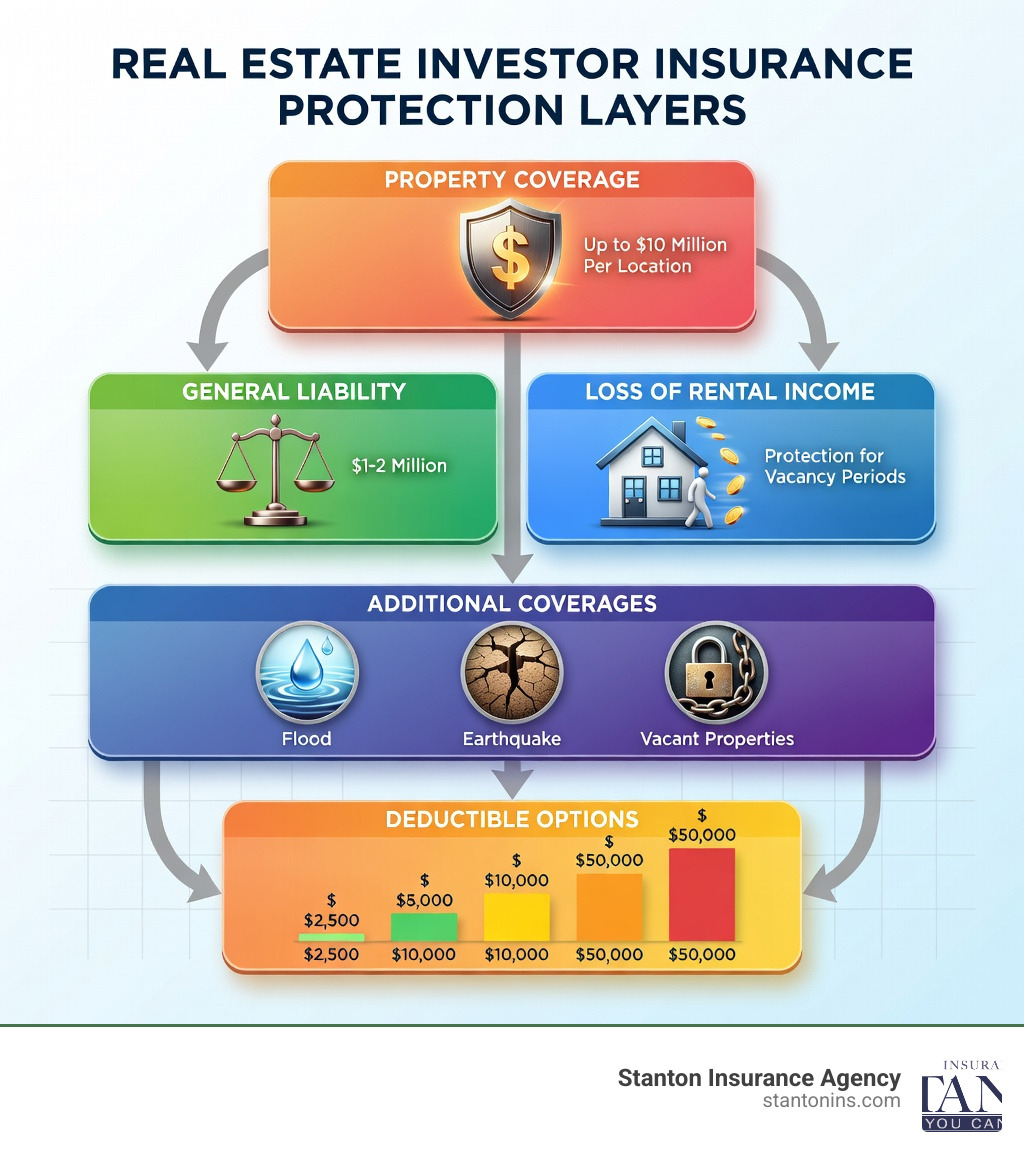
As your portfolio grows, so does your target for potential lawsuits. In the insurance world, we look at your portfolio as a series of interlocking shields.
The core of your protection includes:
- General Liability: Protects you if a tenant or visitor is injured on the property and sues for damages.
- Hazard Insurance: Covers the physical structure against fire, wind, hail, and lightning.
- Loss of Rental Income: If a fire makes your property uninhabitable, this coverage replaces the rent you lose while the building is being repaired.
For many of our clients in MA and NH, we also emphasize Umbrella Policies for Rental Properties. An umbrella policy provides an extra layer of liability protection—often $1 million to $5 million—that kicks in once your primary policy limits are exhausted. In today’s litigious environment, a single slip-and-fall settlement can easily exceed a standard $1 million limit.
We also can’t ignore the “un-glamorous” risks. Sewer backups and water line failures can turn a profitable month into a nightmare. In some areas, property owners are responsible for water or sewer line breaks even beyond their property line. Adding these endorsements is a small price to pay for avoiding a $20,000 repair bill.
Protecting Against Natural Disasters and Floods
New England weather is nothing if not unpredictable. While we worry about snow loads, water is the more frequent enemy. Floods are the most costly natural disaster in the country, costing the nation an average of $8.2 billion per year.
Many investors believe they don’t need flood insurance because they aren’t in a “high-risk” zone. However, FEMA data shows that one inch of water inside an investment property can cost approximately $27,000 in damage. Standard real estate investor insurance almost always excludes flood damage. To be truly protected, a separate flood policy is required. We also use Scientific research on data tracking for insurance marketing and modern mapping tools to help our clients understand their specific flood risks beyond just the basic FEMA maps.
Specialized Liability for Multi-State Portfolios
If you own properties in both Massachusetts and New Hampshire, you’re dealing with different state regulations and court systems. A master policy is the gold standard for managing this. It allows you to have one policy with a single renewal date, covering all locations.
These programs often feature:
- Daily Prorated Premiums: You only pay for the days you actually own the property. If you buy a house on the 15th and sell it on the 25th, you aren’t stuck with a full month’s bill.
- Medical Payments: Covers minor injuries to guests without requiring a full-blown lawsuit.
- Legal Fees: Provides a defense if you are sued, even if the claim is groundless.
For those focusing on larger assets, our Insurance for Multifamily Properties provides the specific high-limit property and liability coverage required for apartment complexes and large residential blocks.
Navigating Exclusions and Ineligible Risks
Not every property is a “slam dunk” for insurance companies. Understanding what insurers don’t want is just as important as knowing what they do cover.
Common ineligible risks in specialized investor programs often include:
- Wood Shake Roofs: These are seen as high fire risks and are often excluded or require a massive surcharge.
- Barrier Islands: Properties located directly on the coast (Tier 1 locations) are frequently ineligible for standard investor packages due to hurricane risk.
- Student Housing: High turnover and “party” risks make this a specialized class that many standard programs avoid.
- Section 8/HUD: While we help many landlords with these, some national programs have strict exclusions for subsidized housing.
- Vacation Rentals: Short-term rentals (Airbnb/VRBO) have a different risk profile than long-term leases and usually require a specific endorsement or separate policy.
Common Policy Gaps to Avoid
The most dangerous words in insurance are “I thought I was covered for that.” One major gap is the Vacancy Clause. Most standard policies have a provision that reduces or eliminates coverage (especially for vandalism and glass breakage) if a property is vacant for more than 30 or 60 days. If your renovation is taking longer than expected, you must notify your agent to ensure a vacancy endorsement is in place.
Other gaps include:
- Theft Coverage: Some policies cover the “damage” caused by a thief (like a broken window) but not the actual items stolen (like copper piping or appliances) unless specifically added.
- Maintenance Issues: Insurance is for “sudden and accidental” damage. It is not a maintenance contract. If a roof leaks because it’s 30 years old and needs replacing, that is a maintenance issue, not an insurance claim.
Cost Analysis and Premium Factors
How much does real estate investor insurance actually cost? While the national average is $1,478 per year, your specific premium in the Northeast will vary based on several factors.
| Policy Type | Average Annual Cost | Key Difference |
|---|---|---|
| Standard Homeowners | $1,182 | Owner-occupied, personal use |
| Landlord/Investor | $1,478 | 25% higher; covers rental risks |
| Vacant/Rehab | $1,800 – $2,500 | Higher risk due to lack of occupancy |
Several factors affect your specific premium:
- Location: A property in a high-crime area or a flood zone will naturally cost more.
- Property Age: Older New England homes with knob-and-tube wiring or lead pipes are more expensive to insure.
- Payroll Size: If you have employees (maintenance crews, property managers), you will need Workers’ Compensation, which is based on payroll.
- Vehicle Usage: If your business owns trucks or vans, commercial auto insurance is a requirement.
To get a deeper look at the numbers for larger assets, visit our page on Apartment Building Insurance Cost.
How to Lower Your Real Estate Investor Insurance Premiums
We always look for ways to help our clients save without sacrificing coverage. One of the most effective methods is bundling. You can often save up to 10% or more by bundling your property, liability, and even commercial auto policies under one carrier.
Other strategies include:
- Higher Deductibles: Moving from a $1,000 deductible to a $5,000 deductible can significantly lower your annual premium.
- Security Systems: Installing monitored fire and burglar alarms often triggers a discount.
- Loss History: Maintaining a “clean” record with no claims for 3-5 years makes you a preferred risk for insurers.
- Safety Training: For investors with employees, documenting safety training can reduce Workers’ Comp costs.
Frequently Asked Questions about Real Estate Investor Insurance
What is the difference between landlord and investor insurance?
In many circles, these terms are used interchangeably. However, “landlord insurance” usually refers to a policy for a single rental property. Real estate investor insurance typically refers to a more robust, portfolio-based approach that can handle multiple properties, vacant buildings, and rehab projects under a single business entity or LLC.
Are vacant properties covered under standard investor policies?
Usually, no. Standard rental policies expect a tenant to be in place. If a property becomes vacant, you often need a vacancy endorsement. This covers the increased risk of fire, vandalism, and squatters that comes with an empty building. For long-term vacancies or major renovations, a specific Vacant Property or Builder’s Risk policy is the safer bet.
How does a master policy benefit investors with large portfolios?
A master policy is the ultimate tool for administrative ease. Instead of 50 different policies, you have one. This means one bill (which can often be itemized by property), one renewal date, and consistent coverage limits across your entire “empire.” It also makes adding or removing properties as simple as a single email to your agent.
Conclusion
Building a real estate portfolio in Massachusetts and New Hampshire is a marathon, not a sprint. Whether you are just starting with your first duplex or managing a hundred units across state lines, your insurance should be a tool that enables your growth, not a hurdle that slows you down.
At Stanton Insurance Agency, we pride ourselves on providing trusted protection for your most valuable assets. We understand the local nuances of the MA and NH markets because we live and work here too. Don’t leave your empire to chance. If you’re looking to streamline your coverage, protect your cash flow, and ensure your legacy is secure, we’re here to help.
Ready to take the next step? Explore our comprehensive guide to Apartment Building Insurance or reach out to us today for a portfolio review. Let’s make sure your insurance is as solid as the foundations of your properties.
