
Ice storm safety tips: Ultimate Guide 2025
Why Ice Storm Safety Preparation Can Save Your Life
For New England homeowners, ice storm safety tips are essential. These dangerous weather events occur when freezing rain coats everything in a layer of ice—from power lines and tree branches to roads and walkways—creating hazardous conditions that can last for days.
Essential Ice Storm Safety Tips:
- Stay indoors – Avoid unnecessary travel during the storm.
- Prepare emergency supplies – Stock 72 hours of food, water, and medications.
- Avoid downed power lines – Stay at least 33 feet away and assume all lines are live.
- Use generators safely – Only operate outdoors, 20+ feet from your home.
- Prevent carbon monoxide poisoning – Never use fuel-burning devices indoors.
- Dress in warm layers – Protect against hypothermia and frostbite.
- Keep phones charged – Maintain communication with emergency services.
- Clear ice carefully – Watch for falling branches and hidden power lines.
Ice storms pose unique dangers. The weight of ice can bring down power lines, leaving homes and critical services without electricity. Roads become nearly impassable due to “black ice,” and each year, thousands are killed in weather-related vehicle crashes.
In Massachusetts and New Hampshire, ice storms can cause widespread power outages lasting several days, making preparation essential.
I’m Geoff Stanton, President of Stanton Insurance Agency. With over 25 years of experience helping New England families with winter storm claims, I’ve seen how these ice storm safety tips can prevent a minor inconvenience from becoming a major catastrophe.
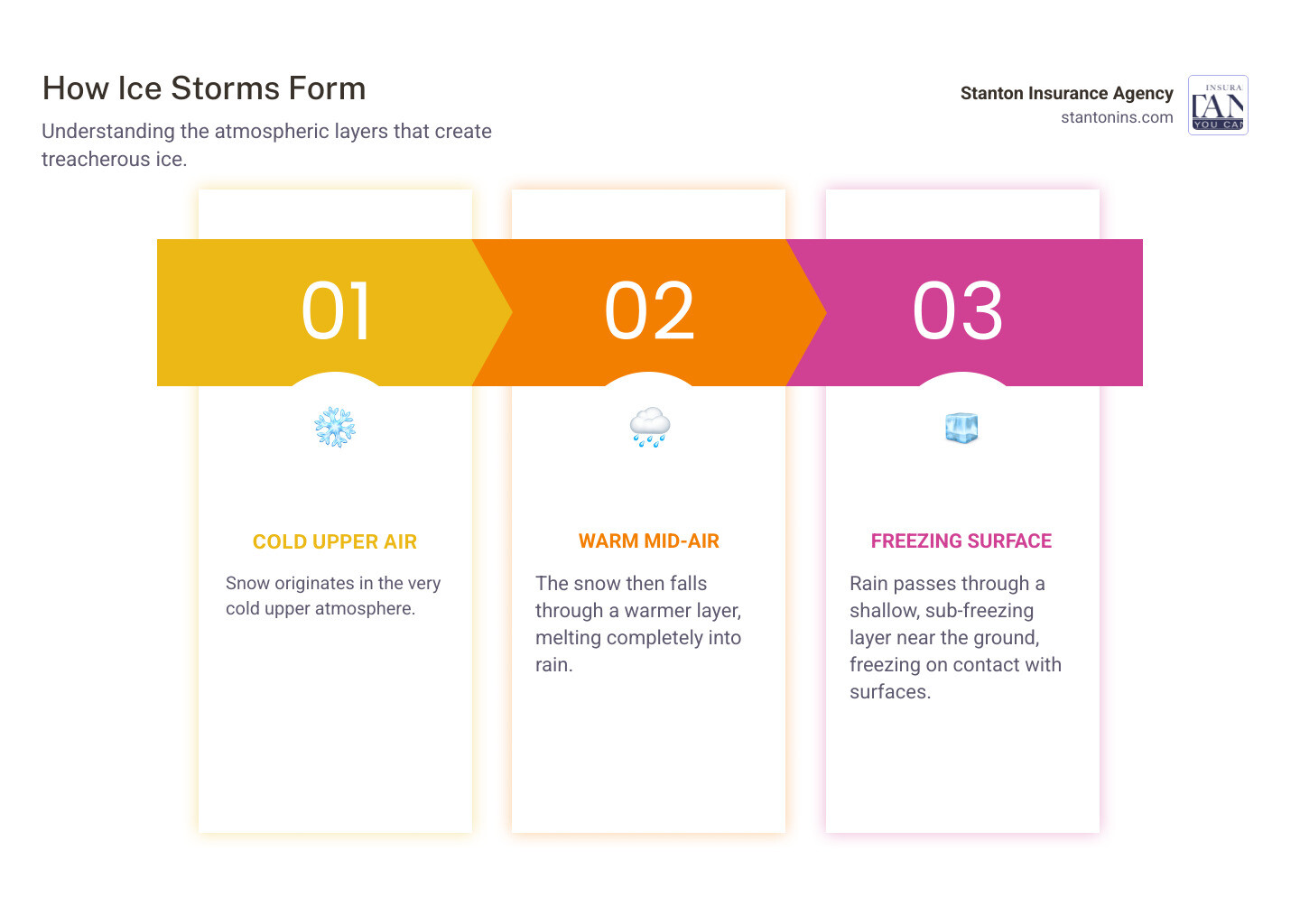
Ice storm safety tips terms explained:
Understanding the Primary Dangers of an Ice Storm
Ice storms create a perfect storm of hazards, making ice storm safety tips critical. These storms bring dangers that regular snowstorms simply can’t match.
The most immediate threat is widespread power outages. Ice accumulates on power lines, adding immense weight. When lines snap or poles topple, entire neighborhoods can lose electricity for days, turning a power loss into a life-threatening emergency in freezing temperatures.
Falling trees and branches pose another serious danger. Ice makes branches incredibly heavy and brittle, causing them to snap without warning and crash down on homes, vehicles, and people.
Travel becomes nearly impossible due to treacherous conditions and black ice. Roads turn into skating rinks, and emergency services often can’t reach people who need help.
Infrastructure damage extends beyond power lines. Burst pipes are common when homes lose heat, and the weight of ice can cause roofs to collapse. Ice dams can also form, forcing water into your home.
Perhaps most concerning is the risk of carbon monoxide poisoning. In desperation for heat, people sometimes make deadly mistakes like bringing gas grills indoors or running generators in garages. Learning how to protect yourself from carbon monoxide poisoning is essential.
The Threat of Downed Power Lines
Downed power lines are one of the deadliest aspects of any ice storm. The weight of ice can bring them down, creating electrical hazards that persist long after the storm passes.
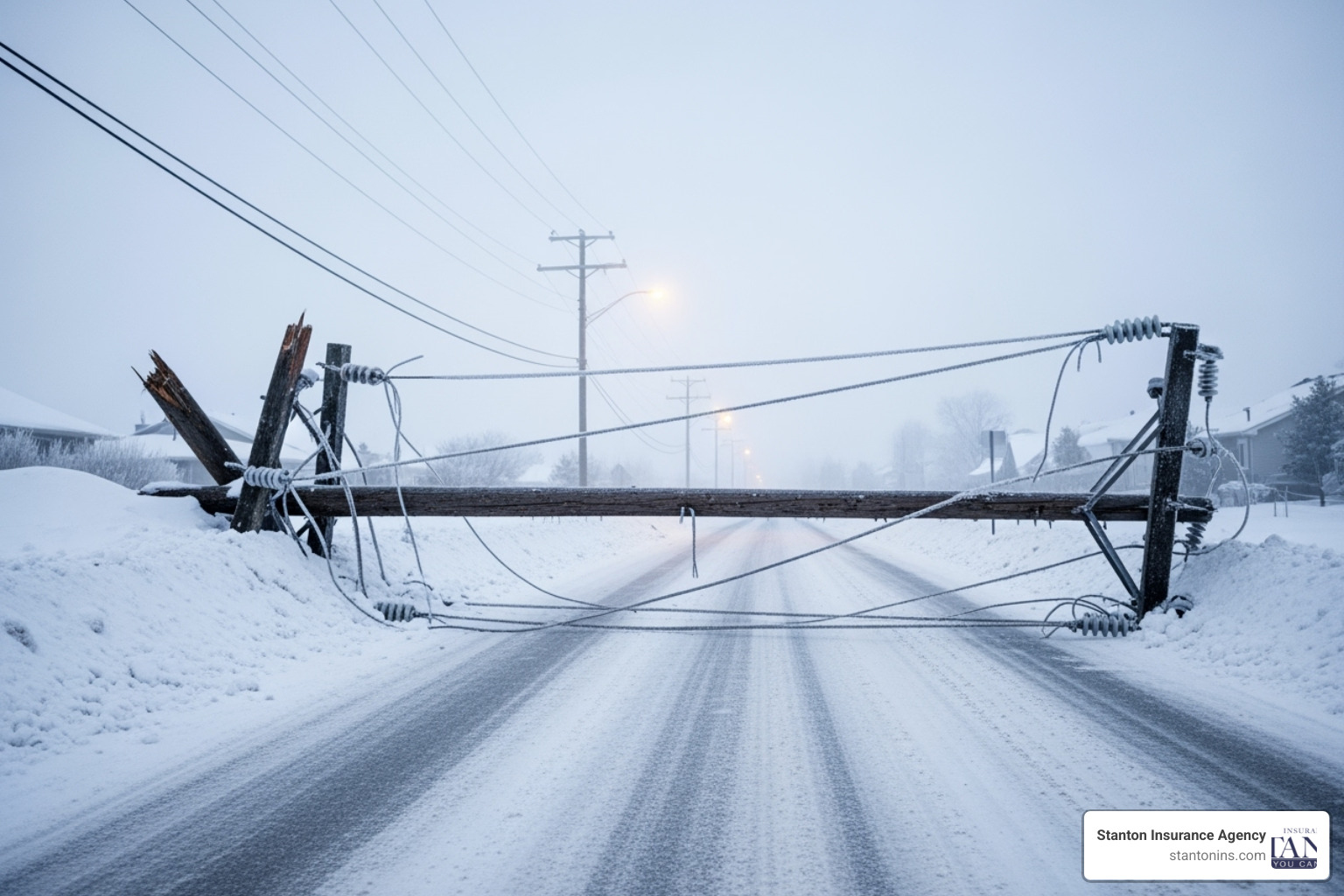
Here is the most important rule: assume all downed lines are live. Treat every wire as if it’s carrying enough electricity to kill you. Electricity can arc or “jump” to nearby objects, including people, without direct contact.
Stay back at least 33 feet—about the length of a school bus—from any downed power line. The ground around a downed line can become energized. Warn others to stay away.
Report downed lines immediately to your utility company or 911. Do not attempt to clear debris yourself. Professional crews have the specialized equipment and training to handle these situations safely.
If a power line falls on your car, stay put. The rubber tires provide insulation. Call for help and wait for professionals. Only exit if there’s an immediate threat like a fire. If you must get out, jump clear with both feet together, ensuring you don’t touch the car and the ground simultaneously. Then, shuffle away with your feet together until you are well clear.
Property Damage Risks
The weight of ice from a storm can cause significant property damage. Most people underestimate this risk.
Your roof wasn’t designed to handle the massive weight of ice accumulation. Just one inch of ice can add over 5 pounds per square foot to your roof’s load. Collapsed structures are a real threat, especially for older homes or buildings with large, flat roofs.
Ice dams are a common problem for New England homeowners. When heat from your home melts snow on the roof, the water runs down and refreezes at the colder roof edges, creating a dam. This forces water under your shingles and into your home, causing significant damage. Understanding ice dams is crucial for protecting your property.
Burst pipes are a major concern when power outages leave homes without heat. Pipes in unheated areas like basements or exterior walls can freeze and burst, leading to extensive water damage.
This is why reviewing your homeowners insurance policy before storm season is so important. While homeowners insurance coverage for personal injuries is a separate consideration, protecting your property is a top priority. Document any damage immediately with photos and videos for your insurance claim.
Before the Storm: Essential Home and Vehicle Preparation
When it comes to ice storm safety tips, advance preparation is your best defense. A few proactive steps can turn a stressful event into a manageable one.
First, create a solid family emergency plan. Discuss how you’ll communicate if cell service fails, designate a safe meeting place, and check in on neighbors, especially the elderly or those with medical needs. For more guidance, explore our guide on how to Prepare Home for Winter.
Assemble Your 72-Hour Emergency Kit
A well-stocked emergency kit is a lifeline during a prolonged power outage. Prepare enough supplies for at least 72 hours—or more, as outages in New England can last for days.
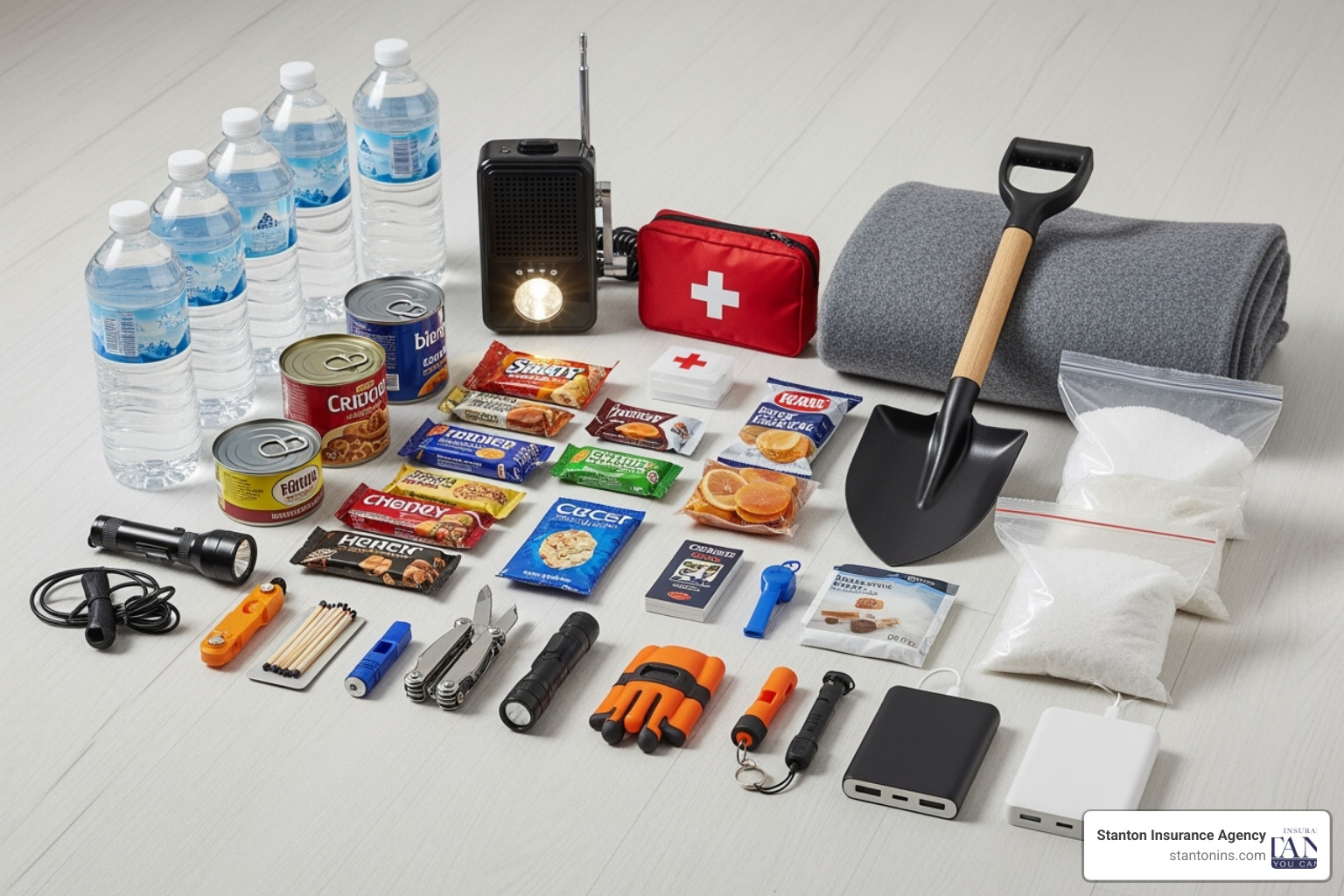
Your kit should include:
- Water: At least one gallon per person, per day.
- Food: Non-perishable items that don’t require cooking, plus a manual can opener.
- Communication: A battery-powered or hand-crank NOAA Weather Radio.
- Light: Flashlights and plenty of extra batteries (avoid candles).
- First-Aid: A full kit, plus a one-month supply of any personal prescription medications.
- Tools & Safety: A multi-tool, a whistle to signal for help, and cash.
- Sanitation: Toilet paper, moist towelettes, and other personal hygiene items.
- Warmth: Extra blankets and warm, layered clothing.
- Documents & Pet Supplies: Copies of important documents in a waterproof container and supplies for pets.
For a deeper dive, our Winter Storm Emergency Kit resource has you covered.
Secure Your Home and Property
Taking preventative measures around your home can dramatically reduce the risk of damage. Before winter, trim any dead or weak tree branches near your home and power lines (contact your utility for branches near lines). Ensure your gutters are clear to prevent ice dams.
Inside, insulate water pipes in unheated areas like basements and attics. During extreme cold, let faucets drip slightly to prevent freezing. Test all smoke and carbon monoxide detectors and replace their batteries. Clear outdoor vents for these detectors as well.
Secure outdoor furniture and other items that could become projectiles. If you have a fireplace, wood stove, or generator, ensure they are serviced and you have fuel stored safely. Before the storm, charge all electronic devices and power banks. Our guide on how to Insulate Windows for Winter offers more tips for keeping heat inside. Finally, stock up on de-icing products like rock salt or sand.
Prepare Your Vehicle for Winter Travel
Even if you plan to stay home, preparing your vehicle is a critical ice storm safety tip. You may need it in an emergency.
Keep your gas tank at least half full to prevent fuel lines from freezing. Check your antifreeze levels and install good quality winter tires. Have a mechanic winterize your car by checking the battery, belts, brakes, and other essential systems. For a full guide, see our Winterize Your Car Checklist.
Finally, stock a Winter Survival Kit for Your Vehicle. This is as vital as your home kit and should include:
- Warmth: Blankets, sleeping bags, extra warm clothing.
- Traction & Tools: A shovel, ice scraper, sand or cat litter, jumper cables, and a tow rope.
- Essentials: A first-aid kit, flashlight, non-perishable food, water, and a phone charger.
- Signaling: A brightly colored cloth to tie to your antenna.
Our Winter Survival Kit for Your Vehicle page has a complete list.
During the Storm: How to Stay Safe and Warm
During an ice storm, your primary mission is to stay safe and warm indoors. The outside world becomes dangerous quickly, so avoid all unnecessary travel.
Monitor weather updates from reliable sources like the National Weather Service using a battery-powered radio. To conserve heat, close off unused rooms and stuff towels under doors. Drawing curtains or hanging blankets over windows adds another layer of insulation. Dress in warm layers of loose-fitting clothing; wool, silk, or polypropylene are excellent choices. Don’t forget mittens and to bring all pets inside.
Key Ice Storm Safety Tips for Power Outages
Power outages are almost a given during a severe ice storm. Knowing these ice storm safety tips will help you manage the situation.

When the lights go out, unplug electronics to protect them from power surges when service returns. Leave one light on to know when power is restored. For food safety, keep refrigerator and freezer doors closed. A fridge keeps food cold for about 4 hours; a full freezer for 48 hours (24 if half-full). If an outage is prolonged, discard perishable food that has warmed.
This next tip is crucial: never use a gas stove or oven to heat your home. They can release deadly, odorless carbon monoxide. Conserve your phone battery for emergencies by using it sparingly. Finally, stay together. Gather your family in one central room to share body heat and stay connected. For more guidance, check out Safe Electricity’s tips on how to Stay Safe And Warm During an Ice Storm.
Using Alternative Heat Sources Safely
When using alternative heating, safety must come first. The biggest danger is carbon monoxide (CO), a colorless, odorless, and deadly gas. Proper ventilation is critical for any fuel-burning appliance.
Never use generators, charcoal grills, or camp stoves indoors, including in a garage or basement. Operate a portable generator at least 20 feet (about 6 meters) away from your home, with its exhaust pointed away from all windows, doors, and vents. If you use a fireplace or wood stove, ensure it has been professionally cleaned to prevent creosote buildup.
Fire is another major concern. Keep flammable objects at least 3 feet (about 1 meter) away from any heating source, including space heaters, fireplaces, and wood stoves. For space heater safety, choose electric models with automatic shut-off features. Never cover a space heater or run cords under carpets. Finally, ensure you have working fire extinguishers and that everyone knows how to use them. Install battery-operated carbon monoxide detectors on every level of your home and test them monthly—they are your best defense against CO poisoning.
For more details, refer to our Home Heating Safety Tips.
After the Storm: Cleanup, Recovery, and Ice Storm Safety Tips
The dangers of an ice storm don’t disappear when the storm ends. Hazards can linger for days, so patience and caution are key.
Wait for official clearance from authorities before traveling. Road crews need time and space to make conditions safe.
Even on clear days, be aware of falling ice and branches. As ice melts, it can come crashing down from trees and power lines without warning.
Once it’s safe to go outside, carefully check your property for damage. Look at your roof and foundation, check for a broken electrical mast, and note any fallen trees. If you see damage, document everything with photos and videos for your insurance claim. Contact us at Stanton Insurance Agency to discuss your coverage and begin the claims process.
Essential Ice Storm Safety Tips for Clearing Ice and Snow
Clearing ice and snow is tough work with its own set of risks. Follow these ice storm safety tips to stay safe during cleanup.
- Avoid overexertion when shoveling. Take frequent breaks, stay hydrated, and lift with your legs, not your back.
- Apply salt or sand to walkways, steps, and your driveway to melt ice and improve traction.
- Watch for downed power lines hidden under snow or debris. Assume any wire you see is live and dangerous.
- Safely clear snow from gas meters and exhaust vents. Blocked vents can cause a dangerous buildup of carbon monoxide in your home.
- For safe roof ice dam removal, we highly recommend calling a licensed contractor. Attempting it yourself is dangerous and can cause more damage to your roof. For more information, refer to our guide on safe roof ice dam removal.
- Be aware of refreezing. Melted ice can form new patches of black ice, especially overnight. Remain cautious even after clearing an area.
Frequently Asked Questions about Ice Storm Safety
It’s natural to have questions when an ice storm is in the forecast. We’ve gathered some of the most common inquiries to help you feel more prepared.
Is it ever safe to drive during an ice storm?
No. Driving during an ice storm is extremely dangerous and should be avoided. Roads become coated in nearly invisible “black ice,” making accidents highly likely. If travel is absolutely unavoidable, ensure your vehicle is fully winterized, drive very slowly, and maintain a large following distance. If a power line ever falls on your car, your safest bet is to stay inside and call for help.
How can I prevent carbon monoxide (CO) poisoning during a power outage?
Preventing CO poisoning is one of the most critical ice storm safety tips. The golden rule is to never use fuel-burning equipment inside your home, garage, or basement. This includes generators, gas grills, and camp stoves. Operate portable generators at least 20 feet away from your house, with the exhaust pointing away from all windows and doors. Crucially, ensure you have working, battery-operated carbon monoxide detectors on every level of your home. If the alarm sounds, evacuate immediately and call 911.
What should I do if my pipes freeze?
If you suspect a frozen pipe (only a trickle of water comes out of a faucet), keep the faucet open to allow water to flow as it thaws. Gently apply heat to the frozen section using an electric heating pad, a hair dryer, or towels soaked in hot water. A very important ice storm safety tip here: never use a blowtorch or any other open-flame device. If you can’t locate the frozen spot or if you suspect the pipe has already burst, turn off your main water supply immediately and call a licensed plumber.
Conclusion
Navigating an ice storm is about preparation and caution. By following these ice storm safety tips and understanding the risks before, during, and after the storm, you are taking powerful steps to safeguard your family and home.
While we hope to avoid the worst of winter, having a solid plan and the right protection offers incredible peace of mind. For comprehensive protection against winter’s perils, it’s wise to partner with a trusted advisor. The team at Stanton Insurance Agency is ready to help you review your home and auto insurance policies. We’ll ensure you’re covered, giving you one less thing to worry about, no matter what Mother Nature throws our way.
