
What’s comprehensive insurance: Your #1 Shield
Understanding Comprehensive Car Insurance: Protection Beyond Collisions
What’s comprehensive insurance? It’s a type of auto insurance that covers damage to your vehicle from non-collision events—like theft, vandalism, weather damage, and animal strikes. While collision coverage pays for damage when you hit another car or object, comprehensive insurance protects your vehicle from almost everything else.
Quick Answer:
- What it covers: Theft, vandalism, fire, floods, hail, windstorms, falling objects, animal collisions, broken windshields
- What it doesn’t cover: Collision damage, mechanical breakdowns, wear and tear, personal items stolen from your car
- Cost: National average is $255/year (New Hampshire averages $110/year)
- When it’s required: Usually mandatory if you lease or finance your vehicle
- When it’s optional: If you own your car outright
Understanding your coverage before you need it can save you thousands of dollars and a lot of stress. Imagine your windshield is shattered by hail, a deer darts in front of your car on a rural Massachusetts road, or your vehicle is stolen. These are the exact scenarios where comprehensive insurance becomes your financial safety net.
As Geoff Stanton, President of Stanton Insurance Agency, I’ve helped countless Massachusetts and New Hampshire residents determine the right coverage. With over two decades of experience, I’ve seen how this protection saves drivers from devastating out-of-pocket costs.
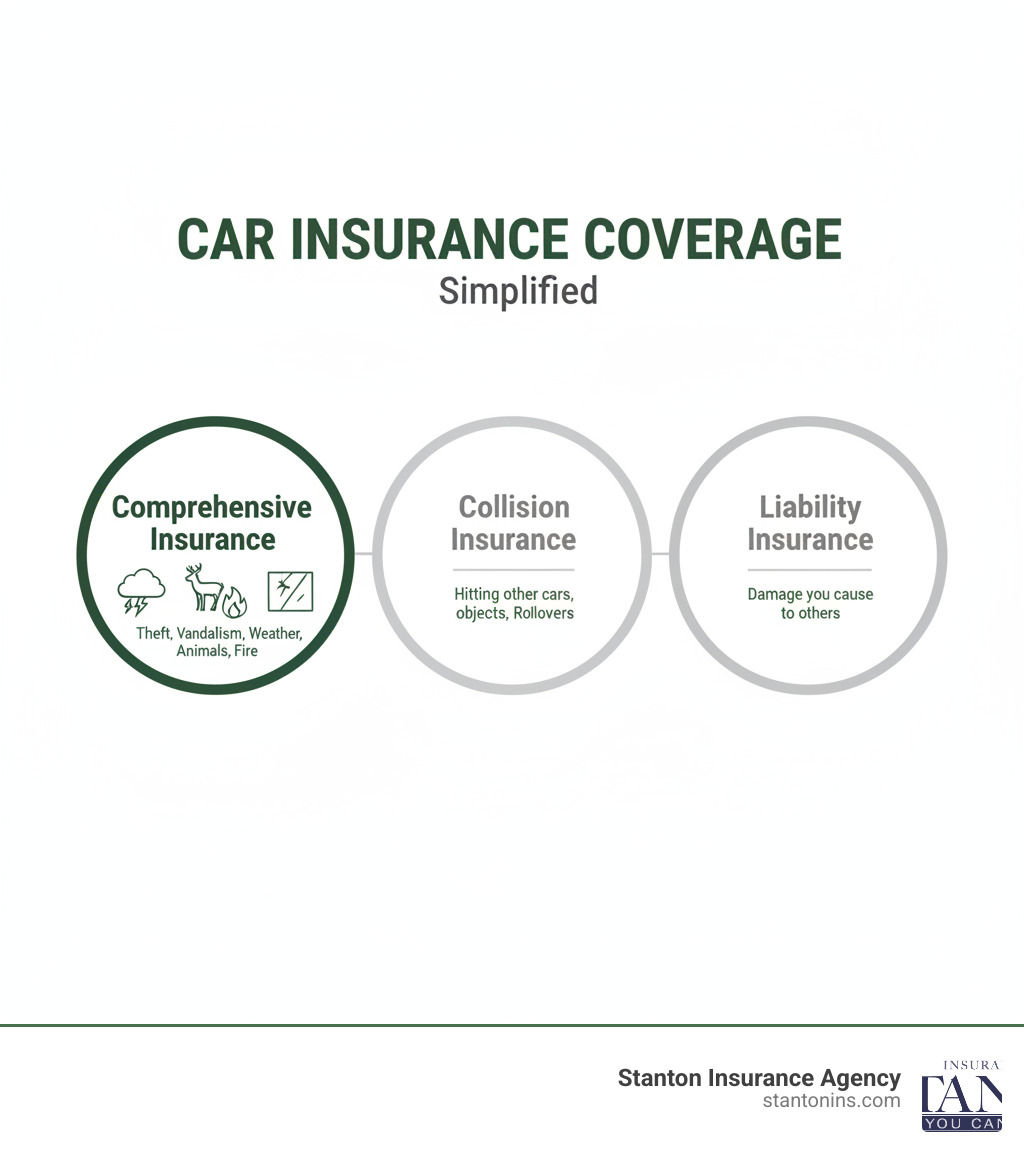
What’s comprehensive insurance terminology:
- collision vs comprehensive
- what is collision insurance
- does hitting a deer fall under collision coverage
What’s Comprehensive Insurance and What Does It Cover?
At its core, what’s comprehensive insurance is your vehicle’s protection against damage from events that aren’t collisions. Insurance professionals call it “other-than-collision” coverage. Think of it as your car’s shield against life’s unpredictable moments: a hailstorm that dents your hood, a deer on a dark New Hampshire road, or a tree branch crashing down during a storm. This physical damage protection ensures you won’t be stuck with a massive repair bill for events that are almost always outside your control. To learn more, you can explore what does comprehensive insurance cover and how auto comprehensive insurance works.
Specific Incidents Covered
Comprehensive coverage steps in to save the day in many situations:
-
Theft and vandalism: If your vehicle is stolen or intentionally damaged (keyed paint, broken windows, slashed tires), comprehensive insurance covers the loss or repair costs.
-
Fire and explosions: Whether it’s an electrical fire under the hood or damage from a nearby wildfire, your comprehensive coverage has you covered.
-
Natural disasters: This is where comprehensive really shows its worth. It covers damage from floods, hail, windstorms, earthquakes, and lightning strikes.
-
Falling objects: A tree limb crashing onto your car, or debris flying off a truck and striking your windshield, are common claims in Massachusetts and New Hampshire.
-
Animal collisions: This surprises many people. Hitting a deer, moose, or any other animal is covered by comprehensive, not collision, insurance. These strikes can cause thousands of dollars in damage.
-
Glass and windshield damage: A rock that shatters your windshield on the highway is a frequent comprehensive claim. Many policies offer glass coverage with a low or zero deductible.
-
Civil unrest or riots: If your vehicle is damaged during protests or other civil disturbances, comprehensive insurance typically handles the repairs.
For a more detailed look, check out What Is Covered by Collision and Comprehensive Auto Insurance?
What Comprehensive Insurance Does NOT Cover
Understanding what it doesn’t cover helps you avoid surprises when filing a claim.
-
Collision with another vehicle or object: If you back into a mailbox, hit another car, or slide into a guardrail, that’s a job for collision insurance, not comprehensive.
-
Normal wear and tear: Fading paint, worn-out tires, or minor scratches from regular use are considered maintenance, not insurance claims.
-
Mechanical breakdown: If your engine or transmission fails due to mechanical issues, comprehensive insurance won’t help. These repairs fall under a warranty or come out of your pocket.
-
Personal belongings stolen from your car: This is a common misconception. If someone breaks into your car and steals your laptop, your auto policy covers the damage to the car (like a broken window), but the stolen items are typically covered by your homeowners insurance or renters insurance policy.
-
Damage from potholes: Hitting a pothole is usually considered a collision claim, not comprehensive, because you’ve hit a road hazard. Learn more at Does my Auto Insurance Cover Damage Caused by Potholes?
Understanding these boundaries helps you build a complete picture of your coverage.
Comprehensive vs. Collision: Understanding the Key Differences
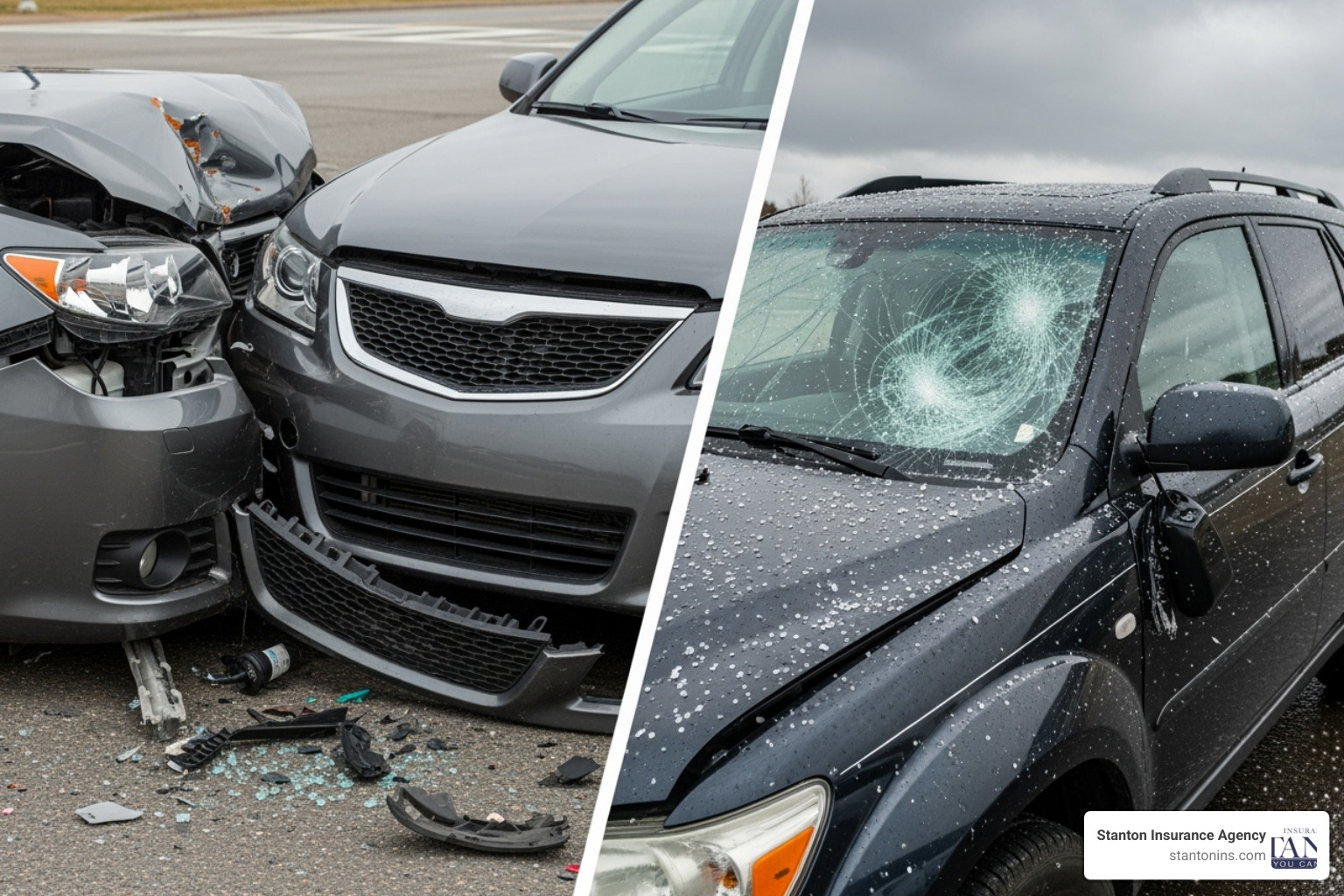
While often sold together, comprehensive and collision coverage are quite different. The simplest way to think about it is:
- Collision coverage protects your car when you hit something—another vehicle, a guardrail, a tree, or even if your car rolls over.
- Comprehensive coverage protects your car from almost everything else, including theft, weather damage, vandalism, fire, and animal strikes.
If your car is moving and strikes an object, that’s a collision. If something happens to your car while it’s parked, or an animal runs into you, that’s typically comprehensive. The distinction matters when you file a claim. For a detailed exploration, see Collision vs Comprehensive and what is the difference between collision and comprehensive insurance coverage.
Is Comprehensive Insurance Considered ‘Full Coverage’?
You’ve likely heard the term “full coverage,” but it isn’t an official insurance product. It’s industry shorthand for a policy that includes three key components: liability insurance (required by law in Massachusetts and New Hampshire), collision insurance, and comprehensive insurance. You can read more at Full Coverage vs Comprehensive and Collision.
Comprehensive insurance alone is not “full coverage”—it’s one crucial piece of the puzzle. Think of it like building a house: liability is the foundation, collision is the walls, and comprehensive is the roof. You need all three for a complete structure. They cover entirely different scenarios, which is why lenders and leasing companies require both collision and comprehensive. They want to ensure their investment is protected from as many risks as possible, whether it’s a crash or a theft.
Comparing Comprehensive and Collision Insurance
This side-by-side comparison makes the distinction crystal clear:
| Feature | Comprehensive Insurance | Collision Insurance |
|---|---|---|
| Primary Purpose | Covers non-collision damage to your vehicle. | Covers damage to your vehicle from a collision. |
| Covered Events | Theft, vandalism, fire, flood, hail, animal strikes, falling objects. | Hitting another car, hitting a stationary object (pole, wall), rollovers. |
| Example | A tree falls on your car during a storm. | You back into a light post in a parking lot. |
| Mandatory? | Optional, unless required by a lender for a lease or loan. | Optional, unless required by a lender for a lease or loan. |
Understanding these differences helps you make informed decisions about your coverage needs on Massachusetts and New Hampshire roads.
How Much Does Comprehensive Insurance Cost?

When clients ask what’s comprehensive insurance going to cost, the national average is a starting point: around $255 per year. However, your actual cost will vary. In New Hampshire, for example, the average is just $110 per year, making it one of the most affordable states for this protection. Massachusetts rates vary more by region, but you can learn more about Auto Insurance Costs.
While comprehensive is optional if you own your car, lenders require it for financed or leased vehicles to protect their investment. These requirements are typically spelled out in your loan or lease agreement and commonly include both comprehensive and collision coverage.
What Factors Influence the Price of Comprehensive Premiums?
Insurers look at several factors to determine your premium:
- Vehicle’s Actual Cash Value (ACV): This is your car’s current worth, accounting for depreciation. A new $60,000 SUV will cost more to insure than a ten-year-old sedan worth $4,000.
- Vehicle Make and Model: Some cars are stolen more often or have expensive parts, which increases the premium.
- Your Location: Parking in an area with high theft rates or frequent hailstorms will raise your rate. This is why Car Insurance Rates Massachusetts and NH Auto Insurance can differ significantly.
- Driving Record: A history of accidents or violations signals higher risk to insurers and can increase your rates.
- Your Deductible: This is the factor you have the most control over.
How Does the Deductible Work?
Your deductible is the amount you pay out-of-pocket before your insurance coverage begins. For example, if a deer strike causes $3,000 in damage and you have a $500 deductible, you pay $500 and your insurer covers the remaining $2,500.
Common deductibles are $500 and $1,000. The trade-off is simple: a higher deductible means a lower premium, and vice versa. When choosing, pick an amount you can comfortably afford to pay on short notice. Your deductible applies per incident. If your car is vandalized in March and damaged by a falling tree in July, you’ll pay the deductible for each separate claim.
Making a Claim and Deciding if Comprehensive is Worth It
When disaster strikes, the claims process is usually straightforward. You’ll contact your insurer, report the incident with documentation like photos, and they will assess the damage. But should you always file a claim? We recommend filing only when repair costs significantly exceed your deductible. Filing a claim for a $600 repair when you have a $500 deductible may not be worth the potential impact on your future rates.
According to the Insurance Research Council, the average comprehensive claim payout was $2,033 in 2018, highlighting its value for significant damage. The good news is that comprehensive claims are not considered “at-fault,” so they don’t raise your premiums as dramatically as a collision. A single claim might increase your annual premium by around $100, but multiple claims in a short period can signal higher risk to insurers. The logic is similar to deciding When to drop collision insurance coverage.
When Should You Consider Dropping Comprehensive Coverage?
For older, low-value cars, keeping comprehensive coverage may not be cost-effective. A helpful guideline is the 10% rule: consider dropping coverage when your annual premium is more than 10% of your car’s current market value. For example, if your car is worth $3,000 and your premium is $350, you’re paying over 10% of its value. With a $500 deductible, the most you’d get for a total loss is $2,500. You can check your car’s value using online valuation tools or by consulting with a dealership.
If you have enough savings to repair or replace your car out-of-pocket, comprehensive coverage becomes a matter of personal preference for peace of mind.
Advantages and Disadvantages of Comprehensive Coverage
Weighing the pros and cons helps you make the right choice.
Advantages:
- Financial Protection: Shields you from thousands of dollars in expenses from theft, natural disasters, and animal collisions.
- Peace of Mind: Removes the worry about unpredictable events, especially with New England’s weather and wildlife.
- Required for Loans/Leases: It’s a mandatory protection for financed or leased vehicles.
- Covers Events Beyond Your Control: Protects you from “acts of God” and random incidents that even the safest drivers can’t avoid.
Disadvantages:
- Additional Cost: It adds to your overall auto insurance premium.
- Deductible Applies: You must pay your deductible out-of-pocket for each claim.
- Not Cost-Effective for Older Cars: The premium and deductible may outweigh the potential payout on a low-value vehicle.
Frequently Asked Questions about Comprehensive Insurance
Here are answers to the questions we hear most often from Massachusetts and New Hampshire drivers.
What’s comprehensive insurance in simple terms?
It’s protection for your car against damage from almost anything except a collision. Think of it as coverage for “acts of God” and other non-accident events like theft, vandalism, animal strikes, and storm damage. If you hit something, that’s collision; if something happens to your car otherwise, that’s comprehensive.
Do I need comprehensive insurance on an old car in Massachusetts or New Hampshire?
It depends. If your car’s value is low (e.g., under $3,000) and the annual premium plus your deductible is a large fraction of that value, it may not be worth the cost. A good rule of thumb is to consider dropping it if the premium exceeds 10% of the car’s value. However, if you couldn’t afford to replace the car out-of-pocket after a theft or storm, the peace of mind might be worth the premium, especially given New England’s weather and wildlife.
How is comprehensive different from liability insurance?
They cover completely different things. Liability insurance is legally required and pays for damage you cause to other people and their property in an accident. It protects your assets if you’re sued. Comprehensive insurance is optional (unless you have a loan) and covers damage to your own car from non-collision events. In short: liability protects others from you; comprehensive protects your car from the unexpected.
Secure Your Vehicle with the Right Protection
You now have a solid understanding of what’s comprehensive insurance and how it acts as a financial cushion against unexpected events. You can’t control when a hailstorm hits Massachusetts or a deer crosses a New Hampshire road, but you can control how prepared you are. That’s where comprehensive coverage shines.
Choosing the right auto insurance is about balancing protection with your budget. Comprehensive insurance works with collision and liability coverage to create the complete safety net most people call “full coverage.” For some, it’s a must-have; for others with older cars, it may be an expense to reconsider. The right choice depends on your vehicle’s value, your finances, and your tolerance for risk.
At Stanton Insurance Agency, we help you steer these decisions. We take the time to explain your options and build a policy that protects what matters to you. Whether you’re in Boston or rural New Hampshire, we want you to drive with confidence.
Ready to ensure your car has the protection it deserves? Get a car insurance quote today and see how affordable comprehensive coverage can be.
