
Whats better limited collision or collision coverage: Key 1
Understanding Your Auto Insurance Options in Massachusetts
Whats better limited collision or collision coverage depends on your vehicle value, driving record, and financial situation. Here’s the quick answer:
| Coverage Type | Best For | Key Benefit | Main Risk |
|---|---|---|---|
| Standard Collision | Newer cars, financed vehicles, drivers wanting full protection | Covers your car in any collision, regardless of fault | Higher premium cost |
| Limited Collision | Older cars, drivers with clean records and emergency savings | Lower premium, no deductible when it applies | No coverage if you’re at fault or in a hit-and-run |
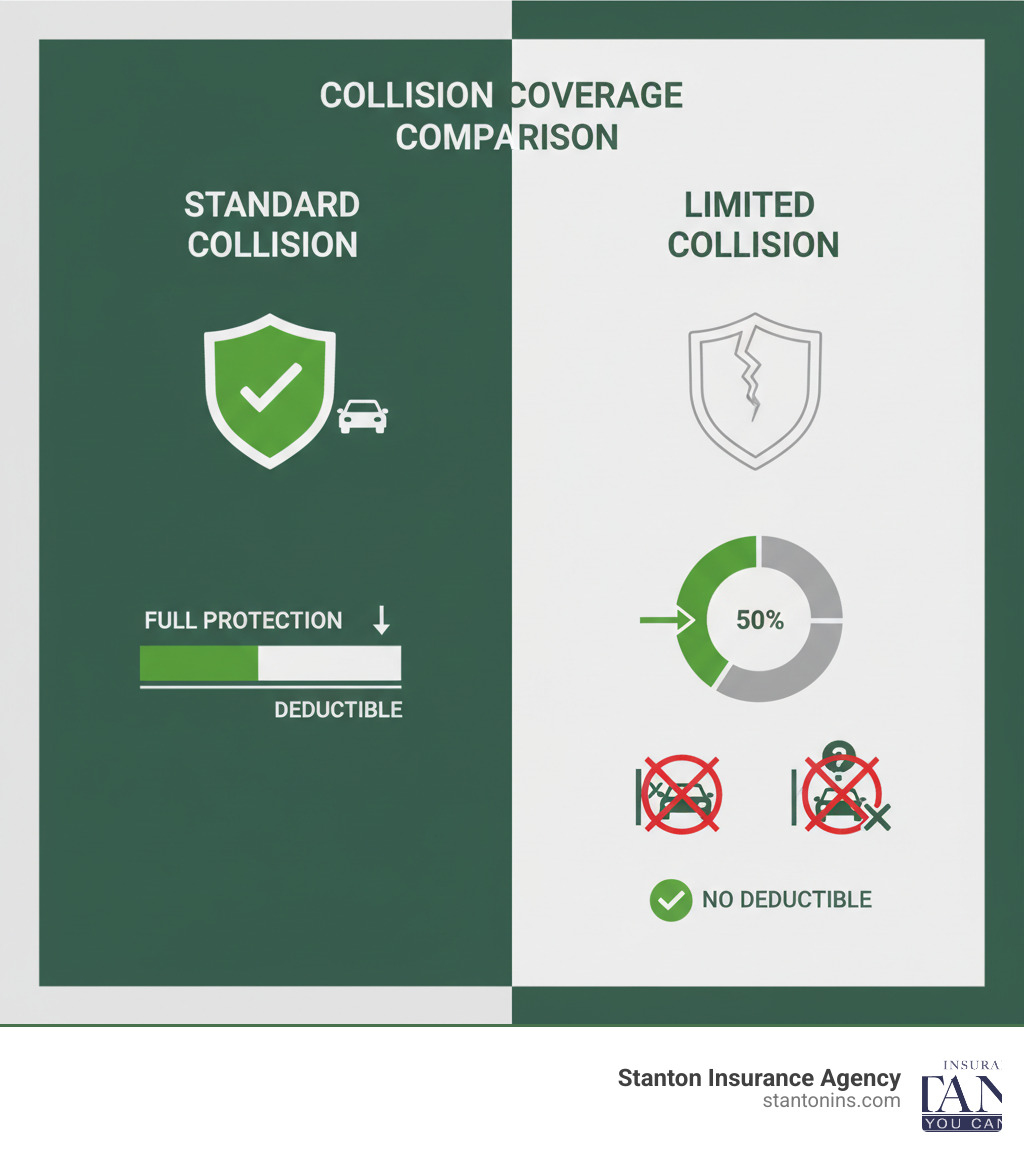
When navigating auto insurance in Massachusetts, the choice between these two coverage types can significantly impact both your wallet and your peace of mind. Standard collision coverage protects your vehicle in any accident, regardless of who caused it. Limited collision coverage, available only in Massachusetts, costs less but only covers you when you’re 50% or less at fault and the other driver can be identified.
The lower premium of limited collision certainly looks attractive on paper—but it’s critical to understand what you’re really trading away. If you cause an accident, back into a pole, or get hit by an unidentified driver, limited collision provides zero coverage. You’d be facing the full repair or replacement cost out of your own pocket.
As Geoff Stanton, President of Stanton Insurance Agency and a fourth-generation insurance professional, I’ve helped countless Massachusetts families steer the question of whats better limited collision or collision coverage for their specific circumstances. With over two decades of experience in the insurance industry and specialized expertise in auto insurance, I’ve seen how this decision can either provide crucial financial protection or leave families vulnerable when they need coverage most.
This guide breaks down everything you need to know about both coverage types, helping you make an informed decision that protects your vehicle, your finances, and your peace of mind on Massachusetts roads.
The Fundamental Difference: Standard Collision vs. Limited Collision
When it comes to protecting your car from accidents, collision coverage is your go-to safety net. But here in Massachusetts, you have a choice that drivers in most other states don’t face. The fundamental difference between standard collision and limited collision coverage comes down to one critical word: fault. This isn’t just insurance jargon—it’s the deciding factor in whether your policy will cover your repairs or leave you reaching for your checkbook.
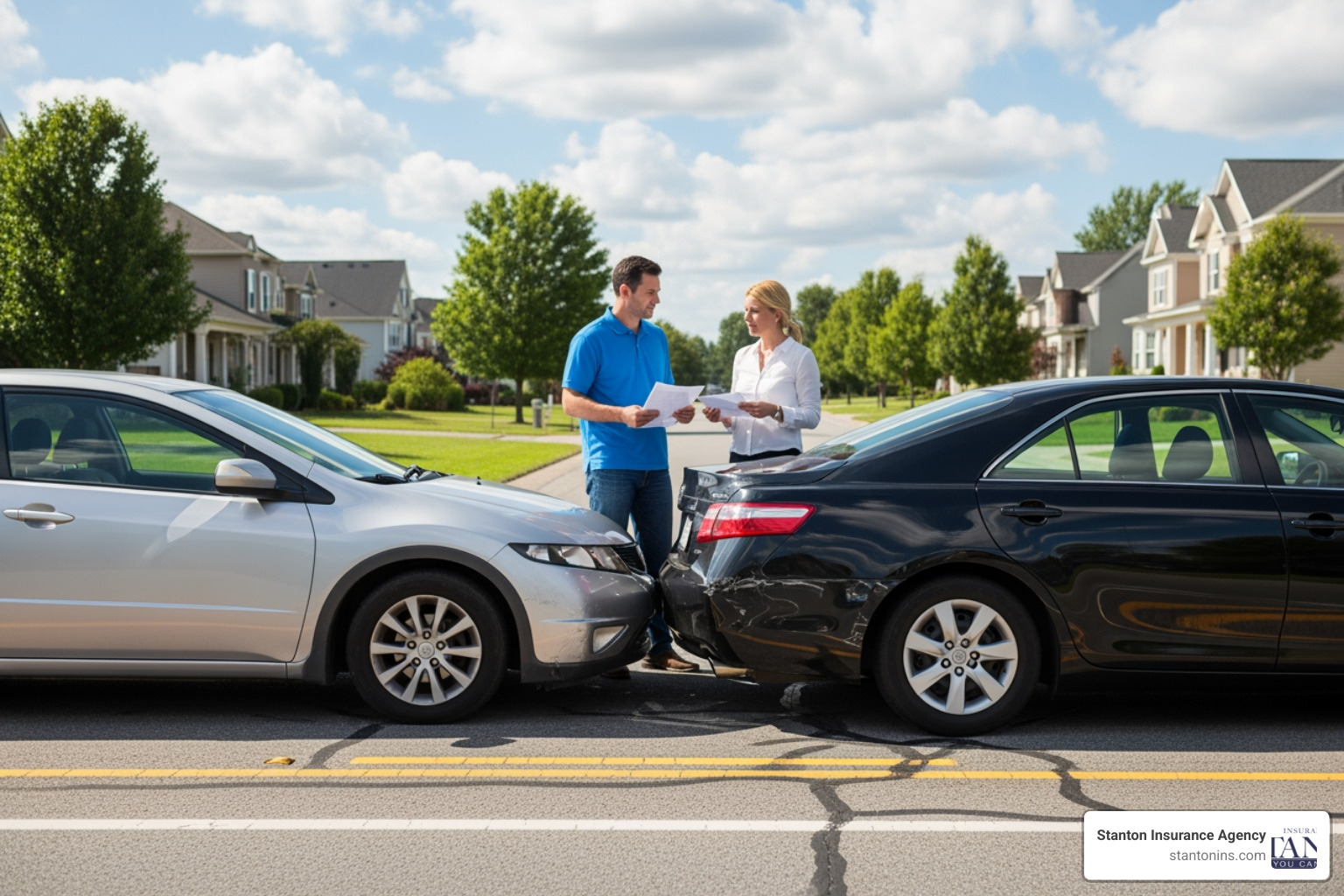
Both coverage types protect your vehicle after a collision, but they operate under completely different rules. Think of it this way: standard collision is like having a friend who always helps you move, no questions asked. Limited collision is more like a friend who’ll help—but only if you weren’t the one who decided to rent a third-floor walk-up.
How Standard Collision Coverage Works
Standard collision insurance is refreshingly straightforward. It helps pay to repair or replace your car if it’s damaged in a collision with another vehicle, an object (like a fence, tree, or guardrail), or if your vehicle rolls over.
The real beauty of standard collision? It pays out regardless of who caused the accident. If you’re distracted for a moment and rear-end someone at a stoplight, you’re covered. If another driver runs a red light and hits you, you’re covered. You simply pay your deductible, and your insurance company handles the repairs.
Here’s where it gets even better: after your claim is paid, your insurer will often go after the at-fault driver’s insurance company through a process called subrogation to recover what they paid out. If they’re successful, you’ll even get your deductible back. This means fault determination happens behind the scenes, but your car gets fixed right away. According to Mass.gov’s basics of auto insurance, this comprehensive approach gives drivers the peace of mind that their vehicle is protected in nearly any collision scenario.
How Limited Collision Coverage Works
Limited collision coverage is Massachusetts-specific, and it plays by much stricter rules. This coverage only pays for your vehicle’s repairs if you are found to be 50% or less at fault for the accident. But there’s an additional requirement that makes this coverage even more limited: the at-fault driver must be identified.
What does this mean in real terms? If you’re more than 50% responsible for an accident, your limited collision coverage won’t help you. If you’re the victim of a hit-and-run where the other driver disappears, you’re out of luck—even if the accident wasn’t your fault at all. In either scenario, you’d be paying for all repairs or replacement costs out of your own pocket.
The trade-off for these restrictions? When limited collision does apply, there’s typically no deductible to pay. Your repairs are covered without any upfront cost to you. It’s a significant perk, but it only matters if your claim actually qualifies under those narrow conditions.
Understanding whats better limited collision or collision coverage starts with recognizing this fundamental split: standard collision offers broad protection with a deductible, while limited collision offers narrow protection without one. The question isn’t which coverage is objectively better—it’s which one is better for your specific situation, your vehicle, and your tolerance for financial risk.
What’s Better: Limited Collision or Collision Coverage? A Detailed Breakdown
Deciding whats better limited collision or collision coverage is a bit like choosing between a high-end, all-weather jacket and a light, stylish raincoat. Both offer protection, but one is clearly more robust for a wider range of storms. This choice involves a careful balancing act between the upfront cost you pay now and the potential financial risk you’re willing to absorb if an accident occurs down the road. Let’s break down this comparison to help you determine which aligns best with your personal circumstances and financial comfort zone.
| Coverage Type | Fault Requirement | Deductible | Premium Cost | Hit-and-Run Coverage | Best For |
|---|---|---|---|---|---|
| Standard Collision | Covers regardless of fault (0-100%) | Yes, chosen by you (e.g., $500, $1,000) | Higher | Yes, covered after deductible | Newer/financed vehicles, peace of mind, all NH drivers |
| Limited Collision | Only if you are 50% or less at fault | No, when it applies | Lower | No, requires identified at-fault driver | Older, low-value vehicles (MA only), drivers with substantial savings |
The Financial Trade-Off: What’s better, limited collision or collision coverage for your budget?
The most immediate and attractive aspect of limited collision coverage is its lower premium compared to standard collision. This cost saving is a direct reflection of the significantly reduced risk the insurance company assumes. With limited collision, the insurer only pays if you’re not primarily at fault and the other driver is identified. This significantly narrows the scenarios in which they’ll have to pay out, allowing them to offer a lower price point.
Standard collision, however, comes with a higher premium. Why? Because the insurance company is taking on a much broader risk. They agree to cover damages to your vehicle whether you’re 100% at fault, 0% at fault, or somewhere in between. This comprehensive protection naturally commands a higher price.
While saving a few hundred dollars annually by opting for limited collision might sound appealing, it’s crucial to understand what you’re really trading away. That lower premium could translate into a multi-thousand-dollar repair bill if you’re ever in an at-fault accident, or if you’re unlucky enough to be involved in a hit-and-run. The financial decision isn’t just about the premium—it’s about weighing that saving against the potential for a catastrophic out-of-pocket expense that could wipe out your savings or leave you without a functioning vehicle.
Think of it this way: if you save $400 per year on your premium by choosing limited collision, but then cause an accident that results in $6,000 worth of damage to your car, you’d need 15 years of premium savings just to break even. And that’s assuming you never have another at-fault accident during those 15 years. The math gets even more sobering when you consider that many vehicles today cost significantly more to repair than they did a decade ago.
Vehicle & Ownership Scenarios: Who is Each Coverage For?
The type of vehicle you drive, its value, and your financial situation are key determinants in deciding whats better limited collision or collision coverage. Let’s look at who each coverage type really serves best.
Standard collision is your best bet if you’re driving a newer or high-value vehicle. If you’ve invested significantly in your car, standard collision protects that investment from a wide array of potential damages. This protection becomes even more essential if you’re still making payments on a lease or loan. Lenders and leasing companies almost universally require standard collision (along with comprehensive coverage) to protect their asset. If you don’t carry it, they might “force-place” an expensive policy on you, which is no fun at all.
Standard collision also makes sense if an unexpected repair bill would cause serious financial strain. If a $5,000 repair bill would mean choosing between fixing your car and paying your mortgage, standard collision provides a crucial safety net. You’ll pay your deductible, and your insurance handles the rest. For those who want to drive without constantly worrying about “what if I hit a tree?” or “what if I cause an accident?”, standard collision offers broad protection and genuine peace of mind.
It’s also worth noting that all drivers in New Hampshire who want collision protection will need standard collision. Limited collision coverage is a Massachusetts-specific option and simply isn’t available across the border.
Limited collision might be a sensible choice if you’re driving an older, low-value vehicle that’s paid off. If your trusty 2010 sedan is worth maybe $4,000, paying $500-$600 annually for standard collision might feel like throwing money away. If you own the car outright and its repair cost would exceed its value anyway, limited collision could make financial sense. This is especially true if you have a substantial emergency fund—enough liquid savings to comfortably cover the full repair or replacement cost of your vehicle out-of-pocket, even in an at-fault accident.
Drivers with a long, clean driving record might also consider limited collision if they’re confident in their driving skills and have a history of avoiding at-fault accidents. However, even the best drivers can have a momentary lapse or encounter unexpected road hazards. A patch of black ice, a distracted moment while adjusting the radio, or a deer darting into the road can happen to anyone. The question isn’t whether you’re a good driver—it’s whether you can afford the financial consequences if something unexpected happens.
The decision between standard and limited collision isn’t just about your driving ability. It’s about your vehicle’s value, your financial cushion, and your comfort level with risk. As we often tell our clients at Stanton Insurance Agency, the right choice is the one that lets you sleep soundly at night, knowing you’re protected in the ways that matter most to your situation.
Understanding the Risks and Related Coverages
Choosing limited collision coverage isn’t just about pocketing a few hundred dollars in premium savings—it’s a strategic financial decision that shifts more risk onto your shoulders. Before you make this choice, it’s important to understand what could go wrong and how this coverage interacts with the rest of your auto insurance policy. For Massachusetts drivers, where limited collision is actually an option, these nuances matter even more.
The Hit-and-Run Nightmare
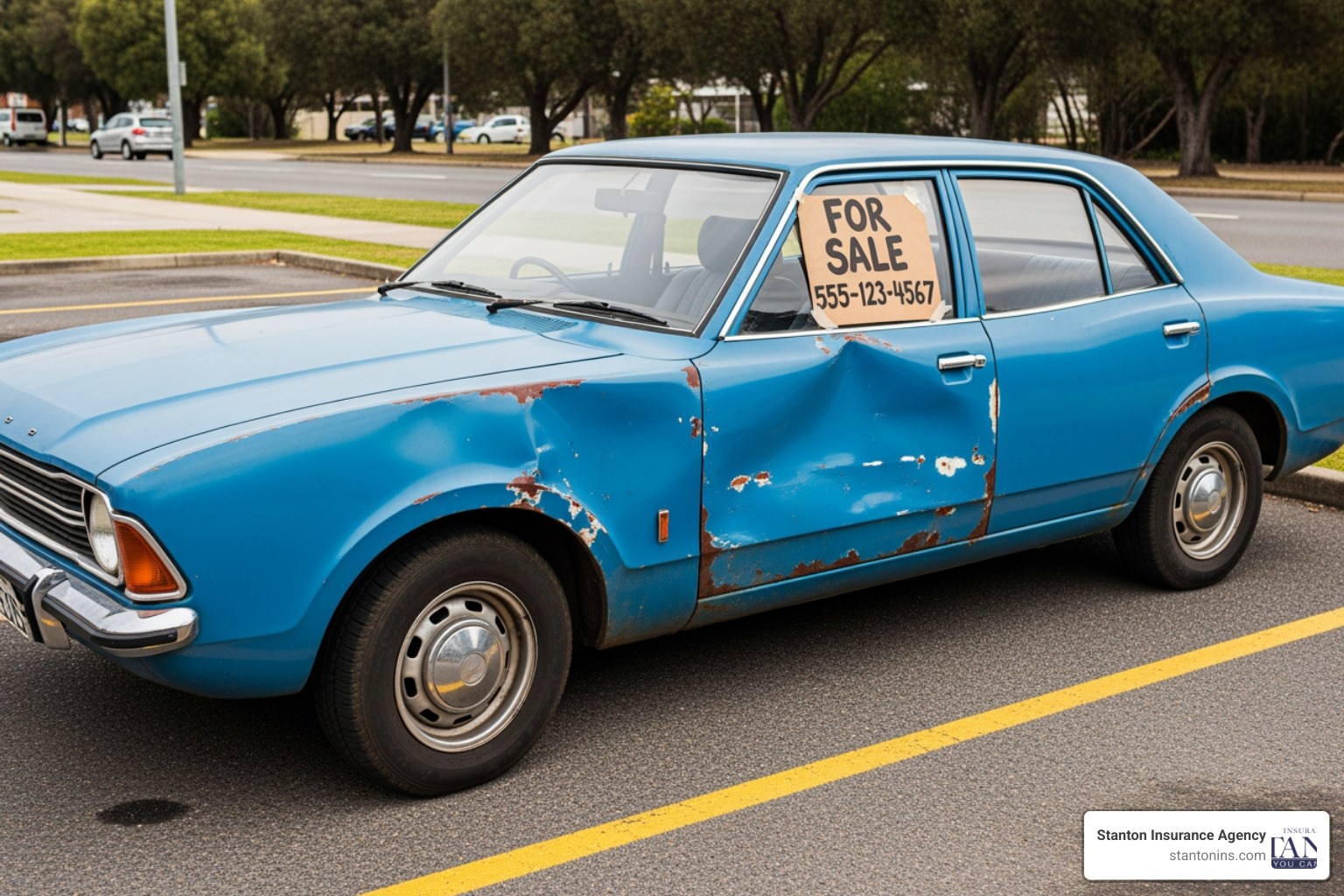
Picture this: You park your car at the grocery store, grab your shopping list, and head inside. Ten minutes later, you return to find a massive dent in your door and scraped paint down the side. The culprit? Long gone. This is the hit-and-run scenario that keeps drivers up at night, and it’s where limited collision coverage reveals its biggest weakness.
With limited collision, you’re completely on your own in this situation. The coverage requires that the at-fault driver be identified, period. No identification means no coverage, even though you did absolutely nothing wrong. You’re stuck with the entire repair bill—which could easily run into thousands of dollars—coming straight out of your pocket.
Standard collision coverage, on the other hand, has your back in exactly this scenario. After paying your deductible, your insurance company covers the damage. It’s the difference between a frustrating inconvenience and a potential financial disaster.
Making the Final Call: What’s better, limited collision or collision coverage for your situation?
The question of whats better limited collision or collision coverage really comes down to how much financial risk you’re comfortable taking on. Think of standard collision as your reliable safety net—it catches you whether you stumble, get pushed, or simply have bad luck. Limited collision is more like a safety net with some rather large holes in it, positioned only in very specific spots.
Standard collision protects you from your own mistakes, other people’s mistakes, unidentified drivers, and even those moments when fault is genuinely unclear. It gives you the freedom to simply call your insurance company after an accident without immediately worrying about whether your coverage will actually apply.
Limited collision asks you to gamble that several things will never happen: you’ll never cause an accident where you’re more than 50% at fault, you’ll never be hit by someone who drives away, and you’ll never find yourself in a situation where the other driver’s insurance company refuses to cooperate or pay promptly. Even when you’re clearly not at fault, dealing with another driver’s insurance can be a headache. With standard collision, you can file with your own insurer, pay your deductible, and let them handle the hassle of pursuing reimbursement from the other party.
Before deciding, ask yourself this honest question: If your car was totaled tomorrow in an accident where you were at fault, could you comfortably write a check for a replacement vehicle without derailing your financial life? If that thought makes you nervous, standard collision is probably the wiser choice. The peace of mind alone is often worth the extra premium.
How Collision Differs from Comprehensive Coverage
Here’s where things can get confusing for many drivers, so let’s clear this up. Comprehensive insurance is not the same thing as either standard or limited collision coverage, even though both protect your vehicle.
Collision coverage—whether standard or limited—is all about impacts and accidents while driving. Your car hits another car, you back into a pole, you swerve and hit a guardrail, your vehicle rolls over. These are collision events.
Comprehensive coverage handles everything else that can damage your car when you’re not in a collision. A tree branch falls on your car during a storm? That’s comprehensive. Someone keys your car in a parking lot? Comprehensive. Your car gets stolen? Comprehensive. A hail storm turns your hood into a golf ball? You guessed it—comprehensive. Even hitting a deer or other animal typically falls under comprehensive, not collision.
In simple terms, comprehensive insurance covers damage to your car from something other than a collision, while collision insurance covers damage to your car when you hit another car or object while driving. They’re separate coverages protecting against entirely different risks. Many drivers choose to carry both, creating a comprehensive shield around their vehicle from just about any potential damage. Together, they ensure you’re protected whether the threat comes from the road, the sky, or someone with bad intentions.
Frequently Asked Questions about Collision Coverage
When I sit down with clients at Stanton Insurance Agency to discuss whats better limited collision or collision coverage, I hear the same thoughtful questions time and again. These aren’t just technical insurance questions—they’re about real concerns for your financial security and peace of mind on Massachusetts roads. Let me address the most common points of confusion I encounter.
Is Limited Collision the same as Comprehensive coverage?
No, and this is one of the most common mix-ups I see! Limited collision and comprehensive coverage are completely different animals, protecting you from entirely different scenarios. Limited collision covers damage to your car from a collision, but only when you meet very specific conditions: you must be 50% or less at fault, and the other driver must be identified. It’s collision coverage with strings attached.
Comprehensive coverage, on the other hand, has nothing to do with collisions or fault. It protects your car from non-collision events like theft, vandalism, fire, hail damage, or even hitting a deer. Think of it this way: collision coverage (whether standard or limited) is about impacts with other vehicles or objects, while comprehensive is about everything else that can damage your car. They work together as a team, but they definitely aren’t the same player.
What happens if I have Limited Collision and am the victim of a hit-and-run in Massachusetts?
This is the scenario that keeps me up at night on behalf of my clients who choose limited collision. If your vehicle is damaged in a hit-and-run, your limited collision coverage will not pay for your vehicle’s repairs. Not a penny.
Here’s why: limited collision has a critical requirement that the at-fault driver must be identified. When someone hits your parked car and speeds away, or sideswiped you and disappeared into traffic, that essential condition isn’t met. No identified driver means no coverage, even though you were completely innocent and did nothing wrong.
To be protected in a hit-and-run situation, you would need standard collision coverage. With standard collision, you’d simply pay your deductible and your insurance would handle the repairs. Without it, you’re looking at paying the entire repair bill yourself, which could easily run into thousands of dollars. This is one of the biggest risks of choosing limited collision, and it’s something every Massachusetts driver should carefully consider.
Why is Limited Collision so much cheaper than Standard Collision?
The price difference reflects the dramatically different levels of risk the insurance company accepts. Limited collision is significantly cheaper because insurers only pay under very narrow circumstances. They’ll write you a check only when you’re 50% or less at fault and the other driver is identified. That’s it.
This means the insurer is completely off the hook for all at-fault accidents where you’re more than 50% responsible, all hit-and-runs, and any situation where the other driver can’t be identified. Since the likelihood of them having to pay a claim is substantially lower, they can charge you a lower premium. It’s a straightforward trade-off: you pay less upfront, but you’re protected in far fewer scenarios. The insurance company isn’t being generous with that lower price—they’re simply charging you for the limited risk they’re actually taking on. The question you need to ask yourself is whether that premium savings is worth potentially paying thousands out of pocket when limited collision won’t cover you.
Get the Right Protection for Your Ride
Choosing between standard and limited collision coverage is one of those decisions that can feel overwhelming at first, but it doesn’t have to be. This choice truly hinges on three key factors: your vehicle’s value, your financial situation, and your personal tolerance for risk. There’s no universal “right” answer—only the right answer for your specific circumstances.
For Massachusetts drivers, limited collision can look incredibly tempting when you’re comparing premium quotes. Who doesn’t want to save a few hundred dollars a year? But as we’ve explored throughout this guide, those savings come with significant gaps in protection. You’re essentially betting that you’ll never be in an at-fault accident and never fall victim to a hit-and-run. For some drivers with older vehicles and substantial savings, that’s a bet worth taking. For others, it’s a risk that could lead to financial hardship.
Standard collision, while more expensive upfront, offers broader and more reliable coverage that brings genuine peace of mind on the road. You’re protected whether you cause the accident or someone else does. You’re covered if a hit-and-run driver damages your car. You simply pay your deductible and move forward, rather than navigating the complex world of fault determination and hoping everything falls into place just right.

At Stanton Insurance Agency, we’ve helped countless Massachusetts families work through this exact decision. We understand that insurance terminology can feel like a foreign language, and that’s exactly why we’re here. Our job isn’t to push you toward the most expensive policy or the cheapest one—it’s to help you find the trusted protection that genuinely fits your life, your vehicle, and your budget.
When you work with us, we’ll sit down and really look at your individual situation. What’s your car worth? How much could you comfortably handle out-of-pocket if something went wrong? What’s your driving history like? Do you have teenage drivers who might be more prone to accidents? These aren’t just checkbox questions—they’re the foundation for making a smart decision about whats better limited collision or collision coverage for your unique circumstances.
We’ll walk you through the real-world pros and cons, not just the technical definitions. We’ll talk about what happens if you’re in a parking lot fender-bender, or if someone clips your mirror and drives away. We want you to drive with confidence, knowing you’ve made an informed choice that protects what matters to you.
Don’t leave your vehicle’s protection to chance or guesswork. Let’s have a conversation about what coverage makes the most sense for you and your family. Ready to find out whats better limited collision or collision coverage for your situation? We’d love to help you figure it out.
