What is uninsured motorist: Essential 2025 Guide
Why Understanding Uninsured Motorist Coverage Matters
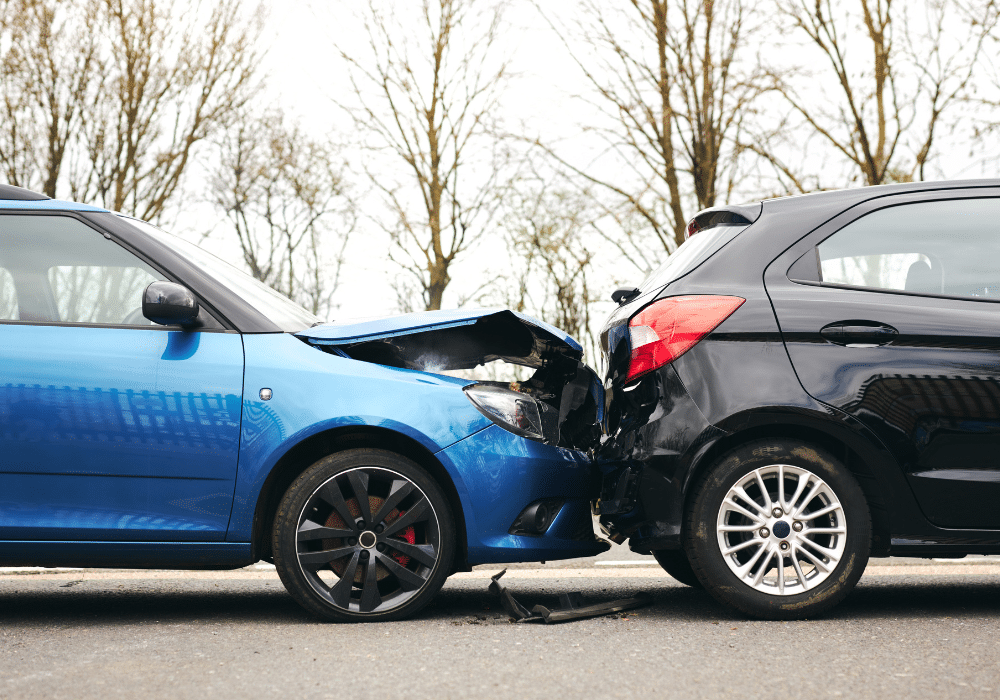
What is uninsured motorist coverage? It’s auto insurance that protects you from the financial fallout of an accident caused by a driver with little or no insurance. This coverage is crucial. While Massachusetts has a low uninsured driver rate (3.5%), New Hampshire’s is significantly higher (9.3%). Nationally, nearly 13% of drivers are uninsured, meaning about one in eight drivers could leave you with the bill for an accident they caused.
Without Uninsured/Underinsured Motorist (UM/UIM) coverage, you could be forced to pay for your own medical bills, lost wages, and vehicle repairs. This protection ensures you aren’t financially ruined by another driver’s lack of responsibility.
I’m Geoff Stanton, President of Stanton Insurance Agency. As a fourth-generation owner, I’ve helped countless Massachusetts and New Hampshire families secure their financial future with the right auto coverage. This guide will walk you through everything you need to know about this essential protection.
What is Uninsured Motorist (UM) and Underinsured Motorist (UIM) Coverage?
When you’re in an accident, you expect the at-fault driver’s insurance to cover your costs. But what if they have no insurance or flee the scene? This is where Uninsured Motorist (UM) and Underinsured Motorist (UIM) coverage become your financial lifeline.
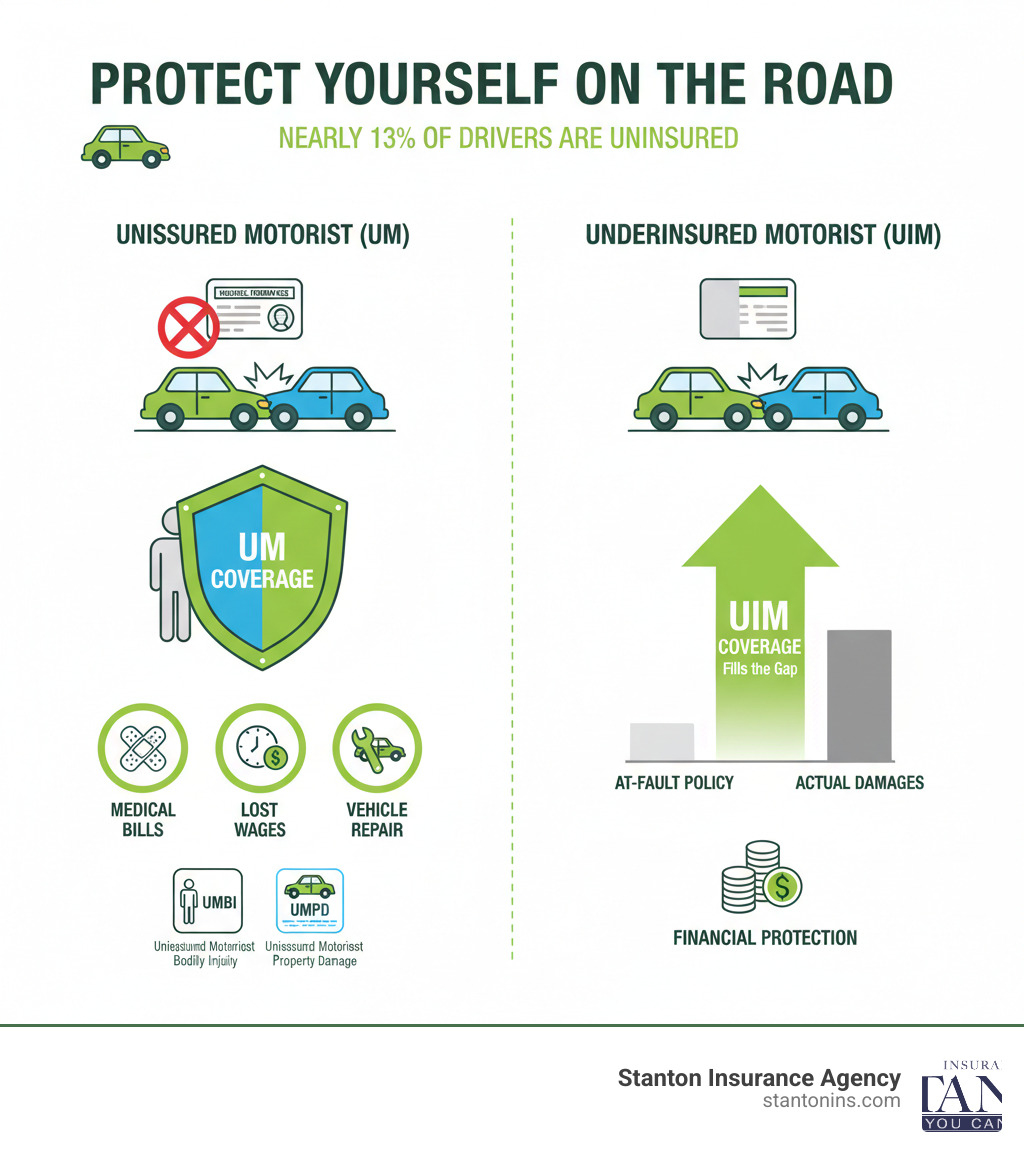
While liability insurance protects others if you cause an accident, what is uninsured motorist coverage is about protecting you. It’s your personal safety net when the other driver’s insurance is inadequate or non-existent. UM and UIM coverage includes protection for Bodily Injury (UMBI and UIMBI) and Property Damage (UMPD), ensuring someone else’s irresponsibility doesn’t become your financial burden. Understanding the difference between uninsured and underinsured drivers is key to proper protection.
Defining Uninsured vs. Underinsured Motorist Coverage
Though often bundled, these two coverages address different scenarios.
Uninsured Motorist (UM) Coverage applies when you’re hit by an at-fault driver with no insurance. This also includes hit-and-run accidents where the driver cannot be identified, or accidents involving a stolen vehicle. Since you can’t file a claim against a driver who can’t be found or isn’t legally responsible, your UM coverage steps in.
Underinsured Motorist (UIM) Coverage is for when the at-fault driver has insurance, but their policy limits are too low to cover all your damages. For example, if your medical bills are $100,000 and the other driver’s liability limit is only $25,000, you face a $75,000 financial gap. Your UIM coverage is designed to fill that gap, up to your policy limits.
| Feature | Uninsured Motorist (UM) Coverage | Underinsured Motorist (UIM) Coverage |
|---|---|---|
| At-Fault Driver Status | Has no insurance, fled the scene, or was driving a stolen vehicle | Has insurance, but their policy limits are too low |
| Purpose | Covers damages when there’s zero liability coverage available | Covers the gap between inadequate coverage and your actual losses |
| Trigger | Complete absence of valid insurance from the other driver | Insufficient policy limits that don’t cover your full damages |
Understanding the Types: Bodily Injury vs. Property Damage
Both UM and UIM are split into two main types:
Uninsured/Underinsured Motorist Bodily Injury (UMBI/UIMBI) is the most critical part of this coverage. It pays for medical expenses, lost wages if you can’t work, and compensation for pain and suffering—something your health insurance will never cover. It protects you and any passengers in your vehicle. Learn more in our guide to Uninsured Motorist Bodily Injury Liability.
Uninsured Motorist Property Damage (UMPD) covers repairs to your vehicle if it’s damaged by an uninsured driver. It typically has a deductible, similar to collision coverage. UMPD and collision coverage work differently, as we explain in our article on Uninsured Motorist Coverage vs Collision. In some states, UMPD may not cover hit-and-runs, making collision coverage necessary.
What Expenses Can UM/UIM Cover?
When you’re hit by an uninsured or underinsured driver, the costs can be overwhelming. UM/UIM coverage is designed to be your financial safety net, stepping in to cover a wide range of expenses that would otherwise come out of your pocket.
This coverage can help pay for immediate medical bills, such as ambulance rides and emergency room visits, as well as ongoing rehabilitation costs like physical therapy. If your injuries prevent you from working, it also replaces lost income. Critically, it provides compensation for pain and suffering, and in the worst cases, can help with funeral expenses.
For your vehicle, UMPD can cover vehicle repairs or its value if totaled. It can also cover other property damage, like personal items inside the car. Your UM coverage also applies in hit-and-run scenarios and even if you’re struck as a pedestrian by an uninsured driver.
Bodily Injury Damages Covered
The human cost of an accident is where UM/UIM coverage proves its worth, covering expenses that can devastate a family’s finances.

UMBI/UIMBI coverage helps pay for:
- Hospital stays and emergency room visits.
- Doctor visits and specialist consultations.
- Physical therapy and other rehabilitation services.
- Long-term care for severe, lasting injuries.
- Lost wages from time off work, and even loss of future earning capacity.
- Compensation for pain and suffering, which addresses the physical and emotional toll of the accident.
For a deeper look at these protections, see our guide on Bodily Injury Liability.
Property Damage and Hit-and-Run Accidents
While injuries are the top priority, damage to your vehicle can be a major financial setback.
If an uninsured driver damages your car, UMPD coverage handles vehicle repair costs or its actual cash value if it’s a total loss. It may also cover replacement of personal property that was damaged inside the car.
In a hit-and-run, your UMPD coverage typically applies as long as the at-fault driver is unidentified. It is crucial to file a police report immediately after a hit-and-run. This official record is almost always required by your insurer to process a UM claim.
Be aware that state-specific rules can affect how UMPD applies. In some cases, your collision coverage may be the primary way to handle hit-and-run property damage. We explore these details on our Property Damage Liability page.
Is Uninsured Motorist Coverage Required and How Much Do I Need?
Whether UM/UIM coverage is legally required varies by state. However, with uninsured driver rates at 3.5% in Massachusetts and 9.3% in New Hampshire, the risk is always present. Considering the national average is nearly 13%, according to the Insurance Information Institute, the question is less about legality and more about financial necessity.
About half of U.S. states mandate some form of UM coverage. Even where it’s optional, the risk of facing an accident with an uninsured driver is high. Without this protection, you are personally responsible for all costs. This coverage is insurance for your insurance—making sure you’re covered even when the other driver isn’t. For personalized guidance, see our resource on How Much Uninsured Motorist Coverage Do I Need.
State Requirements: A Look at Massachusetts and New Hampshire
As we serve both states, it’s important to understand their different approaches.
In Massachusetts, the law is highly protective. Every auto policy must include Uninsured Motorist Bodily Injury (UMBI) and Underinsured Motorist Bodily Injury (UIMBI). This mandatory coverage ensures every driver has a safety net for medical costs and lost wages. While Uninsured Motorist Property Damage (UMPD) is optional, we strongly recommend it. Learn more about minimum car insurance coverage in Massachusetts.
New Hampshire takes a different path. While auto insurance itself is not mandatory, if you choose to buy a policy, it must include both UM and UIM coverage. This provides a smart, built-in safeguard for drivers who opt for insurance. For more details on New Hampshire’s unique laws, visit our page: Are you required to have auto insurance in New Hampshire.
Choosing Your Coverage Limits
How much UM/UIM coverage do you need? The right amount depends on your financial situation.
A good rule of thumb is to match your UM/UIM bodily injury limits to your liability coverage limits. If you have $100,000/$300,000 in liability, you should have the same for your UMBI/UIMBI. This creates a balanced policy that protects you as well as you protect others.
Consider your personal assets, including savings, investments, and home equity. Higher limits shield these assets from being depleted by medical bills after an accident. Your vehicle’s value is also a factor for UMPD, especially if you don’t have collision coverage.
Your health insurance has deductibles and won’t cover lost wages or pain and suffering. UMBI/UIMBI is designed to fill these critical financial gaps.
In some states, you can choose stacked versus unstacked coverage, which allows you to combine limits from multiple vehicles on one policy. This can significantly increase your protection. Explore our guides on Stacked Uninsured Motorist Coverage and Unstacked Uninsured Motorist Coverage to learn more.
The UM/UIM Claim Process: From Accident to Resolution
If you’re in an accident with an uninsured or underinsured driver, having UM/UIM coverage provides a clear path to financial recovery. Knowing the steps can reduce stress during a difficult time. The key is to stay organized and document everything.
For a full overview, our Auto Insurance Accident Claim Complete Guide offers more insight.
What to Do After an Accident with an Uninsured Driver
The actions you take immediately after an accident are critical for your claim.
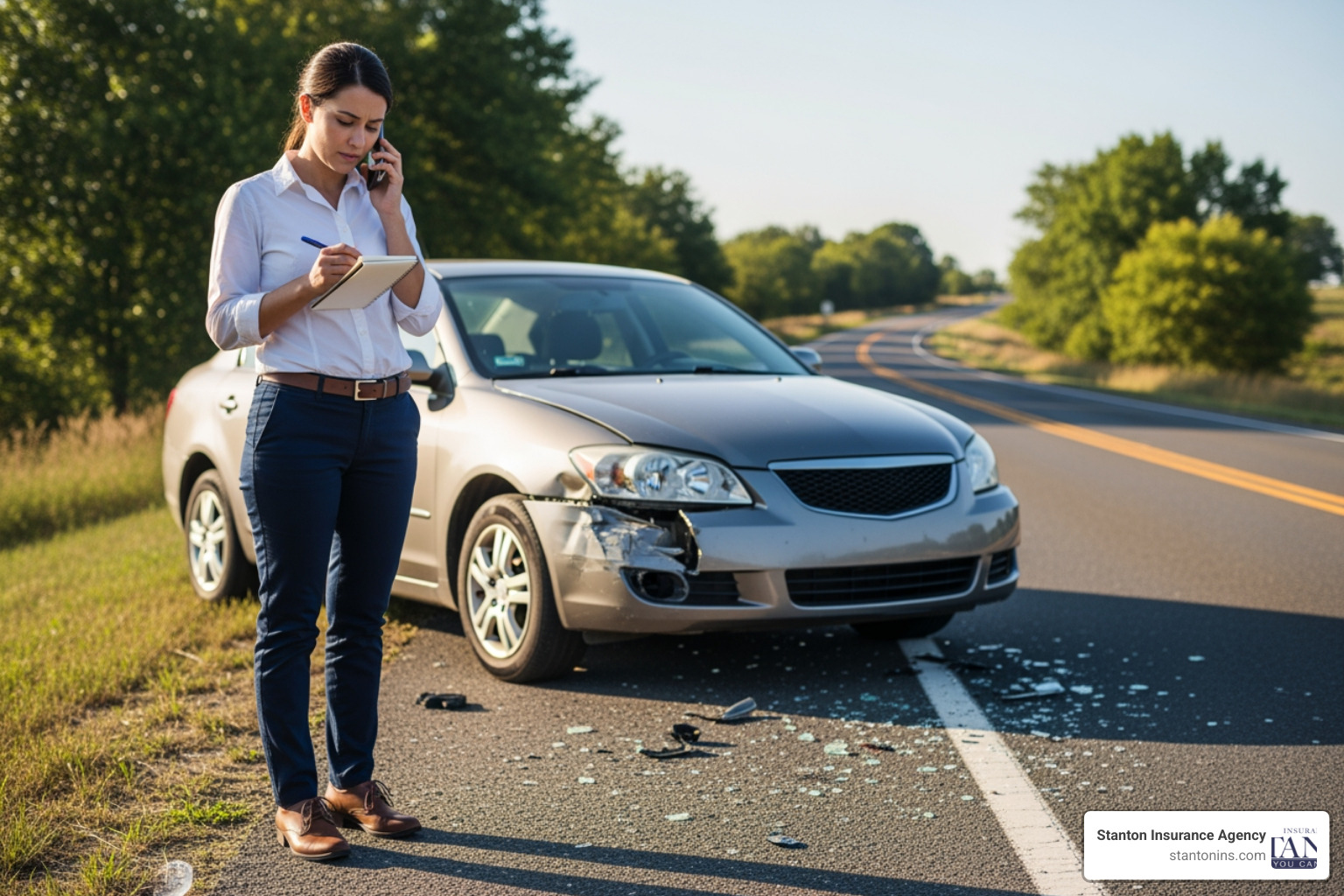
- Prioritize Safety and Call 911: Check for injuries and call for medical help if needed.
- File a Police Report: An official report is essential, especially for a UM claim or hit-and-run. Your insurer will likely require it.
- Exchange Information: If possible, get the other driver’s name, contact details, license number, and license plate.
- Document Everything: Use your phone to take photos and videos of vehicle damage, the scene, road conditions, and any injuries.
- Get Witness Information: If there are witnesses, ask for their names and phone numbers. Their account can be invaluable.
- Notify Your Insurance Company: Contact us at Stanton Insurance Agency as soon as possible. Prompt reporting helps streamline your claim.
How a Claim Works and Its Effect on Your Premiums
After reporting the accident, you’ll file the claim with your own insurer, not the at-fault driver’s. This is a key part of what is uninsured motorist coverage—you claim against your own policy for protection.
You will submit documentation like the police report, medical bills, and repair estimates. An adjuster will review your case to determine damages. Proving the other driver was at fault is crucial, and your documentation will help establish this.
In an underinsured motorist claim, the at-fault driver’s insurance pays its limit first. Your UIM coverage then pays the remaining amount, up to your policy’s limit.
A common question is about deductibles. For bodily injury claims (UMBI/UIMBI), there is typically no deductible. For property damage (UMPD), a deductible usually applies.
Will filing a UM/UIM claim raise your rates? In Massachusetts and New Hampshire, insurers are generally prohibited from adding a surcharge for a not-at-fault accident. While any claim can be a factor in your overall risk profile at renewal, a significant rate hike is unlikely. The financial protection from the claim far outweighs any potential minor premium adjustment.
Frequently Asked Questions about Uninsured Motorist Coverage
We get many questions about what is uninsured motorist coverage. Here are answers to the most common ones.
If I have “full coverage” and health insurance, do I still need uninsured motorist coverage?
Yes. “Full coverage” is an informal term that usually excludes UM/UIM. While your health insurance covers medical bills (minus deductibles and copays), it does not cover lost wages or provide compensation for pain and suffering. UMBI is designed to fill these critical financial gaps for you and your passengers. For more details, read our article: If I Have Full Coverage Do I Need Uninsured Motorist.
What is the difference between Uninsured Motorist Property Damage (UMPD) and Collision coverage?
Both can repair your car, but they apply in different situations. UMPD is for damage caused by an identified, at-fault, uninsured driver. Collision covers damage from a collision with any object or vehicle, regardless of fault. Collision is broader and almost always covers hit-and-runs, whereas UMPD might not in some states. Both typically have a deductible. Learn more in our guide on Collision vs Comprehensive.
Can filing a UM/UIM claim make my insurance rates go up?
In most cases, no. In states like Massachusetts and New Hampshire, you generally cannot be surcharged for an accident that was not your fault. Since a UM/UIM claim means another driver was at fault, it shouldn’t trigger a rate hike. While any claim becomes part of your history, the financial protection you receive is far more valuable than any potential minor adjustment at renewal time.
Secure Your Financial Future on the Road
You can be the safest driver on the road, but you can’t control the actions of others. With uninsured driver rates of 3.5% in Massachusetts and 9.3% in New Hampshire, you are sharing the road with a significant financial risk.
What is uninsured motorist coverage? It’s your financial shield. It ensures that another driver’s irresponsibility doesn’t derail your family’s future by forcing you to cover medical bills, lost income, and repairs out-of-pocket.
At Stanton Insurance Agency, we’ve protected Massachusetts and New Hampshire families for four generations. We believe insurance is about protecting people and the lives they’ve worked hard to build. We’re here to help you understand the real risks and secure the right protection.
Don’t wait for an accident to find a gap in your coverage. Reach out to us today for a personalized review of your auto insurance policy. We’ll help you drive with the confidence that comes from being truly protected.
More info about Auto Insurance