
What is builder’s risk: Essential Safeguard 2025
Why Builder’s Risk Insurance Matters for Your Project
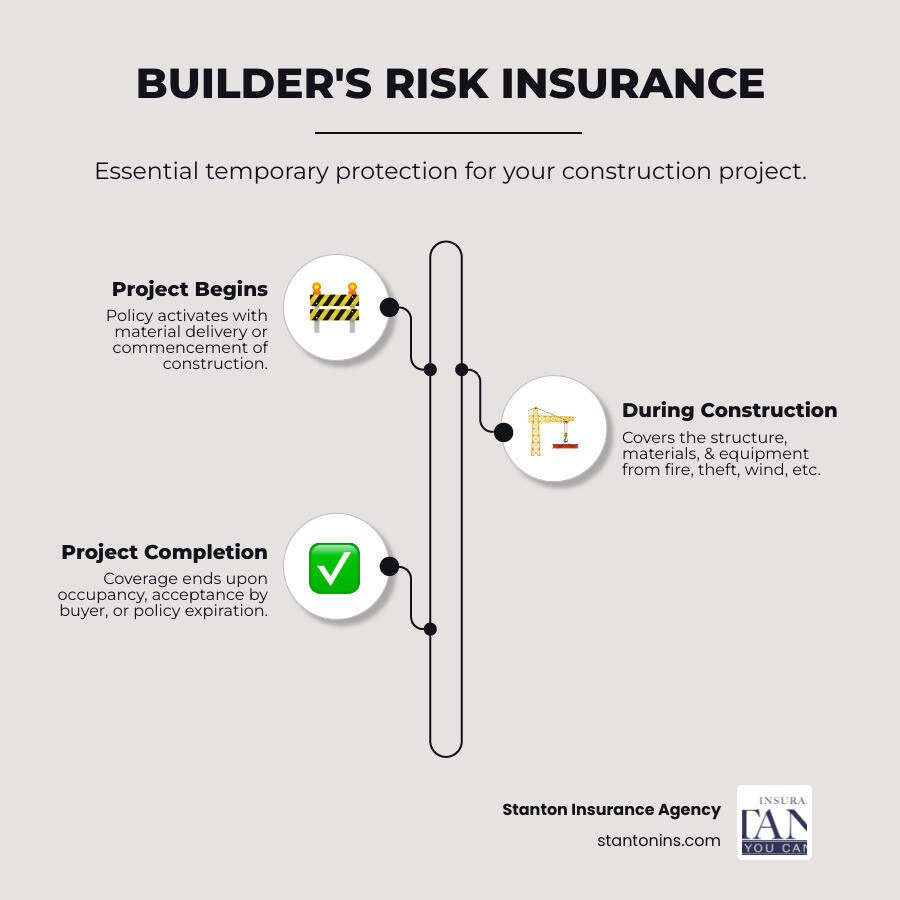
What is builder’s risk insurance? Also called “course of construction” insurance, it’s a specialized property policy that protects buildings, materials, and equipment during construction or renovation. It covers losses from fire, theft, vandalism, wind, and other perils until the project is complete.
Key Points:
- Temporary Coverage: Lasts only during the construction phase
- Property Protection: Covers the structure, materials, fixtures, and equipment on-site
- Common Perils: Fire, lightning, wind, hail, theft, vandalism, and certain natural disasters
- Typical Cost: 1% to 4% of total project cost (e.g., $1,000-$4,000 for a $100,000 project)
- Coverage Ends: When the building is occupied, accepted by the buyer, or the policy expires
Construction projects are exciting but also filled with unique risks. Your investment is vulnerable from the moment materials arrive on-site. Standard homeowners and commercial property policies typically exclude properties under construction, leaving a critical gap in protection.
This specialized insurance is essential for homeowners planning a major renovation, contractors building a new home, or developers. Without it, a single fire, storm, or theft can derail your timeline and budget.
I’m Geoff Stanton, President of Stanton Insurance Agency. With over two decades helping clients in Massachusetts protect their construction investments, I know how crucial builder’s risk is. This guide will walk you through everything you need to know to make an informed decision.
What is Builder’s Risk Insurance and What Does It Cover?
What is builder’s risk insurance? Builder’s risk insurance, or “course of construction” insurance, is a special property policy that protects buildings while they are under construction or renovation. It fills a critical gap left by standard property insurance, serving as the financial backbone to protect your project from unforeseen physical loss or damage.
Imagine building a home in New Hampshire or renovating a commercial space in Massachusetts. Your standard property insurance likely won’t cover the unfinished structure or the materials waiting to be installed. Builder’s risk protects your insurable interest in the materials, fixtures, and equipment used in construction against physical loss from covered causes.
We help you secure comprehensive protection that matches your specific needs. Learn more about the coverage details on our page What does builder’s risk insurance cover.
Standard Inclusions in a Builder’s Risk Policy
A typical builder’s risk policy covers a range of mishaps that can occur during construction.
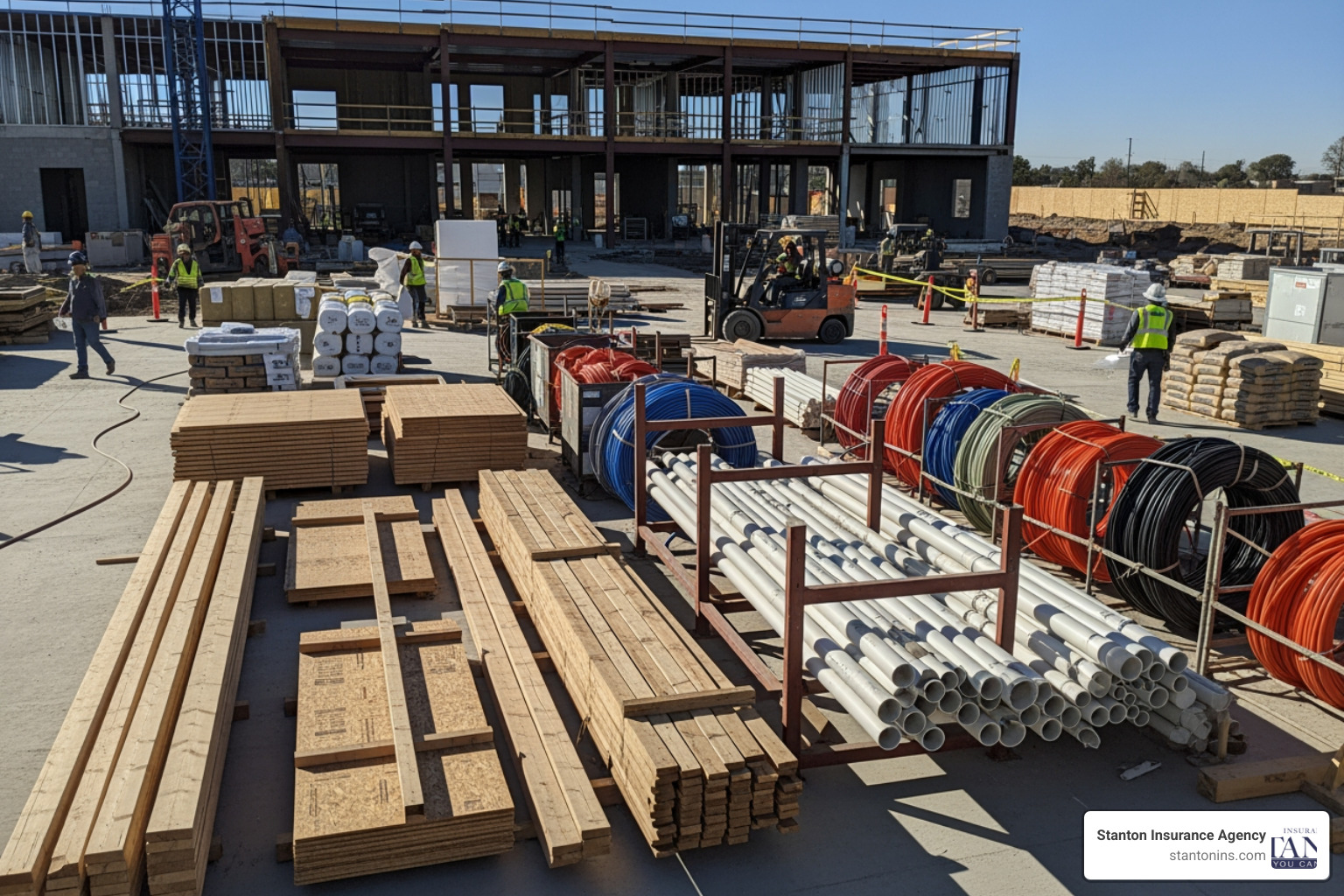
The structure itself is covered as it’s built, from the foundation up. On-site materials, fixtures, and equipment like lumber, plumbing, and wiring are protected before installation. This protection often extends to materials in transit or temporarily stored off-site.
Foundations are protected, as are essential scaffolding and temporary structures. If disaster strikes, debris removal costs are also typically included.
The policy protects against common perils like fire, lightning, hail, explosions, theft, vandalism, and wind. For example, if a Nor’easter hits the Massachusetts coast and damages an unfinished frame, builder’s risk helps cover the repairs. The National Association of Surety Bond Producers provides additional insights into these standard coverages.
Common Exclusions to Be Aware Of
Knowing what isn’t covered is just as important. Most standard policies exclude certain events, though coverage can sometimes be added through endorsements for an additional premium.
Earthquakes and floods typically require specific endorsements. This is particularly important for properties in flood-prone areas of Massachusetts or New Hampshire. You can explore this topic further on our page Does builder’s risk insurance cover flood.
Employee theft is generally excluded, while theft by external parties is usually covered. Faulty design or workmanship isn’t covered because the policy protects against external perils, not inherent flaws. These issues may fall under professional liability insurance.
Mechanical breakdowns, gradual wear and tear, and catastrophic events like war are also typically excluded. Workplace accidents and injuries require separate Workers’ Compensation Insurance, as builder’s risk is property, not liability, coverage. Finally, land and landscaping usually aren’t covered.
Can a policy be customized? What is a builder’s risk endorsement?
Absolutely. Builder’s risk insurance is highly flexible, and your policy can be customized to fit your project.
Endorsements are add-ons to a standard policy that extend coverage to risks not included in the base plan. They allow us to tailor your protection to your project’s unique exposures.
Flood and earthquake coverage is essential if your project is in a susceptible area. Protection for materials in transit or stored off-site ensures your supplies are covered before they even reach the job site.
Soft costs coverage is especially valuable. If a covered loss causes delays, this endorsement can help recoup financial losses like additional loan interest, property taxes, and architectural fees.
Testing of building systems covers damage that might occur when testing new HVAC or electrical systems. Some policies may also need endorsements for scaffolding, construction forms, and temporary structures.
Understanding these options is key to comprehensive protection. Learn more about how these modifications work on our page about Builder’s Risk Endorsement.
The Key Players: Who Needs and Buys This Insurance?
Understanding what is builder’s risk insurance involves more than just knowing what it covers—it’s also about who needs it and who is responsible for buying it.
Several parties have a financial stake, or “insurable interest,” in a construction project. This means their finances would be impacted if something went wrong. Any of them might need or be required to purchase the policy. Clear communication before work begins is key to ensuring there are no coverage gaps.

Who Needs Builder’s Risk Insurance?
Anyone with a financial interest in a construction project likely needs builder’s risk insurance. This includes a broader group than most people expect.
- Property owners are the most obvious candidates. Whether building a home in New Hampshire or developing commercial property in Boston, you stand to lose the most. Standard homeowners insurance won’t cover a major renovation or new build, which is why builder’s risk exists. If you’re a homeowner, learn more on our page Can a homeowner get builder’s risk insurance.
- General contractors and custom home builders have significant risk. They oversee the project, manage materials, and protect their professional reputation. A major loss can be devastating.
- Subcontractors have an insurable interest in their portion of the work and the materials they’ve supplied.
- Lenders and financial institutions providing construction loans have a huge financial interest to protect. They will almost certainly require builder’s risk insurance before releasing funds.
- Architects and engineers may be listed as additional insureds, though their primary protection comes from professional liability insurance.
Who Pays for the Policy?
So, who actually pays for builder’s risk insurance? The answer is found in the construction contract.
While either the property owner or the general contractor can purchase the policy, many experts recommend the property owner should be the one to buy it. This gives the owner direct control over the coverage, limits, and any claim payouts. Since you’ve paid for the materials and labor, you want to manage how insurance money is used to fix any problems.
Some contractors prefer to handle the insurance and include the cost in the project budget. While convenient, this may reduce your visibility into policy details and control over claims. Whichever route you choose, ensure it’s clearly defined in your contract before work begins. For more on this, visit our page on Who pays for builder’s risk insurance.
Is Builder’s Risk Insurance Legally Required?
This is an important distinction: no state law in Massachusetts or New Hampshire specifically mandates builder’s risk insurance.
However, it is almost always a non-negotiable requirement for practical reasons:
- Lender requirements: If you’re financing your project, the bank or mortgage company will require a policy to protect their collateral—the unfinished building. You won’t get your loan without it.
- Municipal building permits: Many towns and cities in Massachusetts and New Hampshire require proof of builder’s risk insurance before issuing a building permit.
- Contractual obligations: The construction contract will almost certainly stipulate that a policy must be in place to protect both the owner and the contractor.
So, while not legally mandated by the state, the financial and practical realities of construction make builder’s risk insurance a necessary component of any significant building project.
Understanding the Financials: Cost and Policy Duration
The cost and duration of a builder’s risk policy are tied directly to your project’s specifics. It’s a temporary policy with a clear start and end, and its premium reflects the total value at risk. Understanding these financial aspects is crucial for effective budgeting and planning.

How is the cost of builder’s risk insurance determined?
Premiums generally range from 1% to 4% of the total construction cost. For a $500,000 project, this could mean a policy cost between $5,000 and $20,000. The wide range is because every project is unique, and several factors influence the final price:
- Project value and scope: Larger, more complex builds with higher total costs lead to higher premiums. The calculation is based on the anticipated completed value, including all labor and materials (but excluding land value).
- Location: A project near the Massachusetts coast faces different storm risks than one in New Hampshire’s White Mountains. Urban sites in Boston may have higher theft risks than rural ones.
- Construction materials: Wood-frame construction carries a higher fire risk than steel and concrete structures, which affects the premium.
- Contractor’s experience: Insurers favor seasoned contractors with solid safety records and minimal claims history.
- Policy deductible and limits: A higher deductible will lower your premium but means you pay more out-of-pocket in a claim.
We’ve created resources to guide you: How much does builder’s risk insurance cost offers more detail, and our Builder’s Risk Insurance Cost Calculator can provide a personalized estimate.
‘Hard Costs’ vs. ‘Soft Costs’
When determining total project value for builder’s risk insurance, it’s important to understand the difference between hard and soft costs. A standard policy covers hard costs, while soft costs typically require an endorsement.
Hard costs are the tangible, physical expenses of construction. This includes labor, materials (lumber, concrete, steel), and on-site equipment. These are the “sticks and bricks” that physically make up your structure. If a storm damages framing or thieves steal piping, that’s a hard cost claim.
Soft costs are indirect expenses that accumulate when a covered loss delays your project. These are often overlooked but can be substantial. Imagine a fire causes a four-month delay. You would still face ongoing expenses like:
- Additional loan interest
- Architectural and legal fees
- Real estate taxes
- Inspection and re-permitting fees
- Marketing expenses (for commercial properties)
These indirect costs can add up quickly. That’s why we always discuss adding a soft cost endorsement to a standard policy.
How long does coverage typically last?
Builder’s risk is temporary insurance designed for the construction phase. Policies are typically written for 3, 6, or 12-month terms, depending on the project’s estimated timeline.
Coverage ends when one of the following trigger events occurs, whichever comes first:
- The policy expires or is canceled. If your project is delayed, you must request an extension before the policy expires to avoid a dangerous gap in coverage.
- The building is occupied or put to its intended use. At this point, you transition to a permanent homeowners or commercial property policy.
- The property is accepted by the buyer and they take possession.
- The project is formally deemed complete.
The timing of this transition is crucial to ensure continuous protection. For more details, visit How does builder’s risk insurance work.
Builder’s Risk vs. Other Policies: Key Distinctions
It’s easy to confuse builder’s risk with other insurance types, but they serve very different purposes. Understanding these distinctions is crucial for ensuring your project is fully protected. Comprehensive Construction Insurance has many layers, and knowing what is builder’s risk is a vital piece of the puzzle.
What is the difference between builder’s risk insurance and commercial property insurance?
The primary difference is the status of the property. Builder’s risk protects what you’re building, while commercial property insurance protects what you’ve already built.
Builder’s risk insurance is temporary coverage for a structure in progress. It protects the physical property, materials, and equipment during construction.
Commercial property insurance (or homeowners insurance) is permanent coverage for a completed and operational building. It protects the finished structure and its contents once occupied. These policies are not interchangeable; a standard property policy will almost certainly exclude coverage for a building undergoing major construction.
Here’s a quick comparison:
| Factor | Builder’s Risk Insurance | Commercial Property Insurance |
|---|---|---|
| Policy Term | Temporary (for project duration) | Permanent (annual or multi-year) |
| Covered Property | Structure in progress, materials, equipment | Completed building, permanent fixtures, business contents |
| Valuation | Completed value of project (including labor & materials) | Actual cash value or Replacement cost |
| Typical Use Case | New construction, major renovations, additions | Daily business operations, occupied residences |
Builder’s Risk vs. General Liability
These two policies cover entirely different types of risk, and you need both for comprehensive protection.
Builder’s risk is first-party property coverage. It protects your investment in the physical structure and materials. If a fire damages the partially built home, builder’s risk covers the cost to repair or rebuild. It’s about damage to the project itself.
General liability is third-party coverage. It protects you if your construction activities cause injury to someone else (like a visitor or neighbor) or damage their property. If a piece of lumber falls and damages a neighbor’s car, your general liability policy would respond. It’s about damage caused by the project to others.
In short: builder’s risk covers damage to the project, while general liability covers damage caused by the project. One protects your investment; the other protects you from claims by others.
Frequently Asked Questions about Builder’s Risk Insurance
Here are answers to common questions we hear from homeowners and contractors in Massachusetts and New Hampshire. Understanding them can help you avoid costly mistakes.
Does my homeowners insurance cover a major renovation?
Generally, no. This is a common and costly misconception. A standard homeowners policy is designed for an occupied, completed home and is not built to handle the unique risks of active construction.
Most homeowners policies have clauses that limit or void coverage when a home is vacant or undergoing major work like removing a roof or tearing down walls. If a fire broke out during your renovation, you could be left uninsured. A separate builder’s risk policy is the safest way to insure a significant renovation or addition, as it’s specifically designed for projects in progress.
What happens if the project is delayed and takes longer than the policy term?
Project delays are common due to weather, material shortages, or other complications. If your project extends beyond your policy term, you must act quickly.
Contact your insurance provider to request a policy extension before your current policy expires. Letting your coverage lapse, even for a day, leaves your project unprotected. A storm, fire, or theft during that gap could be financially devastating. It’s critical to stay in communication with your insurance agent about your project’s timeline.
Can I get a builder’s risk policy after construction has already started?
It can be difficult and more expensive, but it’s not always impossible. Some insurers may offer coverage if the project is less than 30% complete, though you’ll likely face higher premiums and potential limitations. The insurer will probably require a thorough inspection of the work completed to date.
The best practice is to secure your Builder’s Risk Insurance Policy before any work begins or materials are delivered. This ensures continuous, seamless protection from the start and helps you avoid gaps in coverage, extra costs, and unnecessary hassle.
Secure Your Project from the Ground Up
A construction project is a significant investment that is vulnerable to fire, theft, storms, and vandalism from day one. Whether you’re building a new home by Lake Winnipesaukee or renovating a business in Boston, your investment is at risk.
What is builder’s risk insurance? It is the essential safeguard that stands between your project and financial disaster. It protects your physical investment from the moment materials arrive until the project is complete, ensuring an unexpected loss doesn’t force you to absorb catastrophic losses or start from scratch.
This guide has covered the fundamentals: what builder’s risk covers, who needs it, how it can be customized, and how it differs from other policies. You now understand the financial aspects, including the critical difference between hard and soft costs.
Knowledge is powerful, but protection requires action. The construction phase is one of the most vulnerable periods in a building’s life, so don’t leave your investment to chance. The experts at Stanton Insurance Agency are here to help you steer the complexities of builder’s risk insurance. We take the time to understand your unique project in Massachusetts or New Hampshire, identify potential coverage gaps, and tailor a policy that provides comprehensive protection from groundbreaking to completion.
Contact us today to get started and explore how our Builder Risk Insurance solutions can provide you with peace of mind. Your project deserves to be protected.
