Top 3 what can be covered under citizens commercial property insurance
Navigating Commercial Property Insurance When Standard Options Aren’t Available
When asking what can be covered under Citizens commercial property insurance, it’s important to know that these policies primarily protect your business from physical losses. Generally, this coverage includes:
- Building Structures: This covers the physical building itself, along with any permanently attached fixtures and machinery.
- Business Personal Property: This includes your movable assets inside the building, such as furniture, equipment, and inventory.
- Personal Property of Others: This protects items belonging to others that are in your care, custody, or control on your premises.
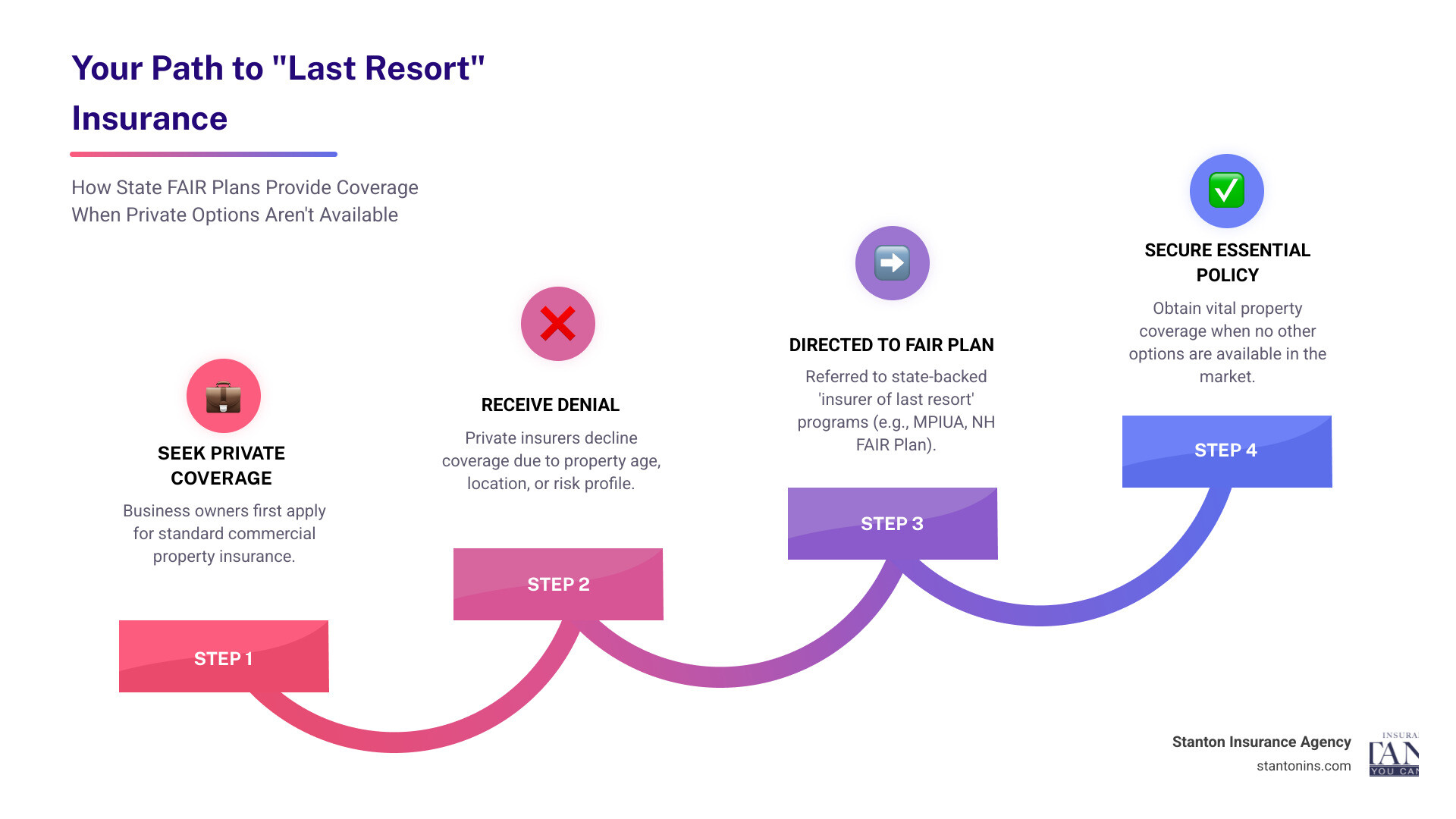
For business owners in Massachusetts and New Hampshire, securing the right Commercial Property Insurance is a critical step in protecting your investment. But what happens when you can’t find coverage in the private market due to your property’s age, location, or risk profile? This is where state-backed “insurer of last resort” programs, like the Massachusetts Property Insurance Underwriting Association (MPIUA) or the NH FAIR Plan, come into play. While often referred to by the well-known “Citizens” name from other states, these plans serve the same vital purpose: providing essential coverage when no one else will. This guide breaks down exactly what these policies can cover, who is eligible, and what limitations you need to be aware of.
I’m Geoff Stanton, President at Stanton Insurance. With experience specializing in Commercial Property & Liability, particularly for small and medium-sized portfolios, I’ve helped countless businesses understand what can be covered under Citizens commercial property insurance and similar vital policies. Let’s dig into the specifics.
Key what can be covered under citizens commercial property insurance vocabulary:
- Commercial Property Insurance
- commercial property insurance rates
- is collapse covered by commercial property insurance
Who is Eligible for a State FAIR Plan Commercial Policy?
When you’re trying to figure out what can be covered under Citizens commercial property insurance (or rather, the MA/NH equivalents), it’s important to know that eligibility for these specialized policies is pretty strict. They’re not meant to compete with the private insurance market. Think of them as a crucial safety net, there only when you truly can’t find coverage elsewhere. The main rule of thumb? You must have genuinely tried and failed to get necessary property insurance from a standard carrier. In Massachusetts, for example, you’ll need to show clear proof that private insurers have denied you. This idea is a lot like how Citizens Property Insurance Corporation works in Florida, stepping in as the insurer of last resort when the private market options just aren’t there or are way too expensive.
What types of properties and entities can be covered?
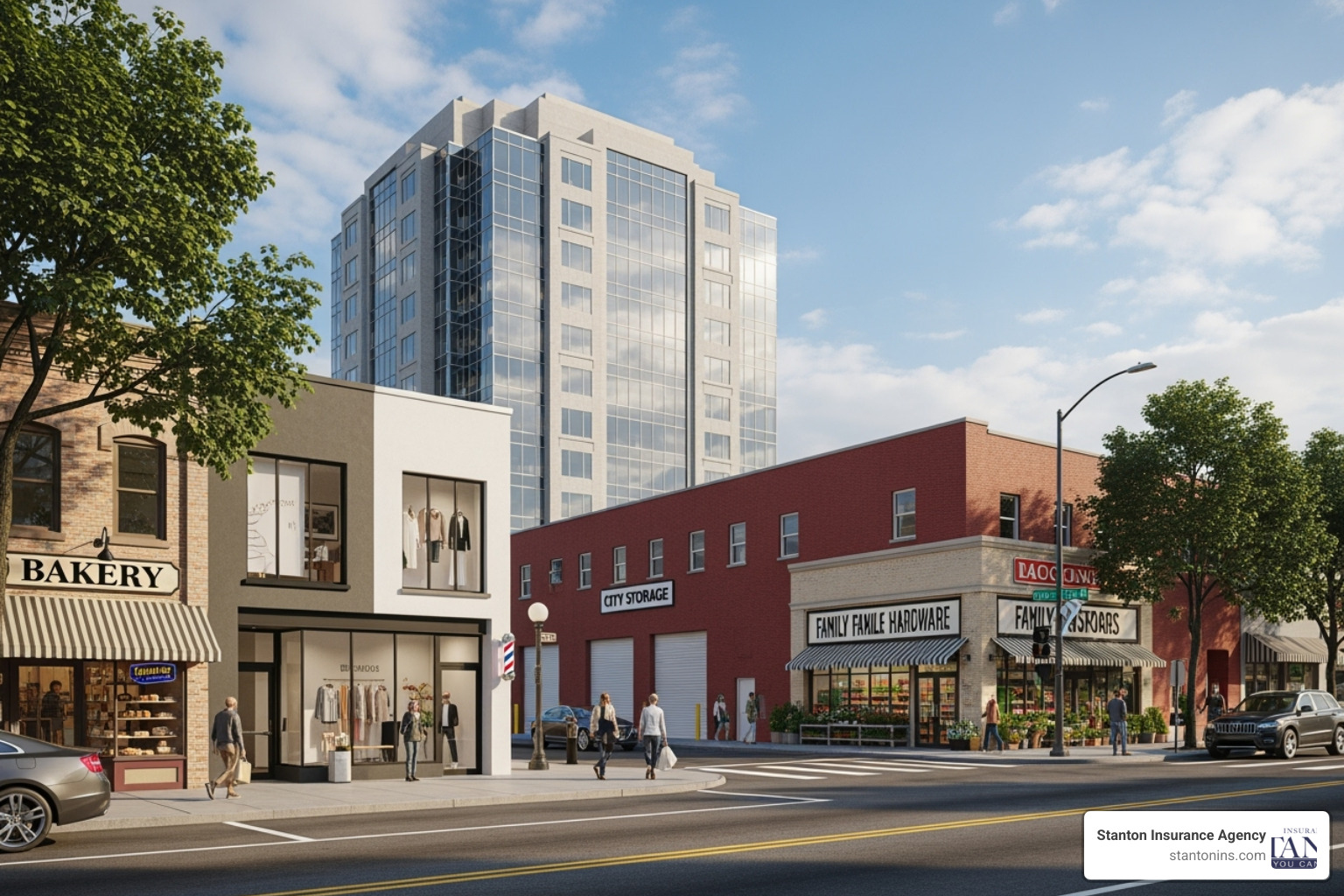
These state-backed plans are designed to cast a wide net, providing essential coverage for a variety of commercial properties and the organizations that own or manage them. This often includes general Eligible Properties like your local Retail Spaces, busy Warehouses, and even professional Office Buildings.
But it’s not just about traditional businesses! These plans also extend their protection to Condominium Associations and Homeowner Associations, making sure the common areas and structural integrity of shared spaces are protected. If you own an apartment building, you’ll be glad to know that Apartment Building Insurance can also be secured through these plans, offering vital coverage for your residential units. And let’s not forget our community heroes: Non-profit organizations also need to protect their physical assets, and state plans can step in when private options are scarce. For more details on protecting these vital groups, you can explore Insurance For Nonprofit Organizations. These programs truly aim to meet the needs of business owners, homeowner associations, and condominium building owners who, through no fault of their own, are struggling to find coverage in the private market.
What are the key eligibility criteria for a business?
Since these plans are truly a “market of last resort,” there are specific hoops you’ll need to jump through to qualify. We see these requirements quite consistently across different state programs, ensuring they only cover properties that truly need them.
First off, you’ll need Proof of Denial. This means you must show that you’ve actively tried to get coverage from standard private insurers and been turned down. It’s not just about finding a cheaper quote; it’s about genuine unavailability. For instance, in some states, to qualify for a “Citizens” type policy, the premiums from private insurers might need to be 20% or more higher than the state plan’s, or coverage might simply be unavailable altogether.
Next, consider your High-Risk Location. Properties situated in areas prone to specific dangers, like coastal zones susceptible to windstorms or urban areas with higher crime rates, often struggle to get private coverage. This makes them prime candidates for these state plans. Similarly, Unique Property Characteristics – perhaps a very old building, unusual construction methods, or a historically significant property – might not fit standard underwriting guidelines, pushing them towards these specialized programs.
The core criterion is that your property must be Uninsurable in Private Market. These plans exist to fill this crucial gap, not to compete with private insurance carriers. Oh, and sometimes, especially for properties older than 20 years, a Four Point Inspection might be required. This is like a health check-up for your commercial building, assessing the condition of the roof, plumbing, electrical, and HVAC systems. It helps determine the property’s eligibility and spots any potential risks before coverage is issued.
What Can Be Covered Under Citizens Commercial Property Insurance?
Understanding the scope of coverage is crucial for managing your risk. When you’re looking into what can be covered under Citizens commercial property insurance or similar state-backed plans, remember these policies are designed to protect your physical assets from direct property damage. Think of them as a vital safety net. While they offer essential protection, it’s also good to know they might not be as comprehensive as a policy you’d find in the private market. Let’s break down exactly what these policies aim to cover.
What can be covered for the building structure?
When we talk about your building structure, we’re focusing on the physical bones of your commercial property. This includes everything that makes up the shell and the permanent fixtures within it.
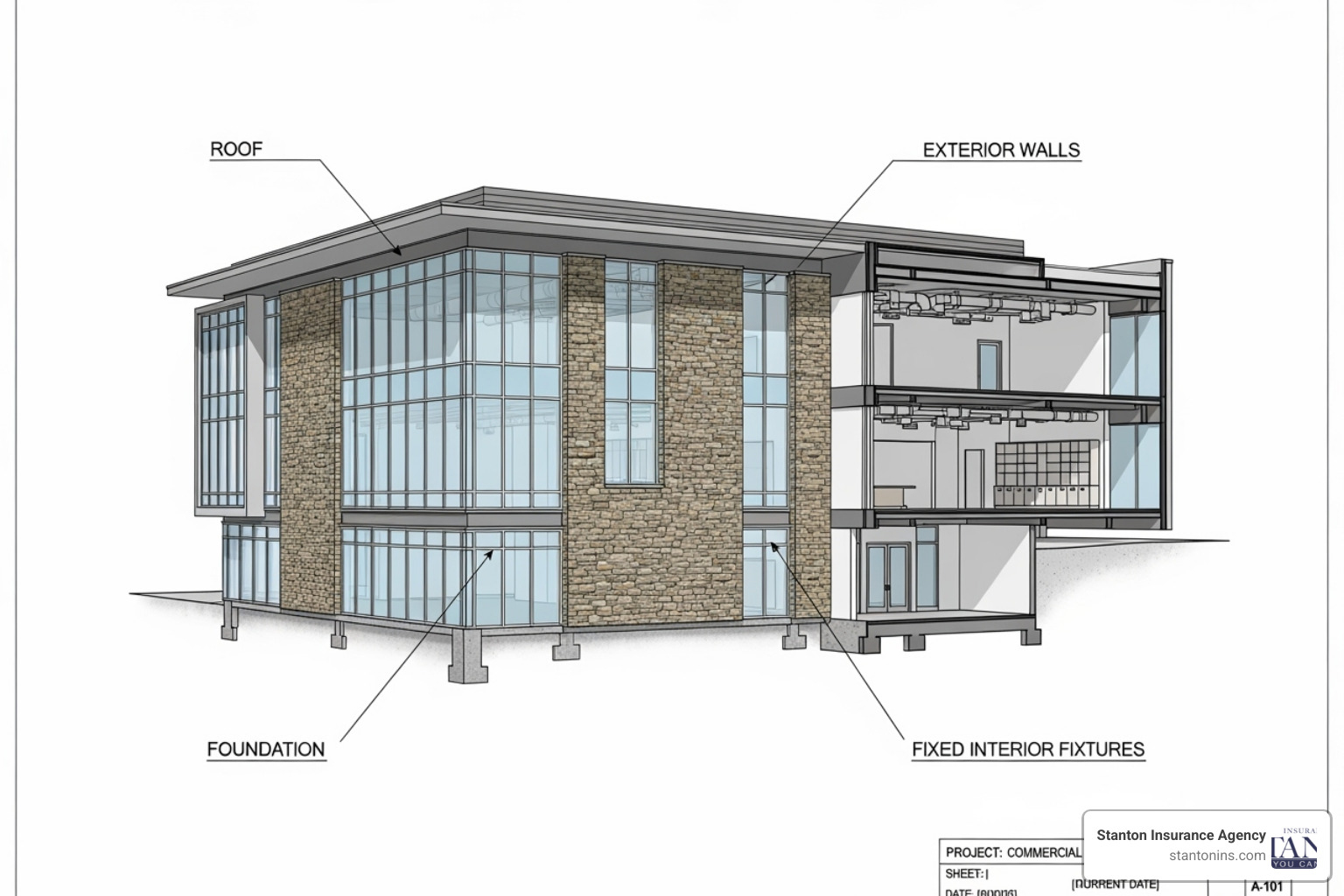
Typically, coverage extends to:
- Completed Additions: If you’ve added a new wing or expanded your office space, these permanent structures are included.
- Fixtures (indoor and outdoor): This means anything permanently attached to the building, from built-in cabinetry and lighting fixtures inside to your outdoor signs and attached lighting.
- Permanently Installed Machinery and Permanently Installed Equipment: This covers heavy machinery or equipment that’s bolted down or integrated into your building’s systems, like your HVAC units or specialized industrial equipment.
- Fire-Extinguishing Equipment: Essential safety items such as sprinkler systems and fire alarms are protected.
- Floor Coverings: Your permanently installed flooring, whether it’s carpeting, tiles, or hardwood, is also part of the covered structure.
- Service and Maintenance Property: This includes personal property used to service or maintain the building itself, like outdoor furniture for common areas, or materials and supplies kept on site for repairs and upkeep (often within 100 feet of the premises).
This comprehensive coverage ensures that the foundation, walls, roof, and all the essential, unmovable elements of your commercial property are protected, giving you peace of mind about your core investment.
Beyond the building, what business assets are protected?
While the building is certainly important, the true heartbeat of your business often lies within its contents and operational assets. Commercial property insurance also extends its protective umbrella to these vital components, which we broadly categorize as Business Personal Property.
This includes:
- Your own Business Personal Property: This is a broad term for the movable assets your business owns, located inside the insured building or even within 100 feet of it (for example, if it’s in a company vehicle parked nearby). This category covers items like your Furniture (desks, chairs, shelving units), all your Inventory and Stock (merchandise for sale, raw materials, finished products), and even Leased Equipment that you’re contractually obligated to insure.
- Tenant Improvements: If you’re a tenant and you’ve made permanent changes or additions that can’t be removed when you leave – like installing new, unremovable carpeting in your leased office space – these improvements are covered.
- Property of Others (in your care, custody, or control): This is a really important one for many businesses! If you’re holding property that belongs to your customers or clients, and it gets damaged while on your premises, this coverage can step in. For instance, if you run a repair shop and a customer’s device is damaged in a fire, this part of your policy could help cover the loss. The policy typically ensures payment goes directly to the property owner.
To easily distinguish what counts as Business Personal Property, here’s a fun little trick: imagine flipping your entire building upside down. Everything that would fall out? That’s generally considered your Business Personal Property. It’s a simple way to remember what’s covered inside your walls!
Understanding Your Coverage: Causes of Loss Forms
The level of protection your policy provides is defined by its “Causes of Loss” form. This document specifies which perils (causes of damage) are covered. There are three standard forms, each offering a different breadth of coverage. Understanding these is key to knowing exactly what can be covered under Citizens commercial property insurance and what you’re protected against.
Think of it this way: choosing a Causes of Loss form is like selecting a safety net for your business. Some nets have bigger holes, while others catch almost everything that falls through.
| Peril / Coverage Form | Basic Form | Broad Form | Special Form |
|---|---|---|---|
| Fire | ✓ | ✓ | ✓ |
| Lightning | ✓ | ✓ | ✓ |
| Windstorm | ✓ | ✓ | ✓ |
| Explosion | ✓ | ✓ | ✓ |
| Smoke | ✓ | ✓ | ✓ |
| Vandalism | ✓ | ✓ | ✓ |
| Aircraft/Vehicles | ✓ | ✓ | ✓ |
| Riot/Civil Commotion | ✓ | ✓ | ✓ |
| Sinkhole Collapse | ✓ | ✓ | ✓ |
| Volcanic Action | ✓ | ✓ | ✓ |
| Falling Objects | ✓ | ✓ | |
| Weight of Ice/Sleet/Snow | ✓ | ✓ | |
| Water Damage (burst pipes) | ✓ | ✓ | |
| Collapse | ✓ | ✓ | |
| Direct Physical Loss (unless excluded) | ✓ |
Basic and Broad Form: Named Perils Coverage
Both Basic Form and Broad Form operate on what we call a “named perils” basis. This means your policy only covers losses caused by the specific dangers explicitly listed in your insurance contract. It’s like having a bouncer at your business who only lets in people whose names are on the guest list.
The Basic Form is the most restrictive option, covering fundamental perils that most businesses face. When you see fire, lightning, windstorm, explosion, smoke, vandalism, damage from aircraft or vehicles, riot or civil commotion, sinkhole collapse, volcanic action, and sprinkler leakage, you’re looking at the core protections this form provides.
The Broad Form builds on this foundation by adding six more perils to your protection. You’ll get coverage for falling objects (like that tree branch that crashes through your roof), weight of ice, sleet, or snow (particularly relevant here in New England!), water damage from burst pipes or appliance malfunctions, collapse of your building structure, breakage of glass, and freezing damage.
Here’s the catch with named perils coverage: the burden of proof is on you to show that a listed peril caused the damage. If your property suffers damage from something that’s not specifically named in your policy, you’re generally out of luck. It’s a more limited approach, but it comes with lower premiums.
Special Form: All-Risk Coverage
The Special Form takes a completely different approach and is often called “all-risk” or “open perils” coverage. Don’t let the “all-risk” name fool you, though—it doesn’t truly cover every possible risk (we’ll talk about exclusions in the next section).
What makes the Special Form special is that it covers all direct physical losses except for those specifically listed in the exclusions section. Instead of having to prove your damage came from a covered cause, the burden of proof shifts to the insurance company. If a loss occurs, your insurer must demonstrate that the damage was caused by an excluded peril to deny your claim.
This broader protection approach means you’re covered against a much wider array of unforeseen events. That mysterious water stain that appeared overnight? If it’s not specifically excluded, you’re likely covered. The Special Form offers the most comprehensive property coverage available through these state-backed plans.
Most state FAIR Plans offer a Special Form option, and it’s typically what we recommend for the most robust protection of your business assets. While it costs more than Basic or Broad Form coverage, the peace of mind and comprehensive protection often make it worth the investment.
Customizing Your Policy: Endorsements and Exclusions
No single policy covers everything. Even the Special Form, which offers broad protection, has its limits. Think of your what can be covered under Citizens commercial property insurance policy as a base meal. You can tailor it with endorsements (like adding extra toppings to your favorite pizza!) to fill gaps and make it perfect for your business. But just like a pizza place might not offer every single topping in the world, you also need to know what’s not on the menu at all – these are the typical exclusions.
What additional coverages can be added?
While a standard policy provides a strong foundation, most businesses need a little more specialized protection to truly bounce back after a major event. These add-ons, called endorsements, can be a lifesaver:
First up, there’s Ordinance or Law Coverage. Imagine your building is damaged by fire. When you go to rebuild, local laws might require you to meet new, stricter building codes. This endorsement helps cover those increased costs, ensuring you can rebuild to today’s standards, not just replace what was there.
Then we have two critically important coverages for your income flow: Business Income (or Business Interruption) Coverage and Extra Expense Coverage. If a covered peril, like a windstorm, forces you to close your doors, Business Income helps replace the profits you lose and covers those ongoing fixed expenses (like rent or salaries) until you can reopen. It can even step in if civil authorities block access to your business after a disaster. Extra Expense Coverage helps with the necessary costs you incur to get back up and running quickly – like renting temporary office space or equipment, or paying overtime to staff. We truly recommend these for every business!
For businesses handling perishable goods, like restaurants or florists, Spoilage Coverage is a must. This protects against losses when your inventory spoils due to things like equipment breakdown or power outages.
Thinking about your tech? Standard policies often have limited protection for your computer networks and digital information. An Electronic Data Processing (EDP) Insurance endorsement specifically protects your computer hardware, software, and valuable data, even against things like power surges or certain virus attacks that a regular policy might miss.
And if your business takes its tools or inventory on the road, consider an Inland Marine Policy. Most commercial property policies only cover items at your main location. An Inland Marine policy (sometimes called an equipment or installation floater) steps in to cover your equipment, tools, or inventory when they’re off-site, perfect for contractors, caterers, or mobile service providers.
What common perils are typically excluded?
Even with all the customization in the world, there are some things commercial property insurance policies generally don’t cover. These are the “not on the menu at all” items, and they often require separate, specialized policies.
The biggest exclusions are often natural disasters like Flood Damage and Earthquake Damage. Especially here in Massachusetts and New Hampshire, if your business is in an area prone to flooding, it’s absolutely critical to secure a separate flood insurance policy. We can help you figure out if Does Your Business Need Flood Insurance?
Your policy also won’t cover gradual issues like Wear and Tear, rust, or mold (beyond very limited circumstances). Insurance is for sudden, unexpected accidents, not for general maintenance or things that simply deteriorate over time.
Then there are perils related to human intent or large-scale conflicts. Intentional Damage caused by you or someone acting on your behalf is never covered. Similarly, damage from Nuclear Hazard, War and Military Action, or large-scale acts of Terrorism are typically excluded or require very specific government-backed programs.
Finally, some very specific types of property are usually excluded or have very low limits. This includes highly liquid assets like Money, Notes, and Securities, which often need a separate crime insurance policy. And, well, if you’re dealing with Contraband (illegal goods), insurance is probably the least of your worries!
It’s always, always a good idea to read your policy carefully. Don’t hesitate to sit down with your agent and discuss these exclusions. Understanding what’s not covered is just as important as knowing what can be covered under Citizens commercial property insurance and similar plans!
Frequently Asked Questions about FAIR Plan Commercial Insurance
We often hear common questions about these unique “insurer of last resort” policies. Let’s tackle some of them head-on, so you can feel fully informed and confident about your business’s protection.
What is the biggest risk of having a FAIR Plan policy?
Perhaps the most significant thing to understand about a state-backed “Citizens” type policy is the potential for assessments. Think of it this way: these plans are designed to be a safety net, funded by premiums and, if needed, by other insurance policyholders in the state. If a big disaster hits and the plan’s funds run low, policyholders like you could face an extra charge on your premium to help cover the shortfall.
For example, in some states, assessments on “Citizens” policyholders can be up to 15% of the premium for each of the plan’s three accounts, potentially maxing out at a significant 45% of your premium if all three accounts have a deficit. It’s a collective responsibility that comes with being part of this crucial safety net, ensuring the plan can always pay its claims.
Are these policies different from standard commercial property insurance?
Yes, they definitely are! While FAIR Plan policies offer vital protection, they’re built to be a backstop, not to compete with the private insurance market. This means they often come with a few key differences:
- Less Comprehensive Coverage: While these policies cover the essential what can be covered under Citizens commercial property insurance aspects, like your building and business personal property, they might not offer the same wide range of optional coverages or higher limits that private insurers do. They focus on providing basic, critical protection.
- More Restrictions: You might find more specific rules or limitations on eligibility or coverage compared to a policy you’d get from a standard carrier.
- Valuation Methods: A big difference lies in how claims are paid out. FAIR Plans may primarily offer Actual Cash Value (ACV) settlement. This means if your property is damaged, you’d receive its depreciated value (what it’s worth today, factoring in wear and tear), not necessarily what it would cost to replace it brand new. Private market policies often offer Replacement Cost, which covers the cost to replace your damaged property with new property of similar quality, without subtracting for depreciation. This is a huge distinction for your financial recovery!
- Lower Limits: The maximum amount the policy will pay out for certain types of property or perils might be lower than what’s available from private insurers.
These plans are there to provide a lifeline when no other options exist, not to be a full-service, highly customizable solution like you might find in the private market.
Can I be forced to leave the FAIR Plan?
Yes, it’s possible! These state-backed plans are truly insurers of last resort. Their whole purpose is to step in when the private market can’t or won’t provide coverage for your business.
So, if market conditions change, or if a private insurance company decides to offer you a comparable policy, you might actually become ineligible for the FAIR Plan. In many states, if a standard insurer offers you a policy that meets certain criteria (like offering similar coverage at a reasonable price), you could be “depopulated” or “taken out” of the FAIR Plan. This means you’d be required to accept the private market offer. This process helps ensure that the state plan can continue to focus on its role as a safety net for those who truly have no other options.
Secure the Right Protection for Your Business
Well, we’ve covered a lot, haven’t we? Navigating commercial property insurance, especially when standard options feel out of reach, can certainly feel like a winding road. But here’s the good news: Whether your business finds its perfect fit with a state FAIR Plan or through the private market, the ultimate goal remains the same – keeping your valuable assets safe and sound.
These “insurer of last resort” plans, like those often associated with the “Citizens” name, are truly a vital safety net. They’re there to catch you when other avenues close. But as we’ve explored, understanding precisely what can be covered under Citizens commercial property insurance – along with its unique limitations and potential risks – is absolutely essential for your peace of mind.
That’s where we come in. At Stanton Insurance Agency, we believe in making this complex world simple for you. Our expert team is here to help you sort through all your options, decipher the fine print, and pinpoint the most comprehensive and cost-effective policy that truly fits your unique situation. We’re not just about policies; we’re about partnership.
Ready to ensure your business is protected, no matter what? Let’s chat. For a complete review of your commercial property insurance needs, and to discuss what can be covered under Citizens commercial property insurance for your specific property, explore our Commercial Property Insurance services. We’re here to help you secure the right protection, so you can focus on what you do best – running your business.