
Safe holiday lighting tips: 5 Essential Ways to Prevent Hazards
Why Holiday Lighting Safety Matters for Your Home
Safe holiday lighting tips are essential knowledge for every homeowner who wants to create a festive display without risking their family’s safety or property. The statistics are sobering: an average of 770 fires are caused by Christmas lights every year, and U.S. fire departments respond to an estimated 790 home structure fires annually that begin with holiday decorations.
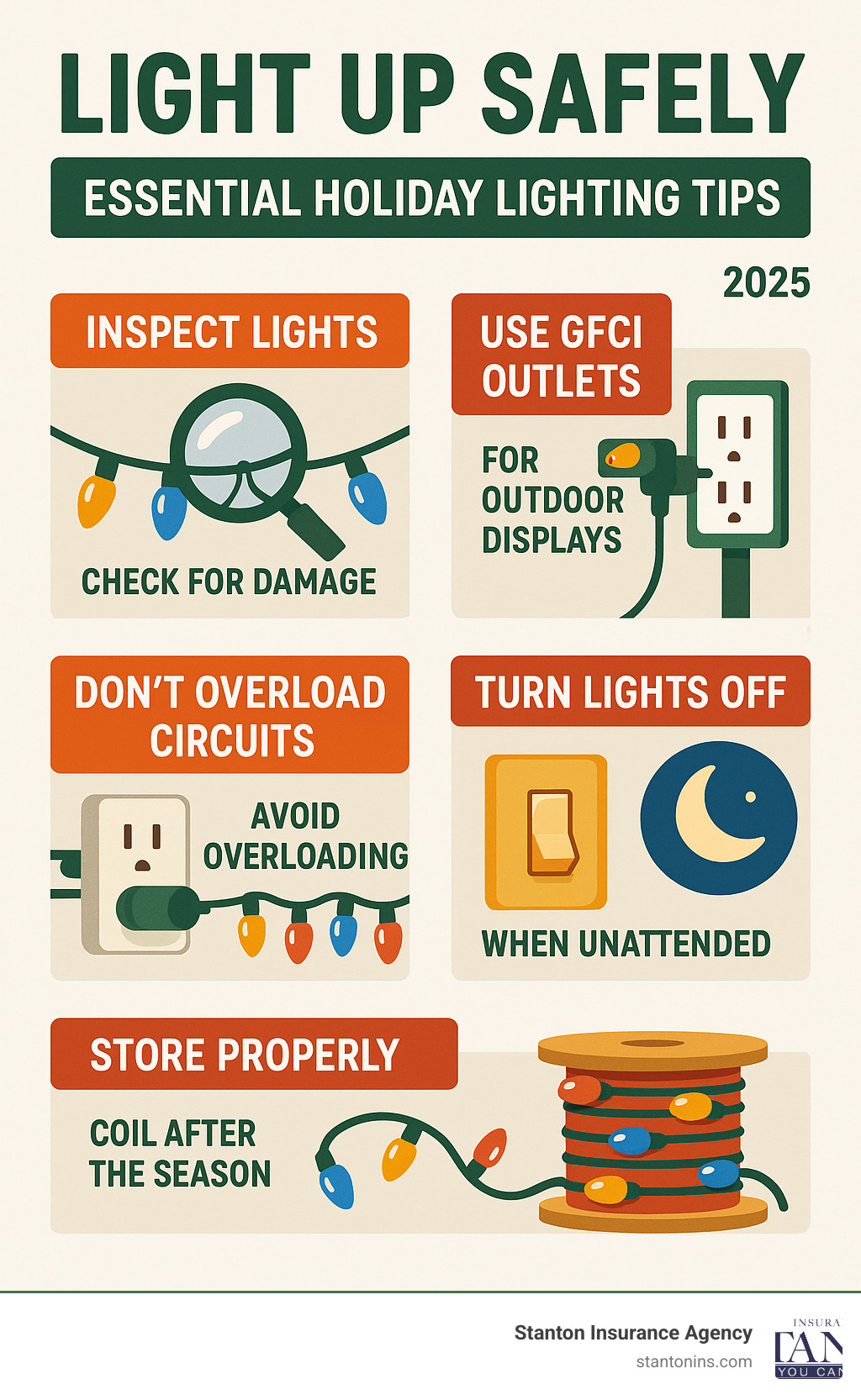
Essential Safe Holiday Lighting Tips:
- Inspect all lights – Check for frayed wires, cracked sockets, and loose connections before use
- Use GFCI outlets – Always plug outdoor lights into Ground Fault Circuit Interrupter-protected outlets
- Don’t overload circuits – Connect no more than three incandescent light strands per extension cord
- Turn lights off – Always switch off decorations when sleeping or leaving home
- Choose the right lights – Use indoor-rated lights inside and outdoor-rated lights outside
- Store properly – Wind lights carefully around spools and store in cool, dry places
The winter months already see nearly half of all home fires, making proper electrical safety during the holidays even more critical. LED lights offer significant advantages over traditional incandescent bulbs, using up to 75% less energy and generating much less heat.
As an insurance professional with over 25 years of experience at Stanton Insurance Agency, I’ve seen how preventable holiday lighting accidents can devastate families and homes. My expertise in safe holiday lighting tips comes from helping countless clients understand the risks and proper precautions needed to protect their most valuable assets during the festive season.
Safe holiday lighting tips terms to know:
Before You Decorate: Inspection and Selection
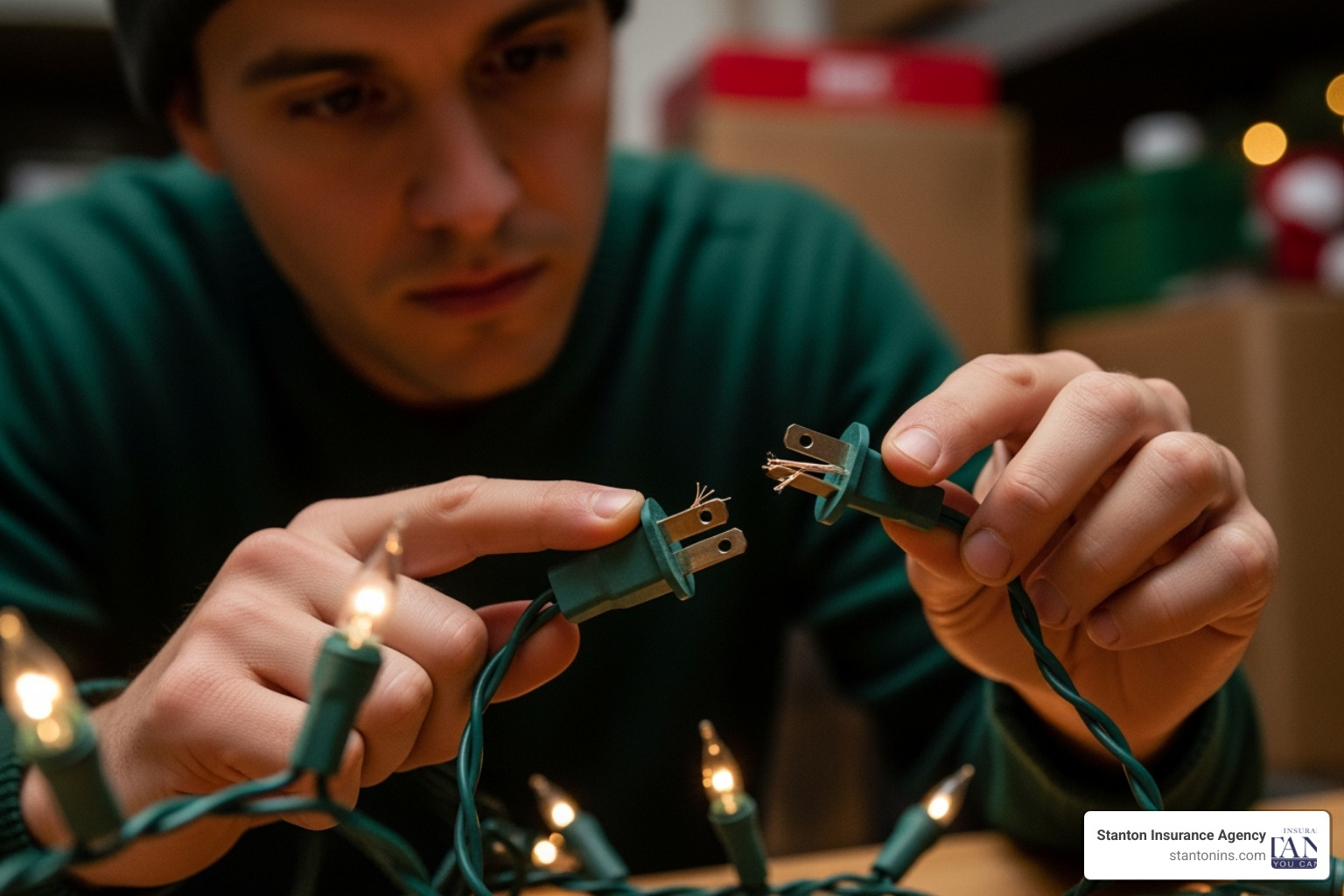
The excitement of decorating for the holidays can make it tempting to dive right in, but taking time to prepare properly is one of the most important safe holiday lighting tips you’ll ever follow. Before that first strand goes up, a careful inspection of your equipment and thoughtful product selection can prevent the electrical hazards that cause most holiday lighting accidents.
Think of this preparation phase as your safety insurance policy. Just as you wouldn’t drive without checking your car’s condition, you shouldn’t decorate without ensuring your lights are ready for the job ahead.
Choose the Right Lights for the Job
Walking down the holiday lighting aisle can feel overwhelming, but understanding the difference between indoor and outdoor lights makes shopping much simpler. Indoor lights are designed primarily with fire safety in mind, tested specifically for use around Christmas trees and other indoor decorations. Outdoor lights, however, are built like little weather warriors – they have thicker insulation and sturdier construction to handle New England’s unpredictable winter conditions.
Using indoor lights outside is like wearing a summer dress in a snowstorm – it just won’t end well. The moisture from rain, snow, and ice can cause electrical shorts, fires, or dangerous shocks when indoor lights face outdoor conditions.
When you’re shopping, look for certification marks from independent testing laboratories. The UL (Underwriters Laboratory) mark is your best friend here. Pay attention to the color of the UL tag: green tags mean indoor use only, while red tags indicate the lights are safe for both indoor and outdoor use. This certification means the lights have been rigorously tested and meet national industry standards set by organizations like the American National Standards Institute.
If you’re decorating an artificial Christmas tree, especially a pre-lit one, make sure it’s fire-resistant. While artificial trees generally pose less fire risk than real ones, they can still catch fire if they’re not properly treated or if faulty lights are used on them. Look for labels indicating the tree meets safety standards like UL 2358.
Consider Switching to LED Lights
If you’re still using those old incandescent bulbs from years past, this might be the perfect time to make the switch to LED lights. It’s one of the smartest safe holiday lighting tips you can follow, and here’s why the upgrade makes such a difference:
| Feature | LED Holiday Lights | Incandescent Holiday Lights |
|---|---|---|
| Energy Use | Up to 75% less energy | High energy consumption |
| Heat Output | Cool to the touch | Generate significant heat |
| Durability | Last much longer | Bulbs break more easily |
| Fire Risk | Very low | Higher risk due to heat |
| Cost | Higher initial cost, lower long-term cost | Lower initial cost, higher electricity bills |
LED lights use up to 75% less energy, which means less strain on your electrical circuits – a crucial safety benefit when you’re adding multiple strands of lights to your home. But the real safety advantage is that LEDs generate very little heat. You can actually touch them while they’re on without burning your fingers.
This cool operation makes LEDs dramatically safer, especially when decorating Christmas trees where hot bulbs could dry out branches and create a fire hazard. While LEDs might cost more upfront, their durability and energy savings make them a smarter investment that pays for itself over time.
Inspect All Your Cords and Bulbs
Here’s where your detective skills come in handy. Every single strand of lights – whether it’s brand new or has been stored in your attic for three years – needs a thorough inspection before it gets plugged in. This step alone prevents most holiday lighting accidents.
Run your hands along the entire length of each cord, feeling for any rough spots, cracks, or areas where the insulation feels different. Look closely for frayed or bare wires, cracked sockets, and loose connections. If you find any damage at all, don’t try to fix it with electrical tape – that’s not safe. Simply discard the damaged strand and replace it.
Check for broken or missing bulbs too. Those empty sockets might look harmless, but they can create safety hazards. Replace any missing bulbs before using the strand.
The Electrical Safety Foundation International (ESFI) emphasizes that this inspection step is critical and provides comprehensive holiday safety guides on their website.
Your family’s safety is worth more than saving a few dollars on a questionable light strand. When in doubt, throw it out and buy new lights. It’s a small investment for peace of mind during the most wonderful time of the year.
Power Management and Circuit Safety

Overloading outlets is one of the quickest ways to turn a cheerful light display into an electrical emergency. New England winters already strain household wiring with space heaters and electric blankets, so it’s critical to plan your holiday power needs carefully.
Know Your Circuit Limits
- Most 15-amp household circuits can safely handle 1,440 watts (80% of their rated load). A 100-count strand of LED mini-lights might draw only 5-10 watts, while a similar strand of incandescent mini-lights could draw 40 watts. Older, larger C9 incandescent bulbs are even more power-hungry, with a single 25-bulb strand drawing up to 175 watts. Do the math before you plug in.
- Spread your display across multiple circuits if possible – kitchens and bathrooms usually sit on their own breakers and should be avoided.
Use Proper Extension Cords
- Choose UL-listed, outdoor-rated cords (marked “W” on the jacket) for exterior displays.
- For long runs, select 14-gauge or thicker wire. Thin household cords can overheat under continuous loads.
- Never run cords under rugs, through doors or windows, or across driveways where they can be damaged by foot traffic or snow blowers.
Protect with GFCI and Surge Suppression
- All exterior outlets in Massachusetts and New Hampshire homes built since the 1970s should already be GFCI-protected. If yours are not, use a portable GFCI adapter (about $20) between the outlet and your lights.
- Add a weather-resistant surge protector to shield LED controllers and inflatable displays from the power spikes common during winter storms.
Follow the “Three-Strand Rule” – or Better, Go LED
- For incandescent lights, daisy-chain no more than three strands per extension cord.
- With energy-sipping LEDs, manufacturers typically allow up to 20 strings end-to-end – but always read the packaging to confirm.
Shut It Down Safely
- Put your entire display on an outdoor-rated digital timer so it turns off automatically by 11 p.m. This saves energy and reduces overnight fire risk.
- When severe weather is forecast, unplug exterior lights altogether. Heavy, wet snow can pull strands down and expose live conductors.
For more regional guidance, see the Massachusetts Department of Fire Services checklist at https://www.mass.gov/service-details/holiday-season-fire-safety and the New Hampshire State Fire Marshal’s seasonal tips at https://www.firemarshal.dos.nh.gov/fire-prevention-safety/seasonal-safety.
Staying mindful of your home’s electrical limits keeps the season bright – and keeps you off your insurer’s naughty list.
