
Roof ice dam removal: 7 Powerful Tips for Safe Results 2025
Why Roof Ice Dam Removal is Critical for Your Home’s Safety
Roof ice dam removal is essential when winter weather creates dangerous ice ridges that trap melting snow and force water into your home. Here’s what you need to know:
Safe Removal Methods:
- Professional steam removal – Low-pressure steam (100-300 PSI) safely melts ice without damaging shingles
- Roof raking – Remove snow from ground level using telescoping rake after each snowfall
- Hot water method – Gently run warm tap water over ice dam to create drainage channels
- Calcium chloride socks – Fill pantyhose with ice melt and lay across dam to slowly create channels
What NOT to Do:
- Never chip ice with hammers, chisels, or shovels
- Avoid high-pressure washers (4000+ PSI damage shingles)
- Don’t use rock salt or harsh chemicals
Ice dams form when heat escaping from your attic melts roof snow, which then refreezes at cold eaves and gutters. This creates a dam that forces water under shingles, leading to leaks, ceiling damage, and costly repairs.
As an insurance professional with over 25 years of experience at Stanton Insurance, I’ve helped countless homeowners steer ice dam damage claims and understand the importance of both proper roof ice dam removal and prevention strategies.
Find more about Roof ice dam removal:
The Winter Threat at a Glance
When we see icicles hanging from our eaves, many think “winter wonderland.” But what we’re actually seeing is often the first sign of a potentially expensive problem brewing on our roofs. Ice dams form when warm air from your attic melts snow on your roof, but when that meltwater hits the cold overhang, it freezes solid. As this cycle repeats, you get a growing ridge of ice that backs water up under your shingles and potentially into your home.
Understanding Ice Dams: Formation, Risks & Early Warning Signs
An ice dam is a thick ridge of ice that builds up along your roof’s edge, creating a barrier that prevents melting snow from draining properly. The damage often happens gradually – you might not realize water is seeping into your home until you spot ceiling stains weeks later.
How Ice Dams Form
The process starts with heat from your living spaces finding its way into your attic through gaps around light fixtures, plumbing penetrations, and areas where insulation has settled. This warm air heats up the roof deck from underneath, melting snow on top even when it’s freezing outside.
When that flowing water reaches your roof’s overhang area, it hits a much colder surface with no heated space underneath. The water immediately freezes solid. As this melt-freeze cycle repeats, ice builds up into a substantial dam that traps meltwater behind it, forcing water under your shingles.
Why Ice Dams Endanger Your Home
Ice dams are more destructive than most homeowners realize. The weight and expanding force can tear gutters right off your house. But the real damage begins when trapped water works its way under shingles, soaking ceiling materials, dripping onto floors, and saturating wall insulation. Soggy insulation loses its effectiveness and becomes a breeding ground for mold and mildew.
Telltale Signs You Have a Problem
Large icicles hanging from gutters are often the first clue, especially if they keep growing back. Watch for water stains on ceilings near exterior walls, peeling paint, or musty smells in upstairs rooms. In your attic, look for damp or wet insulation near the edges. The most obvious sign is seeing actual ice ridges along your roof edge – thick bands of ice extending several feet up from your gutters.
Roof Ice Dam Removal Methods: Safe Options That Really Work
When it comes to roof ice dam removal, safety is paramount. Not all removal methods are created equal – some can void your roof warranty, cause thousands in additional damage, or put you in the hospital.
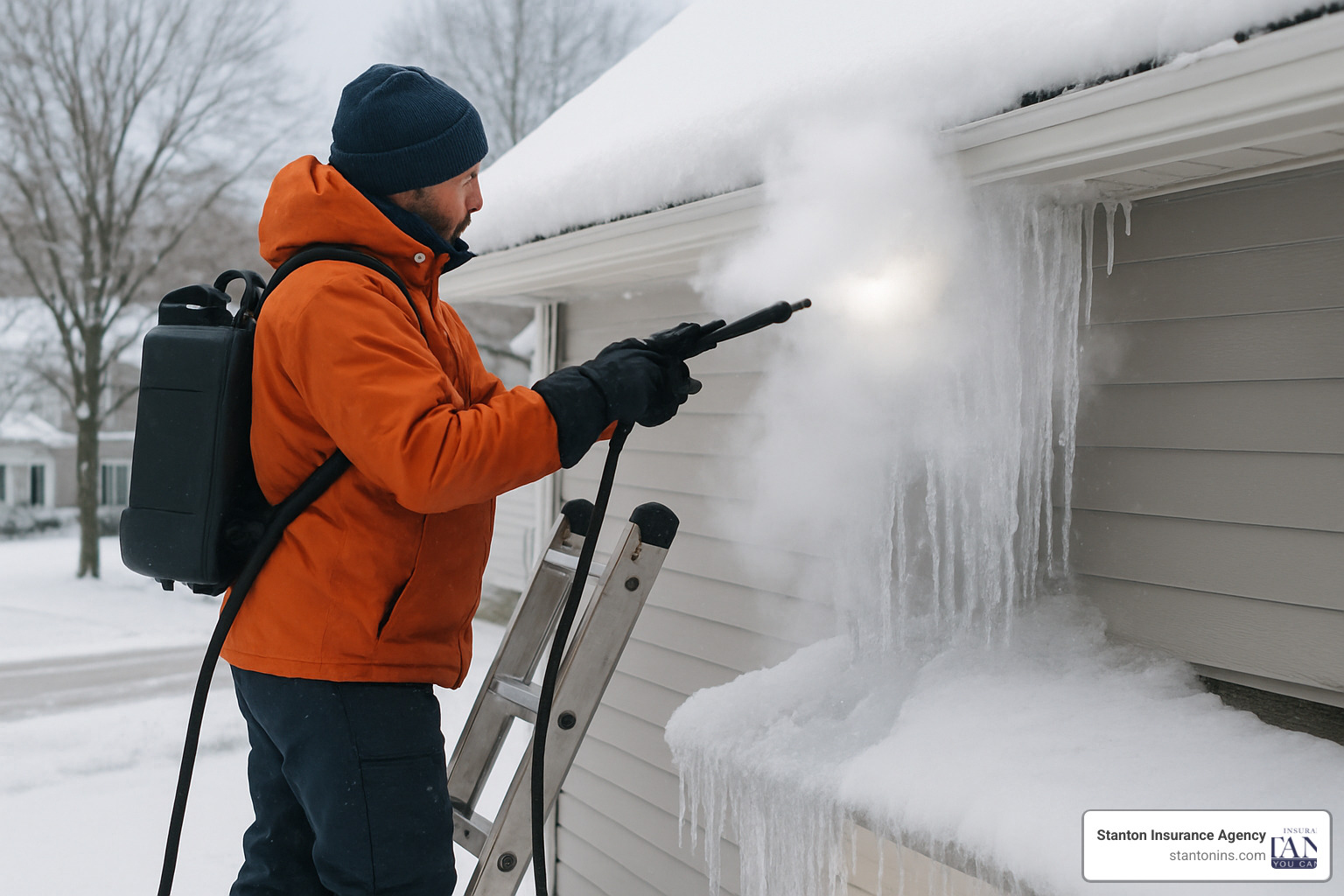
Safest Professional Techniques for Roof Ice Dam Removal
Professional low-pressure steam removal is the safest and most effective method. Real steamers operate at just 100-300 PSI and create steam at 250-300°F. This melts ice effectively while treating your shingles gently. Steam “undercuts” the dam by creating drainage channels, and good technicians can usually stop active leaking within 30 minutes.
When hiring a licensed contractor, ensure they have proper insurance and equipment meeting Ice Dam Steaming Association standards. Legitimate steamers never have triggers on the gun – triggers indicate pressure washing equipment, not true steam.
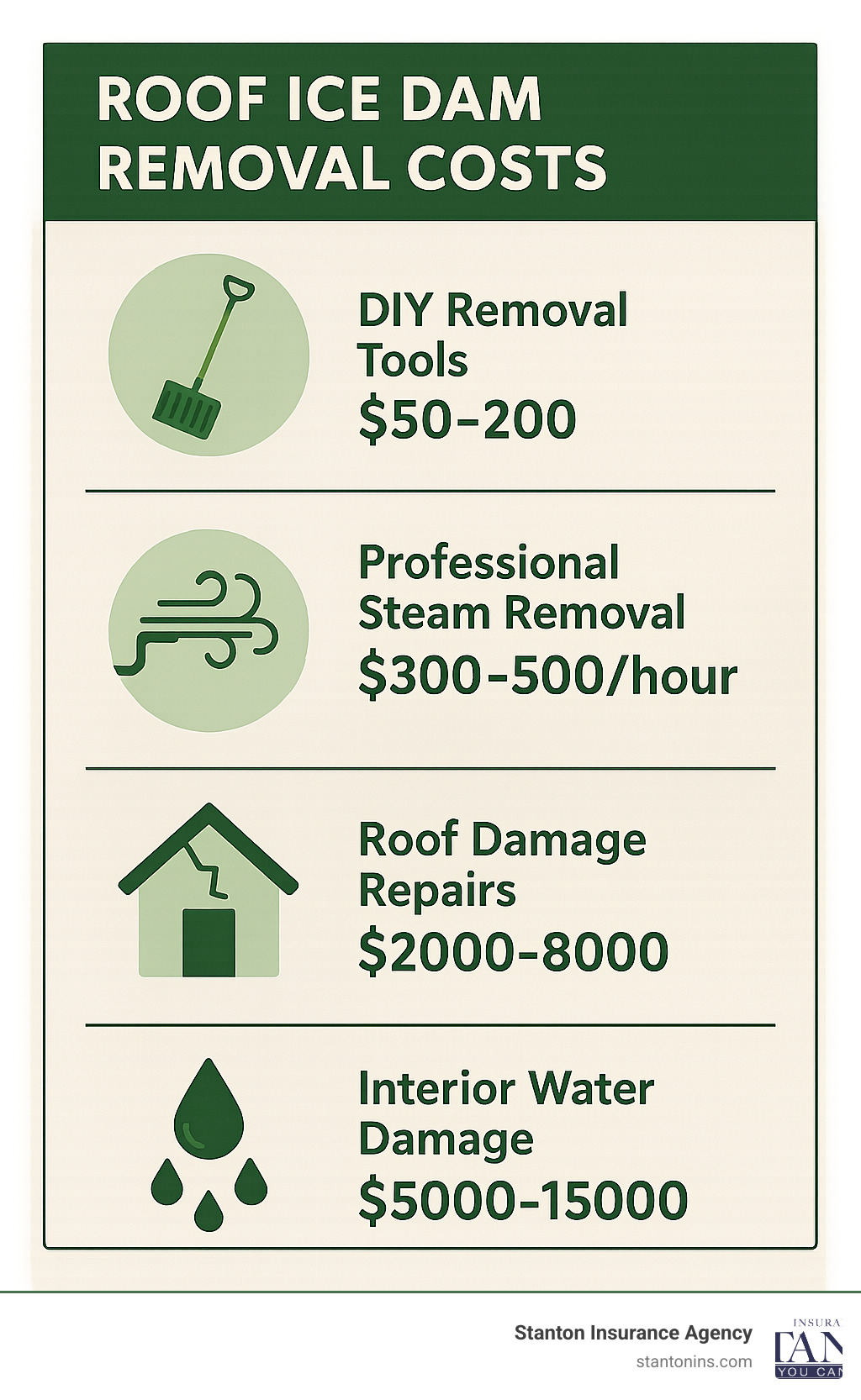
Professional rates run $300-$500 per hour, but consider this against $5,000-$15,000 in water damage claims when ice dams aren’t addressed quickly.
DIY Emergency Steps for Roof Ice Dam Removal
Roof raking from the ground is your safest first move. Use a lightweight telescoping roof rake to remove snow from the first 6-8 feet of your roof edge after each snowfall. The National Roofing Contractors Association recommends leaving some snow to cushion the rake and protect shingles.
The pantyhose de-icer method works surprisingly well. Fill a nylon stocking with calcium chloride and lay it across the ice dam. It slowly melts a channel through the ice, giving trapped water an escape route.
Box-fan attic cooling provides immediate relief when water is actively leaking. Position a fan in your attic to blow cold air at the roof underside where water enters. This can freeze the leak temporarily, buying time for professional removal.
For hot-water application, connect a garden hose to indoor hot water and gently run warm water over the dam to create drainage channels. Never use high pressure, and exercise extreme ladder safety on icy surfaces.
| Method | DIY or Professional | Safety Level | Effectiveness | Cost |
|---|---|---|---|---|
| Low-pressure steam | Professional | High | Excellent | $300-500/hour |
| Roof raking | DIY | High | Good (prevention) | $50-100 for rake |
| Hot water hose | DIY | Medium | Fair | Minimal |
| Calcium chloride socks | DIY | High | Good | $10-20 |
| Box fan cooling | DIY | High | Good (emergency) | $20-40 |
What NOT to Do & Common Myths
Some of the worst damage I’ve seen didn’t come from ice dams themselves – it came from homeowners using wrong removal methods. What starts as a manageable problem can quickly turn into thousands in roof repairs.
Never grab a hammer, chisel, or shovel to attack ice dams. This aggressive approach can cause extensive roof damage. We had one client cause $8,000 in roof damage trying to chip away a $500 ice dam problem, actually cracking the roof deck underneath.
High-pressure washers are absolutely off-limits for roof ice dam removal. These machines blast water at 4000+ PSI, stripping protective granules off shingles and voiding warranties. That high-pressure water can force moisture deep under shingles, creating the exact problem you’re trying to solve.
Rock salt simply doesn’t work at the low temperatures where ice dams form, and it kills landscaping when spring arrives. If someone’s selling a spray claiming to instantly dissolve ice dams, run the other way – these products don’t work and may damage shingles.
Beware contractors showing up with pressure washers claiming they can “steam” your ice dams away. The Ice Dam Steaming Association warns about this bait-and-switch. Real steam equipment doesn’t have triggers and operates at much lower pressures than pressure washers.
Long-Term Prevention Strategies That Work All Winter
Removing ice dams is just putting a band-aid on the problem. The real solution lies in stopping them from forming in the first place. Roof ice dam removal might solve this winter’s crisis, but prevention strategies save you from the same expensive headache next year.
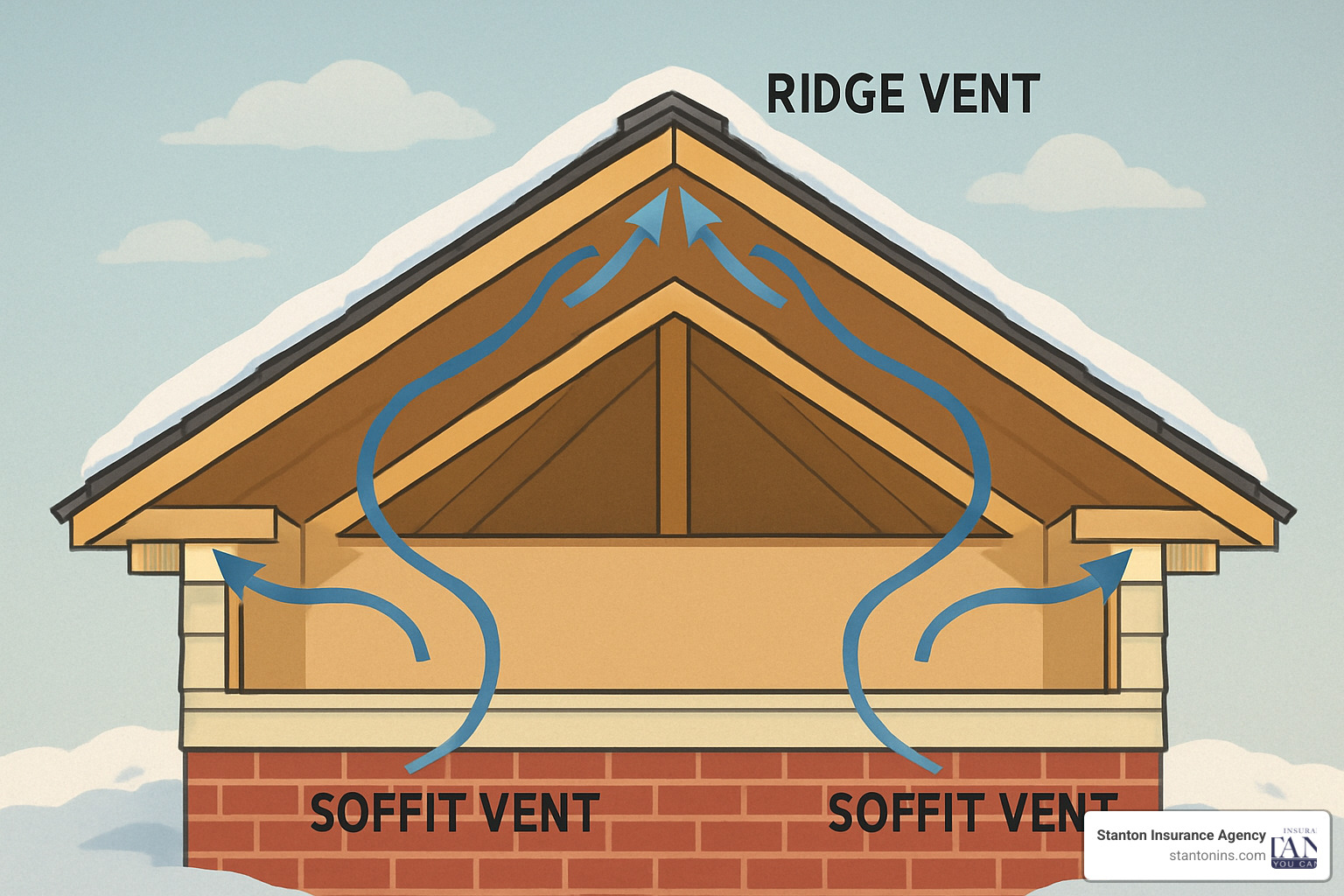
Attic Insulation & Ventilation: Your First Line of Defense
Most ice dam issues begin with inadequate insulation letting heated air escape through your roof. Current building standards call for R-50 insulation, but many older homes have R-19 or less.
First, find air leaks around recessed lights, bathroom fans, plumbing vents, and electrical wires. Seal those air leaks with caulk or expanding foam before adding insulation – like plugging holes in a boat before bailing water.
Proper ventilation maintains crucial temperature balance. Your attic needs one square foot of vent opening per 300 square feet of attic space, split between soffit vents under eaves and ridge vents at the peak. Install baffles at eaves so new insulation doesn’t block soffit vents.
Consider a professional energy audit with infrared imaging to show exactly where heat escapes, taking guesswork out of where to focus efforts.
Roof & Gutter Upgrades
Ice-and-water shield provides backup protection – a self-adhering membrane under shingles at eaves. Building codes require six feet, but extending it further gives extra peace of mind.
Heat cables can prevent ice dams at targeted problem areas when properly installed, but expect $100-$150 monthly in electricity for typical installations. Think of them as one tool in your prevention toolkit, not a standalone fix for poor insulation.
Basic gutter maintenance allows meltwater to flow freely when it occurs. Clean gutters reduce backup potential, though gutters don’t cause ice dams – they’re just where dams like to form.
For comprehensive winter preparation beyond ice dams, check our guide on Prepare Home for Winter. The Minnesota Extension offers technical details on prevention building science.
Costs, Hiring Pros & Insurance Considerations
Professional steam removal runs $300 to $500 per hour, with most residential jobs taking 2-4 hours. While this seems expensive, compare it to $5,000-$15,000 in water damage claims when ice dams aren’t addressed quickly. DIY tools cost $50-$200, but roof damage from improper removal can cost $2,000-$8,000.
Choosing a Reputable Ice-Dam Removal Professional
Licensing and insurance are non-negotiable. Legitimate contractors provide proof immediately. Check their steamer equipment – real low-pressure steam units won’t have triggers and connect to cold water only. Look for established local presence and recent neighborhood references. Get everything in writing, including removal method, equipment PSI ratings, and guarantees.
If Water Has Already Entered Your Home
Document first, clean second. Photograph the ice dam, roof damage, and interior damage before moving furniture or soaking up water. Call us right away – most policies require prompt notification, and early reporting leads to smoother claims processes.
Start emergency mitigation immediately. Remove standing water, move valuables, and set up fans or dehumidifiers to prevent mold. Keep receipts – your policy may reimburse emergency expenses. Make temporary repairs like tarps, but hold off on permanent fixes until your adjuster documents damage.
For detailed guidance on coverage options, check our resources on Ice Dams and consider whether Expand Home Insurance Coverage provides additional peace of mind.
Frequently Asked Questions about Roof Ice Dam Removal
Do I need professional help every time?
It depends on whether water is actively dripping into your home. If you’ve got ceiling leaks, professional roof ice dam removal can typically stop them within 30 minutes. For smaller ice dams without leaks, DIY options like roof raking, calcium chloride socks, or carefully applied hot water can work. Call pros if DIY methods fail, if the dam stretches more than 20-30 feet, or if you see signs water has gotten under shingles.
Are heat cables worth the electric bill?
A typical 500-foot installation adds $100-$150 monthly to electric bills while running. When professional removal costs $300-$500 each time and water damage runs thousands, electricity costs become reasonable. Heat cables work best for north-facing sections that never see sun or roof valleys where snow piles up. They’re insurance, not a cure – fix attic heat loss first, then use cables for stubborn problem areas.
How soon after snowfall should I rake my roof?
Remove snow from the first 6-8 feet of roof edge within 24-48 hours after 6+ inches of snowfall. You want to remove snow before the melt-freeze cycle starts. Safety comes first – don’t rake during storms, icy conditions, or poor visibility. Even if ice dams have started forming, raking can help by reducing the water source feeding the dam.
Conclusion
Winter doesn’t have to feel like a battle against your roof. When you understand roof ice dam removal is about solving a heat loss puzzle, the problem becomes manageable. Those icicles are your home’s way of showing where warm air escapes and costs you money.
Prevention beats cure every time. Professional steam removal can stop ceiling drips, but proper attic insulation and air sealing prevent those midnight panic calls. Don’t turn a $300 ice dam into a $5,000 roof replacement by using hammers or pressure washers. When in doubt, call the professionals – especially if water is entering your home.
Your homeowner’s insurance likely covers more ice dam damage than you think, including interior water damage and emergency repairs. Money spent on proper insulation, ventilation, and professional removal isn’t an expense – it’s an investment in lower energy bills, fewer repairs, and sleeping soundly during storms.
Don’t wait until you’re standing with a bucket wondering how water got through your ceiling. Take action now, before winter’s worst weather arrives.
At Stanton Insurance Agency, we’re here to help you understand your coverage and explore options to Expand Home Insurance Coverage for additional winter weather protection. The best insurance claim is the one you never have to file.
