
Ransomware Insurance 101: Essential Protection
Why Ransomware Insurance is Critical for Today’s Businesses
Ransomware insurance is a specialized type of cyber liability coverage that protects businesses from the financial devastation of ransomware attacks, where criminals encrypt your data and demand payment for its release.
Quick Answer for Ransomware Insurance:
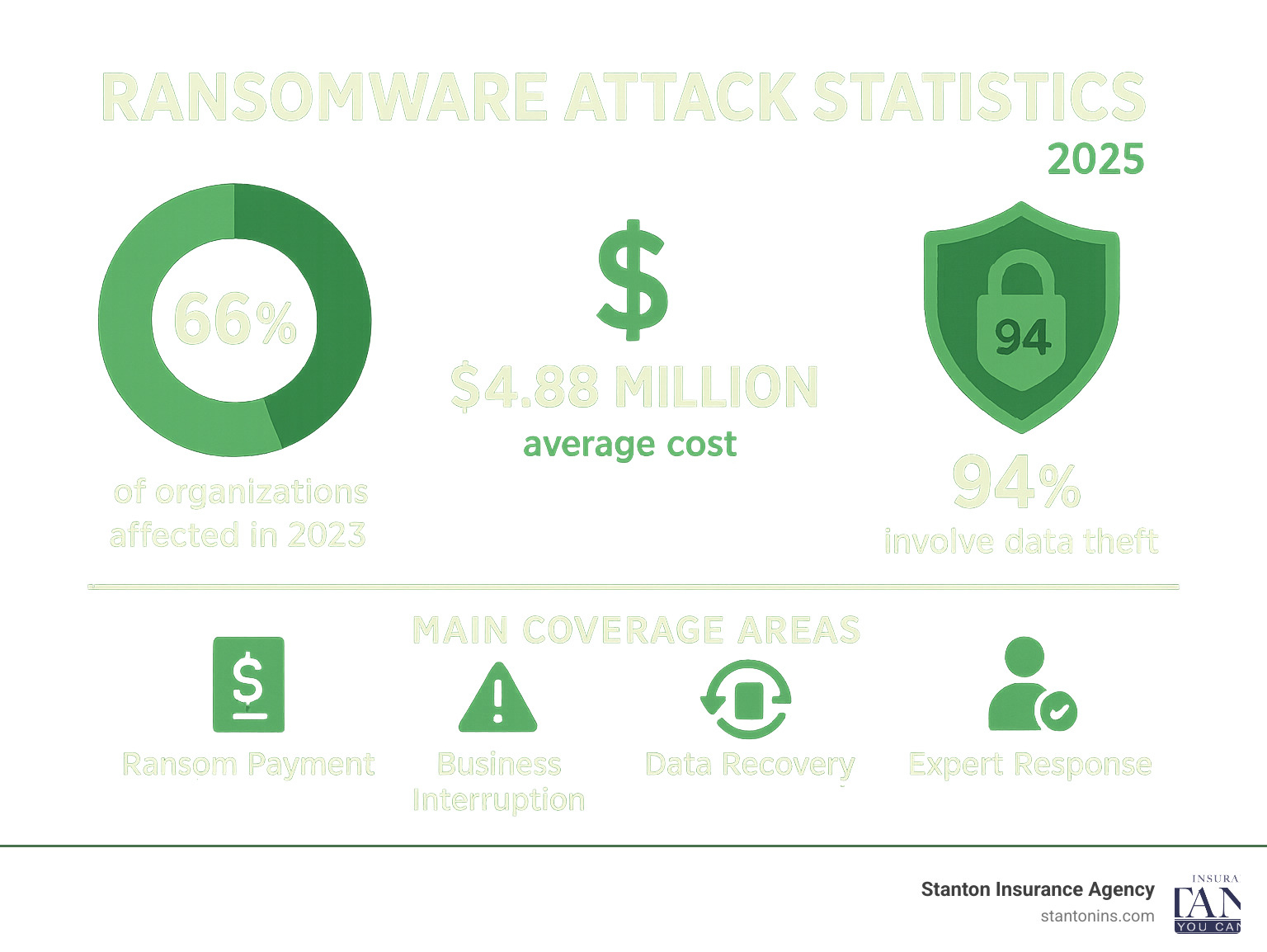
- What it covers: Ransom payments, data recovery costs, business interruption losses, legal fees, and expert incident response.
- Average cost: Around $145 per month for small businesses (varied by industry and risk factors).
- Key benefit: Access to expert negotiators, forensic specialists, and crisis management teams.
- Coverage limits: Typically included as a sublimit within broader cyber liability policies.
- Who needs it: Any business handling sensitive data, especially healthcare, education, and financial services.
The threat is real and growing. In 2023, ransomware attacks impacted 66% of organizations worldwide, with the average cost hitting $4.88 million per incident. Small businesses are particularly vulnerable, representing 50-75% of victims due to a lack of sophisticated security infrastructure.
Modern attacks now involve data exfiltration in 94% of cases, meaning criminals steal your information before encrypting it. This creates multiple pressure points for extortion, with healthcare, education, and government sectors accounting for 47% of attacks in 2024. The financial impact extends well beyond the ransom itself to include business interruption, data recovery, and legal costs.
As President of Stanton Insurance Agency, I’ve helped countless Massachusetts and New Hampshire businesses steer cyber risk with custom ransomware insurance solutions. My experience shows that proactive coverage, combined with strong security, provides the best protection against these evolving threats.
Ransomware insurance vocabulary:
What is Ransomware Insurance and Why Is It a Modern Business Necessity?
Ransomware insurance is a specialized component of a broader cyber liability insurance policy that acts as your financial lifeline when cybercriminals hold your business hostage. It provides a skilled negotiator, forensic investigator, and crisis management team all rolled into one comprehensive safety net.
Beyond simply paying the ransom, ransomware insurance is a comprehensive recovery plan. It covers everything from business interruption losses to the expert help you’ll need during the crucial first hours of an attack. As cybercriminals become more sophisticated, this protection has shifted from a “nice to have” to an essential for any business that relies on digital systems. The resources and support provided can mean the difference between a quick recovery and closing your doors forever.
The Escalating Threat to Businesses
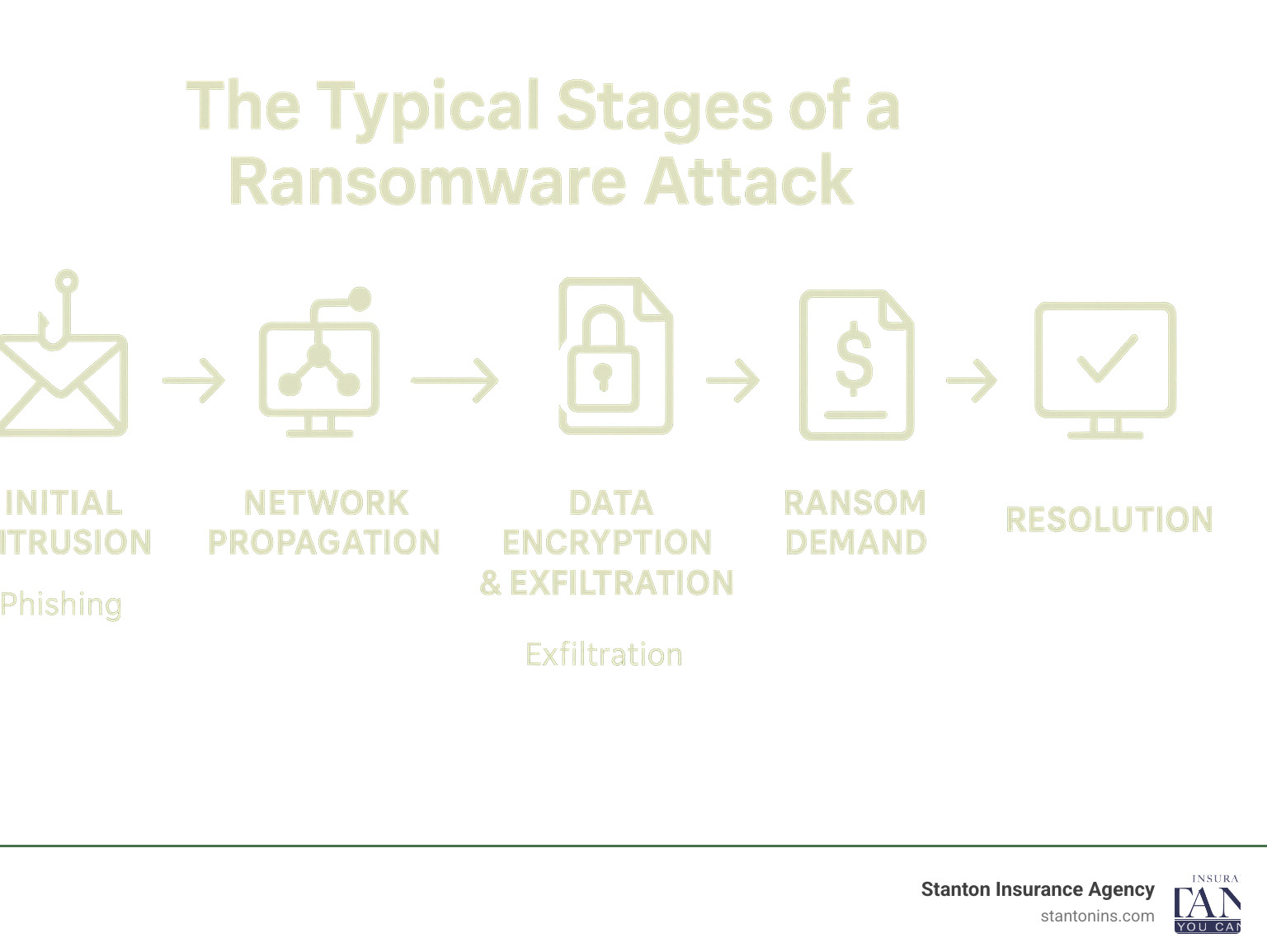
Ransomware attacks aren’t just for big corporations; they target businesses of all sizes, often through simple methods like a phishing email. Once inside your network, intruders encrypt files, steal sensitive data, and bring operations to a halt.
Small businesses are attractive targets because criminals assume they have valuable data but lack robust security. Statistics show small businesses are victims in 50% to 75% of ransomware attacks. Modern attacks have also evolved into “double extortion” schemes, where criminals steal data before encrypting it. This means even with perfect backups, they can threaten to leak customer information, financial records, or trade secrets unless you pay.
Why Is This Insurance So Important?

When an attack hits, you need immediate access to specialists. Ransomware insurance provides a pre-assembled team of IT forensics experts, legal counsel, and skilled negotiators who act the moment you call.
The true cost of an attack often exceeds the ransom demand. The total financial impact, which can reach millions, comes from business interruption, data recovery costs, regulatory fines, and reputation management. Ransomware insurance covers all these costs, not just the ransom payment. It pays for the forensic investigation, legal expertise to handle notification requirements, and PR support to maintain customer trust.
Most importantly, it provides peace of mind, knowing you have a solid plan for the worst-case scenario. This comprehensive protection is why ransomware insurance is an essential part of modern business risk management. Why Is Cyber Liability Insurance Important?
Understanding What Ransomware Insurance Covers (and What It Doesn’t)
Not all ransomware insurance policies are created equal. Understanding the details of what you’re getting can make the difference between a smooth recovery and a financial nightmare. A robust policy provides multi-faceted coverage that addresses the entire lifecycle of an attack.
Typical Inclusions in a Ransomware Policy
A comprehensive policy goes far beyond the ransom itself:
-
Ransom Payment: Your policy can cover the ransom demand, but insurers also bring in expert negotiators who can often slash those demands significantly and verify the attackers’ claims.
-
Data Recovery and Restoration: This covers digital forensics to investigate the attack, costs to rebuild compromised systems, and expenses to recreate data that might be lost forever.
-
Business Interruption: This is often the most valuable coverage. It compensates you for lost income during downtime, covers ongoing operating expenses like rent and payroll, and pays for extra expenses needed to get back online quickly.
-
Legal and Forensic Costs: Your policy covers IT forensics to investigate the breach and legal counsel to steer notification requirements under state laws in Massachusetts, New Hampshire, and other jurisdictions.
-
Public Relations and Crisis Management: This support protects your reputation. Professional communicators manage the narrative, rebuild customer trust, and minimize long-term damage to your brand.
-
Broader Extortion Expenses: Modern policies also cover investigation costs, fees for cyber response specialists, and even reward reimbursement for information leading to the attackers’ arrest.
What Does Cyber Liability Insurance Cover?
Common Exclusions and Policy Limitations
Ransomware insurance isn’t a magic bullet, and there are important limitations to understand:
-
Sub-limits: Your overall cyber policy might cover $1 million, but the ransomware component might be sub-limited to a much lower amount, like $25,000. This can leave you exposed since recovery costs often exceed the ransom.
-
Pre-existing Vulnerabilities: If your business hasn’t maintained basic security standards (like software updates or multi-factor authentication), your claim could be denied. Insurers expect reasonable cyber hygiene.
-
Acts of War and Cyberwarfare: If an attack is clearly linked to a state-sponsored entity, your coverage may be denied under this exclusion.
-
OFAC Sanctions: The U.S. Treasury Department’s Office of Foreign Assets Control (OFAC) prohibits transactions with sanctioned entities. If the cybercriminal group is on the OFAC guidelines list, your insurer cannot legally reimburse a ransom payment.
-
Negligence or Misrepresentation: If you misrepresent your security controls on your application or if employee gross negligence leads to the breach, your claim could be denied.
Other common exclusions include regulatory fines, physical property damage, and costs to improve systems beyond their pre-attack state.
The Financials: Cost, Premiums, and Choosing the Right Policy
Selecting the right ransomware insurance policy requires a careful evaluation of your business’s risk profile and needs. It’s an investment in resilience, and the cost reflects the level of protection you receive.
How Much Does Ransomware Insurance Cost?
Premiums for ransomware insurance are typically part of a broader cyber liability policy. For small businesses, the median cost is around $145 a month, but this can increase based on several key factors:
-
Company Size and Revenue: Larger businesses with higher revenues generally face higher premiums due to greater potential financial loss.
-
Industry Risk: Industries like healthcare, education, and financial services are considered higher risk because they handle vast amounts of sensitive data and are prime targets for attackers.
-
Type and Volume of Data: Handling medical records (PHI), financial information, or intellectual property will increase your premium compared to holding less critical data.
-
Security Posture: This is the factor you control most. Insurers reward proactive security. Businesses with multi-factor authentication (MFA), regular encrypted backups, endpoint protection, and employee training can often qualify for lower premiums.
-
Claims History and Coverage Limits: A history of cyber incidents can lead to higher premiums, as will choosing higher coverage limits and lower deductibles.
Key Features to Look for in a Ransomware Insurance Policy
When shopping for ransomware insurance, look beyond the price. The nuances in policy language can make a massive difference during an attack. Here’s what to prioritize:
-
Broad Definition of “Extortion”: Ensure it covers threats to sell, disclose, or misuse information, not just threats to encrypt data. This is critical as most attacks now involve data theft.
-
24/7 Incident Response Hotline: This provides immediate access to a pre-approved panel of legal, forensic, and PR specialists. Rapid response is critical in mitigating damage.
-
“Pay-on-Behalf” Language: Look for policies where the insurer pays costs directly to vendors, rather than requiring you to pay first and seek reimbursement. This eases the financial burden during a crisis.
-
Short Business Interruption Waiting Period: Downtime is costly. A short waiting period (e.g., 8–12 hours) before coverage begins is ideal.
-
Coverage for System Upgrades: Some policies help cover costs to improve your systems after an attack, helping you emerge more secure.
-
Broad Definition of “Computer Systems”: The policy should cover all hardware, software, cloud services, and IoT devices, including those operated by third-party providers.
-
Clear Data Restoration Coverage: This should cover costs to recover, replace, or restore lost or stolen data, not just damaged data.
Insurance as a Partner: The Role of Insurers and Cybersecurity
Modern ransomware insurance is more than a financial product—it’s a partnership. Insurers have a vested interest in your security and often play an active role in preventing and responding to attacks.
How Insurance Complements Your Cybersecurity Strategy

Think of ransomware insurance as your cybersecurity safety net, not a replacement for strong security practices. A cyber insurance policy for your small business works best as the final layer of defense, as even top-tier security isn’t a 100% guarantee.
The application process itself is a valuable risk assessment, often revealing vulnerabilities. Most insurers require basic security standards like multi-factor authentication (MFA), endpoint detection and response (EDR), and robust backup procedures to qualify for coverage. Meeting these requirements provides a practical roadmap for strengthening your defenses and can lead to lower premiums.
The Ransom Dilemma: To Pay or Not to Pay?
This is a critical question. The FBI advises against paying, as it encourages more attacks and offers no guarantee you’ll get your data back. In fact, 80% of organizations that paid a ransom were targeted again.
Your first move should always be attempting recovery from secure, offline backups. But if backups are compromised or attackers threaten to leak stolen data, your insurer’s expertise becomes invaluable. Their team can verify attackers’ claims, check for OFAC sanctions (paying sanctioned entities is illegal), and negotiate on your behalf, often reducing demands significantly.
Your Insurer’s Role During a Ransomware Attack
When an attack hits, your insurer’s incident response hotline should be your first call. They deploy a team of specialists to manage the crisis:
-
Forensic Analysts: Immediately work to contain the breach, determine what data was compromised, and preserve evidence.
-
Legal Counsel: A specialist in cyber law guides you through complex notification requirements in states like Massachusetts and New Hampshire, ensuring compliance.
-
Crisis Management and PR Experts: Help protect your reputation by crafting careful communications for customers, employees, and the media.
-
Negotiation Specialists: If paying the ransom is the only viable option, they handle all communication with the criminals and facilitate payment legally and safely.
This coordinated, expert-led response is one of the most valuable benefits of ransomware insurance. You have a team of professionals working to get your business back on track as quickly as possible.
Frequently Asked Questions about Ransomware Insurance
Business owners often have pressing questions about how ransomware insurance works in real-world scenarios. Here are the most common concerns we hear from clients across Massachusetts and New Hampshire.
Do I still need ransomware insurance if I have good backups?
Yes, absolutely. While good backups are critical for recovery, they don’t address the full scope of modern cyber threats. Today, 94% of ransomware attacks involve data exfiltration, where criminals steal your sensitive information before encrypting it.
Even with perfect backups, you are still vulnerable to extortion threats where criminals threaten to leak customer data or proprietary information. Ransomware insurance covers the costs that backups can’t, such as business interruption, forensic investigation, legal fees for notification requirements, and public relations support to protect your brand.
Will my insurance premium go up after a claim?
It’s possible your premium may increase after a claim, as with other types of insurance. Your insurer will re-evaluate your risk profile. However, the cost of a potential premium increase is typically far less than the uninsured cost of a ransomware attack, which can be a business-ending event.
After a claim, your insurer will work with you to implement security improvements and address vulnerabilities. This collaborative approach helps reduce your future risk and can mitigate premium increases over time.
Can I choose my own IT company for the response?
Generally, insurers require you to use their pre-vetted panel of expert vendors for incident response. While this may feel restrictive, these panels consist of highly specialized firms with proven experience in handling cyber incidents daily. They have negotiated rates with the insurer, which helps control costs and ensures high-quality service.
Using an unapproved vendor could jeopardize your coverage. We recommend discussing vendor requirements with your broker and insurer upfront to understand their specific policies and ensure you are fully prepared.
Secure Your Business’s Future
The digital landscape is full of risk, but you don’t have to face it alone. Ransomware insurance is a powerful tool that provides financial reimbursement, expert guidance, and critical resources to help you steer a cyber crisis.
Think of ransomware insurance as having a skilled emergency response team on standby. When disaster strikes, you have immediate access to forensic experts, legal counsel, and crisis management professionals. This coordinated response can be the difference between a manageable setback and a business-ending catastrophe.
The investment pays dividends beyond financial protection. The application process itself helps identify security vulnerabilities, and meeting coverage requirements provides a clear roadmap for improving your defenses. This proactive approach is essential for resilience and peace of mind for businesses in Massachusetts and New Hampshire.
The team at Stanton Insurance Agency understands the unique challenges facing local businesses. We’ve helped countless organizations assess their cyber risks and find the right coverage to fit their needs and budget. We’re here to provide trusted protection for your valuable assets, helping you steer the complexities of cyber risk with confidence.
Learn more about our comprehensive Business Insurance solutions today.