
Why Massachusetts Business Owners Need Liability Protection
MA liability insurance protects your business from financial ruin when accidents happen. Here’s what you need to know:
Quick Answer: MA Liability Insurance Essentials
- Not legally required by Massachusetts state law, but often required by landlords and clients
- Typical cost: $25-$45 per month for small businesses
- Standard coverage: $1 million per occurrence, $2 million aggregate
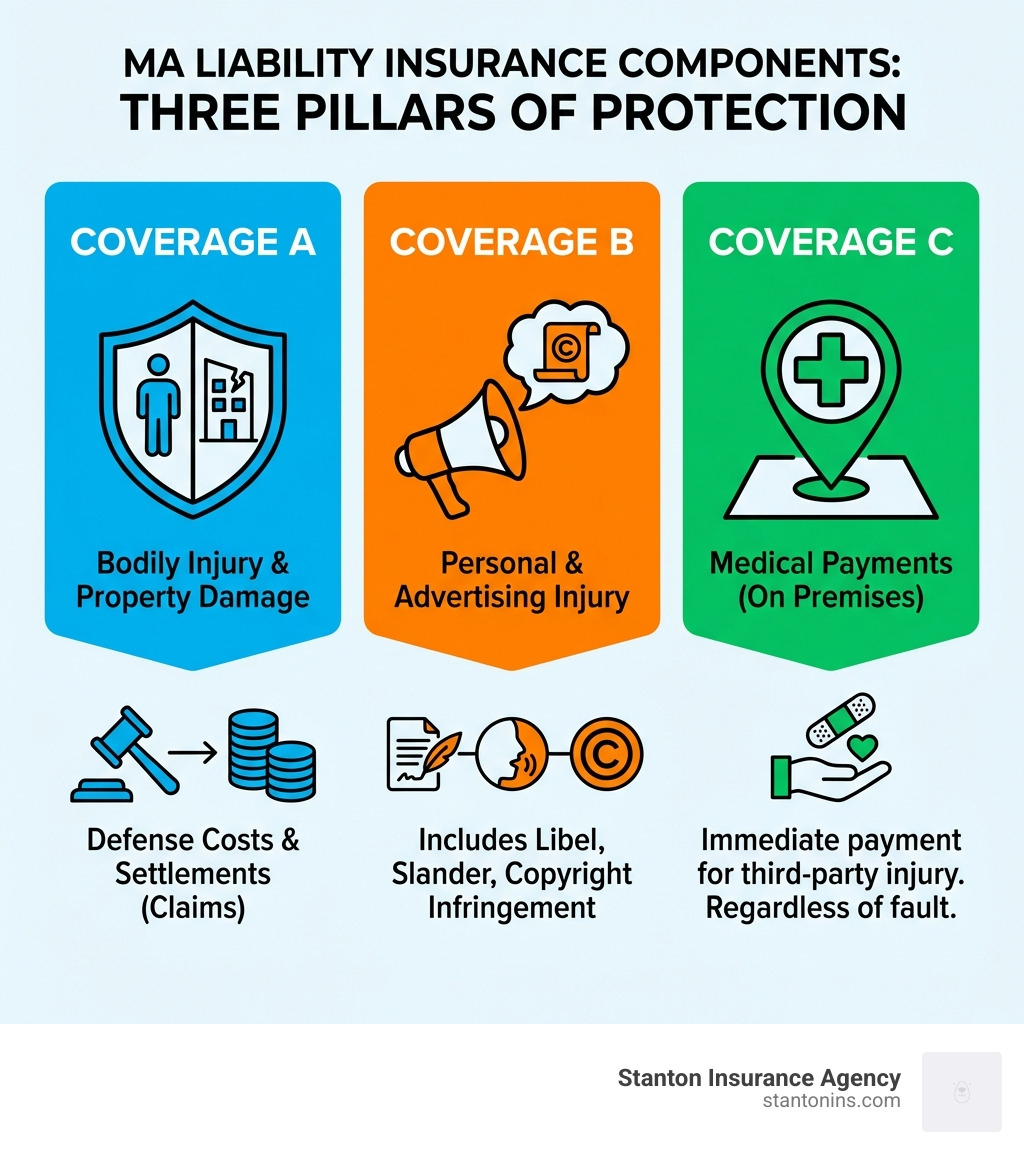
- What it covers: Bodily injury, property damage, personal and advertising injury
- Who needs it: All businesses, especially those with physical locations or customer interactions
Running a business in Massachusetts means navigating real risks every day. A customer slips on your premises. A marketing claim is challenged. Property gets damaged during a project. Without proper coverage, even a single lawsuit could drain your savings and threaten everything you’ve built.
Good news: most Massachusetts businesses pay less than $45 per month for general liability protection. That’s a small investment compared to the average cost of defending a lawsuit, which can easily reach tens of thousands of dollars before you even factor in potential damages.
I’m Geoff Stanton, President of Stanton Insurance Agency in Waltham, and I’ve spent over two decades helping Massachusetts businesses steer MA liability insurance decisions. As a fourth-generation owner and Certified Insurance Counselor, I work with small and medium-sized businesses every day to build protection that fits their unique risks and budgets.
Basic MA liability insurance terms:
- Liability Car Insurance Cost
- does liability car insurance cover legal costs
- minimum coverage for car insurance
Massachusetts Legal Requirements for Business Insurance
It’s a common misconception that every business is legally required to carry general liability insurance. The truth, especially here in Massachusetts, is a bit more nuanced. While MA liability insurance (specifically general liability) is not mandated by Massachusetts state law for all businesses, its importance cannot be overstated. Most businesses in Massachusetts choose to purchase general liability insurance even though it’s not required by the state. This proactive approach helps protect them from significant out-of-pocket costs if something goes wrong.
Even without a state-level mandate, you’ll frequently find that general liability coverage becomes a de facto requirement due to other factors:
- Lease Agreements: If you’re renting commercial space, your landlord will almost certainly require you to carry a certain level of general liability insurance. This protects them if someone is injured on the property you’re leasing, shifting the financial responsibility to your policy.
- Client Contracts: Many clients, particularly larger organizations or those in industries with higher risk, will require proof of general liability insurance before they’ll sign a contract with your business. This is especially true for contractors, consultants, and service providers. It helps them mitigate their own risk.
- Licensing and Permits: Depending on your specific industry and the city or town you operate in, certain licenses or permits might necessitate general liability coverage.
What Business Insurance Is Legally Required in Massachusetts?
While general liability offers crucial protection, Massachusetts law does mandate other forms of business insurance:
- Workers’ Compensation Insurance: This is perhaps the most critical mandatory insurance for employers. Almost all employers in Massachusetts are required by law to have workers’ comp insurance. This coverage provides medical benefits and wage replacement for employees who get injured or become ill as a direct result of their job. Failing to carry workers’ comp can lead to severe penalties, including fines and even criminal charges.
- Commercial Auto Insurance: If your business owns or uses vehicles for operations, Massachusetts requires all automobile owners to have commercial auto insurance. This helps cover vehicle damage, personal injury, and property damage from accidents involving your business vehicles. Whether it’s a delivery van, a company car, or a truck, if it’s used for business, it needs commercial auto coverage. Learn more about protecting your fleet with our Commercial Auto Insurance MA Ultimate Guide.
Carrying general liability insurance, even when not legally required, demonstrates professionalism and can help you secure more business opportunities. It shows potential clients and partners that you are a responsible and prepared business owner, ready to handle unforeseen circumstances.
Understanding the Cost of MA Liability Insurance
When we talk about MA liability insurance costs, we’re often focusing on general liability. For many small businesses in Massachusetts, the cost is surprisingly affordable. Our experience shows that many of our clients pay anywhere from $25 to $45 per month for their general liability coverage. This range can fluctuate based on your specific industry, the nature of your business operations, and the level of coverage you choose.
Typical general liability policies in Massachusetts are structured with specific limits:
- Per-Occurrence Limit: This is the maximum amount your insurer will pay for any single claim or incident. A common limit for small businesses is $1 million per occurrence.
- Aggregate Limit: This is the total maximum amount your insurer will pay for all covered claims within a single policy period (usually one year). A typical aggregate limit often seen is $2 million.
These policies also frequently include a feature called Medical Payments Coverage (Coverage C). This provides limited medical payments for injuries sustained by non-employees who are hurt on your premises or as a result of your business operations, regardless of who was at fault. This “no-fault” coverage can be a smart way to quickly cover minor medical expenses, potentially preventing a small incident from escalating into a larger lawsuit.
Understanding these costs and limits is essential for budgeting and ensuring you have adequate protection.
Factors Influencing Your MA Liability Insurance Premium
Several key factors come into play when calculating the premium for your MA liability insurance policy. Insurers assess these elements to determine the level of risk associated with your business:
- Industry Risk Level: This is one of the most significant factors. Businesses in inherently riskier industries, such as construction, roofing, or those involving heavy machinery, will generally face higher premiums than those in lower-risk sectors like consulting or retail. The more physical interaction with the public or potential for damage, the higher the perceived risk.
- Business Location: Where your business operates in Massachusetts can influence costs. Areas with higher foot traffic, greater population density, or a history of more frequent claims might lead to slightly higher premiums.
- Claims History: A clean claims history is a beautiful thing for your insurance premiums! Businesses with a record of past claims or lawsuits will likely pay more for coverage, as they are seen as a higher risk for future incidents. Conversely, a business with no claims over several years might qualify for discounts.
- Number of Employees: More employees generally mean more potential for incidents. While general liability doesn’t cover employee injuries (that’s workers’ comp), more employees interacting with customers, products, or third-party property can increase the likelihood of a general liability claim.
- Selected Coverage Limits: As discussed, you can choose different per-occurrence and aggregate limits. Opting for higher limits will naturally increase your premium, but it also provides a greater financial safety net.
- Deductible Amount: Your deductible is the amount you agree to pay out-of-pocket before your insurance coverage kicks in. Choosing a higher deductible often results in a lower premium, but it means you’ll bear more of the initial cost in the event of a claim. It’s a balance between upfront savings and potential out-of-pocket expenses.
For a deeper dive into how these factors play out and to better understand your overall business liability needs, we invite you to explore our Business Liability Ultimate Guide.
Who Needs General Liability Insurance and Why?
While the state of Massachusetts might not mandate it, we at Stanton Insurance Agency firmly believe that general liability insurance is recommended for all businesses, regardless of size or industry. It’s especially crucial for professions with a greater degree of physical risk or those that involve direct interaction with customers or their property. Think of it as your business’s personal bodyguard against the unexpected.
Types of Businesses That Benefit Most from MA Liability Insurance
Virtually any business can face a general liability claim, but some are more exposed than others. Here are some examples of businesses in Massachusetts that particularly need robust MA liability insurance:
- Construction Contractors: From minor remodels to large-scale builds, the potential for accidents—a client tripping over tools, accidental damage to a client’s property—is ever-present.
- Restaurants and Food Trucks: Spills, slips, falls, food-borne illness claims (though often requiring specific endorsements), and property damage are common risks in the food service industry.
- Retail Stores: Customers browsing your aisles can easily slip on a wet floor, knock over merchandise, or be injured by falling items.
- Landscapers: Working on clients’ properties, operating heavy equipment, and dealing with potential property damage (e.g., damaging a sprinkler system) makes this a high-risk profession.
- Cleaning Services: Accidental damage to a client’s valuable items, or a slip-and-fall caused by a freshly cleaned floor, are real possibilities.
- Handymen: Similar to contractors, handymen often work in clients’ homes, increasing the risk of accidental property damage or injury.
These are just a few examples; whether you’re a coffee shop in Framingham, a carpet cleaner in Amherst, or a food truck in Cambridge, general liability provides a vital safety net.
Key Benefits of Having General Liability Insurance for a Massachusetts Business
The advantages of carrying general liability coverage extend far beyond simply covering claims. It’s a strategic business decision that offers multiple layers of protection and opportunity:
- Financial Protection from Lawsuits: This is the most direct benefit. General liability insurance steps in to cover legal defense costs, settlements, and judgments arising from covered claims. Without it, a single lawsuit for bodily injury or property damage could easily bankrupt your business, forcing you to pay out-of-pocket for tens or hundreds of thousands of dollars in legal fees and damages.
- Ability to Win New Clients: Many potential clients, especially in the B2B sector, will ask for proof of insurance before they’ll even consider hiring you. Having a general liability policy, and being able to provide a certificate of insurance quickly, can be a significant competitive advantage and help you secure more work.
- Meeting Lease and Contract Requirements: As we discussed, landlords and many business contracts will require you to carry general liability. Without it, you might be unable to rent commercial space or bid on lucrative projects. It’s often a non-negotiable prerequisite for doing business.
- Peace of Mind: Knowing that your business is protected against common, everyday risks allows you to focus on what you do best: running and growing your company. It removes a significant layer of financial anxiety.
Beyond General Liability: Other Essential MA Business Insurance
While general liability is foundational, it’s just one piece of the puzzle when it comes to comprehensive business protection. Massachusetts small business owners, like those in New Hampshire, face a variety of unique risks that often require additional specialized insurance policies. Thinking beyond just general liability is crucial for building a truly resilient business.
Here’s a breakdown of other important types of business insurance we often discuss with our Massachusetts clients:
| Insurance Type | What It Covers | Required by Law? |
|---|---|---|
| General Liability | Bodily injury, property damage, personal injury | Not state-mandated |
| Professional Liability (E&O) | Financial loss from professional mistakes | No, but often required |
| Workers’ Compensation | Employee on-the-job injuries | Yes, for most employers |
| Commercial Property Insurance | Physical assets (buildings, equipment, inventory) | No, but highly advised |
| Business Owner’s Policy (BOP) | Bundles GL and property insurance | No |
| Cyber Liability & Data Breach | Data breach and cyberattack costs | No, but increasingly vital |
Let’s dig a bit deeper into some of these:
- Professional Liability (Errors & Omissions – E&O) Insurance: This is distinct from general liability and vital for service-based businesses. It protects you from claims of financial loss due to professional mistakes, negligence, errors, or omissions in the services or advice you provide.
- Commercial Property Insurance: This coverage protects your physical business assets—your building (if you own it), equipment, inventory, and even the furniture in your office—from perils like fire, theft, vandalism, and certain natural disasters. While not legally required, it’s highly advised to safeguard your investments. Learn more about protecting your assets with Commercial Property Insurance.
- Business Owner’s Policy (BOP): For many small to medium-sized businesses, a BOP is an excellent solution. It bundles general liability, commercial property, and often business interruption insurance into a single, cost-effective package. This streamlined approach simplifies coverage and can save money.
- Cyber Liability & Data Breach Insurance: Data breaches and cyberattacks are a growing threat. This insurance helps cover the significant costs associated with a cyber incident, including legal fees, notification expenses, credit monitoring, and business interruption due to system downtime. It’s not legally mandated, but it’s becoming increasingly vital for any business that handles sensitive customer data or operates online. Understand why this coverage is so important with our guide to Cyber Liability and Data Breach Insurance.
Considering these additional policies ensures that your Massachusetts business is protected from a broader spectrum of risks, not just those covered by general liability.
Differentiating General vs. Professional Liability
It’s easy to confuse General Liability and Professional Liability, but they cover very different types of risks. Understanding this distinction is crucial for ensuring your Massachusetts business has the right coverage.
-
General Liability Insurance: This is your “slip-and-fall” insurance. It primarily covers physical risks—claims related to bodily injury, property damage, and personal and advertising injury that occur in the course of your business operations.
- Example: A customer trips over a loose rug in your store and breaks an arm (bodily injury). Your employee accidentally spills coffee on a client’s laptop, damaging it (property damage). You’re sued for slander after making a negative comment about a competitor (personal injury).
- When it’s needed: Virtually all businesses need general liability because accidents can happen anywhere, anytime.
-
Professional Liability Insurance (E&O): Often called “Errors and Omissions” (E&O) insurance, this coverage is for financial loss resulting from your professional services. It protects against claims of negligence, errors, or omissions in the advice or services you provide.
- Example: An accountant makes a mistake on a client’s tax return, leading to an IRS penalty. A marketing consultant provides bad advice that causes their client to lose revenue. A software developer’s coding error results in a system malfunction for a client.
- When it’s needed: This insurance is essential for service-based professionals who offer advice, design, or specialized expertise. This includes consultants, accountants, lawyers, real estate agents, IT professionals, and many others whose “product” is their knowledge or service.
The critical difference lies in what is being harmed: General liability covers physical harm or damage, while professional liability covers financial harm resulting from your professional actions or inactions. Sometimes, a business might need both. For instance, a graphic designer (needs professional liability for design errors) who also meets clients in an office (needs general liability for a client tripping).
While we’re discussing professional liability, it’s worth noting that Directors and Officers (D&O) Liability insurance is another specialized form of coverage. It protects the personal assets of corporate directors and officers against claims alleging wrongful acts in their management capacity. While distinct from general and professional liability, it’s part of the broader conversation about protecting leadership and decision-makers within your organization. Learn more about specialized leadership protection with What is Director and Officer Liability Insurance?.
How to Secure Your MA Liability Insurance Policy
Securing the right MA liability insurance policy for your business doesn’t have to be complicated, but it does require a thoughtful approach. Our goal at Stanton Insurance Agency is to make this process as clear and efficient as possible, ensuring you get custom protection without unnecessary hassle.
Here’s a straightforward path to getting your business insured:
- Assess Your Business Risks: Take an honest look at your operations. What are the unique hazards? Do clients visit your premises? Do you work at client locations? Do you handle sensitive data? Do you operate machinery? Understanding your specific risks is the first step to identifying the right coverage.
- Gather Necessary Documents: Before seeking quotes, having key information ready will streamline the process. This typically includes your business registration details, payroll information (if you have employees), a brief description of your services or products, and any past claims history.
- Consult with a Knowledgeable Insurance Advisor: This is where we come in. An experienced insurance advisor, like our team at Stanton Insurance Agency, can help you steer the complexities of different policies, explain jargon, and ensure you’re not over-insured or, more importantly, under-insured. We’ll help you understand what’s covered, what’s not, and what limits are appropriate for your Massachusetts business.
How to Get a Quote for MA Liability Insurance
Obtaining a quote for MA liability insurance is a critical step, and you have a few options:
- Use Online Quote Tools for Quick Estimates: Many insurance providers offer online tools that can give you a preliminary quote in minutes. These are great for getting a general idea of costs, but they often don’t capture the nuances of your specific business.
- Work with an Experienced Agent to Tailor Coverage: For a more accurate and comprehensive quote, we highly recommend working directly with an experienced insurance agent. We can ask the right questions, identify risks you might overlook, and help you customize a policy that truly fits your needs. We can also explain the impact of different coverage limits and deductibles on your premium.
- Leverage the Expertise of an Independent Insurance Broker: This is our specialty. As an independent agency, we work with multiple insurance carriers, not just one. This means we can shop around on your behalf, comparing various policies and prices to find the best possible coverage and rates for your business in Massachusetts or New Hampshire. We act as your advocate, helping you understand complex policy language and ensuring you get the most value for your insurance dollar.
Choosing to partner with an independent commercial insurance agent offers significant advantages, including personalized service, expert advice, and access to a wider range of options. Find the true value of working with an Independent Commercial Insurance Agent. We’re here to simplify the process and empower you to make informed decisions about your business’s protection.
Frequently Asked Questions about MA Liability Insurance
We hear a lot of questions from Massachusetts business owners about liability insurance. Here are some of the most common ones we address:
What is a typical general liability coverage limit for a small business in Massachusetts?
Most small businesses in Massachusetts typically opt for a general liability policy with a $1 million per-occurrence limit and a $2 million aggregate limit. This structure means your insurance will pay up to $1 million for any single covered claim or incident, and a maximum of $2 million for all covered claims combined within a policy year.
However, “typical” doesn’t always mean “right” for your business. The ideal amount of coverage depends heavily on several factors:
- Your Industry: High-risk industries might need higher limits.
- Your Exposure to the Public: Businesses with a lot of foot traffic or on-site client work might need more.
- Contractual Requirements: Many clients or landlords will specify minimum limits.
- Your Assets: The more assets your business has to protect, the higher your limits should generally be.
We always recommend discussing your specific situation with an experienced agent to determine the optimal coverage limits for your unique needs.
Does general liability insurance cover my employees if they get hurt on the job?
No, general liability insurance does not cover injuries to your employees that occur while they are working. That’s a crucial distinction. General liability is designed to cover claims from third parties—like customers, vendors, or members of the public—who are injured or whose property is damaged by your business operations.
For employee injuries and illnesses related to work, you need Workers’ Compensation insurance. This is a separate and distinct type of coverage, and it is legally required for almost all employers in Massachusetts. Workers’ comp covers medical expenses, lost wages, and rehabilitation costs for employees injured on the job, regardless of fault. Neglecting workers’ compensation can lead to serious legal and financial consequences for your business.
Can I get MA liability insurance for my home-based business?
Absolutely, and it’s not just possible—it’s highly recommended! Many home-based business owners mistakenly believe their homeowner’s insurance policy will cover business-related incidents. Unfortunately, standard homeowners’ policies typically exclude or provide very limited coverage for business-related liability. This means if a client trips and falls on your porch during a business meeting, or if a product you sell from your home causes damage, your homeowner’s policy likely won’t cover the claim.
To protect your home-based business in Massachusetts, you generally have a few options:
- A Separate General Liability Policy: This is often the cleanest and most comprehensive solution, providing dedicated coverage for your business.
- A Business Owners Policy (BOP): If you have business property in your home, a BOP can bundle general liability and commercial property coverage, offering broad protection.
- A Home-Based Business Endorsement (or Rider): Some insurers offer an endorsement that can be added to your homeowner’s policy to provide limited business liability coverage. However, these endorsements usually have lower limits and narrower coverage than a standalone policy, so understand their limitations.
Given the potential risks, from client interactions to product liabilities, securing appropriate MA liability insurance for your home-based business is a smart and necessary investment to safeguard both your business and your personal assets.
Conclusion: Your Partner in Protection
Securing the right liability coverage is a foundational step in protecting your Massachusetts business from unforeseen events that could be financially devastating. While not always state-mandated, general liability insurance is a critical tool for risk management, client acquisition, and long-term stability. It acts as a financial shield, ensuring that a single accident or lawsuit doesn’t derail your hard work and entrepreneurial dreams.
By understanding your risks, knowing the difference between general and professional liability, and working with a trusted advisor, you can build a comprehensive insurance plan that truly meets your needs. The team at Stanton Insurance Agency is dedicated to helping local businesses steer their options and secure the protection they need to thrive, whether you’re in Massachusetts or our neighboring state of New Hampshire. We pride ourselves on offering clear, warm, and expert guidance to ensure your business is covered. For a comprehensive review of your business insurance needs, explore our full range of Business Insurance solutions.