
Personal Liability Insurance: Essential 2024 Protection
Why Personal Liability Insurance Protects Your Financial Future
Personal Liability Insurance is coverage that protects you financially if you’re found legally responsible for causing bodily injury or property damage to others. This essential protection covers legal defense costs, medical expenses, and settlements both on and off your property.
Key Coverage Elements:
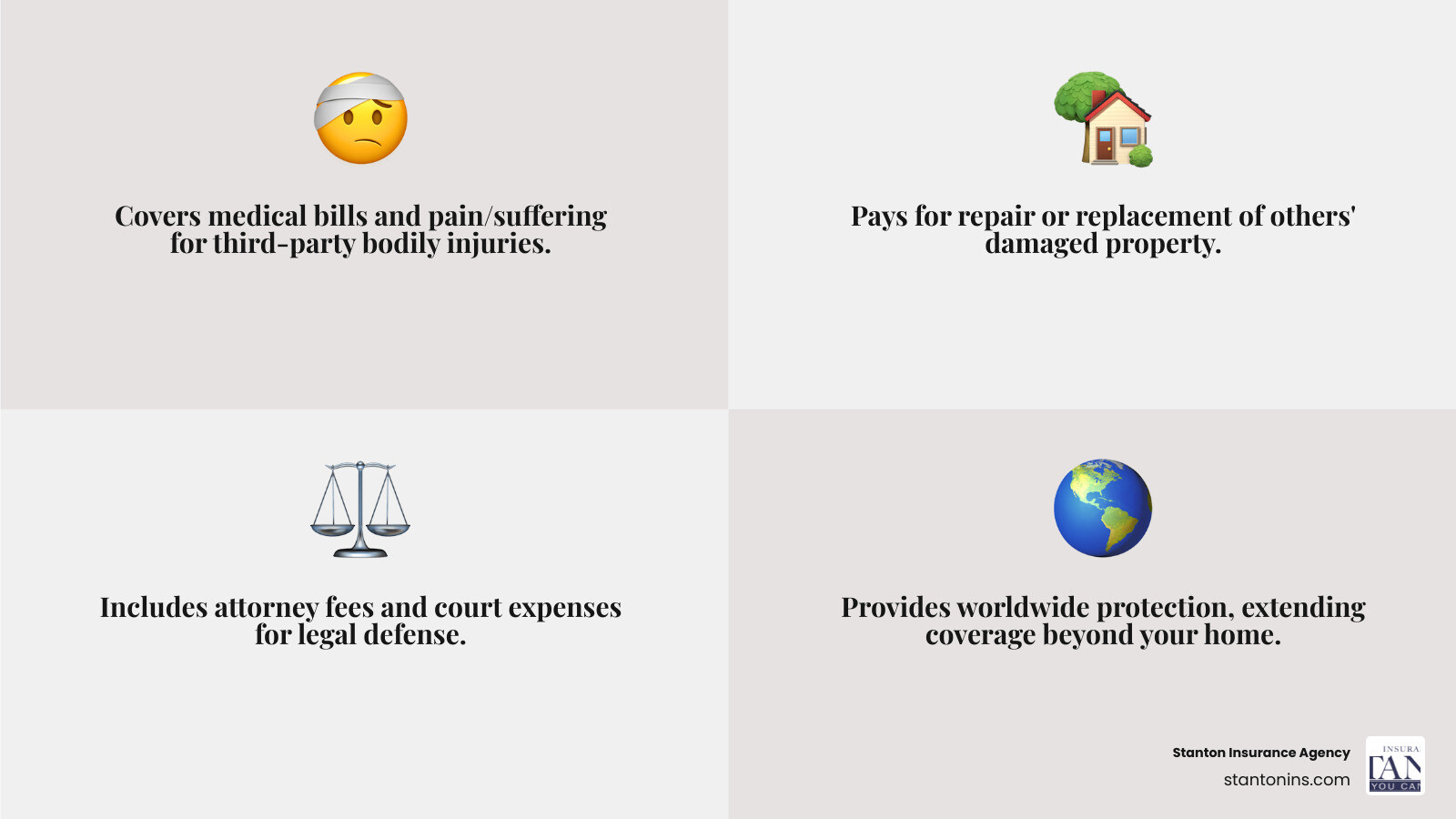
- Bodily injury to third parties – Medical bills and pain/suffering compensation
- Property damage claims – Repair or replacement costs for others’ belongings
- Legal defense costs – Attorney fees and court expenses
- Worldwide protection – Coverage extends beyond your home
- Typical limits – Range from $100,000 to $5,000,000
Most people don’t worry about daily accidents, but as one expert notes, “there’s simply no way to avoid every mistake and mishap that can happen throughout the course of your life.” Whether a guest slips on your icy driveway, your dog bites a visitor, or your child damages someone’s property, personal liability claims can easily exceed $1 million.
Personal liability coverage is automatically included in standard homeowners and renters insurance policies, with most insurers recommending limits of $1,000,000 to $2,000,000. For additional protection, umbrella policies can extend coverage up to $5,000,000 or more.
I’m Geoff Stanton, President of Stanton Insurance Agency. With over two decades helping Massachusetts and New Hampshire families understand their Personal Liability Insurance needs, my experience gives me unique insight into how this protection works when you need it most.
Personal Liability Insurance terms to learn:
What is Personal Liability Insurance and What Does It Cover?
At its core, Personal Liability Insurance is your financial safeguard against claims arising from injuries to other people or damage to their property. It’s a safety net that prevents a minor mishap from becoming a major financial disaster, protecting your savings, assets, and future earnings. Without it, you could be responsible for significant expenses.
This crucial coverage typically includes:
- Bodily injury to others: This covers medical expenses, rehabilitation costs, and lost wages for someone injured due to your negligence. For example, if a guest trips in your home and breaks an arm, your policy would help pay their medical bills.
- Property damage to others’ belongings: If you or a family member accidentally damage someone else’s property, this coverage helps. For instance, if your child kicks a soccer ball through a neighbor’s window, your policy would help cover the repair costs.
- Legal defense costs and court fees: A significant benefit is coverage for legal expenses. If you’re sued, your policy typically covers attorney fees, court costs, and settlements or judgments against you, up to your policy limits. This can be a huge relief, as legal battles are expensive.
- Medical payments for others: Many policies include a smaller amount of “medical payments to others” coverage, which can pay for minor injuries to guests on your property, regardless of fault. This can help prevent a small incident from becoming a larger claim.
- Incidents occurring on or off your property: This coverage isn’t limited to your home. It extends to incidents away from your residence, such as your dog biting someone at a park.
- Worldwide coverage for covered claims: A fantastic aspect of Personal Liability Insurance is its global reach. If you accidentally cause injury or damage while traveling abroad, your policy can still provide protection.
We often explain to clients that Personal Liability Insurance is “third-party insurance,” meaning it protects you against claims made by others, not for injuries to yourself or damage to your own property.
Learn more about Bodily Injury Liability and Property Damage Liability.
Real-Life Examples of Personal Liability Insurance Claims
To understand the value of Personal Liability Insurance, consider these real-life scenarios where coverage would apply:
- A guest slips and falls in your home: If a friend visiting your Massachusetts home slips and breaks an ankle, your policy would cover their medical expenses, lost wages, and your legal defense costs.
- Your dog bites a visitor: Dog bites are a common liability claim. If your dog bites a delivery person, your policy would help cover medical treatment and any legal proceedings.
- A tree from your yard falls onto a neighbor’s car: If a tree from your New Hampshire property falls and damages your neighbor’s car, and you’re found responsible, your policy would cover the repair costs.
- Your child accidentally breaks a valuable item at a friend’s house: If your child is playing at a friend’s house and accidentally breaks an expensive vase, your policy could cover the cost of repair or replacement.
- A party guest slips near your swimming pool: Pools are considered “attractive nuisances” and increase your liability risk. An incident like a guest slipping and hitting their head could lead to severe injuries and a substantial lawsuit.
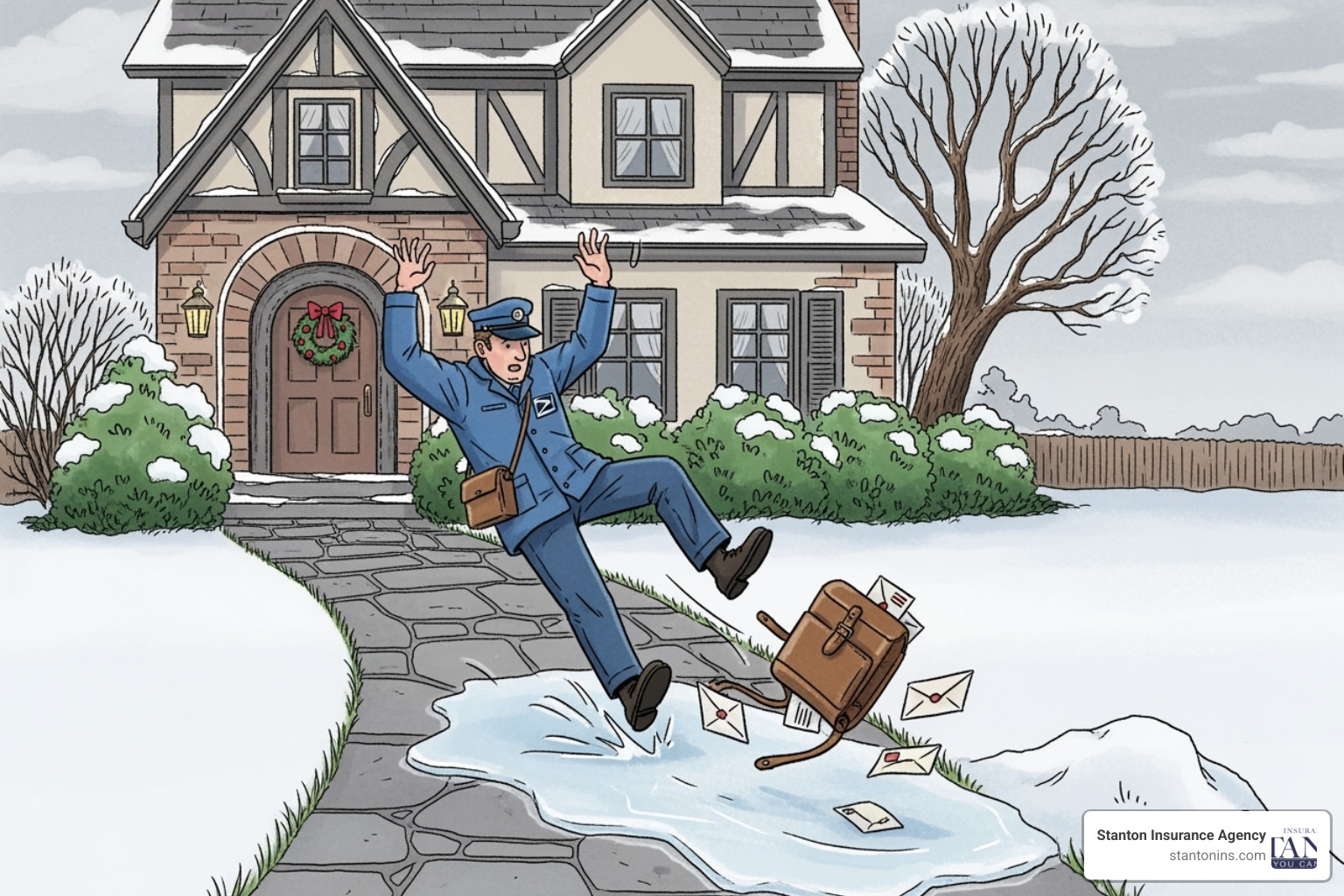
- A delivery person slips on black ice on your driveway: In New England, maintaining clear walkways is crucial. If a delivery driver slips on an icy patch you failed to clear, your policy would cover their medical expenses and any resulting lawsuit.
- You accidentally injure someone while playing sports: If you accidentally injure someone during a recreational game, your personal liability coverage could help with their medical and dental costs.
These examples highlight why robust coverage is a necessity for protecting your financial well-being, as claims can easily exceed $1 million.
What is Personal Liability Insurance for Renters and Homeowners?
A common question we hear is whether Personal Liability Insurance is a standalone policy. The good news is that it’s typically an integral part of your existing property insurance.
Personal liability coverage is included in most standard homeowners and renters insurance policies. This means if you own a home in Massachusetts or rent in New Hampshire, you likely already have this protection.
For homeowners, this coverage protects against claims for accidents on your property or for damage you or your family cause to others’ property, even away from home.
For renters, it serves a similar purpose, protecting you if you’re found responsible for damage to the rental property or for injuries to others in your rented space. Many landlords require this coverage in the lease agreement, as tenants can be held liable for damage to the building or harm to others. So, if you’re renting, this coverage isn’t just smart—it might be required.
We encourage all clients to review their existing policies to confirm their liability limits.
Learn more: What is Personal Liability Insurance for Renters? | What is Personal Liability in Home Insurance?
What Is Not Covered by Personal Liability Insurance?
While Personal Liability Insurance offers broad protection, it’s crucial to understand its limitations. Knowing what your policy doesn’t cover is as important as knowing what it does, preventing surprises if an incident occurs.

Generally, Personal Liability Insurance does not cover:
- Intentional acts to cause harm: If you deliberately cause injury or property damage, your policy will not provide coverage. Insurance is designed for accidents and negligence, not intentional acts.
- Business or professional activities: Your personal liability policy is for your personal life. If an incident arises from a business you operate, even from home, it will not be covered. For that, you would need commercial general liability or professional liability insurance. We often clarify this for our small business clients in Massachusetts and New Hampshire.
- Auto-related accidents: Liability from operating a motor vehicle is covered by your auto insurance policy, not your personal liability policy. We can help you understand your Liability Car Insurance Coverage separately.
- Injuries to yourself or household members: This is “third-party” coverage, meaning it protects you from claims by others. It does not cover injuries to you or anyone living in your household. Your health insurance would cover your own medical needs.
- Damage to your own property: This policy does not cover your own home or belongings. That’s what other parts of your homeowners or renters policy, like dwelling or personal property coverage, are for.
- Certain high-risk activities or property features: Some policies may have exclusions or require special endorsements for things like exotic animals, certain watercraft, or aircraft. Always review your policy details.
- Contractual liability: If you assume liability through a contract, your personal liability policy may not cover it.
It’s crucial to review your policy to understand what is and isn’t covered.
Personal vs. Professional vs. General Liability
Understanding the different types of liability insurance is essential for ensuring you have the right protection. While they all deal with legal responsibility, their purposes differ.
Here’s a breakdown of how Personal Liability Insurance differs from its business-focused counterparts:
| Type of Liability Insurance | What It Covers | Who Needs It |
|---|---|---|
| Personal Liability | Non-business activities, injuries or damage to others on or off your property. | Homeowners, renters, condo owners – anyone who could be held personally responsible for an accident outside of a business context. |
| Professional Liability | Errors, omissions, or negligence in professional services causing financial loss. Also known as E&O or Malpractice insurance. | Professionals like doctors, lawyers, accountants, consultants, and real estate agents. |
| General Liability | Business-related bodily injury, property damage, and advertising injury on your premises or from your operations. | Almost all business owners, from small contractors and retail shops to large corporations. |
To illustrate:
- Personal Liability: A friend slips in your New Hampshire home and breaks their wrist. Your Personal Liability Insurance would cover their medical bills and any resulting lawsuit.
- Professional Liability: You’re a financial advisor in Massachusetts and an error causes a client significant financial loss. You would need Professional Liability Insurance to cover the lawsuit.
- General Liability: At your cafe, a wobbly table causes a customer to spill coffee on their laptop. Your General Liability Insurance would cover the property damage.
These policies serve distinct purposes. Your personal policy protects you as an individual, while professional and general liability policies are for business risks.
Learn more: Liability Insurance Definition
Understanding Your Personal Liability Insurance Coverage and Limits
When it comes to Personal Liability Insurance, your coverage limit can be the difference between a manageable setback and a financial catastrophe. This limit is the maximum amount your insurer will pay for a covered claim, and understanding it is crucial.
Most standard homeowners and renters policies come with Personal Liability Insurance limits from $100,000 to $300,000. While this seems generous, a serious accident can result in costs far exceeding these amounts. Medical bills, lost wages, and legal fees can quickly add up.
At Stanton Insurance Agency, we’ve seen liability claims easily exceed $1 million. That’s why we recommend higher limits of $500,000 or $1,000,000 for our Massachusetts and New Hampshire clients. This is especially important if you have significant assets or property features that increase risk, like swimming pools or trampolines, known as “attractive nuisances.”

Several factors should influence your coverage decision. Your net worth is a starting point; a common guideline suggests coverage that’s at least double your total assets. Your lifestyle also matters. Frequently hosting gatherings or owning pets increases your risk profile. Property features like pools and recreational equipment also increase the likelihood of injury on your property.
Fortunately, increasing your liability limits from the standard $100,000 to $500,000 or $1,000,000 typically adds only a modest amount to your annual premium. The cost-to-benefit ratio makes higher limits one of the smartest insurance investments you can make.
We encourage clients to review their liability limits regularly as their financial situation and lifestyle evolve.
Get a Liability Insurance Quote
When You Need More: Personal Umbrella Policies
Sometimes, even the highest limits on a standard policy aren’t enough. This is where a Personal Umbrella Policy becomes an essential extra layer of protection.
An umbrella policy extends over your existing homeowners, renters, and auto insurance policies. When your primary liability limits are exhausted, your umbrella policy steps in to provide additional protection against catastrophic claims.
The benefits are compelling. Higher liability limits typically start at $1 million and can be increased in $1 million increments. This dramatically extends your protection beyond standard policy limits.
Broader protection is another advantage. Umbrella policies often include coverage for claims like libel, slander, and false arrest, which can be invaluable in today’s connected world.
Umbrella policies also offer cost-effective coverage. The premium for $1 million in coverage is often just a few hundred dollars annually, making it attractive for high-net-worth individuals or anyone wanting comprehensive protection.
Consider this: a court awards a guest $800,000 for an injury at your Massachusetts home. If your homeowners policy has a $300,000 limit, you’d face a $500,000 shortfall. An umbrella policy would cover that difference, protecting your savings and future earnings.
Learn more: Personal Umbrella and Excess Liability Insurance
Frequently Asked Questions about Personal Liability Insurance
Over the years at Stanton Insurance Agency, we’ve noticed our Massachusetts and New Hampshire clients often have similar questions about Personal Liability Insurance. Here are the answers to the most common ones we hear.
Does personal liability insurance cover incidents that happen while I’m traveling?
Yes, and this is a great feature. The Personal Liability Insurance included in your homeowners or renters policy typically provides worldwide coverage. Whether you’re exploring Boston or vacationing in Europe, your coverage travels with you.
For example, if you accidentally knock over an expensive antique while staying at a hotel, or if a guest is injured at a barbecue you’re hosting while visiting friends, your personal liability coverage could step in to protect you financially if you’re found responsible.
This worldwide protection also extends to your family members. It’s a crucial financial safety net that follows you wherever you go.
How much does personal liability insurance cost?
Personal Liability Insurance isn’t something you typically buy separately. It’s built right into your Homeowners Insurance or Renters Insurance policy, making it both convenient and cost-effective.
A portion of your annual premium already covers this valuable protection. What makes this coverage a great value is how little it costs to increase your limits. Bumping your liability from the standard $100,000 to a more robust $500,000 or $1,000,000 typically adds only a modest amount to your annual premium.
For those who want even more protection, a personal umbrella policy is also surprisingly affordable, often providing an additional $1 million in coverage for just a few hundred dollars annually.
Is personal liability different from the liability on my car insurance?
Yes, and this is an important distinction. Both types of liability insurance serve different but equally crucial roles in protecting your financial well-being.
Your Personal Liability Insurance, part of your homeowners or renters policy, handles non-automotive mishaps. This includes incidents at your home, like a guest slipping on your stairs, or away from home, like accidentally damaging someone’s property.
Your Liability Car Insurance Coverage, on the other hand, is specifically for incidents that occur while you’re operating a motor vehicle. It handles medical bills for injured parties and repair costs for damaged property resulting from a car accident where you are at fault.
Think of it this way: if the incident involves your car, your auto liability insurance applies. For most other personal accidents, your personal liability coverage steps in. Both are essential pieces of your overall protection strategy.
Secure Your Financial Future with the Right Coverage
Life can be unpredictable. One moment you’re hosting a barbecue, and the next, a guest has slipped and is facing months of physical therapy. These unexpected moments show why Personal Liability Insurance isn’t just another policy item—it’s your financial lifeline.
A single liability claim can cost hundreds of thousands of dollars, sometimes over a million. Without proper coverage, your savings, home, and even future earnings could be at risk. That’s where the right coverage makes all the difference.
Whether through the Personal Liability Insurance in your standard homeowners or renters policy, or improved with an umbrella policy, you’re building a protective barrier around everything you’ve worked to achieve.
At Stanton Insurance Agency, we’ve seen how the right coverage transforms a potential financial disaster into a manageable situation. We’re here to help you understand what protection you need and why it matters. Our team explains complex insurance concepts in plain English, so you can feel confident about your coverage.
The peace of mind that comes with knowing you’re properly protected is invaluable. Don’t wait for an accident to find gaps in your protection. Review your current coverage and consider if it truly matches your needs. If you have significant assets, a home with features like a pool, or simply want extra security, exploring more protection is a smart financial decision.
To ensure your coverage provides the comprehensive protection your family deserves, we invite you to explore your options for Umbrella Insurance. Let us help you build the trusted protection you need for your financial security and peace of mind.