
Your Guide to Buying and Insuring Your First Car

Finance cars with insurance for first time drivers can feel overwhelming, but breaking down the process into clear steps makes it manageable. Here’s what you need to know:
Main Financing Options:
- Bank or Credit Union Loans – Often offer competitive rates, especially if you’re already a member
- Dealership Financing – Convenient but compare rates carefully
- Manufacturer Programs – Special offers for first-time buyers, new graduates, or newcomers
- Co-Signer Loans – A parent or family member can help if you have limited credit
Insurance Essentials:
- Required Coverage – Liability is legally required; collision and comprehensive are mandatory when financing
- Average Costs – New drivers in Massachusetts typically pay $3,000-$7,000 annually
- Ways to Save – Good student discounts, telematics programs, and bundling policies can lower premiums
Total First-Year Costs to Budget:
- Down payment (aim for 20% of purchase price)
- Monthly loan payments
- Insurance premiums (often your biggest ongoing expense)
- Fuel, maintenance, and registration fees
Getting your first car is a major step towards independence, but it comes with significant financial responsibility. With new cars averaging over $47,000 and used cars around $28,000, plus insurance costs that can reach $7,000 annually for young drivers, the expenses add up fast.
Thankfully, these challenges are manageable. Many first-time buyers worry about getting a loan without a credit history or are shocked by insurance quotes. Understanding your options and preparing for the costs are the keys to making smart choices and navigating the process successfully.
I’m Geoff Stanton, President of Stanton Insurance Agency in Waltham, Massachusetts, and I’ve helped hundreds of families steer the process to finance cars with insurance for first time drivers throughout Massachusetts and New Hampshire. With over 20 years in the insurance industry, I understand both the excitement and the questions that come with this major purchase.
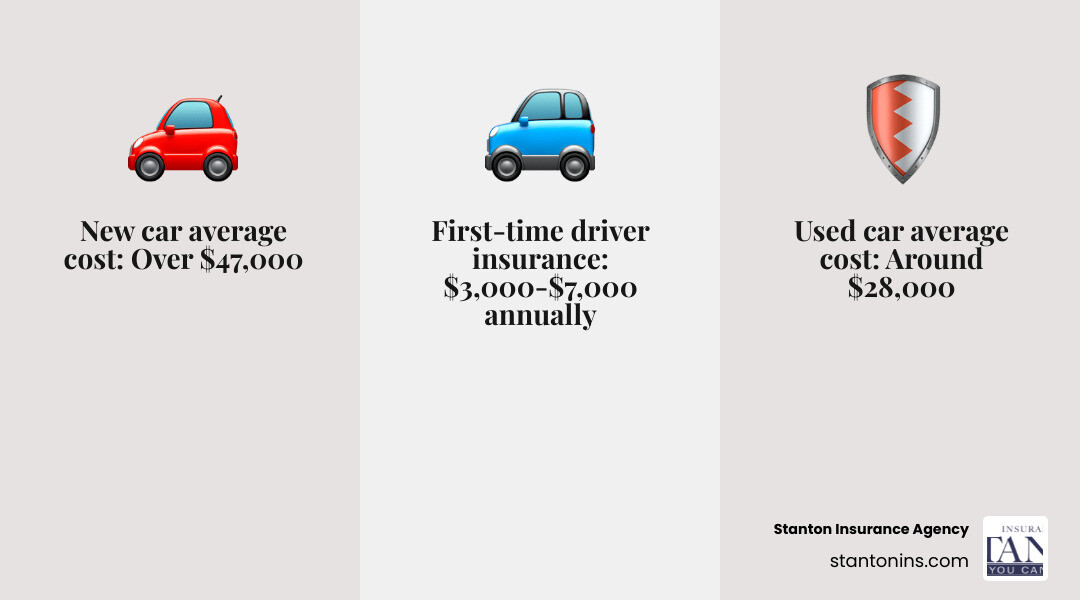
Quick look at finance cars with insurance for first time drivers:
Before You Shop: Budgeting for Your First Car
Before you even step foot on a dealership lot, the most crucial step is to understand your budget. This isn’t just about the car’s sticker price; it’s about the total cost of ownership. Beyond the purchase price, you’ll need to account for your down payment, monthly loan payments, insurance premiums, fuel, routine maintenance, and even unexpected repairs. Missing any of these can quickly turn your dream car into a financial nightmare.
A good rule of thumb we often recommend is the 20/4/10 rule: aim for a 20% down payment, finance the car for no more than four years, and keep your total monthly car expenses (loan, insurance, fuel, maintenance) under 10% of your gross monthly income. While a 20% down payment isn’t always necessary, it significantly lowers your monthly payments and reduces the risk of owing more than the car is worth (negative equity). Trust us, starting with a solid budget makes the entire process of how to finance cars with insurance for first time drivers much smoother.

New vs. Used Cars: What’s Right for You?
One of the first big decisions for any first-time buyer is whether to go new or used. Both have their merits, and the best choice depends on your budget and priorities.
New Cars:
- Pros: Come with the latest tech, a full warranty, and no wear and tear. They often qualify for lower interest rates.
- Cons: A higher purchase price, rapid depreciation (losing up to 20% of value in the first year), and higher insurance premiums.
Used Cars:
- Pros: A much lower purchase price, slower depreciation, and cheaper insurance. You get more car for your money.
- Cons: Potential for existing wear and tear and an unknown history. Maintenance costs may be higher, and they usually lack a manufacturer warranty unless it’s a Certified Pre-Owned (CPO) vehicle.
For first-time drivers, a used car often makes more financial sense. You get more car for your money, and the lower insurance premiums can be a huge relief. If you’re concerned about reliability, a Certified Pre-Owned (CPO) vehicle from a dealership can offer a good compromise, providing a warranty and a thorough inspection process. When comparing options, we always recommend checking safety ratings from reputable sources like The Insurance Institute for Highway Safety (IIHS) provides safety ratings for new and used vehicles.
Creating a Realistic Car Budget
Beyond the purchase price, a realistic car budget must encompass all ongoing expenses. Here’s what to factor in:
- Loan Payments: If financing, this is a major monthly expense. A good credit score can lower your interest rate, saving you thousands.
- Car insurance costs: For new drivers in Massachusetts and New Hampshire, this can be a huge expense, often $3,000 to $7,000 annually. Budget for this upfront.
- Fuel: Consider your commute and the car’s MPG. For example, a car getting 25 MPG driven 500 miles a month will use 20 gallons of gas.
- Routine Maintenance: Budget annually for oil changes (every 5,000-7,500 miles), tire rotations, and brake checks to prevent larger issues.
- Unexpected Repairs: Set aside a small amount monthly or have an emergency fund for unexpected problems.
- Registration Fees: Remember to include the annual state vehicle registration cost.
By carefully planning for these expenses, you’ll avoid surprises and maintain a healthy financial outlook while enjoying your new ride.
Securing Your First Car Loan: Options for New Buyers
For many first-time buyers, especially those eager to finance cars with insurance for first time drivers, securing a car loan is a major hurdle. The good news is there are several avenues to explore, even if your credit history is still in its infancy. The key is understanding your options and preparing your application thoroughly.
When you apply for a car loan, lenders will typically ask for a few standard documents to verify your identity, income, and residence. Here are the documents typically required for a car loan application:
- Proof of identity (e.g., valid Massachusetts or New Hampshire driver’s license)
- Proof of income (e.g., recent pay stubs, employment letter)
- Proof of residence (e.g., utility bill, lease agreement)
- Vehicle information (if you’ve already chosen a specific car)
Main Financing Options for First-Time Buyers
Let’s explore where you can find that all-important car loan:
- Bank Loans: Your personal bank or a local credit union is an excellent starting point. They often offer competitive rates to existing customers. Getting pre-approved from a bank before visiting a dealership gives you a baseline offer and negotiating leverage.
- Dealership Financing: Most dealerships offer financing through their lending partners. This is convenient, but always compare their offers with any pre-approvals you’ve secured.
- In-House Financing: Some used car dealerships offer “buy here, pay here” financing. This can be an option for those with challenging credit, but they often come with higher interest rates. Proceed with caution.
- Special Manufacturer Programs: Many car manufacturers have programs for first-time buyers or recent college graduates. These programs acknowledge that new drivers might not have extensive credit histories and can offer more accessible financing. Many car manufacturers and their dealerships have programs for first-time buyers or recent college graduates, which can be found in states like New Hampshire.
How Your Credit History (or Lack Thereof) Affects Financing
Your credit score is a key factor for lenders. As a first-time buyer, you may have a limited credit history, which can make lenders hesitant.
- No Credit History Challenges: A thin credit file may be seen as a higher risk, leading to higher interest rates or a larger required down payment. However, many lenders have “first-time buyer” programs that consider other factors, like stable income, instead of just a credit score.
- Building Credit: The best way to improve your financing options is to start building credit before you need a car loan. A secured credit card, used responsibly and paid off monthly, is a great tool for building a positive credit history.
- Co-Signers: A co-signer with good credit can significantly improve your chances of approval and help you secure a better interest rate. This is a serious commitment, as it impacts their credit too.
- Down Payment Impact: A larger down payment reduces the amount you need to borrow, making the loan less risky for the lender and improving your approval odds.
- Income and Employment Stability: Lenders look closely at your income and employment stability. A steady job signals your ability to make regular payments.
Understanding Loan Terms and Using a Calculator
Understanding loan terms is key to making an informed decision.
- Loan Length (Term): This is how long you have to repay the loan (e.g., 60, 72, or 84 months). Shorter terms have higher monthly payments but save you money on interest. Longer terms lower your monthly payment but cost significantly more in total interest.
- Loan Amount: The principal you borrow after your down payment.
- Annual Percentage Rate (APR): The true cost of borrowing, including interest and fees. A lower APR means a cheaper loan, and a better credit score usually gets you a lower APR.
Before you commit, use a car loan calculator. Using an online car loan calculator helps you understand potential payments before you apply. This helps you find a payment that fits your budget.
How to Finance Cars with Insurance for First Time Drivers
Congratulations, you’ve found the perfect car and secured financing! Now comes the next crucial step in being able to finance cars with insurance for first time drivers: getting it insured. This is often where first-time drivers experience a bit of sticker shock, but with the right knowledge, you can steer these waters successfully.
New driver insurance is almost universally more expensive than for experienced drivers. In Massachusetts, for example, new drivers can generally expect to pay anywhere from $3,000 to $7,000 or more annually for their first car insurance policy. This significant cost is a direct reflection of the higher risk associated with new drivers.
Why Insurance Is Expensive for New Drivers and How to Save
Why the hefty price tag? Insurers base premiums on risk, and statistics show new drivers are more likely to have an accident. Key factors include:
- Age and Experience: Lack of experience is the biggest factor. Statistically, up to 20% of new drivers are in an accident within their first year, which translates to higher premiums.
- Vehicle Type: High-performance cars or those with expensive repair costs are more expensive to insure. Choosing a car with high safety ratings and lower repair costs can reduce premiums.
- Location: Rates are higher in areas with more traffic congestion and vehicle theft.
So, how can you save?
- Shop Around: This is our #1 piece of advice. Get multiple quotes from different insurers.
- Ask About Discounts: Many insurers offer discounts for good students, completing a defensive driving course, or bundling your car insurance with a home or renters policy.
- Higher Deductible: Choosing a higher deductible (the amount you pay out-of-pocket before insurance kicks in) will lower your premium. Just make sure you can afford it if you need to file a claim.
Essential Insurance Coverage When You Finance Cars with Insurance for First Time Drivers
When you finance cars with insurance for first time drivers, your insurance needs go beyond just meeting state minimums. Lenders have a vested interest in your vehicle and will require specific coverages to protect their investment.
Here’s what you’ll typically need:
- Liability coverage is a legal requirement: This covers damages and injuries you cause to others in an at-fault accident. It’s legally mandated in Massachusetts and New Hampshire but doesn’t cover your own vehicle.
- Collision Coverage: This pays for damages to your own vehicle if you hit another car or object. Lenders almost always require this.
- Comprehensive Coverage: This covers damages to your car from non-collision incidents like theft, vandalism, or fire. Lenders also require this.
- Gap Insurance: This is highly recommended for financed cars. If your car is totaled, its actual cash value might be less than what you still owe on your loan. Gap insurance covers this “gap,” preventing you from being upside down on a loan for a car you no longer have.
To fully understand your obligations, Learn more about car insurance requirements for financed cars. We’re here to help you tailor a policy that meets both lender requirements and your personal needs.
Telematics and Other Ways to Lower Your Premium
Technology and smart choices can help lower your premium:
- Telematics Programs: Also known as Usage-Based Insurance (UBI), these programs use a small device or smartphone app to monitor driving habits like speed, braking, and mileage. Safe driving can earn you significant discounts.
- Being a Named Driver: If you only use a car occasionally, being listed as a named driver on a parent’s policy is often cheaper than having your own. Be honest about who the main driver is; misrepresenting this (“fronting”) is insurance fraud.
- Increasing Your Deductible: A higher deductible lowers your premium, but make sure you can afford the out-of-pocket cost if you file a claim.
- Other Discounts: Ask about discounts for low annual mileage and for vehicles with advanced safety features like anti-lock brakes and anti-theft devices.
The First-Time Buyer’s Roadmap: From Research to Driving Away
The journey to finance cars with insurance for first time drivers can seem like a winding road, but with a clear roadmap, you’ll reach your destination with confidence. Let’s break down the process into manageable steps. One of the first decisions you’ll make is whether to finance or lease. Here’s a quick comparison:
| Feature | Financing a Car | Leasing a Car |
|---|---|---|
| Ownership | You own the car once the loan is paid off. | The leasing company owns the car. |
| Monthly Payments | Generally higher than lease payments. | Typically lower than finance payments. |
| Mileage Limits | No mileage restrictions. | Strict mileage limits (e.g., 10,000-15,000 miles/year). Exceeding them incurs fees. |
| Customization | You can customize the car as you wish. | Limited customization allowed. Must be returned in original condition. |
| Maintenance | Your responsibility; typically covered by warranty early on. | Often covered by warranty during lease term; you’re responsible for normal wear and tear. |
| End of Term | You own the car outright. | Return the car or buy it for its residual value. |
| Long-Term Cost | Potentially lower if you keep the car for many years after paying off the loan. | More expensive if you continuously lease new cars. |
| Equity | Builds equity over time. | No equity built; like a long-term rental. |
Step 1: Research, Inspect, and Test Drive
This is the fun part, but don’t rush it! Thorough research will save you headaches and money in the long run.
- Online Research Tools: Start by identifying your needs (commute, passengers, cargo). Then dive into online resources that provide detailed vehicle reviews and offer excellent insights into various makes and models. Look at consumer reviews, safety ratings, and reliability reports.
- Vehicle History Reports: For used cars, a vehicle history report is a must-have. It can reveal past accidents, mileage discrepancies, and service history.
- Pre-Purchase Inspection: This is non-negotiable for used cars. Invest $100-$200 to have a trusted independent mechanic in Massachusetts or New Hampshire inspect the vehicle. They can spot issues that you might miss, potentially saving you thousands.
- What to Look for During a Test Drive: Drive on both city streets and highways. Pay attention to the brakes (are they firm?), acceleration (is it smooth?), and steering (does it pull?). Turn off the radio to listen for unusual rattles or engine noises. Check for blind spots and ensure you are comfortable.
- Questions to Ask the Seller: Don’t be shy! Ask about the car’s history, maintenance records, why they’re selling, and if it’s been in any accidents.
Step 2: Negotiate the Price and Finalize the Deal
Negotiation is an art, not a battle. Go in prepared and confident.
- Know Your Numbers: Research the Manufacturer’s Suggested Retail Price (MSRP) for new cars and the market value for used cars using online valuation tools. This gives you a negotiation window.
- Negotiate the “Out-the-Door” Price: This includes the car price, taxes, and all fees. Focus on this total figure, not just the monthly payment.
- Avoiding High-Pressure Sales Tactics: Dealerships often push expensive add-ons like extended warranties or paint protection. Be prepared to politely say “no.” Your goal is to get the best deal on the car itself.
- Reviewing the Final Purchase Agreement: Before signing, read every line carefully. Ensure all agreed-upon terms (price, interest rate) are accurately reflected. Don’t feel rushed; ask questions about anything you don’t understand.
Common Mistakes When You Finance Cars with Insurance for First Time Drivers
Even the savviest buyers can stumble. Here are some pitfalls to avoid:
- Not Getting Pre-Approved for a Loan: This weakens your negotiating position on interest rates at the dealership.
- Focusing on the Monthly Payment: A low payment can hide a longer, more expensive loan. Always negotiate the total “out-the-door” price.
- Skipping a Pre-Purchase Inspection: For a used car, this is a critical step to avoid buying a vehicle with hidden, costly problems.
- Forgetting to Budget for Ongoing Costs: Insurance and maintenance are major expenses. Get insurance quotes before you commit to a car.
- Making an Emotional Decision: Don’t let a car’s appearance override your budget and practical needs. Stick to your plan.
- Failing to secure proper auto insurance before leaving the lot is a critical error: You must have proof of insurance to legally drive your new car home.
Frequently Asked Questions about Financing and Insuring Your First Car
What is the most important type of car insurance for a first-time driver with a financed car?
For a financed car, the most critical coverages are collision and comprehensive, in addition to the state-mandated liability insurance. Your lender requires collision and comprehensive to protect their financial interest in the vehicle against damage or theft. Gap insurance is also highly recommended to cover the difference between the loan balance and the car’s depreciated value if it’s totaled.
Can I get a car loan as a first-time buyer with no credit history?
Yes, it is possible. While challenging, many lenders and manufacturers have programs specifically for first-time buyers or those with limited credit. These may require a larger down payment, a co-signer with good credit, or proof of steady income. Building a small credit history with a secured credit card for a few months before applying can also improve your chances.
Should I buy a new or used car for my first vehicle?
This depends on your budget and priorities. A used car is generally cheaper to buy and insure, and you avoid the steepest depreciation. However, it may have a shorter lifespan and require more maintenance. A new car offers the latest safety features, a full warranty, and better financing rates, but comes with a higher price tag and faster depreciation. A certified pre-owned (CPO) vehicle can be a good compromise.
Get on the Road with Confidence
Buying your first car is a major milestone that combines excitement with significant financial responsibility. By carefully budgeting, exploring all your financing options, and securing the right insurance, you can steer the process smoothly. Understanding the total cost of ownership—from the loan payment to the insurance premium—is the key to a successful and stress-free experience. For expert guidance on finding the best and most affordable auto insurance in Massachusetts and New Hampshire, the team at Stanton Insurance Agency is here to help you every step of the way.