
Is full coverage required: 1 Crucial Guide 2025
Understanding the “Full Coverage” Question
Is full coverage required? The answer is nuanced: No, it’s not legally mandated by any state, but yes, it’s almost always required by your lender or leasing company if you’re financing a vehicle.
Quick Answer:
- Legal Requirement: No state law requires “full coverage” car insurance
- Lender Requirement: Banks and leasing companies typically do require it as a condition of your loan or lease
- Massachusetts Minimums: $20,000/$40,000 bodily injury liability, $5,000 property damage, plus PIP and uninsured motorist
- New Hampshire: No mandatory insurance law, but if you buy coverage, minimums are $25,000/$50,000 bodily injury and $25,000 property damage
- What “Full Coverage” Means: A combination of liability, collision, and comprehensive coverage—not a single policy type
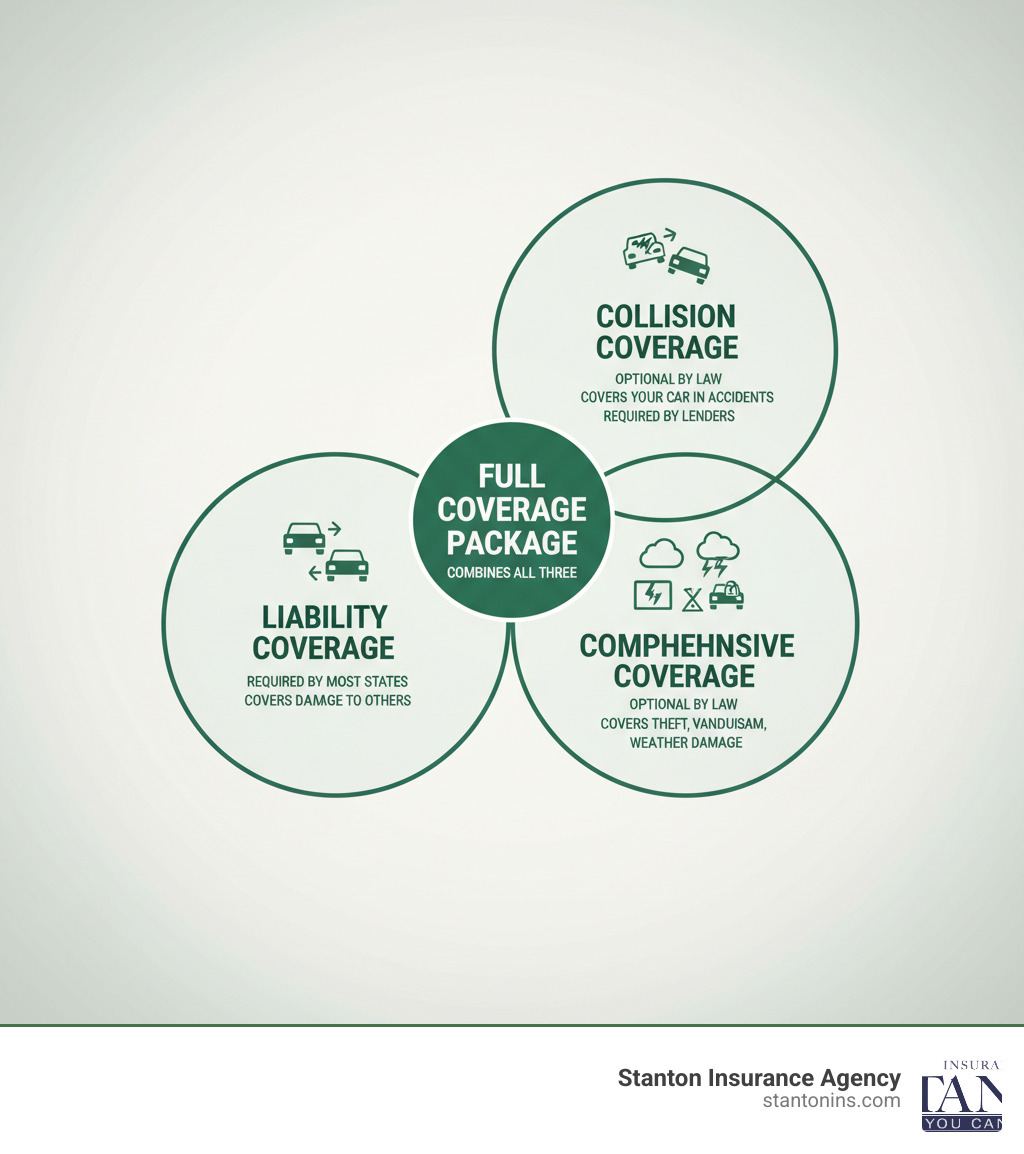
The term “full coverage” is often misunderstood. It isn’t a specific policy, but industry shorthand for a bundle of coverages: state-required liability, plus collision and comprehensive protection for your own vehicle. This combination creates a robust safety net against financial loss from accidents, theft, or other damage.
While Massachusetts and New Hampshire have different approaches to mandatory insurance—Massachusetts requires specific coverages, while New Hampshire has no insurance mandate—neither legally requires you to carry what’s commonly called “full coverage.” However, if you have a loan or lease on your car, your lender will require comprehensive and collision insurance as a condition of the agreement.
I’m Geoff Stanton, President of Stanton Insurance Agency. As a fourth-generation insurance professional serving Massachusetts since 1999, I’ve helped countless clients steer this exact question. I’m here to break down when you need full coverage and when you don’t.
What “Full Coverage” Car Insurance Really Means

Let’s clear up the confusion: “full coverage” isn’t a specific type of insurance. It’s industry shorthand for a policy that bundles state-required liability with physical damage protection for your own vehicle. This package protects you from a fender bender you cause to theft or hail damage. Let’s break down the components.
The Core Components of a Full Coverage Policy
When insurance professionals talk about full coverage, they’re referring to a policy that combines three essential types of protection.
Liability insurance forms the foundation. This is the coverage that’s mandatory in nearly every state, including Massachusetts. Crucially, liability only pays for damages and injuries to other people and their property; it never covers your own expenses. Bodily injury liability covers medical expenses and lost wages for anyone injured in an accident you cause. Property damage liability handles damages to another person’s property—their car, fence, or mailbox.
Collision insurance pays to repair or replace your own vehicle if it’s damaged in an accident with another car or object, regardless of who caused it. Even if you’re at fault, like sliding on ice into a guardrail, collision coverage pays to fix your car. Without it, you’d be paying for those repairs entirely out of pocket.
Comprehensive insurance (or “other than collision” coverage) protects your vehicle from non-accident events. If your car is stolen, comprehensive coverage reimburses you for its value. If someone vandalizes your car, comprehensive has your back. Weather damage from hail, floods, or falling trees, and even hitting a deer, all fall under comprehensive coverage. It’s the safety net for all those unexpected moments when life happens to your car.
The Difference Between Full Coverage and Comprehensive
“Full coverage” and “comprehensive insurance” are not the same thing. Comprehensive insurance is just one piece of the full coverage puzzle, covering non-collision events like theft and weather damage. On its own, comprehensive won’t cover a collision.
Full coverage is the complete package—it’s the bundled policy that includes liability, collision, and comprehensive coverage, along with any other protections your state requires. You can’t have full coverage without comprehensive, but you could technically buy comprehensive without collision (though this is uncommon).
When someone asks “is full coverage required?” they’re really asking whether they need the whole package—and the answer depends on whether you own your car outright or still owe money on it.
Is Full Coverage Required by Law in Massachusetts and New Hampshire?
No state legally requires drivers to purchase a policy specifically called “full coverage.” State laws focus on ensuring you have enough liability coverage to protect others if you cause an accident. Massachusetts and New Hampshire have very different approaches to this.
Massachusetts Compulsory Insurance Requirements
Massachusetts law requires four distinct coverages for all drivers.
First is Bodily Injury to Others ($20,000 per person/$40,000 per accident) to pay for medical costs and lost wages if you injure someone in a crash.
Next, Personal Injury Protection (PIP) is a no-fault coverage paying up to $8,000 for your medical bills and lost wages, regardless of who caused the accident.
You also need Bodily Injury Caused by an Uninsured Auto ($20,000/$40,000) to protect you if you’re hit by an uninsured driver.
Finally, Property Damage to Others ($5,000 minimum) covers damage you cause to another person’s property.
While these four coverages are legally required, Collision and Comprehensive are optional under state law. However, if you have a loan or lease, they will likely be mandatory. For a more detailed look, you can learn more about the basics of MA auto insurance.
New Hampshire’s Unique “Financial Responsibility” Law
New Hampshire is unique: it’s the only state that doesn’t legally require drivers to buy auto insurance. Instead, it operates under a “financial responsibility” law. This means while you aren’t required to buy a policy, you are legally responsible for any damages you cause in an accident.
Driving uninsured in New Hampshire is a huge gamble. If you cause an accident, you are personally liable for all costs, which can lead to severe financial hardship. You could also face penalties like license suspension. To get it back, you’d likely be required to file an SR-22 form for three years, proving you have future financial responsibility, which often means buying a more expensive, high-risk policy.
If you do choose to buy insurance—which we strongly recommend—the minimum required liability limits are $25,000 per person and $50,000 per accident for bodily injury, and $25,000 for property damage. For a complete understanding, we recommend you review New Hampshire’s auto insurance guide.
When is Full Coverage Car Insurance Typically Required?
The most common situation where full coverage is not optional is when you don’t own your car outright. If you have a loan or a lease, your lender has a financial stake in the vehicle and will contractually require you to protect it.
The Lender’s Requirement: Protecting the Asset
When you take out an auto loan or lease a vehicle, the car technically belongs to the financial institution until you’ve made all your payments. They need to ensure their asset is protected.
- Auto loans: If you’ve financed your car, your loan agreement will almost certainly stipulate that you must carry collision and comprehensive insurance.
- Car leases: Leasing companies have similar requirements, often with stricter rules, as they expect the vehicle back in good condition.
- Lender requirements: Banks and leasing companies require you to maintain both Collision and Comprehensive coverage to protect their interest until the loan is paid off.
- Loss payee: Your agreement will list the lender as a “loss payee.” This means if the car is totaled, the insurance payout goes to the lender first to cover your outstanding loan balance.
- Your financing agreement will specify the exact coverages you must carry and often a maximum deductible amount (e.g., $1,000). Always review these details.
So, is full coverage required for my financed or leased car?
Yes, it is almost always a condition of your financing or lease agreement. This is a contractual obligation.
- Review your contract: Before you drive off the lot, make sure you understand the insurance requirements outlined in your loan or lease paperwork, including required deductibles or coverage limits.
- Failure to maintain the required coverage can have severe consequences. The lender can “force-place” an expensive policy on your behalf and add the cost to your loan payments. This policy only protects the lender’s interest, not yours, significantly increasing your financial burden.
Weighing the Pros and Cons: Is Full Coverage Worth the Cost?
For drivers who own their cars outright, the decision to carry full coverage comes down to a personal cost-benefit analysis. It’s about balancing the higher premium against your financial ability to handle a major, unexpected expense.
The Benefits of Full Coverage
Even if it’s not required, full coverage offers substantial advantages:
- Financial security: A “full coverage” policy ensures that if your car is damaged or totaled, you won’t be left footing the entire bill out of pocket.
- Peace of mind: Knowing your investment is protected against a wide range of perils—from collisions to theft to natural disasters—can save you a lot of stress.
- Covers your own vehicle: Unlike basic liability, collision and comprehensive coverages directly address repair or replacement costs for your car.
- Protects against theft and vandalism: Comprehensive coverage acts as your shield against these non-collision losses.
- Manageable cost: While more expensive than a minimum policy, the premium for full coverage is far more manageable than a sudden $15,000 repair bill or the total loss of your vehicle after a major accident.
The Drawbacks and When to Consider Dropping It
While the benefits are clear, full coverage isn’t for every situation.
- Higher premiums: The primary drawback is the higher premium. A minimum liability policy is significantly less expensive, representing a substantial saving compared to full coverage.
- Vehicle value: For older cars with low market value, the cost of full coverage might outweigh the potential payout.
- Deductible costs: Even with full coverage, you’ll still be responsible for your deductible before your insurance kicks in.
- A good rule of thumb is to consider dropping full coverage when the annual premium is more than 10% of your car’s value. For example, if your car is worth $4,000 and your full coverage premium is $1,200/year, it may no longer be cost-effective.
- You might also drop full coverage if you have enough savings to comfortably pay for repairs or a replacement vehicle out of pocket, effectively self-insuring for physical damage.
Beyond the Basics: Optional Coverages to Improve Your Policy
While understanding is full coverage required is crucial, the standard “full coverage” package is just the beginning. A menu of optional coverages, or endorsements, can fill gaps in a standard policy to provide greater financial protection and convenience.
One of the most valuable add-ons is Gap Insurance. It protects against this scenario: your new car is totaled, but its actual cash value (what insurance pays) is less than your remaining loan balance due to depreciation. Gap Insurance bridges this “gap,” paying the difference. For anyone financing a new car, it can be a financial lifesaver.
Rental Reimbursement is another practical coverage. If your vehicle is in the shop for a covered claim, this coverage pays for a rental car so you’re not left stranded. For most people, being without a car disrupts daily life, making this coverage highly practical.
Roadside Assistance and Towing is a safety net for unexpected breakdowns. This provides coverage for services like towing, flat tire changes, battery jump-starts, and lockout assistance. Adding it to your policy can be more cost-effective and convenient than a separate auto club membership.
Medical Payments (MedPay) is valuable in New Hampshire (which doesn’t require PIP) or as a supplement to Massachusetts’ PIP. MedPay covers medical expenses for you and your passengers after an accident, regardless of fault. It can help with out-of-pocket costs that exceed your PIP limits or fill gaps in your health insurance, such as deductibles.
Some insurers also offer Accident Forgiveness, so your rates won’t increase after your first at-fault accident. Similarly, Waiver of Depreciation (or “new car replacement”) ensures that if your new car is totaled within a set period (e.g., 24 months), the insurer pays the full replacement value without deducting for depreciation.
These optional coverages allow you to customize your policy to your specific needs. To explore these and other ways to customize your policy for maximum protection, you can find more info about personal auto insurance options. The right combination of endorsements can transform a standard policy into comprehensive protection that truly fits your life.
Frequently Asked Questions about Full Coverage Requirements
Do I need full coverage on a paid-off car?
No, full coverage is not legally required once your car is paid off. The decision is based on your financial situation and your car’s value.
If your car were totaled tomorrow, could you afford to repair or replace it without financial hardship? If not, keeping full coverage is wise. Losing your primary mode of transportation unexpectedly can create a major financial crisis.
Conversely, if your car’s value has depreciated significantly, the cost may outweigh the benefit. For a car worth $3,000, paying $1,000 annually for full coverage may not be cost-effective. You might be better off saving that premium money for a future vehicle.
Also consider your risk tolerance: do you live in an area with high rates of theft or severe weather? These factors influence whether full coverage makes sense.
How much more does full coverage cost than minimum liability?
Full coverage costs significantly more because it protects your vehicle, not just others.
As a result, a full coverage policy can cost two to four times as much as a state minimum liability policy.
Whether the extra cost is worth it depends on your car’s value and your savings. If your car is worth $20,000, paying a higher annual premium for full coverage is more manageable than a sudden $20,000 replacement cost. The higher premium is an investment in financial security and peace of mind.
Rates vary significantly based on your location, driving record, vehicle, and coverage limits. Massachusetts and New Hampshire drivers will see different rates, so it’s worth getting personalized quotes.
Does “full coverage” mean I’m covered for everything?
No, and this is a common misconception. “Full coverage” provides robust protection, but it doesn’t cover every scenario.
A “full coverage” policy does not typically cover routine maintenance, mechanical breakdowns, or wear and tear. Your policy isn’t a warranty; it won’t cover an engine failure, new brakes, or worn-out tires.
It also doesn’t automatically include optional protections like Gap Insurance, Rental Reimbursement, or Roadside Assistance unless you specifically add them as endorsements.
Every policy has exclusions. Intentional damage, racing, or using your car for commercial purposes (like ridesharing) without proper coverage are typically not covered. Lending your car to an unlisted driver can also lead to limited or denied coverage.
Always review your policy documents and discuss any concerns with your insurance agent to understand precisely what is and isn’t covered.
Conclusion: Making the Right Choice for Your Protection
So, is full coverage required? The answer depends on your lender and your personal finances.
Neither Massachusetts nor New Hampshire legally requires “full coverage.” However, if you’re financing or leasing your vehicle, your lender will absolutely require you to maintain both collision and comprehensive coverage. That’s non-negotiable.
If you own your car outright, the decision is personal. You must weigh the premium cost against the risk of paying for major repairs or a replacement out-of-pocket. For newer, valuable cars, full coverage offers crucial protection. For older cars with low value, it might make sense to drop it if you have emergency savings.
Navigating deductibles, limits, and endorsements can be overwhelming. Making the wrong choice can leave you financially exposed or paying for coverage you don’t need.
That’s where we come in. The trusted advisors at Stanton Insurance Agency have been helping Massachusetts families and businesses make smart insurance decisions for generations. We take the time to understand your unique situation—your vehicle, your finances, and your driving habits. Then we help you compare options and build a policy that provides the right level of protection.
We’re here to ensure your assets are protected with a policy that makes sense for your life and budget.
Contact us today to get a personalized auto insurance quote and ensure you’re properly covered. Let’s have a conversation about what protection looks like for you—no pressure, no jargon, just honest guidance.
