
Is collapse covered by commercial property insurance: 1
Why Commercial Property Collapse Coverage Matters More Than You Think
Is collapse covered by commercial property insurance? The answer depends on your specific policy type and the cause of the collapse, but here’s what you need to know:
Quick Answer:
- Basic Form policies: Only cover collapse if caused by another covered peril (like fire)
- Broad Form policies: Cover collapse from specific named causes as “Additional Coverage”
- Special Form policies: Cover most collapse causes unless specifically excluded
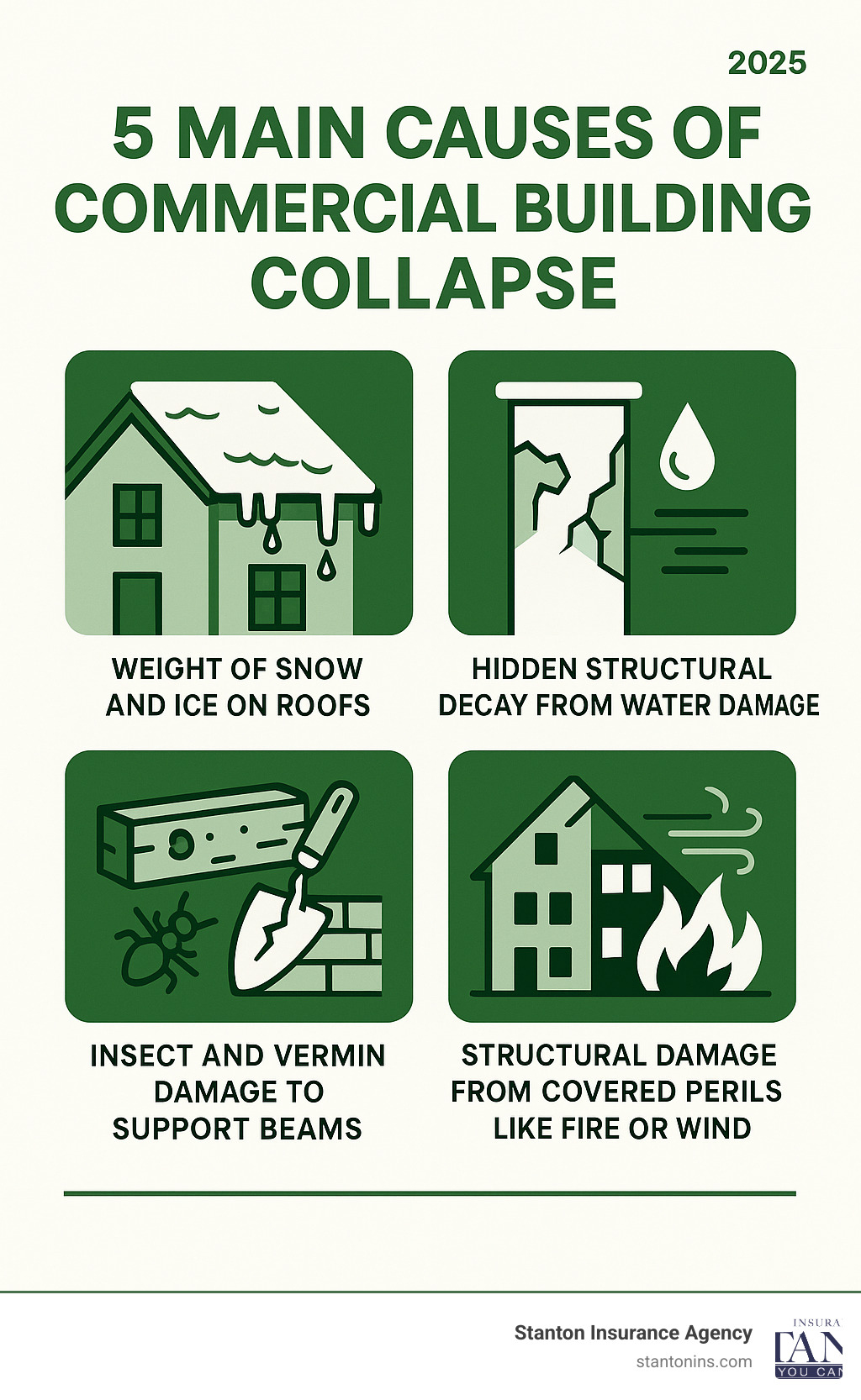
- Key covered causes: Hidden decay, insect damage, weight of snow/rain, structural damage from covered perils
- Common exclusions: Poor maintenance, wear and tear, earth movement, flood damage
Every business owner should anticipate some property damage at some point. While events like fires, floods, hail, and strong winds are expected, a total building collapse can be entirely unexpected if proper maintenance and building protocols aren’t followed. When disaster strikes, the financial impact extends far beyond repair costs – it includes lost revenue, ongoing expenses, and potential liability issues.
More than 200 businesses per day experience property fires, with retail stores facing average damages of $62,360 and office properties suffering losses of $27,027. But collapse events, while less frequent, can be far more devastating both financially and operationally.
I’m Geoff Stanton, President of Stanton Insurance Agency, and in my 25 years in the insurance industry, I’ve helped countless business owners steer complex commercial property claims, including determining is collapse covered by commercial property insurance based on their specific policy terms and circumstances. My experience has shown that understanding your coverage before disaster strikes is crucial for protecting your business investment.
Defining ‘Collapse’ in Your Insurance Policy
The word “collapse” in an insurance policy has a very specific meaning that may differ from its everyday use. Historically, courts were divided, with some requiring a structure to be reduced to a pile of rubble (the “traditional view”) and others considering a “substantial impairment of structural integrity” to be enough (the “broad view”).
To create consistency, the Insurance Services Office (ISO), which provides standardized forms for many insurers, established a more precise definition. Most modern Business Insurance policies define collapse as an “abrupt falling down or caving in of a building or any part of a building with the result that the building or part of the building cannot be used for its intended purpose.” This means the damage must be sudden and severe enough to render the property, or a significant part of it, unusable for its intended purpose. It doesn’t necessarily mean the entire building has to be flattened, but a substantial, unexpected failure must occur.
What Is Not Considered a Collapse?
It’s equally important to understand what doesn’t meet this definition. Under most policies, the following conditions are not considered a collapse:
- A building or part of a building that is in danger of falling down or caving in. This is a crucial point; signs of distress like cracking or sagging, even if they indicate an impending collapse, typically do not trigger coverage until the abrupt failure occurs. Insurers expect property owners to mitigate damage before it escalates to a full collapse.
- A part of a building that is still standing, even if it has separated from another part. The policy language often specifies that the part must have “fallen down or caved in.”
- Cracking, bulging, sagging, bending, leaning, settling, shrinking, or expanding. These are often considered signs of gradual deterioration or earth movement, which are generally excluded unless they directly lead to an abrupt falling down or caving in from a covered cause.
This distinction is crucial. If your building is showing signs of distress but hasn’t abruptly fallen, your policy’s collapse coverage may not be triggered, though you have a duty to mitigate further damage. This is why regular maintenance and inspections are so vital – they help you identify and address issues before they become catastrophic and fall outside the scope of your coverage.
So, Is Collapse Covered by Commercial Property Insurance?
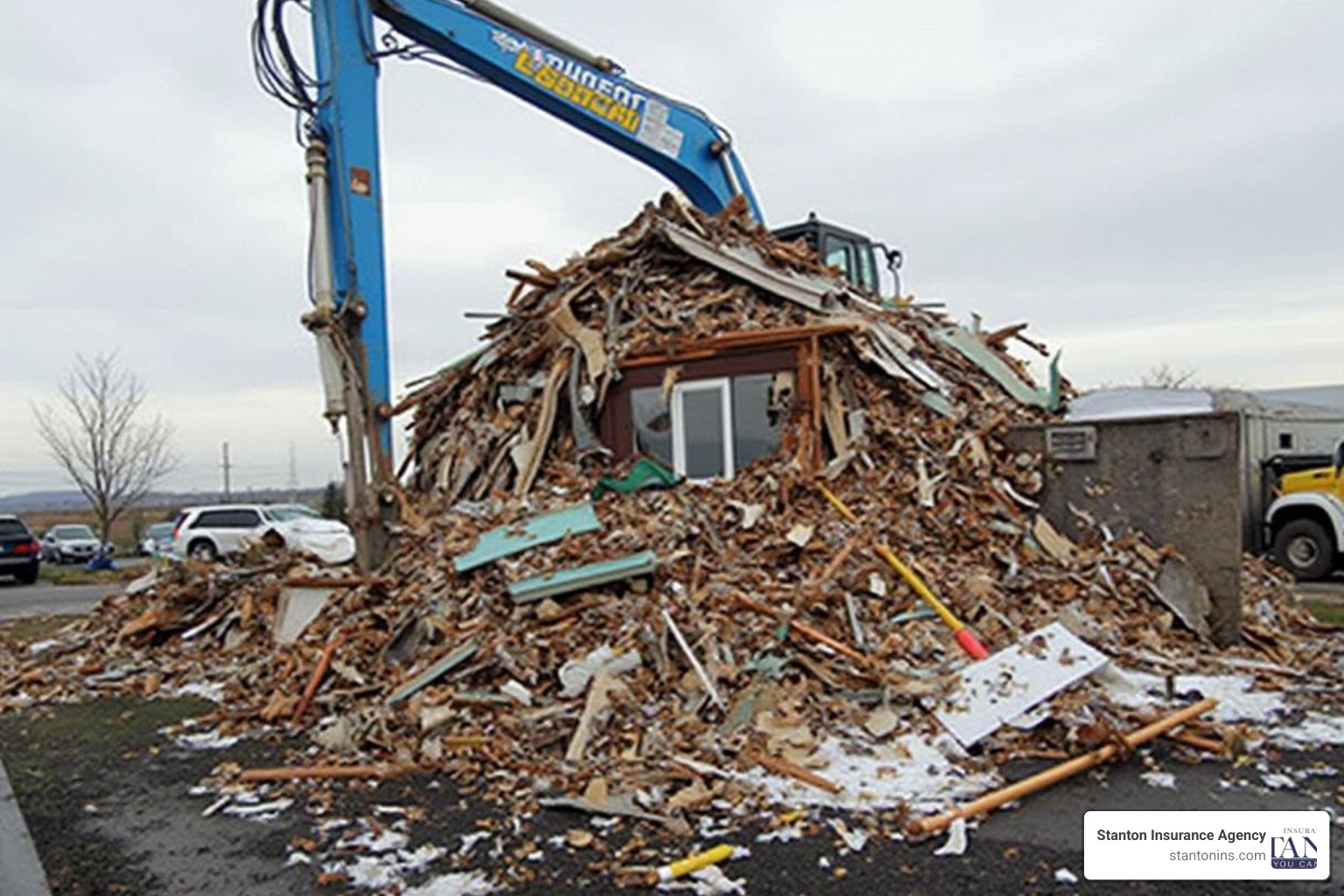
Now for the big question: is collapse covered by commercial property insurance? The answer isn’t a simple yes or no, as it really comes down to the kind of commercial property policy you have. Think of insurance policies like different levels of protection, each offering a distinct approach to covering potential losses. There are three main “causes of loss” forms that define how your policy handles a collapse.
First up is the Basic Form. This policy is like a very specific shopping list – it only covers losses from a pre-set list of perils, such as fire, lightning, or an explosion. Here’s the catch: collapse itself is not on this list. So, if your building crumbles, it would only be covered if that collapse was directly caused by one of the listed perils. For example, if a fire severely weakens the structure and it then collapses, you’d likely be covered because fire is a named peril. This is the most limited form of coverage.
Next, we have the Broad Form. This policy expands on the Basic Form, adding more covered perils like the weight of ice, sleet, or snow, and even falling objects. The really good news here is that the Broad Form adds Collapse as an “Additional Coverage.” This means if your building collapses due to specific causes listed in the policy, you’re in luck! It’s a significant step up in protection compared to the Basic Form.
Finally, there’s the Special Form. This is the most comprehensive option, often called an “all-risk” policy. Instead of listing what is covered, it covers everything unless it’s specifically excluded. So, with a Special Form policy, a collapse is generally covered unless the cause of that collapse is clearly listed in your policy’s exclusions. This form offers the broadest peace of mind, putting the burden on the insurer to show why something isn’t covered.
What Specific Causes of Collapse Are Typically Covered?
Under both Broad and Special forms, your policy usually steps in for a collapse caused by one of these specific scenarios. It’s like having a safety net for these particular types of structural failures:
- Any of the “named perils” in the Broad Form, such as fire, windstorm, hail, explosion, riot, civil commotion, aircraft, vehicles, smoke, vandalism, sprinkler leakage, or volcanic action. So, if a severe storm brings down your roof, that’s typically covered.
- Hidden decay, unless you knew about the decay beforehand. This is super important: if you, as the property owner, were aware of the decay and didn’t fix it, your claim might be denied.
- Hidden insect or vermin damage, like a nasty termite infestation, again, unless you knew about it before the collapse. Just like with decay, if you were aware of the problem and didn’t act, coverage could be at risk.
- The weight of people or personal property. This covers situations where, say, too many people or too much heavy equipment causes a structural part to give way.
- The weight of rain that collects on a roof. This is especially relevant in places with heavy downpours or if your drainage system gets overwhelmed.
- Defective materials or methods used in construction or remodeling, but only if the collapse happens after the construction is fully finished. If the building collapses while it’s still being built, that usually falls under the builder’s insurance.
- A sinkhole collapse. Interestingly, this is one of the few perils covered across all three standard commercial property forms (Basic, Broad, and Special). A sinkhole is when land suddenly sinks into an underground void. While more common in some states, they can pop up anywhere.
Common Exclusions: When is Collapse NOT Covered?
Even with the most comprehensive Special Form policy, there are still situations where a collapse might not be covered. These are called exclusions, and it’s crucial to understand them. A claim can be denied if the collapse is due to:
Poor Maintenance or Negligence: This is a big one. Insurers expect you to take good care of your property. If your building collapses because you failed to fix a known roof leak that led to rot, or ignored obvious structural weaknesses, your claim will likely be denied. Insurers will investigate your property’s maintenance history.
Wear and Tear: Unfortunately, buildings don’t last forever. Insurance is designed for sudden, unexpected events, not the gradual deterioration that comes with age. This means things like gradual cracking, bulging, or sagging that don’t result in an abrupt collapse typically aren’t covered.
Owner’s Prior Knowledge: We touched on this earlier, but it bears repeating. If you knew about hidden decay, a termite problem, or a structural defect and didn’t take reasonable steps to address it, any resulting collapse will likely be denied. It’s considered a failure to prevent further damage.
Earth Movement: Most standard policies exclude perils like earthquakes, landslides, or mudslides. For these, you’ll typically need a separate policy or an endorsement added to your existing one. While a sinkhole collapse is often covered, other types of ground movement usually aren’t.
Flood: Water damage from a flood that weakens your foundation and leads to a collapse is not covered by a standard commercial property policy. For this, you’ll need a separate flood insurance policy. It’s a common misconception, but standard policies just don’t cover flood.
Faulty Design or Workmanship During Construction: If your building collapses while it’s still being built, due to a design flaw or poor work, that’s typically handled by the contractor’s liability insurance or a builder’s risk policy. Your standard commercial property policy usually kicks in after construction is complete.
Mechanical Breakdown: If a piece of equipment within your building, like a hydraulic lift, collapses due to a mechanical failure, this is often excluded. However, if that mechanical breakdown then causes a covered event (like a fire or an impact), the damage from that subsequent event might be covered.
Beyond the Building: Business Interruption and Other Coverages
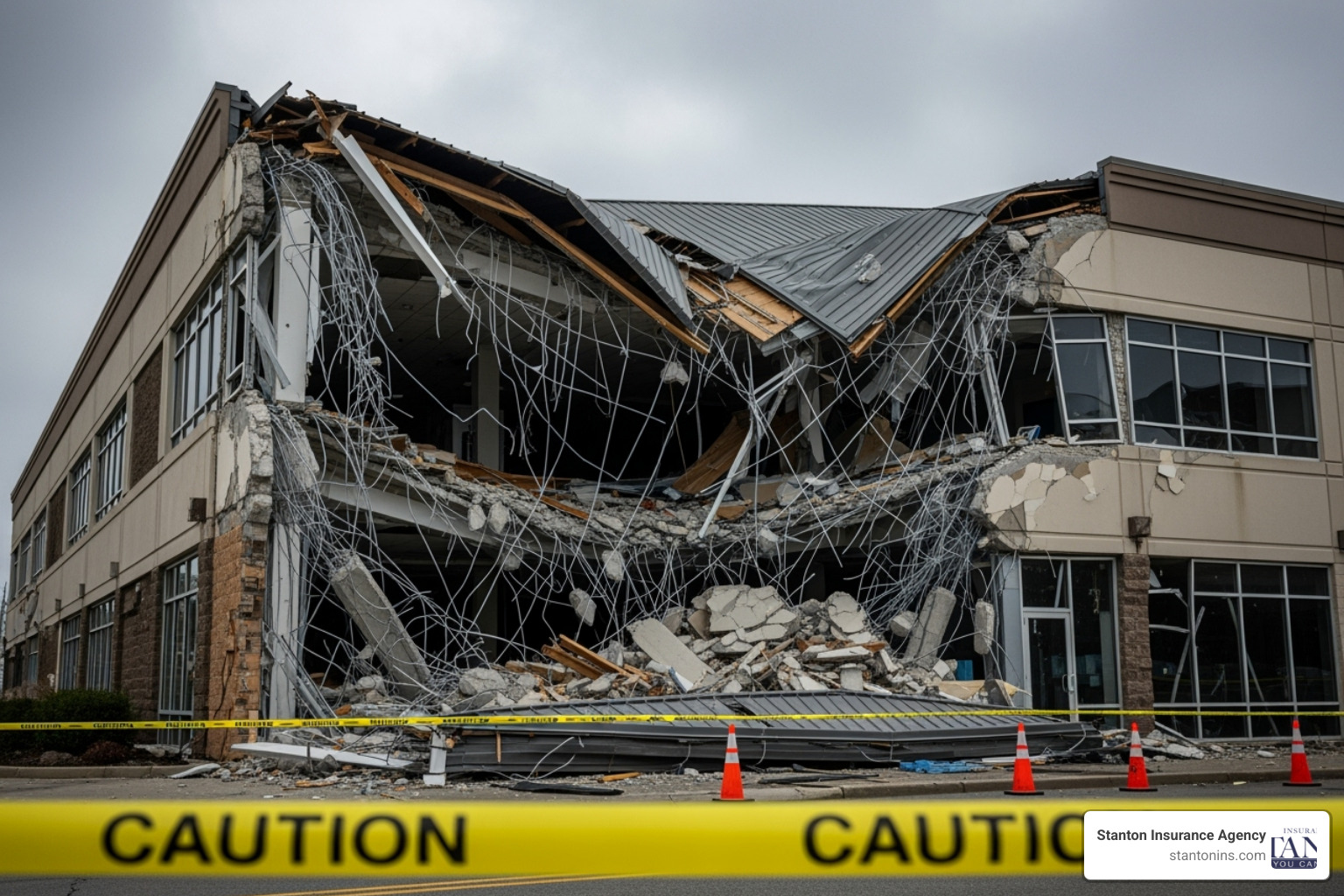
A Commercial Property Insurance policy is designed to pay for the repair or replacement of the physical building and its contents. But a collapse forces your business to shut down, cutting off revenue while expenses like rent, loan payments, and payroll continue. Imagine the financial strain of having your business completely non-operational for weeks or months.
This is where Business Income (or Business Interruption) Coverage becomes essential. If your building suffers a collapse from a covered cause of loss, this coverage can help by:
- Replacing lost net income you would have earned if the business were operational. This is crucial for maintaining financial stability when your doors are closed.
- Covering normal operating expenses that continue even while the business is closed, such as payroll, rent, utilities, and taxes. This ensures you don’t fall behind on your financial obligations during the recovery period.
Extra Expense Coverage is another vital component that pays for reasonable costs to avoid or minimize the shutdown and continue operations. This could include expenses like renting a temporary location, leasing replacement equipment, or paying overtime to employees to speed up repairs. The goal is to get your business back up and running as quickly as possible, reducing the overall impact of the interruption. Without these coverages, a physical loss could easily spiral into a complete business failure.
Proactive Steps to Ensure You’re Covered

While you can’t predict when a collapse might occur, you absolutely can take smart steps to protect your business and ensure your insurance responds when disaster strikes. Think of it as building a safety net before you need it.
Review Your Policy and Consider Endorsements
Here’s something I see all too often: business owners finding their coverage gaps after filing a claim. Don’t let that be you. The time to understand whether collapse is covered by commercial property insurance is now, not when you’re standing in front of a damaged building.
Start by identifying your policy form. Are you carrying a Basic, Broad, or Special Form policy? This single detail determines whether you have robust collapse protection or minimal coverage. If you’re not sure, give us a call – we can review this with you in minutes.
Next, dig into those exclusions. I know policy language can feel like reading a foreign language, but understanding what’s not covered is just as important as knowing what is. This helps you spot potential gaps before they become expensive surprises.
Consider adding endorsements to strengthen your protection. Ordinance or Law Coverage is particularly valuable – it covers the extra costs to rebuild according to current building codes after a major loss. Without it, you might find yourself paying thousands out of pocket to meet today’s stricter requirements. If you’re in an earthquake-prone area or flood zone, separate policies for those perils are essential since they’re typically excluded from standard coverage.
For detailed information about specific policy provisions, you can review the definition of collapse additional coverage.
The Critical Role of Property Maintenance
Here’s the hard truth: the fastest way to get a collapse claim denied is through poor maintenance. Insurance companies will thoroughly investigate your property’s condition and maintenance history. They want to see that you’ve been a responsible property owner who took reasonable steps to protect your investment.
Schedule regular professional inspections of your roof, foundation, and structural supports. This is especially crucial if you own an older building or operate in areas like Massachusetts and New Hampshire, where heavy snow loads can stress roofing systems beyond their limits. A qualified inspector can spot warning signs before they become catastrophic failures.
Keep meticulous records of every inspection, repair, and maintenance activity. Save invoices, take photos, and file inspection reports. These documents can be your best defense if an insurer questions whether you knew about hidden decay or structural issues before a collapse occurred. Good record-keeping proves you were proactive, not negligent.
Address problems immediately when they surface. That small roof leak or minor foundation crack might seem manageable, but ignoring structural issues is like playing Russian roulette with your business. Proactive repairs cost far less than dealing with a collapse – both in repair expenses and lost business income. Plus, as we discussed earlier, proper roof care is vital for your insurance coverage.
The bottom line? Your insurance company expects you to be a partner in protecting your property, not just a passive policyholder hoping for the best.
Frequently Asked Questions about Commercial Property Collapse Coverage
It’s natural to have questions when you’re thinking about something as serious as a building collapse. Let’s tackle some of the most common ones business owners ask about their commercial property insurance.
Does commercial property insurance cover a roof collapse from heavy snow?
This is a really common concern, especially in places like Massachusetts and New Hampshire where winter can bring a lot of snow! The good news is, in most cases, yes, if you have a Broad Form or Special Form policy. The weight of snow, ice, or sleet is actually a specified peril that these policies are designed to cover.
However, your insurer will definitely want to investigate. They’ll look to make sure the collapse wasn’t caused or made worse by pre-existing issues. For example, if your roof was already in poor condition, hadn’t been maintained, or if you didn’t remove excessive snow when it was reasonably possible to do so, that could affect your claim. They want to see that you’ve been doing your part to keep your property safe.
What’s the difference between a building being “in danger of collapse” and an actual “collapse”?
This is a crucial distinction in insurance, and it’s where the specific policy definition of “collapse” really comes into play. If your building is showing signs of distress – like sagging, bulging, or cracking – but it’s still standing, that’s generally considered “in danger of collapse.” While terrifying to witness, this condition typically does not trigger coverage under the collapse provision.
For your policy to kick in, there needs to be an actual “collapse,” which means an abrupt falling down or caving in that renders the building, or a significant part of it, unusable for its intended purpose. It’s not about the potential for collapse, but the sudden, actual event. This is why addressing structural issues before they reach this critical point is so incredibly important. Your policy expects you to be proactive in mitigating risks.
If my building collapses due to a contractor’s error, who pays?
That’s a great question, and the answer often depends on when the collapse happens.
If the collapse occurs during construction, while the contractor is still on the job, the claim would typically fall under the contractor’s own insurance. This would usually be their general liability policy or a builder’s risk policy, which covers the project during the construction phase. As a property owner, it’s always wise to ensure any contractors you hire are properly insured and can provide proof of coverage, including “products completed operations insurance.”
Now, if the collapse happens after construction is complete – say, months or even years later – and it’s determined to be due to defective materials or methods used by the contractor, your own Broad Form or Special Form commercial property policy may provide coverage. Your policy often includes “defective materials or methods” as a covered cause of collapse once construction is finished. If your insurer pays out the claim, they would then likely “subrogate” against the responsible contractor. This means your insurer would seek to recover the costs from the contractor’s insurance company. So, while your policy might pay you first, the ultimate responsibility could still fall back on the contractor who made the error.
Conclusion
So, after all this, is collapse covered by commercial property insurance? As you can see, it’s definitely not a simple “yes” or “no” answer. Instead, it’s a careful dance between your specific insurance policy, what actually caused the damage, and how well you’ve taken care of your property.
But here’s the good news: by understanding the insurance world’s definition of “collapse,” getting familiar with your policy’s limits and exclusions, and being proactive with maintenance, you can truly protect your business. These steps help you lower your risks and shield your valuable investment from this kind of devastating event.
We know that navigating the ins and outs of commercial property policies can feel like trying to solve a puzzle. That’s exactly why we’re here to lend a hand! The friendly, trusted experts at Stanton Insurance Agency are ready to help you look over your current coverage. We’ll pinpoint any areas where you might be exposed and make sure your business has all the protection it needs to stand strong, no matter what.
We’re proud to serve businesses right here across Massachusetts, New Hampshire, and Maine. We love providing personalized advice and finding comprehensive solutions that truly fit your unique needs. Don’t wait for disaster to strike to find out if you’re covered. Reach out to us today to chat about a robust Commercial Property Insurance plan custom-built just for you.
