Why Condo Water Damage Coverage Matters
Condo insurance coverage for water damage is essential protection for every unit owner. Water damage is one of the most common and stressful problems condo owners face. Whether it’s from plumbing mishaps or malfunctioning appliances, the repairs can be costly and time-consuming.
Finding water dripping from your ceiling or coming home to flooded floors are nightmare scenarios for any condo owner. The costs to repair such damage can easily run into the tens of thousands of dollars.
This guide will walk you through the complexities of condo water damage insurance. You’ll learn what your individual HO-6 policy covers, what it doesn’t, and how it works with your condo association’s master policy. We’ll also explain who pays when a leak comes from a neighboring unit and how to protect yourself with the right endorsements.
I’m Geoff Stanton, President of Stanton Insurance Agency. With over two decades of experience helping condo owners in Massachusetts with condo insurance coverage for water damage, I’ve seen how the right policy can prevent financial hardship when disaster strikes.
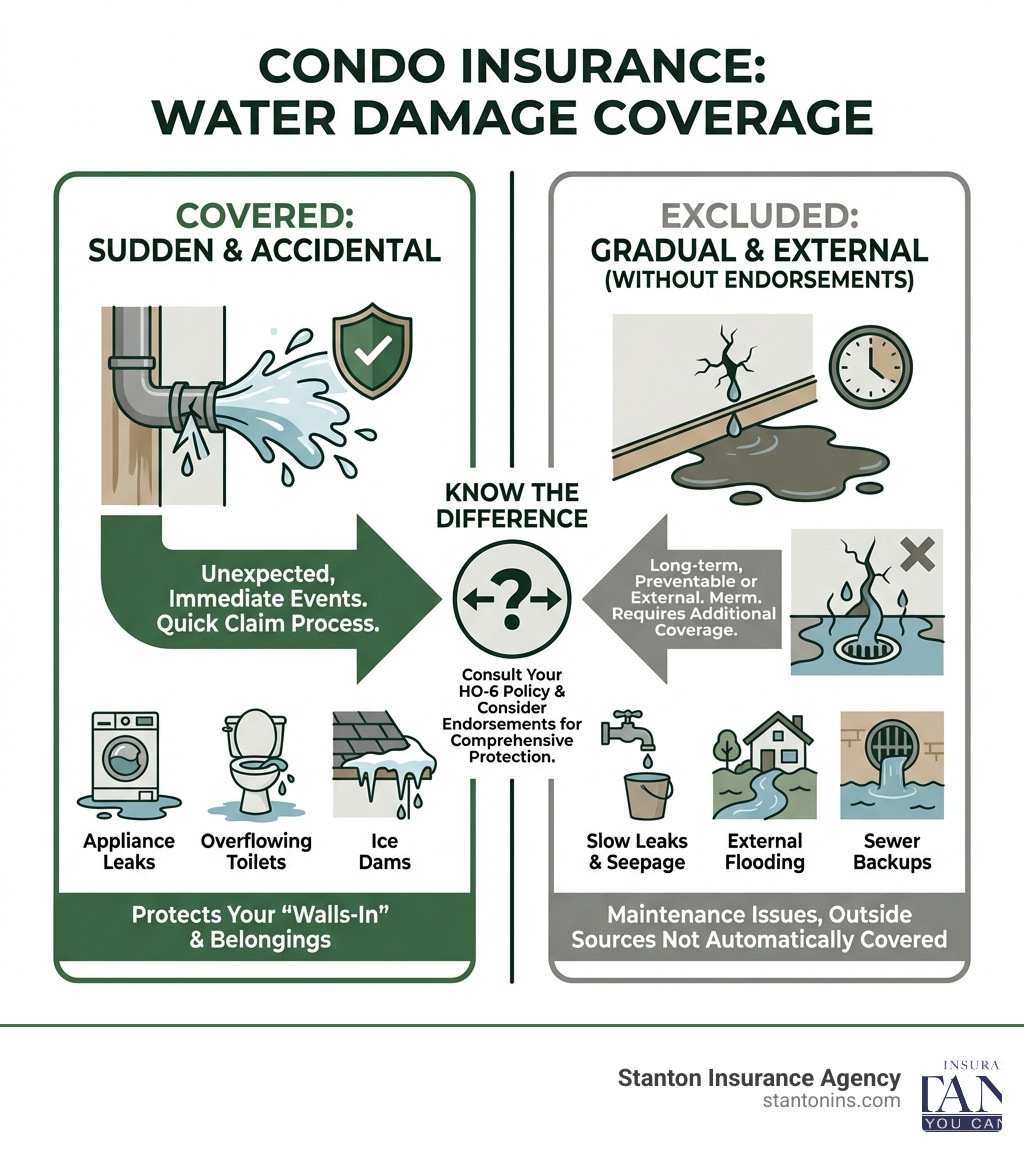
Know your condo insurance coverage for water damage terms:
Understanding Your Condo Insurance Coverage for Water Damage
Water damage is a leading cause of property claims, but not all water-related incidents are treated the same by insurers. Your standard MA Condo Insurance policy (often called an HO-6 policy) is designed to cover sudden and accidental events, but has specific limitations and exclusions you need to be aware of.
What your condo insurance coverage for water damage typically includes
We often get asked, “Does condo insurance cover water damage?” The good news is, yes, it often does for sudden and accidental occurrences. Your HO-6 policy is designed to protect your personal property and the interior structure of your unit from unexpected events.
Here’s a breakdown of what’s typically covered:
- Sudden & Accidental Damage: This is the key principle for coverage. If water damage is abrupt and unforeseen, like a burst pipe, it’s usually covered. Damage from a slow, long-term leak is typically not.
- Internal Sources: Your policy generally covers water damage originating inside your unit or the building, including:
- Burst Pipes: Damage from a sudden pipe rupture inside a wall or leading to an appliance.
- Appliance Malfunctions: Sudden leaks from a dishwasher, washing machine, refrigerator, or water heater. Some policies may have age limits on appliances like water heaters.
- Overflowing Toilets/Sinks: Damage from a sudden overflow due to mechanical failure or a clog.
- Fire Sprinkler Discharge: Water damage from an accidental sprinkler activation.
- Ice Dams: In climates like Massachusetts and New Hampshire, damage from water backing up into your unit due to ice dams on the roof is often covered. You can learn more about how we cover this in our Spring Showers May Bring Home Hassles article.
- Personal Property: Your policy covers your belongings—furniture, electronics, clothing—damaged by a covered water event.
- Additional Living Expenses (ALE): If your condo becomes uninhabitable due to covered water damage, this “Loss of Use” coverage helps pay for temporary housing, meals, and other necessary expenses while your unit is repaired.
For more detailed information on what your policy covers, check out our guide on what does condo insurance cover.
What your condo insurance coverage for water damage usually excludes
While your condo insurance coverage for water damage is broad, it’s important to understand its limitations. Here are the types of water damage typically excluded from standard condo insurance policies:
- Gradual Damage: Insurance covers sudden events, not slow, ongoing leaks from wear and tear or lack of repair. A faucet that drips for months and rots a cabinet would likely be excluded.
- Lack of Maintenance/Negligence: If damage results from your failure to maintain your unit or address a known issue, your claim could be denied.
- Mold: Mold is typically only covered if it’s the direct result of a covered, sudden water damage event (like a burst pipe). Mold from long-term humidity, gradual leaks, or flooding is almost always excluded.
- Ground Water Seepage: Water seeping into your unit from the ground through the foundation is not covered by standard policies.
- Flooding from External Sources: A standard HO-6 policy does not cover damage from natural floods like overflowing rivers or storm surges. This requires a separate flood insurance policy.
- Sewer Backups: Damage from wastewater backing up through your pipes is usually excluded unless you have a specific endorsement.
It’s crucial to review your policy carefully to understand these exclusions. Our article on what is not covered by condo insurance provides more insights into these limitations.
Special Coverage: Floods, Sewer Backups, and Endorsements
Standard policies draw a hard line between water damage from inside your unit and water from outside. For broader protection, you need to add specific endorsements to your policy, which is especially important for residents in Massachusetts and New Hampshire.
- Sewer Backup/Water Backup: This crucial endorsement covers damage from water backing up through sewers, drains, or sumps. Without it, you’re responsible for damage from a municipal sewer line backup or a failed sump pump.
- Overland Water Coverage: This covers damage from fresh water (e.g., heavy rain, rapid snowmelt) that enters your unit from the ground level. It addresses surface water issues that may not be covered by traditional flood insurance.
- Flood Insurance: This is a separate policy that covers damage from rising bodies of water and storm surges. In Massachusetts and New Hampshire, many areas are susceptible to flooding. Flood insurance is often secured through the National Flood Insurance Program (NFIP) or private insurers. If you live in a designated flood zone, your mortgage lender will likely require it, but it’s a smart consideration for all. You can learn more at Is My Flood Damage Covered? – Mass.gov and why flood insurance is important.
Internal water damage (like a burst pipe) is covered by your HO-6, while flood damage requires a separate policy. We highly recommend discussing these endorsements to ensure you have comprehensive protection.
Your Policy vs. The Master Policy: A Team Effort
In a condo, you have two key insurance policies: your personal HO-6 policy and the condo association’s master policy. Understanding how they interact is critical for water damage claims. This dynamic can be a bit like a relay race, where each policy has its leg, and they need to work seamlessly together to cover all bases.
The Role of the Condo Association’s Master Policy
The master policy, purchased by your condo association (HOA), covers the building’s overall structure and common areas. The exact scope of this coverage—and where your responsibility begins—varies significantly based on the type of master policy:
- Bare Walls Coverage: This basic policy covers only the building’s structure (studs, drywall, insulation). As the unit owner, you are responsible for everything inside your unit, including flooring, cabinets, fixtures, and personal property.
- Single Entity Coverage: This covers the building’s structure plus the original fixtures and finishes inside each unit (e.g., original countertops and flooring). You are responsible for your personal property and any upgrades or improvements you’ve made.
- All-Inclusive (All-In) Coverage: The most comprehensive type, this covers the building, original fixtures, and any improvements or additions you’ve made. You still need an HO-6 policy for personal belongings, liability, and potential deductibles.
It’s vital to get a copy of your condo association’s master policy to understand its type and deductible amount. This knowledge directly impacts how much coverage you need from your individual HO-6 policy.
Your HO-6 Policy: Covering from the “Walls-In”
Your HO-6 policy, often called “walls-in” coverage, is designed to complement the master policy and fill the gaps, ensuring your personal investment is secure.

Here’s what your HO-6 policy typically covers:
- Personal Property: Your policy covers your belongings—furniture, electronics, clothing, and decor—against perils like fire, theft, and covered water damage.
- Interior Structures: Your HO-6 covers interior elements from the “walls-in,” such as flooring, paint, cabinetry, and fixtures, especially if the master policy is “bare walls.” It also protects any “improvements and betterments” you’ve made.
- Liability Coverage: This protects you financially if you’re responsible for injuring someone in your unit or causing damage to another unit (e.g., your overflowing tub floods a neighbor).
- Additional Living Expenses (ALE): If a covered loss makes your unit uninhabitable, this covers the cost of temporary housing and other increased living expenses.
- Loss Assessment Coverage: This crucial coverage helps pay your share of a special assessment levied by the condo association for a covered loss that exceeds the master policy’s limits or deductible.
Your HO-6 policy is your personal shield, protecting your unique space and belongings within the larger condo structure.
Who Is Responsible? Navigating Liability for Water Damage
Determining who pays for water damage in a condo can be complicated, especially when multiple units are involved. Responsibility often hinges on the source of the water and the concept of negligence.
Damage from a Neighboring Unit or Common Area
Imagine coming home to a water stain spreading across your ceiling. Your first thought might be, “Whose fault is this?”
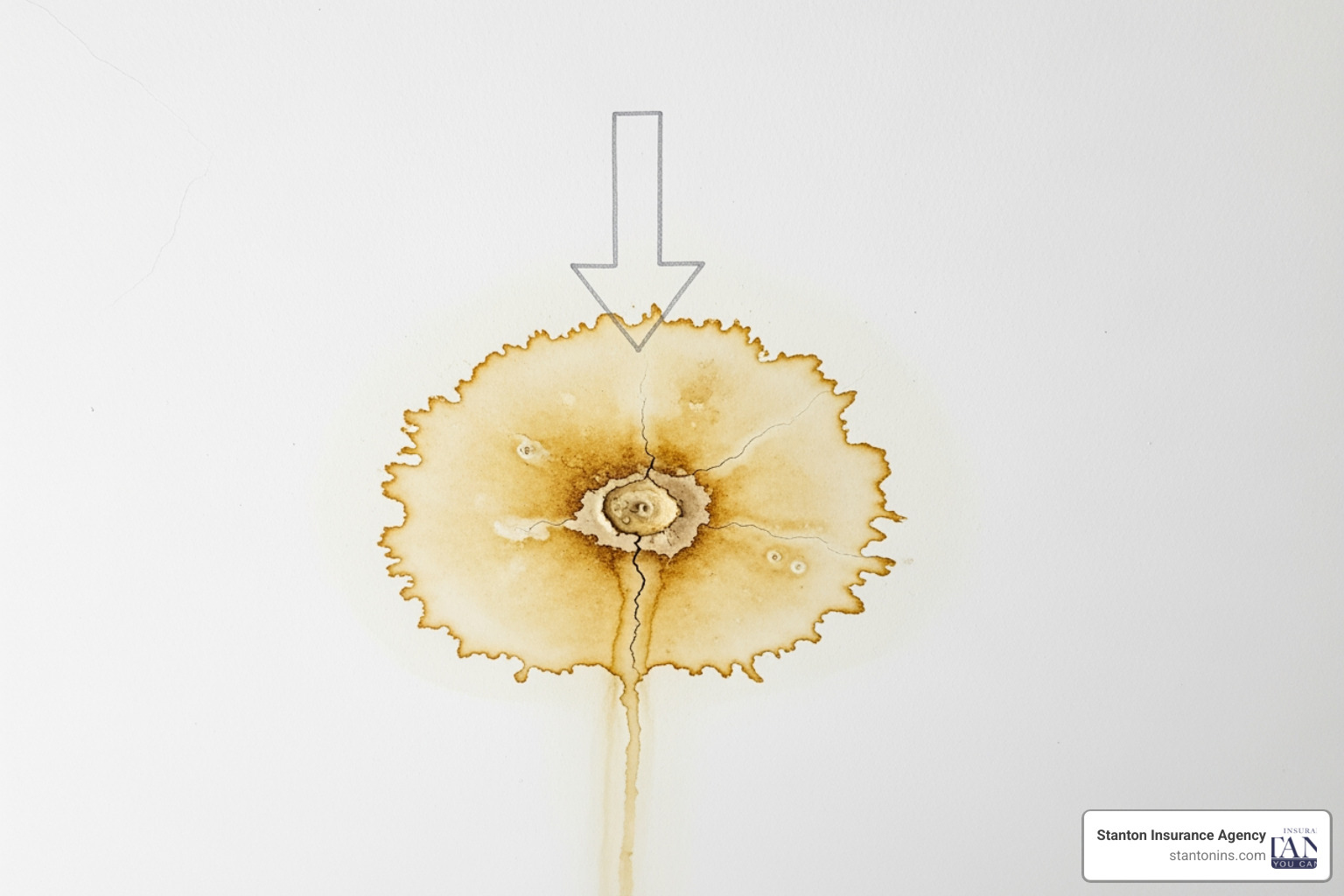
Here’s how responsibility typically breaks down:
- From a Neighboring Unit: If a leak from your neighbor’s unit damages your condo, you should file a claim with your own insurer first. Your insurer will pay for your damages and may then seek reimbursement from your neighbor’s insurer through a process called subrogation, especially if negligence was involved. Your neighbor’s liability coverage is designed for this scenario.
- From a Common Area: If the damage comes from a common element (like a roof leak or a pipe in a shared wall), the condo association’s master policy is generally responsible for repairing the common area. Your HO-6 policy would then cover damage to your personal property and the interior of your unit.
If the source is unclear, involve both your insurer and the condo association to investigate.
The Role of Negligence and Maintenance
Insurance covers accidents, not a lack of maintenance. If you fail to repair a known slow leak and it causes major damage to your unit or a neighbor’s, your claim could be denied due to negligence. Policies are designed for sudden and accidental losses, not problems preventable with reasonable care.
Similarly, if your neighbor knew about a faulty toilet and did nothing, they could be found negligent, and their liability coverage would likely be responsible for the damages. However, proving negligence can be difficult. Courts often consider whether an owner acted reasonably and promptly to fix a known issue. If an owner takes immediate and appropriate action to stop a leak, they may not be deemed negligent even if damage still occurs.
To avoid this situation, we recommend proactive maintenance. Regularly inspect your unit for leaks, address plumbing issues promptly, and encourage your neighbors to do the same.
What to Do After Water Damage: A Step-by-Step Guide
Finding water in your condo can be alarming, but acting quickly and methodically can significantly minimize damage and streamline your insurance claim. These steps are crucial whether the water originates in your unit, a neighbor’s, or a common area.
Immediate Steps to Take
Time is of the essence when dealing with water damage. Follow these steps immediately:
- Stop the Water: This is your top priority. If the water is coming from your unit, locate your main water shut-off valve and turn it off if it’s safe to do so. If it’s a pipe under a sink or behind a toilet, there might be a smaller shut-off valve nearby. For appliance leaks, unplug the appliance. If you can’t find the source or safely stop it, move to the next step.
- Notify Everyone: Immediately inform your property manager or condo association. They can help locate the source if it’s external or in a common area, shut off the building’s water supply if necessary, and coordinate with other affected units. Also, if you suspect the leak is from an upstairs neighbor, contact them as well.
- Document Everything: Before you clean up anything, take extensive photos and videos of all the damage. Get wide shots of affected areas and close-ups of damaged items. Document the water’s path and its source if known. This visual evidence is invaluable for your insurance claim.
- Protect Your Property: Once the water flow is stopped and documented, start mitigating further damage. Move undamaged items to a dry area. Lift furniture if possible. Use fans or dehumidifiers if you have them. If the ceiling is bulging, carefully poke a small hole to release water into a bucket to prevent a larger collapse.
- Call Your Insurer: Report the claim to your insurance agent or company as soon as possible. Delaying notification can sometimes complicate your claim. We are here to guide you through this process, from initial reporting to working with adjusters.
Navigating the Claims Process
Once the immediate crisis is handled, the insurance claims process begins. This can feel overwhelming, but we’re here to help you every step of the way.
- Working with the Adjuster: Your insurer will assign a claims adjuster who will inspect the damage. Be prepared to provide your documentation (photos, videos, notes) and a detailed list of damaged items, including their age and estimated value. Be present during their inspection to answer questions and point out all affected areas.
- Understanding Your Deductible: Your deductible is the amount you agree to pay out-of-pocket before your insurance coverage kicks in. For example, if you have a $1,000 deductible and $10,000 in covered water damage, your insurer will pay $9,000. Make sure you understand your policy’s specific deductible for water damage claims.
- Actual Cash Value (ACV) vs. Replacement Cost Value (RCV): This distinction is vital for your personal property.
- Actual Cash Value (ACV): This pays for the depreciated value of your damaged items. So, a 5-year-old couch might only be reimbursed for a fraction of its original cost, leaving you to pay the difference for a new one.
- Replacement Cost Value (RCV): This is generally preferred as it pays to replace your damaged personal property with new items of similar kind and quality, without deduction for depreciation. This means if your 5-year-old couch is ruined, you get enough money to buy a new one. We always recommend RCV coverage for your personal property.
- Repairs: Once you’ve agreed on a settlement with your insurance company, you can proceed with repairs. We recommend getting multiple bids from licensed contractors experienced in water damage restoration. Don’t start major repairs until your insurance company has approved the claim and you understand your coverage. Keep all receipts and records related to temporary repairs and professional restoration.
Communication is key throughout this process. Keep detailed records, ask questions, and don’t hesitate to reach out to us for guidance.
Frequently Asked Questions about Condo Water Damage Insurance
We understand that condo insurance coverage for water damage can be confusing, especially when you’re facing a stressful situation. Here are answers to some of the most common questions we receive from condo owners in Massachusetts and New Hampshire.
Does my condo insurance cover mold?
Mold coverage is often limited and one of the trickiest areas of water damage claims. Most standard HO-6 policies will provide some coverage for mold remediation, but only if the mold is a direct result of a covered “sudden and accidental” water damage event. For example, if a burst pipe causes water damage and mold quickly grows as a result, the mold remediation might be covered. However, mold that stems from gradual leaks, long-term humidity problems, or external flooding (if you don’t have a separate flood policy) is typically excluded. The key is often the cause of the mold and how quickly you acted to mitigate the water source. This is why prompt action after finding a leak is so critical!
What if the water damage makes my condo unlivable?
If a covered water damage event forces you to temporarily move out of your condo, your policy’s Additional Living Expenses (ALE) coverage, also known as “Loss of Use,” is designed to help. This coverage will reimburse you for the necessary and reasonable increase in living expenses you incur while your unit is being repaired. This can include costs for a hotel or rental unit, meals above your normal expenses, laundry services, and even pet boarding. ALE coverage is a huge relief during an already stressful time, ensuring you’re not left without a place to stay or facing unexpected financial burdens.
Who pays the master policy deductible?
This is a common point of confusion and a frequent source of conflict in condo communities. The responsibility for the master policy’s deductible largely depends on your condo association’s bylaws and the origin of the water damage.
- If damage originates in your unit: Even if the water damage was accidental (e.g., your washing machine overflowed), if it originates in your unit and causes damage to common areas or other units, your condo association might assess you for their master policy’s deductible. Master policy deductibles can be substantial, sometimes as high as $50,000 or even $100,000, so this could be a significant out-of-pocket cost. This is precisely where your individual HO-6 policy’s Loss Assessment Coverage becomes invaluable. It can help cover your portion of that master policy deductible, protecting your personal finances.
- If damage originates in a common area: If the water damage starts in a common area (like a shared pipe in a wall, the roof, or a common hallway), the master policy would typically cover the repairs to the common area, and the association would pay its deductible. However, if the cost of repairs is very high and exceeds the master policy’s limits, or if the association decides not to file a claim to avoid higher premiums, they might levy a special assessment against all unit owners. Again, your Loss Assessment Coverage would be your best friend here.
It’s essential to thoroughly review your condo association’s governing documents and discuss this with your insurance agent to understand your potential exposure.
Protect Your Condo from Water Damage
Water damage is a significant risk, but understanding your insurance is the best defense. A comprehensive condo insurance policy, custom with the right endorsements for risks like sewer backup and potential loss assessments, provides a critical safety net. We’ve seen how water damage can quickly escalate, turning a minor leak into a major headache and a significant financial burden. By understanding the nuances of your HO-6 policy, how it interacts with your condo association’s master policy, and the importance of additional coverages like flood and sewer backup insurance, you can proactively protect your valuable asset.
The experts at Stanton Insurance Agency can review your current coverage and your association’s master policy to ensure you have the protection you need in Massachusetts and New Hampshire. We’re committed to helping you steer these complexities with ease and confidence, ensuring you’re prepared for whatever unexpected events come your way. Don’t wait for disaster to strike—let’s make sure your condo insurance coverage for water damage is as robust as it needs to be. Contact us today for a personalized Condo Insurance Quote.