
Why Understanding Home Insurance Costs Matters
The average cost of building and contents insurance varies widely depending on where you live and what you own. Here’s what you need to know:
Quick Answer: Average Annual Costs
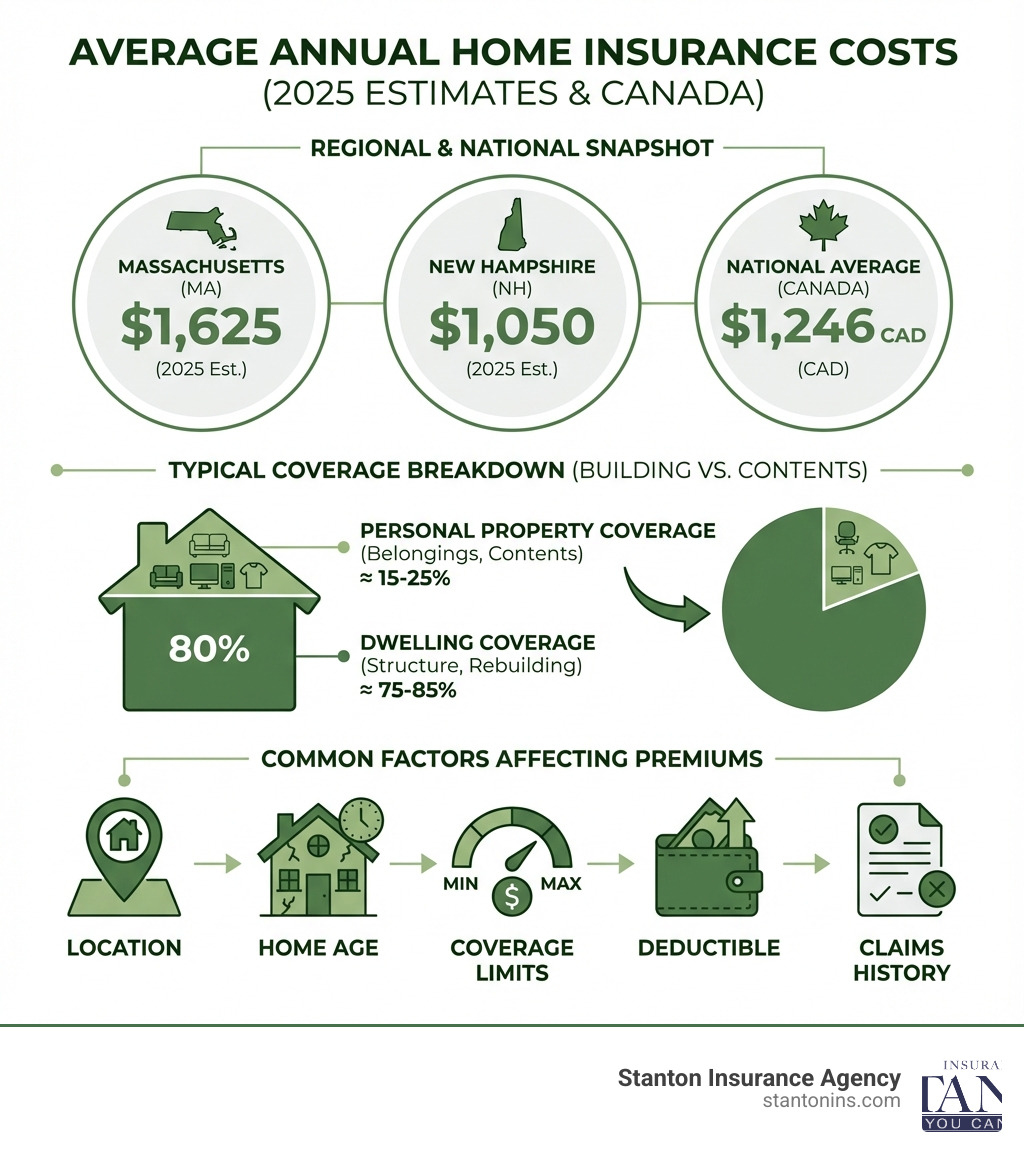
- Massachusetts: $1,625 (2025 estimate)
- New Hampshire: $1,050 (2025 estimate)
- Cost Range: Typically $1,000–$2,100 annually for most homeowners
Note: Your actual premium depends on your home’s value, location, age, and coverage choices.
If you’re a homeowner in Massachusetts or New Hampshire, you’ve likely wondered whether you’re paying too much—or too little—for your home insurance. The truth is, building and contents insurance (also called dwelling and personal property coverage) is one of your most important financial protections. It covers everything from the structure of your home to the belongings inside it. Yet most people don’t fully understand what drives the cost or how to get the best value.
The research shows that home insurance premiums have been rising steadily across the U.S. These increases are driven by extreme weather, inflation in building materials, and higher repair costs. Whether you’re in Boston, Worcester, or Manchester, these forces affect your wallet.
This guide will break down the average cost of building and contents insurance in simple terms. You’ll learn what factors influence your premium, how Massachusetts and New Hampshire compare, and—most importantly—how to lower your costs without sacrificing protection.
I’m Geoff Stanton, President of Stanton Insurance Agency in Waltham, Massachusetts, and I’ve spent over two decades helping families understand and manage the average cost of building and contents insurance for their homes. My goal is to make sure you get the right coverage at a fair price—no jargon, no confusion.
Understanding the Average Cost of Building and Contents Insurance
When we talk about the average cost of building and contents insurance, we’re referring to the premium you pay to protect your most valuable asset: your home. This includes two main components:
- Building (Dwelling) Coverage: This protects the physical structure of your home, including the foundation, walls, roof, and attached structures like a garage. It’s about rebuilding your house if a covered peril strikes.
- Contents (Personal Property) Coverage: This protects your personal belongings inside your home, from your furniture and electronics to your clothes and kitchenware. It’s about replacing your “stuff” if it’s damaged or stolen.
The average cost can be a useful benchmark, but remember, it’s just that—an average. Your specific premium will be custom to your unique circumstances. Let’s explore what this looks like in our neck of the woods.
What is the average cost of building and contents insurance in Massachusetts?
Massachusetts, with its beautiful coastline, historic towns, and busy cities, presents a diverse landscape for home insurance costs. For 2025, the estimated average annual premium for homeowners insurance in Massachusetts is $1,625. This figure can fluctuate quite a bit depending on where you hang your hat.
For instance, if you live in a coastal town, you might pay more than someone inland due to increased risks from nor’easters, hurricanes, and coastal flooding. Older homes, common in many parts of Massachusetts, can also drive up premiums if they haven’t been updated. The city you live in also plays a role:
- Boston: Being a dense urban area with higher property values and sometimes older infrastructure, premiums can be higher than the state average.
- Worcester: A central Massachusetts city, it might see rates closer to the state average, influenced by its climate and property types.
- Springfield: In Western Massachusetts, rates here could differ from eastern parts of the state due to different weather patterns and property values.
- Cape Cod: Known for its beautiful beaches and charming towns, but also for its exposure to severe coastal storms, leading to some of the highest premiums in the state.
We understand that these variations can be confusing, but our goal is to help you steer them. Understanding the unique risks and characteristics of your home and location is the first step to finding the right coverage.
For more detailed information on home insurance in Massachusetts, we’ve got you covered: Average Cost of Homeowners Insurance in Massachusetts (2025)
What is the average cost of building and contents insurance in New Hampshire?
Just to our north, New Hampshire offers a different picture when it comes to home insurance costs. The estimated average annual premium for homeowners insurance in New Hampshire for 2025 is $1,050. That’s significantly lower than Massachusetts, but why the difference?
New Hampshire generally has lower property values in many areas, less coastal exposure (though it has a small coastline), and a different risk profile. While both states experience harsh winters, the specific types and frequencies of severe weather events can differ. New Hampshire homeowners often contend with heavy snow, ice storms, and rural risks like wildfires, but typically less hurricane activity than coastal Massachusetts.
The cost can vary within the Granite State too:
- Urban areas (e.g., Manchester, Nashua): Might see slightly higher rates due to population density and potentially higher crime rates compared to rural areas.
- Rural areas (e.g., White Mountains): Could have lower base rates but might face challenges with fire protection due to distance from fire stations, or risks associated with remote locations.
Comparing the two states, New Hampshire’s lower premiums highlight how location and specific risk factors heavily influence the average cost of building and contents insurance.
How Coverage Limits Affect Your Premium
The amount of coverage you choose directly impacts your premium. This isn’t just about the dollar amount; it’s also about the type of valuation and the specific limits for different aspects of your policy.
Let’s look at how dwelling coverage limits can affect your annual premium in Massachusetts:
| Dwelling Coverage Limit | Average Annual Premium (MA) | Personal Property Coverage (Typical %) | Liability Limit |
|---|---|---|---|
| $250,000 | $1,350 | 50% | $300,000 |
| $500,000 | $2,100 | 50% | $300,000 |
| $750,000 | $2,950 | 50% | $300,000 |
Note: These are illustrative averages and your actual premium may vary.
As you can see, increasing your dwelling coverage significantly increases your premium. This is because the insurer takes on more risk for rebuilding your home.
It’s crucial to understand the difference between:
- Replacement Cost Value (RCV): This pays to rebuild or repair your home and replace your belongings with new ones, without deduction for depreciation. This is generally what we recommend for most homeowners, as it provides the most comprehensive protection.
- Actual Cash Value (ACV): This pays the depreciated value of your damaged property. While it results in a lower premium, it means you’ll receive less in a claim payout, which could leave you with significant out-of-pocket expenses.
Your personal property coverage limit is typically a percentage of your dwelling coverage, often 50% or 70%. If you have particularly valuable items, you might need to increase this percentage or add specific endorsements for scheduled personal property. Your liability limit (e.g., $300,000) protects you if someone is injured on your property or you accidentally cause damage to someone else’s property. Choosing higher liability limits offers greater peace of mind, especially in our litigious society.
Key Factors That Determine Your Insurance Premiums
Understanding the average cost of building and contents insurance means understanding what factors insurers consider when calculating your premium. Think of it like a puzzle: each piece represents a risk, and the more risks you have, the higher your premium might be. Insurers are constantly assessing the likelihood of a claim and the potential cost of that claim.
Recently, we’ve seen a noticeable upward trend in home insurance premiums across the country, including Massachusetts and New Hampshire. This isn’t just a local phenomenon; it’s a reflection of several broader issues:
- Extreme Weather Events: Our region, like many others, has experienced an increase in severe weather, from powerful winter storms to heavy rainfall and potential hurricane impacts. These events lead to more frequent and costly claims.
- Inflation in Repair Costs: The cost of labor and building materials has soared. Rebuilding a damaged home or replacing contents simply costs more now than it did a few years ago.
- Rising Property Values: As home values increase, so does the amount of coverage needed to rebuild, which translates to higher premiums.
Let’s explore the specifics that influence your rate.
Property Characteristics and Condition
The physical attributes of your home tell a story to an insurer about its potential vulnerabilities.
- Home Age and Updates: Older homes, a charming feature of New England, often come with outdated systems that can be prone to issues. For example, homes built before the 1980s might have plumbing, electrical wiring, or roofing materials that are considered higher risk. If your older home has been lovingly updated with modern systems, tell us! This can positively impact your rate.
- Construction Materials: What your home is made of matters. Brick, wood, or masonry all have different fire ratings and resistance to perils. For example, a primarily wooden property might have a higher fire risk.
- Roof Condition and Type: Your roof is your home’s first line of defense against the elements. An older, worn roof is more susceptible to damage from snow, ice, and wind. Insurers often favor roofs that are 20 years old or younger. The type of roofing material also plays a role. We can’t stress enough how important it is to maintain your roof: Why its important to replace your roof for your homeowners insurance
- Electrical System: Outdated electrical systems, like knob and tube wiring, are a significant concern for insurers due to increased fire risk. Upgrading these systems can lead to noticeable savings.
- Plumbing Type: Old lead or galvanized pipes are more prone to leaks and bursts, especially in our cold winters. Modern plumbing systems are a plus.
- Square Footage: Simply put, a larger home costs more to rebuild and potentially contains more contents, leading to higher coverage needs and thus higher premiums.
Location-Specific Risks
You can love your neighborhood, but insurers are looking at its risk profile.
- Proximity to Coast or Water: Both Massachusetts and New Hampshire have beautiful coastlines and numerous lakes and rivers. Homes in coastal areas or near bodies of water face increased risks from flooding, storm surge, and high winds, which can lead to higher premiums.
- Flood Zones and Elevation: If your home is in a designated flood zone, you will almost certainly need separate flood insurance, which is typically not covered by a standard homeowner’s policy. Even outside a flood zone, your home’s elevation can impact water damage risk. For more details on flood protection, visit: More info about flood insurance. You can also learn about federal flood coverage through the National Flood Insurance Program at FloodSmart.gov.
- Winter Storm Frequency: We know a thing or two about winter in New England! Heavy snow, ice storms, and nor’easters can cause burst pipes, ice dams, and tree damage. Areas more prone to these severe winter conditions may see higher rates.
- Local Fire Protection Class: How close is your home to a fire station and a fire hydrant? The closer you are, the better your fire protection, and potentially the lower your premium.
- Neighborhood Crime Rates: Areas with higher crime rates, particularly for theft and vandalism, can lead to increased premiums as the risk of claims goes up.
Your Coverage Choices and Personal History
Beyond your home’s physical attributes, your choices and past experiences significantly shape your premium.
- Policy Type (HO-3 vs. HO-5): Most homeowners in MA and NH opt for an HO-3 policy, which offers “open perils” coverage for your dwelling (meaning it covers everything unless specifically excluded) and “named perils” for your contents (meaning only perils listed are covered). An HO-5 policy offers “open perils” for both dwelling and contents, providing broader protection, usually at a slightly higher cost.
- Deductible Amount: This is the amount you pay out of pocket before your insurance kicks in. Choosing a higher deductible (e.g., $1,000 instead of $500) will generally lower your premium, but make sure it’s an amount you’re comfortable paying if a claim arises.
- Coverage Limits for Dwelling and Contents: As we discussed, the higher your coverage limits, the higher your premium. It’s a balance between adequate protection and affordability.
- Claims History: If you’ve filed multiple claims in recent years, insurers may view you as a higher risk, which can lead to increased premiums. This is why it’s often wise to pay for small repairs out of pocket rather than filing a claim close to your deductible.
- Credit-Based Insurance Score: In many states, including Massachusetts and New Hampshire, insurers use a credit-based insurance score as one factor in determining your premium. A good credit score can indicate financial responsibility and may result in a lower rate.
Understanding your personal liability is also key: What is personal liability in home insurance
Smart Strategies to Lower Your Home Insurance Bill
Alright, so we’ve talked about why the average cost of building and contents insurance is what it is. Now, let’s get to the good stuff: how you can potentially lower your home insurance bill without leaving yourself vulnerable. We love helping our clients find savings, and there are many practical strategies you can employ.
For a comprehensive guide on saving, check out: Saving on home insurance: practical strategies for homeowners
Bundling Policies and Adjusting Coverage
One of the easiest and most common ways to save is by bundling.
- Multi-Policy Discounts (Home & Auto): This is probably the biggest discount you’ll find! Many insurers offer a significant discount (often 15-20% or more) if you purchase both your home and auto insurance from them. It simplifies your insurance life and keeps more money in your pocket. We offer competitive rates for both:
- Increasing Your Deductible: We touched on this earlier, but it’s worth reiterating. If you raise your deductible from, say, $500 to $1,000 or even $2,500, your premium will decrease. Just make sure you have that amount readily available in an emergency fund.
- Reviewing Coverage Annually: Your life changes, and so should your insurance. Did you get rid of that antique collection? Did your kids move out? Did you add a new extension? Reviewing your policy every year ensures you’re not over-insured (or under-insured!) and that you’re getting all eligible discounts.
- Avoiding Over-Insuring Contents: While have enough contents coverage, you don’t want to pay for more than you need. Conduct a home inventory to accurately assess the value of your belongings. For particularly valuable items like jewelry or fine art, consider scheduling them separately rather than simply increasing your overall contents limit.
Home Maintenance and Safety Upgrades
Taking care of your home isn’t just about pride of ownership; it’s also about reducing risk, which insurers love.
Safety upgrades that may provide discounts:
- Installing Security Systems: A centrally monitored burglar alarm system can deter thieves and often qualifies you for a discount. Some insurers even offer discounts for smart home devices like doorbell cameras.
- Monitored Fire and Smoke Alarms: Connecting your fire and smoke detectors to a central monitoring station can also earn you a discount, as it ensures a faster response time in case of a fire.
- Water Leak Detectors: These clever devices can alert you to leaks before they become catastrophic, preventing costly water damage claims—a common claim in our region. Preventing these claims can help keep your premiums down.
- Storm Shutters and Impact-Resistant Windows: If you’re in a coastal area of Massachusetts or New Hampshire, these upgrades can significantly reduce the risk of damage from high winds and flying debris during storms, potentially leading to discounts.
- Upgrading Old Electrical, Plumbing, or Heating Systems: Replacing outdated systems (like that old knob and tube wiring or ancient oil furnace) not only makes your home safer but also reduces the risk of claims, often resulting in lower premiums.
- Maintaining a Good Claims History: While insurance is there when you need it, frequent small claims can signal higher risk to insurers and lead to increased premiums. Consider paying for minor repairs yourself if the cost is close to your deductible.
By being proactive about your home’s safety and maintenance, you’re not just protecting your property; you’re also actively working to reduce your average cost of building and contents insurance. It’s a win-win!
Frequently Asked Questions about Building and Contents Insurance
We hear a lot of great questions from homeowners in Massachusetts and New Hampshire. Here are some of the most common ones we encounter when discussing the average cost of building and contents insurance.
Is home insurance mandatory in Massachusetts or New Hampshire?
This is a fantastic question, and the answer might surprise you! Legally, no, home insurance is not mandatory by state law in Massachusetts or New Hampshire. You won’t get pulled over for not having it (unlike car insurance).
However, almost every mortgage lender will require it. If you have a mortgage on your home, your lender needs to protect their financial investment. They’ll stipulate that you maintain a certain level of home insurance coverage (specifically dwelling coverage) as a condition of your loan. If you don’t, they can purchase “lender-placed insurance” on your behalf, which is often far more expensive and provides less coverage than a policy you’d choose yourself.
Even if you own your home outright and are mortgage-free, going without home insurance is a huge gamble. Imagine a fire, a severe winter storm, or a major theft. Without insurance, you’d be personally responsible for the entire cost of rebuilding your home, replacing all your belongings, and any liability claims. The financial implications could be devastating. So, while not legally mandated, it’s undeniably essential for your financial security.
How do costs differ for a condo versus a single-family home?
The average cost of building and contents insurance for a condo is typically lower than for a single-family home, and there’s a very good reason for this!
- Condo (HO-6) Policy: As a condo owner, your individual policy (an HO-6) primarily covers the interior of your unit (from the “walls in”) and your personal belongings. It also includes personal liability coverage. The structure of the building itself, common areas, and shared utilities are generally covered by the condo association’s master policy.
- Single-Family (HO-3/HO-5) Policy: For a single-family home, your policy is responsible for the entire structure (the “walls out” and everything in between), your personal belongings, and your personal liability.
Because the condo association’s master policy covers the building’s exterior and common elements, your individual HO-6 policy doesn’t need to duplicate that coverage. This shared responsibility means your portion of the premium is generally lower.
However, it’s crucial to understand what your condo association’s master policy covers and where your HO-6 policy needs to pick up. We can help you decipher the details to ensure you have comprehensive protection without overpaying.
Learn more about specific condo insurance coverages: What does condo insurance cover
What is typically excluded from a standard home insurance policy?
Standard home insurance policies are comprehensive, but they don’t cover everything. It’s vital to know what’s excluded so you can assess if you need additional coverage. Here are some common exclusions:
- Flood Damage: This is perhaps the most significant exclusion. Damage from floods (rising water from outside your home) is almost never covered by a standard homeowner’s policy. Separate flood insurance is required, often purchased through the National Flood Insurance Program (NFIP).
- Earthquakes: While less common in MA and NH than other regions, earthquake damage is also excluded from standard policies and requires a separate endorsement or policy.
- Pest Infestations: Damage caused by insects, rodents, or other pests (e.g., termites, mice, squirrels) is generally considered a maintenance issue and is not covered.
- Wear and Tear: Your policy isn’t a home warranty. Damage from general wear and tear, deterioration, or lack of maintenance is not covered.
- Intentional Damage: Damage caused intentionally by you or a member of your household is not covered.
- Sewer Backup: While some water damage is covered, sewer backup (water backing up through drains or sewers) is typically excluded and requires an endorsement.
- War or Nuclear Hazard: These catastrophic events are universally excluded.
If you have specific valuables like expensive jewelry, fine art, or collectibles, their coverage under a standard policy might be limited. You’ll likely need a “scheduled personal property” endorsement to fully protect them. If you run a home-based business, your business assets and liability are generally not covered by your homeowner’s policy, requiring a separate home business endorsement or a standalone business policy.
Understanding what natural disasters are covered and what requires additional protection is key: Are natural disasters covered?
Get a Personalized Quote for Your Home
Every home is unique—get coverage custom to your needs and budget.
Navigating the complexities of the average cost of building and contents insurance can feel like a maze, but you don’t have to go it alone. At Stanton Insurance Agency, we pride ourselves on being your trusted advisors, helping you find the right balance of protection and value. We’re here to answer your questions, explain your options, and ensure you have peace of mind knowing your valuable assets are well-protected.
Whether you’re a first-time homebuyer, looking to review your current policy, or simply curious about how to save, we’re ready to help.