Does liability insurance cost more depending on kind of car? 5
Why Your Car Choice Matters More Than You Think
Does liability insurance cost more depending on kind of car? Yes. Your vehicle’s make and model is a primary factor in your liability insurance premium. Insurers use decades of claims data to price policies, and some cars consistently cost more to insure.
Quick Answer:
- Sports cars and luxury vehicles typically have the highest liability premiums
- Family sedans and small SUVs usually have the lowest rates
- Vehicle performance, safety ratings, and claims history are the main pricing factors
- Your car’s ability to cause damage to others directly impacts liability costs
When you’re shopping for a new car, you probably consider the sticker price, fuel economy, and features. But most people don’t think about how their choice will affect their insurance bill until it’s too late. Insurers analyze massive amounts of data about every make and model, knowing which cars are more likely to be in accidents, cause expensive damage, or be driven aggressively.
This pricing isn’t random – it’s based on real statistics. For example, research shows that Chevrolet Malibu models have 98% more bodily injury losses than average, while Subaru Ascent models have 57% less. These differences translate directly into what you pay for coverage.
I’m Geoff Stanton, a fourth-generation insurance professional and Certified Insurance Counselor. For over two decades, I’ve helped Massachusetts and New Hampshire residents steer complex insurance decisions and seen how car choice affects a family’s budget and coverage.
How Your Car’s Make and Model Directly Impacts Liability Insurance
Yes, the specific car you drive absolutely affects your liability car insurance cost. Insurance companies don’t just guess at rates—they use mountains of real-world data to predict how risky you are to insure.
Your car is your responsibility. If you cause an accident, your liability insurance pays for damage to others and their property. Insurers have tracked which cars are more likely to cause expensive accidents for decades and price policies accordingly.
The data tells a clear story. Some cars consistently rack up higher claims costs, while others have remarkably clean records. A Chevrolet Malibu, for example, has 98% more bodily injury losses than average according to industry statistics. That’s not a small difference – it’s nearly double the claims costs.
When insurers look at your car, they’re asking three key questions: How often is this model involved in crashes? How much damage does it typically cause when accidents happen? And what do those claims usually cost to settle?
A sports car with a powerful engine might encourage faster driving, leading to more severe accidents. A heavy SUV might cause more damage to smaller vehicles in a collision. These aren’t judgments about the cars themselves – they’re simply statistical realities that insurers use to set fair prices.
Cars with Higher Liability Premiums: What Makes Them Risky?
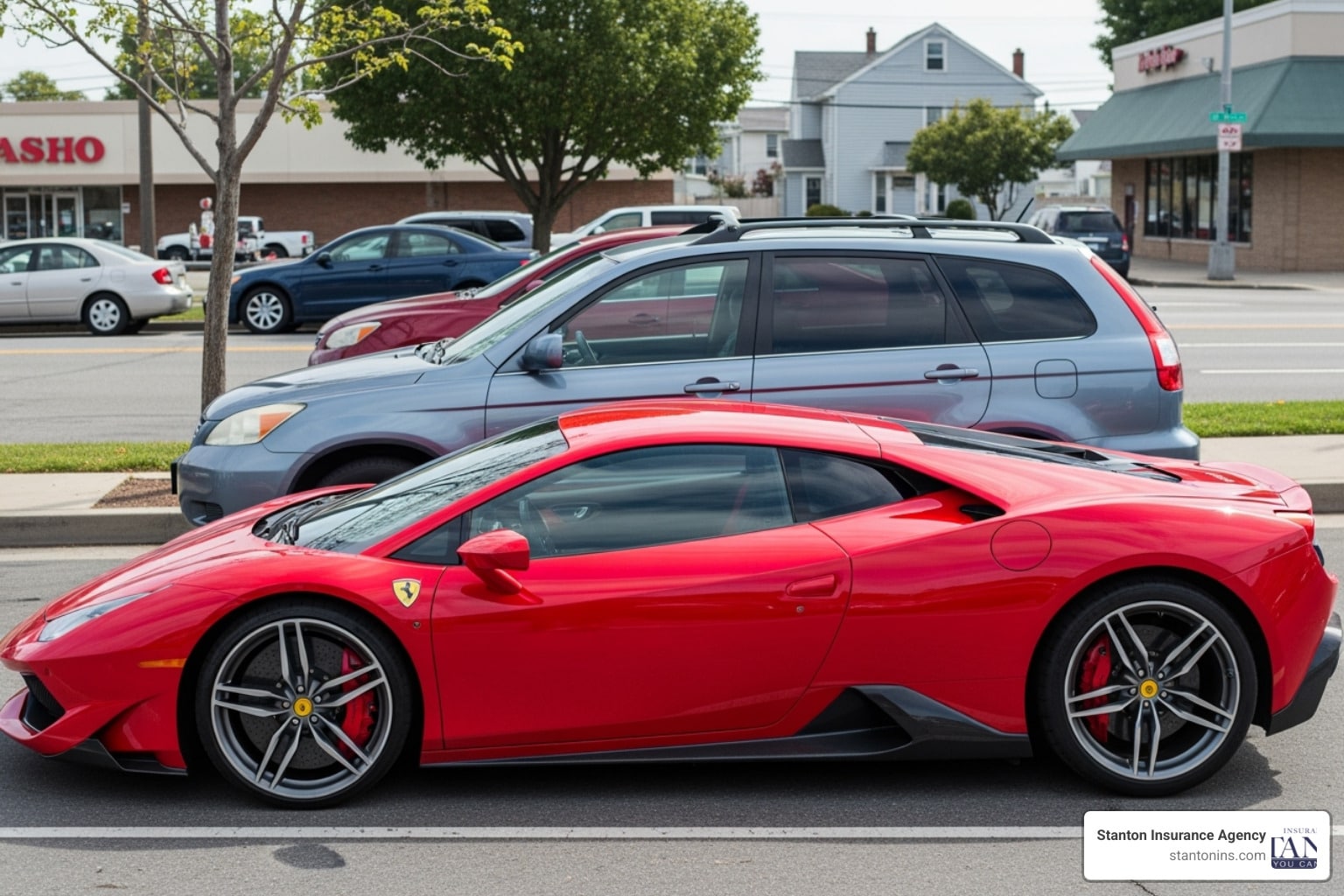
Some vehicles are statistical magnets for expensive liability claims. High-performance sports cars, luxury sedans, and certain electric vehicles often top the list of most expensive models to insure.
The reasons vary, but they usually boil down to power, weight, and driver behavior. A car designed for speed and performance naturally attracts drivers who might push those limits. Even luxury sedans that aren’t technically “sports cars” often have powerful engines that can get their drivers into trouble quickly.
The numbers from the Insurance Institute for Highway Safety paint a clear picture. Chevrolet Malibu models have 98% more bodily injury losses than average, while Nissan Altima models have 65% more and Kia K5 models have 38% more according to IIHS-HLDI’s insurance losses by make and model.
These aren’t necessarily bad cars; they might be reliable and well-built. But their claims history shows they are more likely to be in accidents that injure people, and those medical bills add up.
Cars with Lower Liability Premiums: The Safer, Cheaper Choices
On the flip side, some vehicles are insurance company favorites. Family-oriented SUVs, minivans, and practical sedans typically earn the lowest liability rates because they have the best track records for keeping claims costs down.
These vehicles share common traits: they’re designed for safety over speed, they attract more cautious drivers, and when accidents do happen, they tend to be less severe. A Subaru Forester driver is statistically less likely to cause a high-speed collision than someone behind the wheel of a sports car.
The data backs this up beautifully. Subaru Ascent models have 57% fewer bodily injury losses than average, Subaru Forester models have 54% fewer, and Honda Passport models have 49% fewer according to IIHS-HLDI.
These differences can mean savings of hundreds of dollars annually. When car shopping, remembering that your choice affects insurance costs can help you save money for years to come.
The bottom line? Your car choice sends a signal to insurance companies about the kind of risk you represent. Choose wisely, and your wallet will thank you every time you pay your premium.
Key Vehicle-Specific Factors That Influence Your Rates

When insurance companies evaluate your vehicle, they’re not just looking at the badge on the hood. They dig deep into your car’s DNA – examining everything from its horsepower to its crash-test scores. These specific characteristics help them build a complete risk profile that directly impacts what you pay for your auto insurance.
Think of it like a detailed report card for your car. Every feature, every safety system, and every performance specification gets weighed and measured to determine how likely your vehicle is to cause expensive claims.
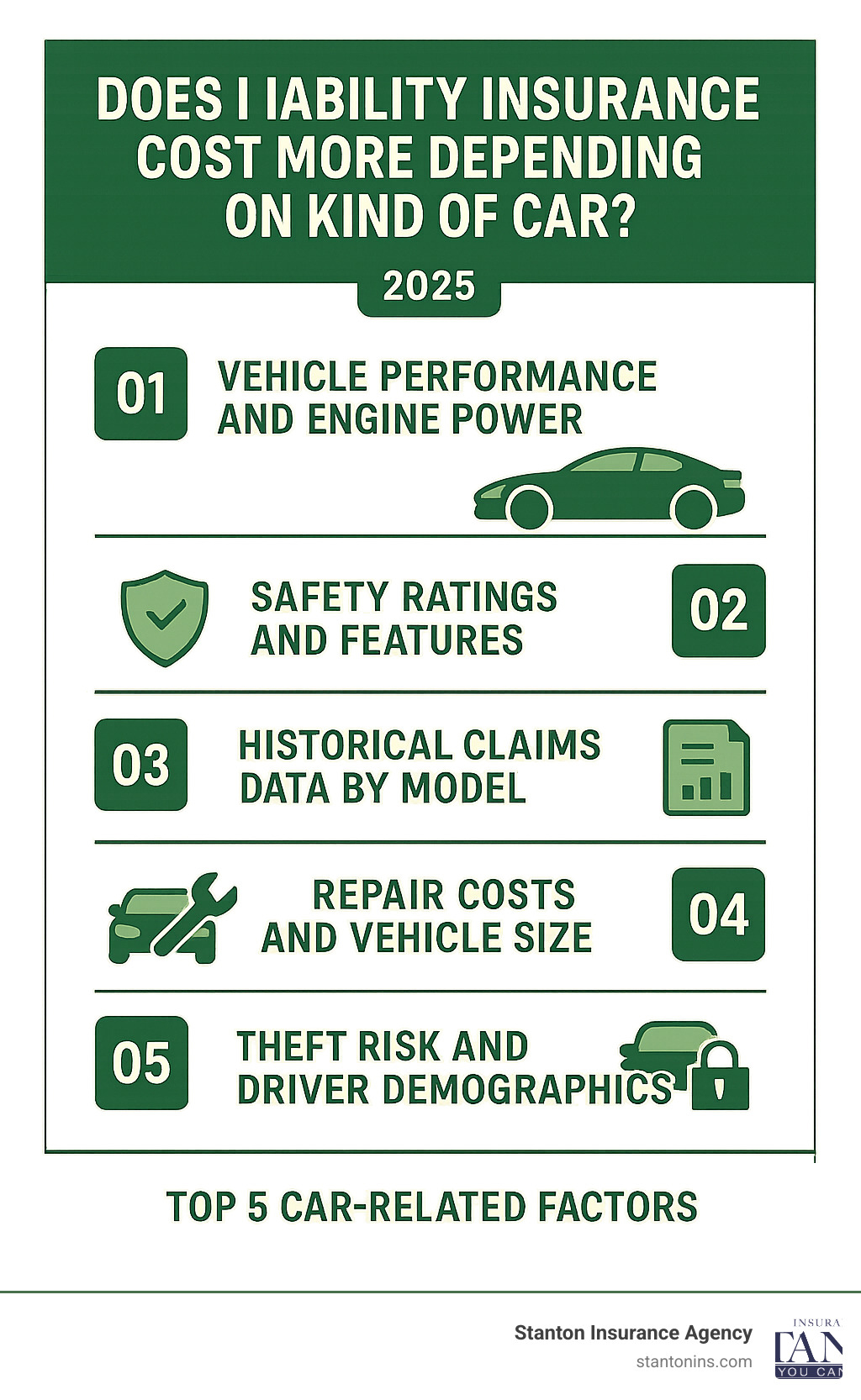
Performance and Power: The Horsepower-Premium Connection
Here’s something that might surprise you: does liability insurance cost more depending on kind of car when it comes to horsepower? The answer is a resounding yes. There’s a direct relationship between what’s under your hood and what comes out of your wallet for insurance.
Insurance companies have decades of data showing that high-performance vehicles are involved in more frequent and severe accidents. It’s not necessarily about judging drivers – it’s about cold, hard statistics. A car that can rocket from 0 to 60 mph in under four seconds creates opportunities for high-impact collisions that a modest family sedan simply can’t match.
This horsepower penalty applies across the board. Sports cars like the Nissan GT-R face steep premiums, but so do luxury sedans with powerful engines, such as the Maserati Quattroporte or BMW 7 Series. Even if you’re the most careful driver on the planet, you’re still paying for the potential that your car’s capabilities represent.
The reality is that insurers group you with other drivers of similar vehicles. If most people who drive 500-horsepower cars tend to use that power, you’ll pay premiums that reflect that behavior – even if your right foot is always gentle on the gas pedal.
Safety Ratings and Features: Your Car’s Built-In Discount
Now here’s where your car can actually work in your favor. Modern safety technology isn’t just about protecting you – it’s about preventing accidents altogether, and insurance companies love that.
Advanced safety systems like automatic emergency braking, blind-spot detection, and lane-keeping assist act like invisible co-pilots. They’re constantly monitoring the road and ready to step in when human reflexes aren’t fast enough. When your car can help you avoid a collision, the chances of filing a liability claim drop significantly.
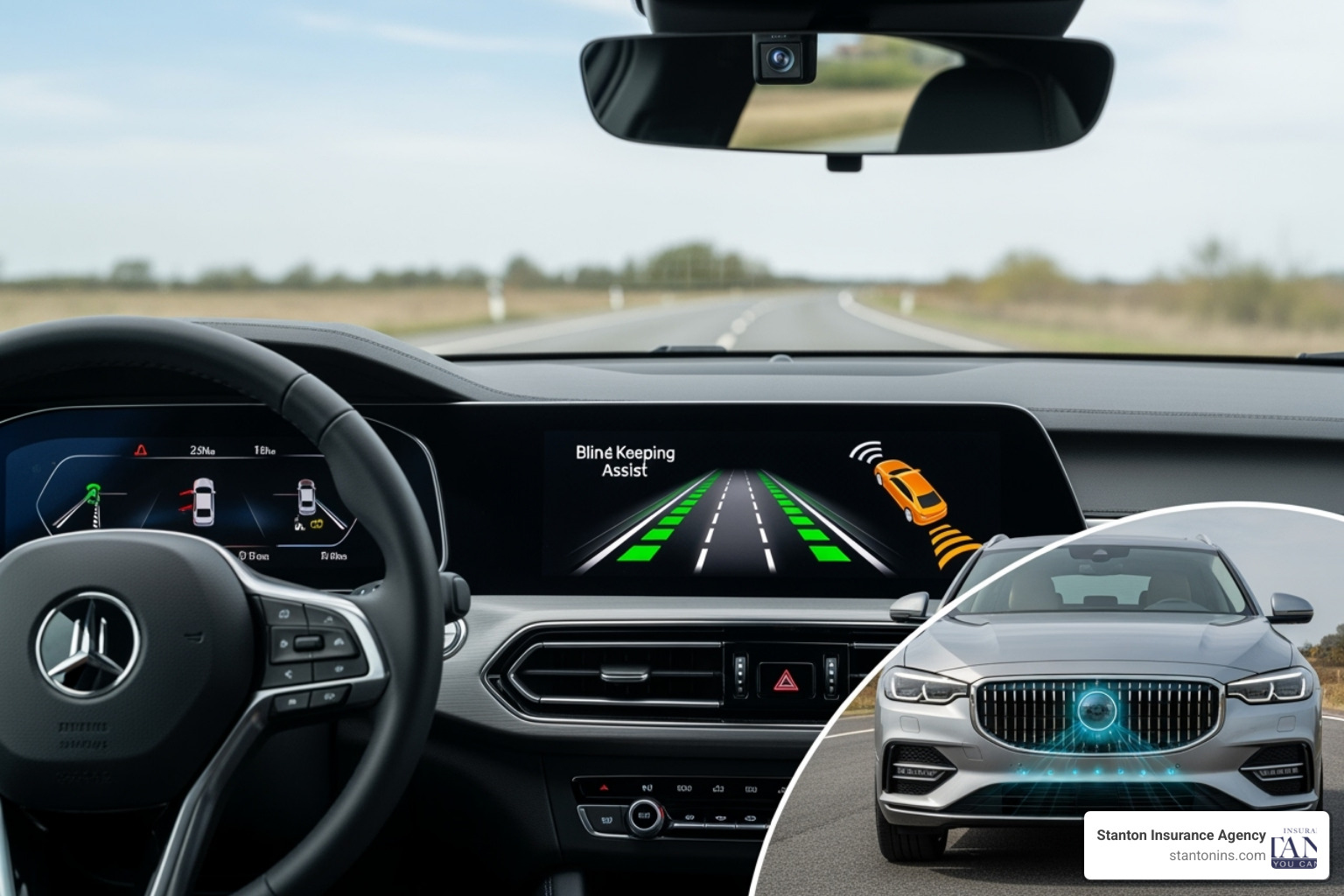
Crash-test performance matters too. Vehicles that earn top marks from safety organizations demonstrate engineering excellence that goes beyond protecting their own occupants. A car with a strong safety structure and excellent crash-test ratings often performs better in real-world accidents, potentially reducing the severity of injuries to everyone involved.
If you’re shopping for a new vehicle, checking out the IIHS-HLDI top safety picks is a smart move. These vehicles often come with insurance discounts that can add up to real savings over time.
Repair Costs, Size, and Theft Risk: The Hidden Rate Drivers
Some factors affecting your liability rates work behind the scenes in ways you might not expect. While these elements primarily impact other types of coverage, they can still influence your liability premiums in subtle but meaningful ways.
Vehicle size and weight play a bigger role than many people realize. When a massive SUV or heavy pickup truck collides with a compact car, the damage potential is enormous. Insurance companies know that larger, heavier vehicles can cause more extensive property damage in accidents, which translates directly into higher property damage liability claims.
Repair costs also factor into the equation, though not always in obvious ways. If your car is expensive to fix, it often signals higher overall value and more complex engineering. While your liability coverage pays for damage to other vehicles, insurers sometimes view expensive, complex cars as carrying higher overall risk profiles.
Theft risk creates an interesting ripple effect. While liability insurance does not cover a stolen car – that’s what comprehensive coverage is for – vehicles with high theft rates sometimes correlate with riskier driver demographics or higher-risk neighborhoods. Insurers use these data points as part of their comprehensive risk assessment, which can subtly impact your liability rates.
The bottom line? Insurance companies are looking at the complete picture of your vehicle’s potential impact on the road. Every characteristic, from its ability to prevent accidents to its potential to cause expensive damage, gets factored into your final premium.
Does liability insurance cost more depending on kind of car and its age?
The age of your vehicle adds another layer to the insurance pricing puzzle. It’s fascinating how a car’s age interacts with other factors to shape your final premium, and there are some persistent myths we need to clear up about how vehicle characteristics really affect what you pay.
New vs. Used: How Vehicle Age Affects Liability Costs
Here’s something that might surprise you: does liability insurance cost more depending on kind of car age? Not as much as you’d think. The liability portion of your insurance typically doesn’t change dramatically based on age alone. After all, a 10-year-old sedan can cause just as much damage in an accident as a brand-new one. The physics of a collision don’t care about your car’s birthday.
But there are some interesting nuances worth understanding. Newer cars often come loaded with those advanced safety features we talked about earlier – automatic emergency braking, lane-keeping assist, and blind-spot monitoring. These technological helpers actively work to prevent accidents, which means fewer liability claims. Insurance companies love this and often reward it with discounts that can lower your liability premium.
On the flip side, as cars age and lose value, many owners make a practical decision: they drop comprehensive and collision coverage and stick with just liability. This makes their overall policy cheaper, but it’s not because liability coverage itself costs less for older cars. It’s simply because they’re buying less coverage overall.
There’s one more twist to consider. Older vehicles might lack modern safety features, but they’re also less likely to be driven by high-risk young drivers who gravitate toward newer, flashier models. It’s one of those interesting balancing acts that insurers factor into their calculations.
The Myth of Car Color and Other Misconceptions
Let’s tackle one of the most stubborn myths in the insurance world: the idea that red cars cost more to insure. We hear this one constantly from clients, and we always have to break the news gently – it’s completely false.
This persistent belief probably comes from the stereotype that flashy red cars are driven more aggressively, or that they’re more likely to catch a police officer’s eye. But here’s the reality: insurers don’t care if your car is fire-engine red, boring beige, or electric blue. Your premium is calculated based on your car’s make, model, year, and claims history – not its paint job.
The myth persists despite clear evidence against it. As industry experts note, no conclusive evidence exists to back up that claim that car color affects insurance rates. Insurance pricing is a sophisticated, data-driven process that relies on accident statistics, repair costs, and safety ratings – not aesthetic preferences.
So if you’ve been dreaming of that cherry-red convertible but worried about insurance costs, go for it! Your insurer won’t penalize you for choosing a color that makes you smile every time you walk to your car. The real factors that matter – your driving record, where you live, and yes, your car’s make and model – are much more significant than whether you prefer classic black or vibrant yellow.
It’s Not Just the Car: How Personal Factors Interact with Your Vehicle Choice
Two people driving identical cars can pay wildly different insurance premiums. While your vehicle is a major factor, it’s just one piece of a much larger puzzle. Insurance companies build a complete risk profile that includes who you are, where you live, and how you’ve driven. Your car choice is just the background of that picture.
Think of it this way: a pristine Subaru Ascent won’t save you money if you have a history of speeding tickets and fender-benders. Conversely, a spotless driving record and the right location can help keep your rates manageable, even if you’re driving a sports car.
Your Driving Record and Location: The Biggest Rate Influencers
Your personal driving history is your report card as a driver, and insurers take it very seriously. At-fault accidents are the biggest red flags, showing you’ve caused incidents that liability insurance pays for. Speeding tickets suggest risky behavior behind the wheel. Major violations like DUIs can send your rates soaring, regardless of the car you drive.
Geographic location plays an almost equally important role. Living in downtown Boston means dealing with dense traffic, tight parking, and higher crime rates, all of which lead to more claims and higher premiums. Meanwhile, someone in rural New Hampshire might pay significantly less for the exact same car and coverage because they’re in a lower-risk environment.
This is why when we help clients with car insurance in MA versus car insurance in New Hampshire, we emphasize that your ZIP code can be as important as your car. The same driver with the same vehicle might save hundreds of dollars just by living across a state line.
How does liability insurance cost more depending on kind of car and driver profile?
This is where everything comes together. Your age, driving experience, and gender combine with your vehicle’s risk profile to create your final rate. It’s not just addition—it’s multiplication, where high-risk factors compound each other.
Picture this: an 18-year-old with a new license gets behind the wheel of a Nissan GT-R. You have an inexperienced driver (statistically the highest-risk group) paired with a high-performance vehicle. The result? Premium costs that might make your eyes water.
On the flip side, imagine a 45-year-old with twenty-five years of clean driving history choosing a Honda Passport. You’re looking at an experienced, statistically safer driver in a vehicle with excellent safety ratings and low claims history. This combination typically results in some of the lowest liability insurance rates available.
Decades of data show that young drivers are more likely to have accidents. When you pair that inherent risk with a high-performance car, insurers see a major financial risk. Conversely, mature drivers with clean records get rewarded with lower rates, and choosing a safer vehicle amplifies those savings even further.
A sports car might add $500 to one person’s annual premium but $2,000 to another’s, all based on their individual risk profile. That’s why it’s so important to work with an experienced agent who can help you understand not just what you’ll pay, but why.
Frequently Asked Questions about Car Type and Liability Insurance
Over my years helping families in Massachusetts and New Hampshire find the right coverage, I’ve noticed certain questions come up again and again. These are the real-world concerns that keep people up at night when they’re trying to balance getting the car they want with keeping their insurance budget reasonable.
Do electric vehicles (EVs) have higher liability insurance costs?
Unfortunately, yes – and this often surprises people. You’d think that all those advanced safety features and environmental benefits would translate to lower insurance costs, but the reality is more complex.
Electric vehicles typically cost about 20% more to insure than their gasoline counterparts. Here’s why this matters for your liability coverage specifically:
The weight factor is huge. Most EVs are significantly heavier than similar gas-powered cars because of those massive battery packs. When a 4,500-pound Tesla Model S collides with a 3,200-pound Honda Civic, guess which one causes more damage? That extra weight means more potential property damage when you’re at fault, and insurers price accordingly.
Then there’s the performance issue. Even family-oriented EVs often have impressive acceleration – we’re talking zero to 60 mph in under six seconds for many models. While that instant torque is fun at traffic lights, it also increases the statistical likelihood of accidents involving rapid acceleration or sudden maneuvers.
The repair costs, while primarily affecting collision coverage, also play into the overall risk assessment. When insurers see that a minor fender-bender in an EV can result in a $15,000 repair bill due to specialized components, they factor that complexity into their overall risk calculations.
Are SUVs cheaper to insure for liability than sedans?
This is where I have to give you the classic insurance answer: it depends entirely on which specific models you’re comparing. The SUV category is so broad that making generalizations can be misleading.
Some of the cheapest vehicles to insure are actually small to mid-size SUVs like the Subaru Forester or Honda CR-V. These models have excellent safety records, are typically driven by cautious family-oriented drivers, and have relatively low claims frequencies.
But here’s the catch – larger SUVs can be significantly more expensive to insure for liability. A full-size SUV weighing 6,000 pounds has the potential to cause devastating damage to a smaller vehicle in a collision. I’ve seen property damage liability claims from SUV accidents that were double or triple what a similar sedan accident would cost.
The key is looking at the specific model’s claims history rather than just the vehicle category. A well-engineered compact SUV with good safety ratings will often beat a performance sedan in insurance costs, while a large luxury SUV might cost more than a basic four-door car.
Does a car’s trim level affect liability insurance?
Yes, and this is one of those details that can catch people off guard when they’re shopping. The difference between the base model and the “sport” or “performance” trim can add a noticeable amount to your liability premium.
Here’s what typically happens: you fall in love with a Honda Accord, get a great insurance quote, then decide to upgrade to the Sport trim with the more powerful engine. Suddenly, your insurer sees a different risk profile. That upgraded engine doesn’t just add horsepower – it statistically correlates with more aggressive driving patterns and higher claim frequencies.
The performance modifications matter most. A trim level that adds leather seats and a sunroof probably won’t affect your rates much. But one that includes a turbocharged engine, sport suspension, or performance tires? That’s likely to bump up your premium.
I always recommend getting insurance quotes for the specific trim level you’re considering, not just the base model. It’s better to know the real cost upfront than to be surprised when you’re sitting in the dealership ready to sign papers.
The bottom line is that does liability insurance cost more depending on kind of car extends to these specific variations within models too. Every detail of your vehicle choice can impact what you pay, which is why it’s so important to work with an agent who understands these nuances and can help you make informed decisions.
Find the Right Liability Coverage for Your Car
So, does liability insurance cost more depending on kind of car? The answer is a definitive yes. Your vehicle choice plays a starring role in determining your insurance costs, and now you understand why. It’s not just about the sticker price on the lot—it’s about years of real-world data showing how that specific make and model behaves on the road.
Insurance companies have gotten really good at this. They know that a Chevrolet Malibu statistically causes 98% more bodily injury claims than average, while a Subaru Ascent causes 57% less. They know that high-performance engines often correlate with higher-risk driving behaviors, and that advanced safety features can prevent accidents before they happen. This isn’t guesswork—it’s decades of claims data translated into your premium.
But here’s what makes this whole equation interesting: your car is just one piece of the puzzle. I’ve seen responsible drivers with sports cars pay less than reckless drivers with minivans. Your driving record, where you live, and your personal risk factors all blend together with your vehicle’s characteristics to create your final rate.
The real challenge isn’t just understanding these factors—it’s finding the sweet spot where you get the coverage you need at a price that makes sense for your budget. Maybe you’re considering that fun convertible but want to know the insurance impact first. Or perhaps you’re a new parent wondering if switching to an SUV will break the bank. These are the conversations we have with clients every day.
That’s where working with experienced professionals makes all the difference. At Stanton Insurance Agency, we’ve been helping Massachusetts and New Hampshire families steer these decisions for generations. We know which carriers offer the best rates for different vehicle types, which safety discounts you might qualify for, and how to structure your coverage to protect what matters most.
We don’t just quote you a price and send you on your way. We take the time to understand your situation, explain your options, and help you make informed decisions. Whether you’re driving that high-risk sports car or the safest family sedan on the road, we’ll make sure you have the right protection without paying more than necessary.
Ready to see how your car choice affects your rates? Learn more about Car Liability Insurance and get a personalized quote that takes all these factors into account. Your future self will thank you for making the smart choice today.