
Directors and Officers Insurance Demystified 2025
Understanding Directors and Officers Insurance: Your Essential Guide
When someone asks about directors and officers insurance (D&O), they usually want to know three main things:
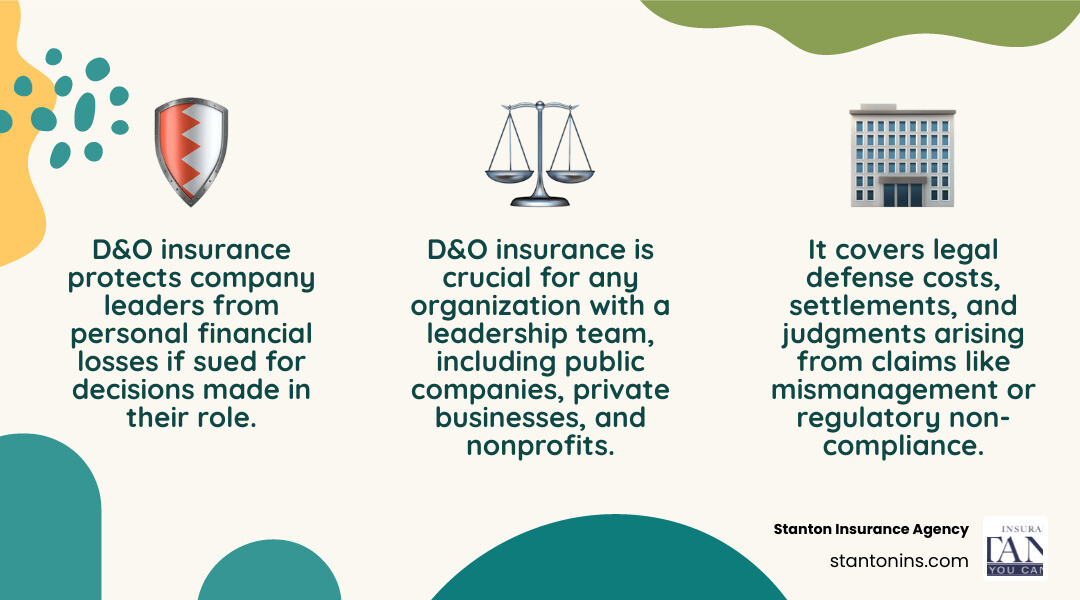
- What it is: D&O insurance protects company leaders like directors and officers from personal financial losses if they are sued for decisions they make in their role.
- What it covers: It helps pay for legal defense costs, settlements, and judgments arising from claims like mismanagement, regulatory non-compliance, or misrepresentation.
- Who needs it: Any organization with a leadership team, including public companies, private businesses, and nonprofits.
The decisions made by directors and officers can lead to lawsuits, even when they’ve done nothing wrong. These suits can threaten their personal assets and the company’s financial stability.
This guide will explain D&O insurance in simple terms, covering what it does, why it’s a must-have, and how it protects your organization’s future.
I’m Geoff Stanton, President at Stanton Insurance. As a Certified Insurance Counselor and 4th generation owner, I help businesses like yours understand complex coverages, including directors and officers insurance, ensuring both the organization and its leaders are protected. Let’s get started.
Directors and officers insurance terms you need:
- Management Liability Insurance
- Insurance for Nonprofit Organizations
- Is Director and Officer’s Insurance Included in General Liability
What is Directors & Officers (D&O) Liability Insurance?

At its core, directors and officers insurance is a specialized coverage that acts as a financial shield for your company’s leaders and their spouses. If they are sued for decisions made in their professional capacity, D&O insurance protects their personal assets from potentially devastating lawsuits.
A D&O policy also helps the company by reimbursing it for the legal fees it pays to defend its leaders. This ensures the business isn’t crippled by litigation costs. D&O insurance is a key part of a strong Management Liability Insurance program, which addresses the various risks your leadership team faces.
What Allegations and Claims Does D&O Insurance Cover?
Directors and officers insurance is built to cover many specific claims arising from leadership duties. The losses are primarily financial, including legal defense costs, settlements, and court judgments. Common allegations include:
- Breach of fiduciary duty: Claims that a leader failed to act in the company’s best interest.
- Mismanagement of company funds: Allegations of mishandling money or corporate assets.
- Failure to comply with regulations: Accusations of not following the complex web of laws governing a business.
- Misrepresentation to shareholders: Claims of misleading investors about the company’s financial health.
- Unfair trade practices: Lawsuits from competitors alleging attempts to gain an unfair advantage.
- Employment-related lawsuits: Claims like wrongful termination or discrimination, which are a major source of D&O claims for private companies and nonprofits.
- Creditor claims during bankruptcy: Lawsuits filed by creditors accusing leaders of mismanagement when a company is financially distressed.
The Three Pillars of Protection: Understanding Side A, B, and C Coverage

Directors and officers insurance policies are designed with three distinct parts, often called “Sides,” to provide comprehensive protection:
- Side A Coverage: This is direct personal protection for directors and officers. It applies when the company cannot or will not pay for their defense or settlement, serving as the last line of defense for their personal assets.
- Side B Coverage: This is the most common part of a D&O policy. It reimburses your company for the costs it pays to defend and indemnify its leaders in a lawsuit, protecting the company’s balance sheet.
- Side C Coverage: Also known as “entity coverage,” this protects the company itself when it’s named in a lawsuit alongside its directors and officers. For private companies and nonprofits, Side C can be broad, covering many types of company “wrongful acts.”
Understanding these three sides is crucial, as they show how and when your policy will respond, providing peace of mind to both your leaders and your organization.
Learn more about Director and Officer Liability Insurance Coverage
Key Policy Features to Understand
Beyond the A, B, and C sides, a few other features shape how your directors and officers insurance policy works:
- Claims-Made Basis: The policy must be active both when the alleged wrongful act occurred and when the claim is filed. Switching insurers may require special “tail” coverage to protect against past actions.
- Shrinking Limits: Legal defense costs (attorney fees, investigation costs) directly reduce the total amount of coverage available for a settlement or judgment. This makes having an adequate limit essential.
- Severability Clause: This clause is designed to protect innocent directors and officers if another insured individual commits a wrongful act, like fraud, that might otherwise void the policy for everyone.
- Indemnification Model: Many D&O policies do not have an automatic “duty to defend.” Instead, your company manages its own legal defense, and the insurer reimburses those costs according to the policy terms.
Who Needs D&O Insurance and Why Is It Crucial?

It’s a common misconception that directors and officers insurance is only for large, publicly traded corporations. The truth is that organizations of all sizes—from tech startups in Boston to established family businesses in New Hampshire—face significant liability risks.
Your leaders make decisions daily that affect employees, customers, and investors. A single lawsuit, even one without merit, can put personal assets at risk and severely impact your organization’s finances. Industry studies show that over a quarter of private companies face a D&O loss over a three-year period, with most suffering a negative financial impact. This coverage isn’t a luxury; it’s a fundamental safeguard.
Public Companies
For public companies, the stakes are incredibly high. They are particularly vulnerable to D&O claims like securities litigation from shareholders over stock performance or alleged financial misrepresentation. Public companies also face intense scrutiny from bodies like the SEC, leading to costly regulatory investigations. Given the strict disclosure requirements, any perceived error in reporting can trigger a claim, making robust directors and officers insurance non-negotiable.
Private Companies
Private companies are not immune to D&O risks. While they don’t face public shareholder lawsuits, they are exposed to claims from other sources. A huge area of risk is employment practices liability, with allegations like wrongful termination, discrimination, or harassment driving a significant portion of claims.
Private companies also face competitor lawsuits over trade practices, vendor and customer disputes, and bankruptcy litigation from creditors if the company faces financial distress. For any private business, a single lawsuit can be financially devastating, making directors and officers insurance a critical safeguard.
Nonprofit Organizations
Nonprofit leaders often think, “We’re doing good work, who would sue us?” But nonprofits are not immune to lawsuits. Their leaders can be sued by donors, beneficiaries, employees, volunteers, or government agencies over issues like mismanagement of funds or breach of fiduciary duty.
While the federal Volunteer Protection Act offers some immunity for uncompensated volunteers, it has significant gaps and doesn’t cover defense costs. The financial impact of a lawsuit can be severe, with settlement and defense costs diverting precious resources away from an organization’s core purpose. Directors and officers insurance for nonprofits ensures the organization can continue its vital work without legal battles draining its funds.
More info about Directors and Officers Insurance for Nonprofit Organizations
The Practical Side of Directors and Officers Insurance
Understanding the practical side of directors and officers insurance—cost, exclusions, and the claims process—is key to making an informed decision. A D&O policy is a strategic investment in your organization’s stability and future.
Factors Influencing the Cost of D&O Insurance
The price of directors and officers insurance is not one-size-fits-all; it depends on your organization’s unique risk profile. Insurers consider several major factors:
| Factor | Public Company | Private Company | Nonprofit Organization |
|---|---|---|---|
| Industry risk | High | Moderate | Low to Moderate |
| Company revenue/assets | High | Moderate | Low to Moderate |
| Financial health | Critical | Important | Important |
| Claims history | Major impact | Major impact | Major impact |
| Public/private status | Public | Private | Nonprofit |
| Governance structure | Important | Important | Important |
Your industry risk is a key factor; tech or healthcare firms may face higher premiums than a local nonprofit. Your organization’s size, revenue, and financial health also play a significant role. A clean claims history helps keep costs down, while a prior claim can increase rates. Finally, strong governance and risk management practices are viewed favorably by insurers and can lead to premium credits.
While costs vary widely, the median annual premium for a small business can be around $1,200 to $1,500. Premiums can range from under $500 for a small nonprofit to six figures or more for a large public company. We can help you assess your specific risk profile and find ways to manage these costs effectively.
More info about Director and Officer Liability Insurance Cost
Navigating the Fine Print: Common D&O Policy Exclusions
Understanding what your directors and officers insurance doesn’t cover is as important as knowing what it does. Common exclusions include:
- Fraudulent or criminal acts: Policies cover honest errors, not intentional illegal behavior.
- Illegal personal profit: Claims related to ill-gotten personal gains are not covered.
- Bodily injury and property damage: These are typically covered by a Commercial General Liability (CGL) policy.
- Prior and pending litigation: Claims that were known or ongoing before the policy period began are excluded.
- Insured vs. Insured claims: This prevents one insured party (like the company) from suing another (like a director) just to trigger an insurance payout.
It’s vital to know what is not covered to avoid gaps in your protection. We recommend a thorough review of your policy’s exclusions.
What Happens When a Claim is Filed?
Understanding the claims process can provide significant peace of mind. It generally follows three steps:
- Claim Notification: Your organization must notify the insurer as soon as you become aware of a potential claim. Prompt communication is critical.
- Insurer Investigation: The insurer reviews the claim to determine if it falls within your policy’s coverage, examining the allegations against your policy’s terms and exclusions.
- Defense and Settlement: If the claim is covered, the policy pays for defense costs. As these costs are paid, they reduce the overall policy limit available for a settlement or judgment. The policy will then cover a settlement or judgment up to the remaining limit, after your deductible is met.
Strategic Value and Selecting the Right Coverage
Directors and officers insurance is more than a defense against lawsuits; it’s a strategic move that strengthens your organization and positions it for long-term success. It’s an investment in your leadership, reputation, and future.
Beyond the Balance Sheet: Strategic Benefits of D&O Coverage
Solid directors and officers insurance offers advantages that go far beyond covering legal bills:
- Attracting and retaining top talent: The best executives and board members often won’t serve without D&O protection for their personal assets. Offering this coverage is a powerful tool for talent acquisition, especially in competitive markets like Massachusetts and New Hampshire.
- Enhancing corporate governance: The process of obtaining D&O insurance encourages companies to review and improve their internal controls and management practices.
- Facilitating mergers and acquisitions (M&A): D&O coverage protects leaders from the heightened risk of lawsuits during major transactions, making deals smoother and more appealing.
- Boosting investor confidence: Strong D&O insurance signals to investors and lenders that the company takes risk management seriously, which can build trust and improve company value.
This coverage frees your leaders to make bold, smart decisions without the constant worry of personal financial ruin.
How to Determine the Right D&O Coverage for Your Organization
Choosing the right amount of directors and officers insurance is about finding the perfect balance of protection and cost. Here’s how we help you find the best coverage for your needs:
- Assess your unique risk profile: We analyze your industry, size, operational complexity, and claims history to understand your specific exposures.
- Benchmark against peer organizations: Reviewing what similar organizations carry can provide a helpful starting point for determining your coverage limits.
- Consult with an insurance professional: As experienced advisors, we can explain complex policy structures and recommend limits and endorsements custom to your risks.
- Consider your future growth: If you’re planning an IPO, expansion, or M&A, your D&O needs will change. We help you plan ahead to ensure your policy can grow with you.
- Review your corporate bylaws: Your D&O policy should work hand-in-hand with your internal indemnification agreements to provide seamless protection.
Our goal at Stanton Insurance Agency is to craft a directors and officers insurance policy that reduces your specific risks, gives your leadership peace of mind, and keeps your organization financially strong.
Frequently Asked Questions about Directors and Officers Insurance
We know directors and officers insurance can seem complex, so we’ve compiled clear answers to some of the most common questions we receive.
Is directors and officers insurance included in a general liability policy?
No. This is a common point of confusion. General liability insurance covers physical risks like bodily injury and property damage. In contrast, directors and officers insurance covers financial losses arising from management decisions and alleged wrongful acts. You need both policies for comprehensive protection.
More info about Is Director and Officer’s Insurance Included in General Liability
Are my personal assets at risk if I serve on a board without D&O insurance?
Yes, absolutely. Without directors and officers insurance, your personal assets—your home, savings, and investments—could be used to pay for legal defense costs and judgments from a lawsuit related to your board service. D&O insurance acts as a vital shield for your personal financial well-being.
Learn more about board member insurance.
Does D&O insurance cover volunteer board members at a nonprofit?
Yes, it does. D&O policies for nonprofits are specifically designed to cover all board members, including unpaid volunteers. While the federal Volunteer Protection Act (VPA) offers some limited immunity, it has significant gaps. Crucially, the VPA often does not cover defense costs, even if the volunteer is found not liable. This makes directors and officers insurance an essential safety net for anyone dedicating their time to a nonprofit.
Learn more about the Volunteer Protection Act
Conclusion
In today’s unpredictable business world, directors and officers insurance is an indispensable shield. It’s a vital safety net that protects the personal assets of the leaders who guide your organization and safeguards your company’s financial resources from being derailed by legal battles.
This coverage is not just for large corporations. Whether you lead a private business, a tech startup, or a dedicated nonprofit, D&O insurance provides crucial peace of mind. It allows your leaders to make confident decisions, knowing they have a strong defense behind them. More than just a safeguard, it’s a strategic asset that helps attract top talent, strengthen governance, and build stakeholder confidence.
Choosing the right directors and officers insurance means understanding your unique risks and finding a policy that fits. At Stanton Insurance Agency, we offer trusted protection for your most valuable assets. Our experts are here to help you steer the complexities of D&O and ensure your organization, and the individuals leading it, are fully protected.