Commercial Boat Insurance: Secure Your 2025
Setting Sail Safely: Your Guide to Commercial Boat Insurance
What is Commercial Boat Insurance and Who Needs It?
Operating a business on the water is an exciting venture, but it comes with its own set of waves to steer. That’s where commercial boat insurance comes in. It’s a specialized policy crafted specifically to protect businesses that use vessels to earn a living. Think of it as a sturdy financial defense for your livelihood and assets, designed for the unique risks of marine operations.
Unlike personal boat insurance, which is for pleasure cruising, commercial boat insurance understands that your vessel is your workplace. It’s built to safeguard three vital elements: the vessel itself, the people on board (whether they’re passengers or crew), and any valuable products or cargo you’re transporting.
Learn more about Business Insurance.
The seas are beautiful, but they can be unpredictable. From sudden storms and unexpected collisions to equipment failures, the dangers are very real. As a vessel owner, you carry a big responsibility for everything that happens on your boat. That’s why having robust commercial boat insurance isn’t just a good idea; it’s essential for peace of mind.
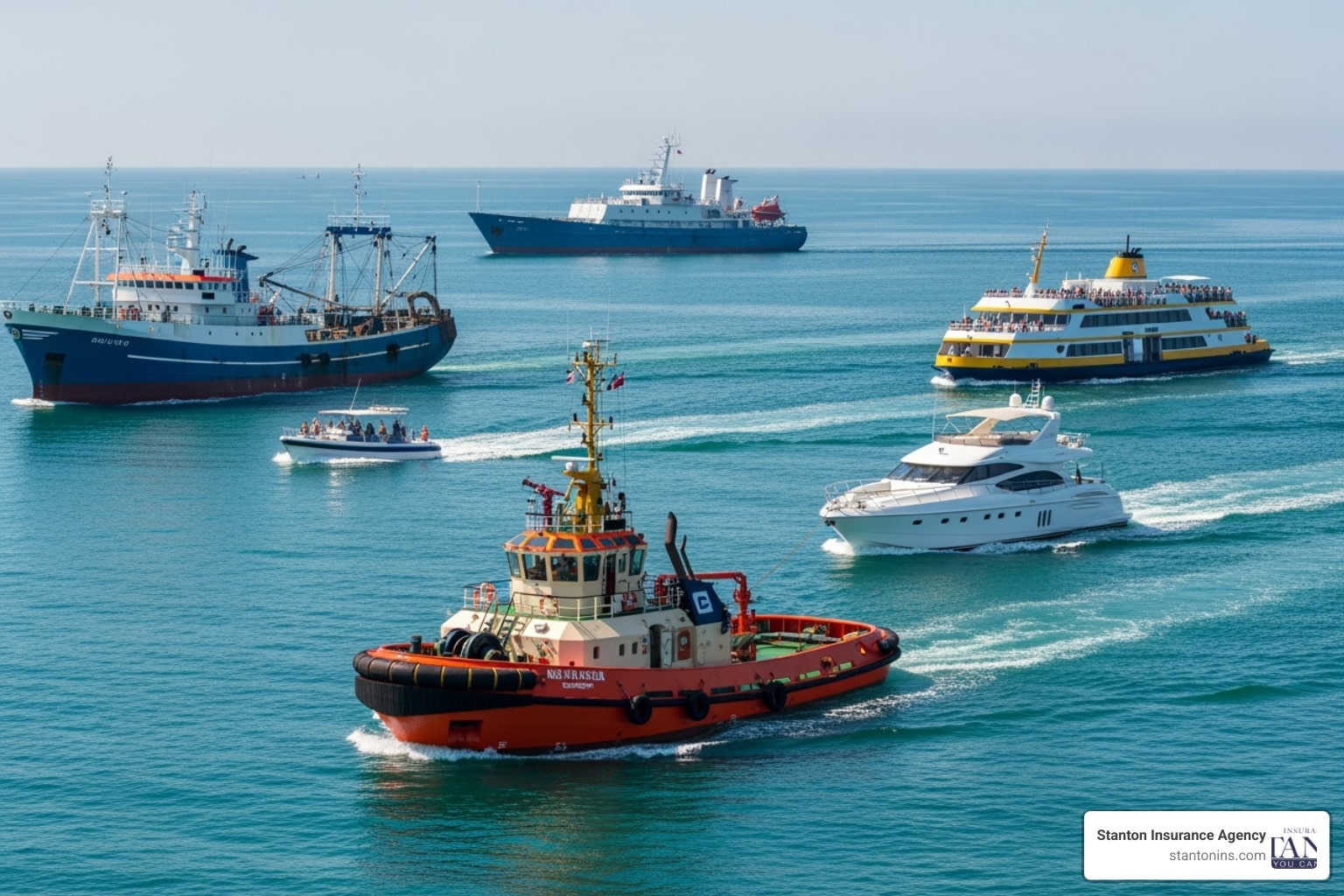
So, who exactly needs this specialized coverage? If your business relies on the water, chances are you do! This includes, but isn’t limited to, charter boat operators (from small ‘6-pack’ charters to larger inspected vessels), commercial fishing vessels (who face some of the highest risks), and tour and sightseeing boats. We also protect water taxis and ferries, boat rental businesses (including bareboat rentals and those on peer-to-peer platforms), and even marine contractors and artisans like ship repairers or dock builders. Don’t forget research vessels, public service boats (like police, fire, and rescue), boat clubs managing their fleets, and businesses involved in marine transportation, dredging, supply and shipping, and tug & barge operations. Even unique ventures like ‘Boat and Breakfast’ operations need this custom protection!
What Types of Vessels Are Covered?
When it comes to vessels, if it floats and it’s used for your business, we can likely help you find coverage! Commercial boat insurance covers a wide range of watercraft, reflecting the diverse world of marine businesses.
This includes everything from fishing boats (whether they’re small inshore vessels or mighty offshore trawlers) to tugboats (and their tows) and barges (operating on the ocean or inland waterways). We also cover various passenger vessels, from small charters to large cruise liners, and all kinds of workboats used for services like environmental work or weed control. Whether you operate pontoons, sailboats (for charters or tours), powerboats (for rentals or commercial services), or even specialized submersibles for tourism or research – we’ve got you covered. This includes custom-built vessels, fiberglass, wooden, or metal boats, and even homebuilt commercial vessels. Essentially, any watercraft used for business or commercial purposes, regardless of its size or type, can be protected.
Key Coverages in a Commercial Boat Insurance Policy
A solid policy pulls several coverages together so you can stay focused on running your business. Below is a streamlined look at the essentials—remember that limits and deductibles are always custom to your operation. Explore Comprehensive Coverage.
Hull Coverage
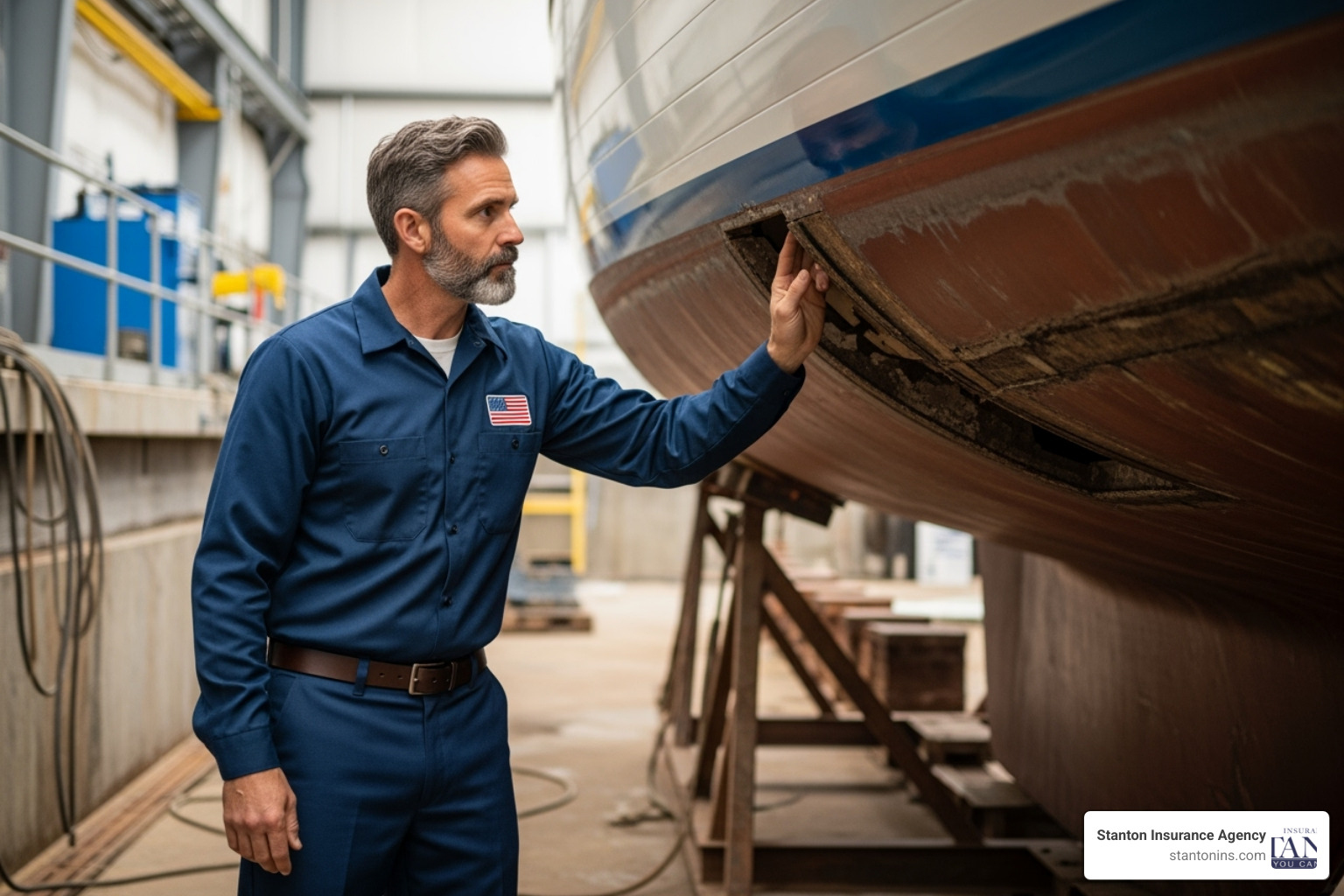
Protects the physical vessel—hull, machinery and permanently installed gear—against storms, fire, theft, collision or sinking. Policies are written for either Agreed Value (full pre-set payout) or Actual Cash Value (replacement cost minus depreciation).
Protection & Indemnity (P&I)
Your liability backstop for bodily injury, damage to docks or other boats, wreck removal and certain cargo liabilities. P&I is critical for complying with maritime law and is available with limits up to (and often above) $1 million.
Pollution Liability
Covers cleanup costs, fines and third-party claims arising from accidental fuel or oil discharge. Some marinas now require proof of this coverage before they will grant a slip.
Marine Cargo & Equipment
Safeguards the goods you transport and the mobile tools you rely on—nets, dive gear, electronics and more—whether they are on board, in transit or stored ashore.
By combining these protections in one coordinated policy, you avoid costly coverage gaps that could sink an uninsured business.
Why This Coverage is Crucial for Your Marine Business

Marine accidents are unfortunately common, and the financial fallout can be severe. A well-structured commercial boat policy keeps an incident from becoming a business-ending event. Learn more about Business Liability Insurance.
The High Stakes of Marine Operations
- Weather, mechanical failure and collisions top the list of loss drivers.
- Human error remains a major factor—alcohol use is involved in roughly 1 in 6 fatal boating accidents, and collisions account for more than half of all reported incidents, according to the U.S. Coast Guard’s annual statistics.
- Commercial fishing is one of the most dangerous U.S. jobs; its fatality rate is about 29 times the national average.
Meeting Contractual and Legal Requirements
Even in Massachusetts and New Hampshire—where there is no broad state mandate—many marinas, lenders and charter clients will require you to show proof of insurance and list them as an additional insured. States such as Arkansas, Utah and Hawaii go further by imposing minimum liability limits for certain horsepower or docking situations. Regardless of where you operate, carrying robust coverage avoids last-minute deal breakers and keeps you compliant.
Factors Influencing the Cost of Your Policy
There is no one-size-fits-all premium—most policies land between 1% and 5% of a vessel’s value each year. See: How Much is Boat Insurance?
What Drives the Price?
- Vessel attributes: age, value, size, horsepower and construction.
- Operations: fishing, passenger carriage, towing, rental, etc.
- Navigation limits: open-ocean “blue water” runs cost more than sheltered “brown water” routes.
- People: experience of the captain and crew, plus your claims history.
- Policy design: higher deductibles lower the premium; broader limits or extra endorsements raise it.
State Requirements and Their Impact
While neither Massachusetts nor New Hampshire mandates boat insurance for every vessel, many facility contracts do. Other states with horsepower or docking mandates illustrate how quickly rules can change, so staying insured is the safest long-term strategy.
How Commercial Differs From Other Insurance Policies
Understanding the distinction prevents expensive gaps. Learn more about Small Business Insurance.
Commercial vs. Personal Boat Insurance
| Feature | Commercial Use (Business) | Personal Use (Pleasure) |
|---|---|---|
| Purpose | Revenue generating | Recreational |
| Liability Limits | High (crew, passengers) | Lower |
| Covered Parties | Paying passengers, crew, cargo | Friends & family |
| Typical Cost | Higher | Lower |
Trying to run charters on a personal policy is a recipe for denied claims.
Why General Liability Isn’t Enough
Most standard General Liability policies exclude watercraft entirely. Marine businesses should carry:
- Marine General Liability (MGL) for shoreside exposures.
- Protection & Indemnity (P&I) for vessel-related liabilities under maritime law such as the Jones Act).
- Optional Bumbershoot (marine umbrella) for extra limits.
These specialized forms work together to create the complete risk-management net your operation needs.
Frequently Asked Questions about Commercial Boat Insurance
We get a lot of great questions about commercial boat insurance, and that’s exactly why we’re here! It can feel like navigating a maze, but don’t worry, we’re here to help shine a light on some of the most common queries.
What is the difference between “blue water” and “brown water” hull coverage?
Think of it like this: not all water is created equal! “Blue water” and “brown water” hull coverage simply refer to where your vessel spends most of its time. This distinction is super important because it helps determine the scope and cost of your hull insurance.
“Blue water” hull coverage is for the triprs of the open ocean. If your vessel is out on the deep sea, tackling longer voyages, or involved in international trade and shipping, this is likely your coverage. It accounts for broader navigational limits and the often more challenging, unpredictable conditions of the open ocean. As you can imagine, with greater exposure comes higher premiums.
On the flip side, “brown water” hull coverage is for vessels that stick to the calmer, more confined waters. We’re talking about rivers, lakes, harbors, estuaries, and near-shore coastal areas. While risks still exist here (the marine world is always full of surprises!), they are generally different from those found in the deep blue. This means premiums for “brown water” coverage are often a bit lighter on the wallet.
Knowing your vessel’s primary operating area is crucial. It ensures you have the right protection in place and helps avoid any unexpected headaches if you ever need to file a claim.
Does commercial boat insurance cover my crew under workers’ compensation?
This is a really important question, and the answer can be a bit nuanced! When it comes to crew injuries, your standard Protection & Indemnity (P&I) coverage steps up. It provides vital liability protection for crew members under federal maritime law, specifically the Jones Act. This law allows injured seamen to seek compensation if their injuries are due to employer negligence. So, your P&I is definitely a cornerstone of commercial boat insurance for any vessel with a crew.
However, here’s the key difference: P&I coverage is not the same as a state-mandated workers’ compensation policy. Generally, state workers’ compensation laws don’t apply to seamen, who fall under that federal maritime law we just mentioned.
Depending on your specific business, how your crew is employed, and the laws in Massachusetts and New Hampshire, you might need additional coverage. For instance, Maritime Employers Liability (MEL) is a special policy often bought alongside or as an extension of P&I. It helps cover your liability for injuries or deaths of crew members who might not be fully covered under P&I, or if they’re working on vessels you don’t own. If you have employees working shoreside, or whose primary job isn’t vessel-based, then you would need a standard state workers’ compensation policy for them.
Don’t worry, we’re here to help you steer these specific needs for your crew. We’ll make sure you’re compliant with both federal maritime law and any relevant state regulations right here in Massachusetts and New Hampshire.
Can I get coverage if I rent my boat out on a peer-to-peer platform?
Absolutely, yes! The world of peer-to-peer (P2P) rentals has truly taken off, and the good news is that specialized commercial boat insurance policies are available to cover these operations. This is a big deal because your standard personal boat insurance policy will not cover commercial use, and that includes rentals. Trying to rent out your boat without the proper commercial coverage would leave you completely exposed financially if there’s an accident, damage, or a liability claim. Yikes!
A specialized policy for P2P rentals is designed to protect you in this unique situation. It will typically cover:
- Physical damage to your boat while it’s being rented out.
- Third-party liability for any bodily injury or property damage caused by the renter to others.
- Some policies can even include special provisions for renter’s liability programs, physical damage, and transportation coverage.
When you’re thinking about renting out your units on a P2P platform, it’s super important to schedule all units to your policy for coverage to apply. We also strongly recommend that renters look into their own insurance, as your owner’s policy might not cover every single potential liability for the renter. We’re here to help you steer through these unique insurance needs for your boat rental business, making sure you’re well-protected.
Secure Your Maritime Venture
Protecting your commercial vessel isn’t just about the boat itself; it’s about safeguarding the entire future of your business. The ocean’s a beautiful workplace, but it comes with its own set of challenges. The complexities of marine law and the inherent risks of operating on the water mean that specialized coverage isn’t just a luxury – it’s a necessity.
A comprehensive commercial boat insurance policy, covering everything from Hull damage to Protection & Indemnity (P&I) and Pollution Liability, acts as your ultimate first line of defense. Imagine the financial hit from a collision, a sinking, or a major liability claim. These incidents can quickly rack up costs in the hundreds of thousands of dollars. You never want to face such a situation only to find you weren’t properly insured.
At Stanton Insurance Agency, we truly get it. We understand the unique demands and responsibilities of running a marine business right here in Massachusetts and New Hampshire. Our expertise means your policy is far more than just a piece of paper. It’s a robust shield, carefully crafted to fit your specific operations. We’re dedicated to giving you the trusted protection your valuable assets deserve, helping you manage risks and stay ready for anything the sea might throw your way.
Our team of experts at Stanton Insurance Agency is here to help you steer your options. We’ll assess your unique risks, help you custom-tailor a commercial boat insurance policy that fits just right, and ultimately, give you the peace of mind you’ve earned.
Ready to set sail with confidence? Contact us today to review your boat insurance needs!