Car Liability Coverage Cost: Smart Value 2025
Why Understanding Car Liability Coverage Cost Matters
Car liability coverage cost varies based on your location, driving record, and chosen protection level. Understanding what you’re paying for is crucial, as it can save you thousands in the event of an at-fault accident. This coverage is the foundation of your financial protection on the road, standing between you and potentially devastating out-of-pocket costs.
Quick Answer: What Does Car Liability Coverage Cost?
- National Average: $644/year for a 50/100/50 liability-only policy.
- Massachusetts: Generally higher than the national average.
- New Hampshire: Often lower rates, but coverage isn’t mandatory if you prove financial responsibility.
- Industry Recommendation: 100/300/100 or higher to protect your assets.
What It Covers:
- Bodily injury to others (medical bills, lost wages, legal fees).
- Property damage you cause to others (vehicles, fences, buildings).
What It Doesn’t Cover:
- Damage to your own vehicle.
- Your own injuries.
- Costs exceeding your policy limits.
Many drivers in Massachusetts and New Hampshire carry only state minimums, not realizing a single serious accident could exceed those limits and put their savings, home, and future earnings at risk. I’m Geoff Stanton, President at Stanton Insurance Agency, and I’ve spent over two decades helping clients steer car liability coverage cost decisions. This guide will walk you through what liability coverage costs, what affects your premium, and how to choose the right amount for your situation.
What Liability Insurance Covers (and What It Doesn’t)
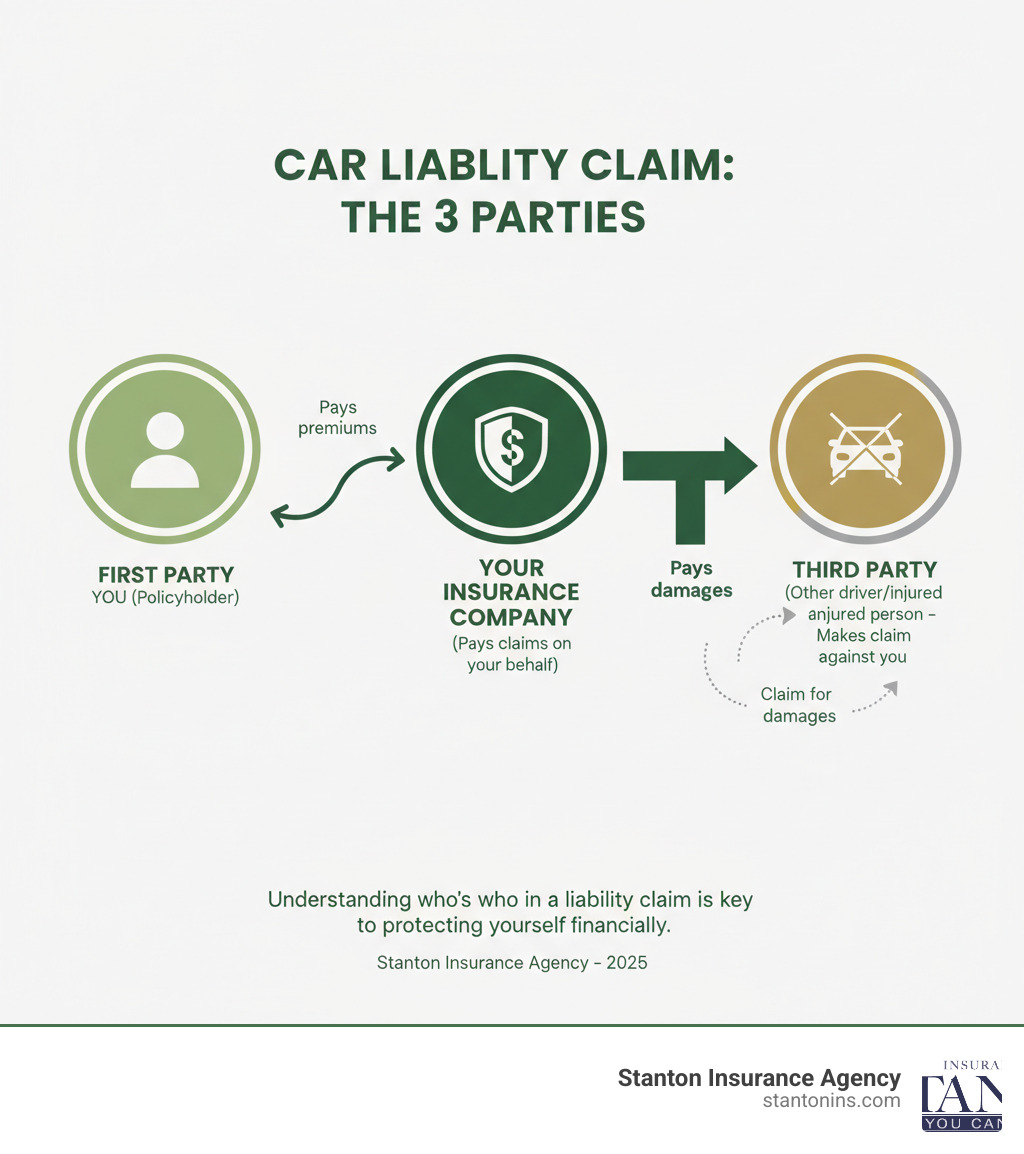
Liability insurance protects you from the financial consequences of harming others in an at-fault accident. It’s a safety net for your assets when an incident on the road becomes a legal or financial problem. Auto liability coverage has two main components: Bodily Injury Liability (BI) and Property Damage Liability (PD). These shield you from claims made by a “third party”—anyone other than you or your insurance company.
- Bodily Injury Liability (BI): Covers costs from injuries you cause to others, including their medical bills, lost wages, and compensation for pain and suffering. It also pays for your legal fees if a lawsuit arises.
- Property Damage Liability (PD): Pays for damage you cause to someone else’s property. This most often means vehicle repairs, but it also covers things like fences, guardrails, or buildings.
It’s vital to know that liability coverage protects others, not you or your own property. For more details, you can explore our resources on Liability Car Insurance Coverage and How Does Liability Car Insurance Work.
What’s Covered by Liability Insurance
Here’s a breakdown of the third-party costs your liability insurance is designed to cover:
- Injuries to Others: Medical care for pedestrians, passengers in other cars, cyclists, or other drivers. This includes everything from emergency room visits to lost wages if they can’t work.
- Damage to Other Vehicles: The repair or replacement costs for any car you hit.
- Damage to Public or Private Property: Repairs for things like a traffic light, utility pole, or a neighbor’s fence.
- Your Legal Defense: Covers attorneys’ fees and court costs if you are sued, even if the lawsuit is unsuccessful. This is a significant financial safeguard.
What’s NOT Covered by Liability Insurance

Understanding the exclusions is critical to avoid gaps in your protection:
- Your Own Vehicle’s Damage: Liability insurance will not pay for your car’s repairs if you are at fault. For that, you need Collision coverage.
- Your Own Injuries: Your medical bills and lost wages are not covered by liability. In Massachusetts, your Personal Injury Protection (PIP) covers this. New Hampshire offers similar medical payments coverage.
- Your Passengers’ Injuries: In Massachusetts, your passengers’ medical costs are typically covered by your mandatory PIP coverage, not your BI liability.
- Intentional Damage: Insurance is for accidents, not deliberate acts. If you intentionally cause damage, it won’t be covered.
- Damage Exceeding Policy Limits: If you cause $100,000 in damages but only have $50,000 in coverage, you are personally responsible for the remaining $50,000. The difference in car liability coverage cost between minimum and recommended limits is small compared to this risk. Our guide on Full Coverage vs Liability Car Insurance can help you weigh your options.
Understanding the Car Liability Coverage Cost
Your car liability coverage cost is a customized calculation based on factors insurers use to assess risk. While state minimums offer the lowest premium, they often leave you exposed. Recommended limits cost more but provide robust financial protection. Key factors influencing your premium include:
- Driving Record: A clean record earns the best rates. An at-fault accident can increase your premium by 25% or more, while a DUI can cause a spike of over 40%.
- Vehicle You Drive: Safer cars that are cheaper to repair generally cost less to insure than high-performance or luxury vehicles.
- Where You Live: Urban areas with more traffic and theft risk, like Boston, have higher premiums than rural communities.
- Credit Score (in MA): In Massachusetts, drivers with excellent credit often pay 15-25% less than those with poor credit.
- Annual Mileage: Driving less means less risk. Low-mileage drivers can see premiums drop by 12% or more.
- Age and Experience: Younger, less experienced drivers face higher rates. Premiums typically decrease in your 30s and 40s with a clean record.
Understanding these factors helps you manage your personal Auto Insurance Costs.
What is the average car liability coverage cost?
Nationally, a liability-only policy with 50/100/50 limits averages $644 per year. However, local factors are more important. A typical 35-year-old driver with a good record might pay around $64 monthly, or $736 annually.
- In Massachusetts, rates are typically higher than the national average due to high population density and traffic. For a closer look, see our guide on Car Insurance Rates Massachusetts.
- In New Hampshire, drivers often enjoy lower rates than both MA and the national average, thanks to less density and unique insurance laws.
Your specific zip code, driving history, and chosen limits will determine your final price, so personalized quotes are essential.
Mandatory Minimums in Massachusetts and New Hampshire
Massachusetts and New Hampshire have very different auto insurance requirements. Knowing them is key to staying legal and making smart coverage choices.
- Massachusetts requires all drivers to carry insurance. This includes Bodily Injury, Property Damage, Personal Injury Protection (PIP), and Uninsured/Underinsured Motorist coverage.
- New Hampshire uses a “financial responsibility” model. You don’t have to buy insurance if you can prove you can pay for damages yourself. Most drivers meet this by purchasing a policy with at least the state’s minimum liability limits.
Here’s a side-by-side comparison:
| Coverage Type | Massachusetts Minimums | New Hampshire Minimums (if insured) |
|---|---|---|
| Bodily Injury Liability | $20,000 per person / $40,000 per accident | $25,000 per person / $50,000 per accident |
| Property Damage Liability | $5,000 per accident | $25,000 per accident |
| Personal Injury Protection (PIP) | $8,000 per person (mandatory) | Not mandatory (Medical Payments coverage available) |
| Uninsured Motorist | $20,000 per person / $40,000 per accident (mandatory) | Not mandatory (but recommended) |
| Underinsured Motorist | $20,000 per person / $40,000 per accident (mandatory) | Not mandatory (but recommended) |
For more details, explore these resources: Your Guide to Understanding Auto Insurance in the Granite State, What is the Minimum Car Insurance Coverage in Massachusetts, and Auto Insurance Requirements in New Hampshire.
How to find the cheapest car liability coverage cost
Finding an affordable car liability coverage cost means being strategic. Here are proven ways to save:
- Compare quotes from multiple insurers: Rates for the same driver can vary widely between companies.
- Bundle your policies: Combine auto with home or renters insurance for a multi-policy discount of 5% to 25%.
- Maintain a clean driving record: This is the best long-term strategy for lower rates.
- Ask for discounts: Inquire about savings for good students, defensive driving courses, multiple cars, or professional affiliations.
- Choose a higher deductible: For Collision or Comprehensive coverage, a higher deductible lowers your overall premium.
- Drive a “low-risk” vehicle: Cars that are safer and cheaper to repair often have lower insurance rates.
For more strategies, see our guide on Cheapest Liability Only Car Insurance.
How Much Liability Coverage Do You Really Need?
This is the most critical question. While state minimums are legal, they rarely provide adequate financial protection. Think of your liability limits as a safety net for your financial future; you want one that’s robust, not flimsy.

Determining your needs starts with assessing your personal assets—your savings, investments, home equity, and future earnings. In a serious at-fault accident, all of these are vulnerable if damages exceed your insurance limits. This is why net worth protection is so important.
Insurance experts widely recommend the 100/300/100 rule as a starting point: $100,000 for bodily injury per person, $300,000 per accident, and $100,000 for property damage. For homeowners or those with significant savings, we often recommend limits of $250,000/$500,000. For those with substantial assets, an umbrella policy can add $1 million or more in liability protection for a relatively low cost.
The difference in car liability coverage cost between minimum and adequate protection is often just $10 to $30 per month—a small price for exponentially better security. For more guidance, read our article, How Much Liability Insurance Do I Need for My Car.
Why State Minimums Are Often Not Enough
Relying on state minimums is a significant financial risk. Here’s why:
- Expensive Modern Cars: The average new car price exceeds $47,000. The Massachusetts minimum property damage limit of $5,000 wouldn’t even come close to replacing a totaled modern vehicle, leaving you to pay the difference.
- High Medical Costs: A single serious injury can lead to medical bills in the hundreds of thousands. A $20,000 per person limit (MA minimum) would be exhausted almost instantly.
- Multi-Vehicle Accidents: In a chain-reaction crash, your per-accident limit is divided among all injured parties and damaged vehicles, making minimums dangerously inadequate.
- Your Assets Are at Risk: If a judgment against you exceeds your policy limits, the injured party can pursue your personal assets, including your savings, investments, and even your home.
State minimums were never designed to fully protect you; they are simply the lowest legal requirement.
What Happens if Your Coverage Isn’t Enough?
If you’re at fault and damages exceed your policy limits, you face personal liability for the difference. This can lead to financial disaster.
- Wage Garnishment: A court can order a portion of your paycheck to be deducted until the debt is paid.
- Asset Liquidation: Your savings, investments, and home equity can be seized to satisfy a judgment.
- Long-Term Consequences: A large judgment can ruin your credit score, making it hard to get loans or even rent an apartment.
The small increase in car liability coverage cost for higher limits is a tiny price to pay to avoid these catastrophic outcomes. The peace of mind from knowing you’re truly protected is invaluable.
Frequently Asked Questions about Car Liability Coverage
Here are answers to some of the most common questions we hear at Stanton Insurance Agency.
Does third-party liability insurance cover damage to my own car?
No. Liability coverage is designed to pay for damages and injuries you cause to others (the third party). To cover damage to your own vehicle, you need to add Collision coverage (for accidents) and Comprehensive coverage (for non-accident events like theft or storm damage).
Do I need third-party liability insurance to rent a car?
Yes. If you have a personal auto policy, your liability coverage typically extends to rental cars in the U.S. and Canada. Always verify this with your agent before renting. If you don’t have personal auto insurance, you must purchase liability coverage from the rental agency. Be aware that credit card rental insurance usually only covers damage to the rental car itself, not liability for injuries or damage to others.
How do third-party liability insurance claims work?
When you’re at fault in an accident, the other party files a claim against your insurance policy. Your insurer investigates to determine fault and the extent of the damages. If the claim is valid, your insurer negotiates a settlement and pays for the third party’s medical bills, property damage, and other related costs, up to your policy limits. You typically do not pay a deductible for a liability claim made against you.
Get the Right Protection at the Right Price
Making smart decisions about your car liability coverage cost is about balancing affordability with real-world protection. Opting for the cheapest policy can leave you financially vulnerable, while overpaying isn’t smart either. The right coverage depends on your assets, driving habits, and personal circumstances.
This is where expert guidance from an independent agency makes a difference. At Stanton Insurance Agency, we work for you, not a single insurance company. We serve clients across Massachusetts and New Hampshire by shopping your coverage across multiple top-rated insurers to find the best fit for your needs and budget.
We’ll review your current policy, explain your options in plain English, and ensure you’re not paying too much or risking too little. Your financial security is too important to leave to chance. Don’t wait until after an accident to find your coverage falls short.
Contact a Stanton Insurance agent today to review your policy and get the peace of mind that comes with having the right liability protection.