
Cancel car insurance renewal: 4 Easy Steps
Why You Need to Know How to Cancel Car Insurance Renewal
Cancel car insurance renewal is something most drivers will need to do at least once in their lives, whether due to finding better rates, moving, or selling their vehicle. The process is straightforward when done correctly, but mistakes can lead to coverage gaps, fines, and higher future premiums.
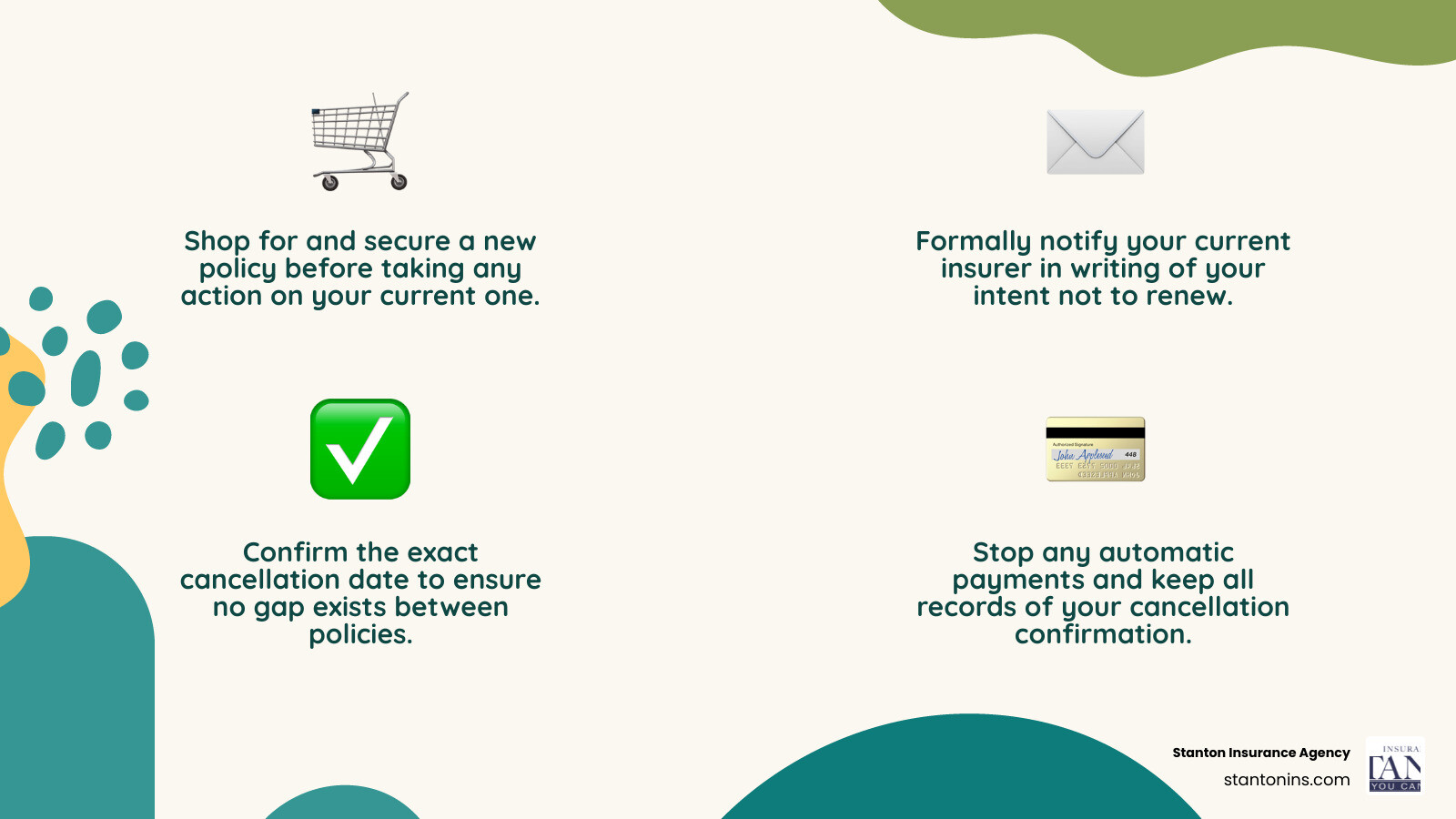
Quick Steps to Cancel Car Insurance Renewal:
- Shop for new coverage first – Get quotes and secure a new policy before canceling
- Notify your current insurer in writing – Don’t just stop paying bills
- Confirm the cancellation date – Ensure no gap between old and new coverage
- Handle final details – Stop automatic payments and keep confirmation records
Nearly 69% of drivers who switch insurers do so for financial reasons, such as finding better rates or being unable to afford current premiums. Another 11% cancel due to vehicle changes like selling their car, while 9% no longer need to drive regularly.
The key difference between cancellation and non-renewal matters. Canceling mid-term often involves fees and can trigger penalties, while letting your policy expire naturally at renewal avoids these costs. However, both require careful timing to prevent dangerous coverage gaps.
As Geoff Stanton, President of Stanton Insurance Agency and a Certified Insurance Counselor with over 25 years of experience helping Massachusetts families steer insurance decisions, I’ve guided countless clients through the process to cancel car insurance renewal safely and efficiently. My expertise ensures you avoid costly mistakes while finding the best coverage for your needs.
Understanding the Difference: Cancellation vs. Non-Renewal
Knowing whether you’re canceling your policy or simply choosing not to renew it isn’t just insurance jargon—it can save you money and headaches down the road. These terms might sound similar, but they have very different meanings and financial implications.
Cancellation means you’re pulling the plug on your policy before its expiration date. Think of it like breaking a lease early—there are usually consequences. Non-renewal, on the other hand, is simply letting your policy expire naturally at the end of its term and choosing not to start a new one. It’s like deciding not to sign another lease when your current one ends.
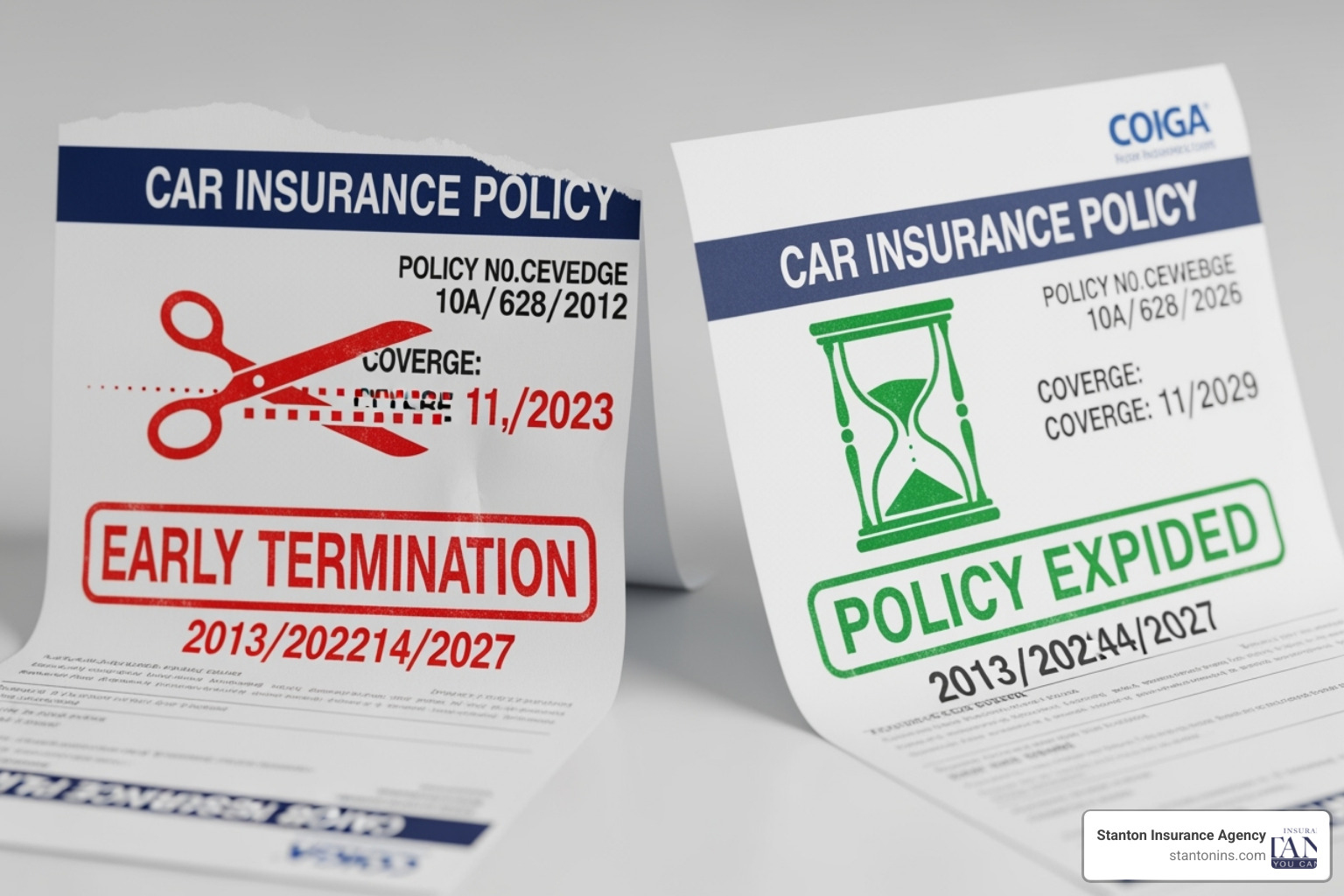
| Feature | Mid-Term Cancellation | Non-Renewal |
|---|---|---|
| Who Initiates? | Policyholder or Insurer | Policyholder or Insurer |
| When Does It Occur? | Any time during the policy term | At the end of the policy term |
| Common Reasons | Selling a car, finding a new policy | Finding a better rate, insurer stops offering coverage |
| Potential Fees? | Yes, a cancellation fee may apply | No, fees are not charged for non-renewal |
When you’re looking to cancel car insurance renewal, you’re typically dealing with non-renewal—the cleaner, fee-free option. But understanding both scenarios helps you make the smartest choice for your situation.
Insurer-initiated Cancellation
Here’s something many drivers don’t realize: your insurance company can also decide to end your relationship, though they can’t do it on a whim. Insurance is heavily regulated, and companies must follow strict rules about when and why they can cancel your policy.
The 60-day rule is your friend here. Once your policy has been active for more than 60 days, insurers can only cancel for very specific reasons. The most common reasons include non-payment of your premiums, fraud or material misrepresentation on your application, or if your driver’s license gets suspended or revoked.
Non-payment is straightforward—if you don’t pay your bills, your coverage stops. But fraud can be trickier territory. This might include lying about who’s the primary driver, where you park your car overnight, or your driving record. These details matter because they directly affect your risk level and premium.
When your insurer initiates a cancellation versus choosing not to renew at your policy’s end, the implications are quite different. A mid-term cancellation by your insurer suggests something went wrong—like a breach of contract or significantly increased risk. Non-renewal by your insurer is typically just business, often due to changes in their coverage areas or risk appetite.
For a more detailed breakdown of these important distinctions, the Insurance Information Institute offers an excellent explanation: What’s the difference between auto policy cancellation and nonrenewal?
The bottom line? If you’re planning to cancel car insurance renewal on your own terms, non-renewal is almost always your best bet—it’s cleaner, cheaper, and doesn’t raise red flags with future insurers.
Key Reasons for Stopping Your Car Insurance Renewal
Understanding why you might want to cancel car insurance renewal can help you make a more informed decision. Drivers choose not to renew their policies for many reasons, but most fall into a few key categories. According to industry data, financial considerations are the most significant driver, but changes in personal circumstances and satisfaction with the insurer also play major roles.

Financial Motivations
Let’s be honest—money talks. The number one reason drivers switch is cost, with nearly 69% of policyholders making the change for financial reasons. Maybe you’ve found another provider offering better car insurance rates, or perhaps your current premiums have simply become too much for your budget.
Life has a way of throwing curveballs at our finances. Job changes, unexpected expenses, or shifts in family income can all make that monthly insurance payment feel heavier than before. That’s why it always pays to shop around and see if you can find cheaper car insurance that still provides the coverage you need.
We understand that every dollar counts in your household budget. Sometimes even a modest savings on your premium can free up money for other important expenses—like that family vacation you’ve been planning or building up your emergency fund.
Changes in Vehicle or Driving Needs
Your life doesn’t stay the same, and neither should your insurance if it no longer fits your situation. Around 11% of cancellations happen because of vehicle-related changes. Maybe you’ve sold your car and aren’t replacing it right away, or your trusty old vehicle finally gave up the ghost and isn’t worth repairing.
Another 9% of drivers find they simply don’t need to drive as much anymore—or at all. Perhaps you’ve moved to a city like Boston or Manchester where public transit is an option, or you’ve started working from home and your car sits in the driveway gathering dust more often than hitting the road.
These lifestyle changes are perfectly valid reasons to reconsider your coverage. Why pay for comprehensive protection on a vehicle that’s not running, or maintain full coverage when you’re barely driving?
Dissatisfaction with Current Insurer
Sometimes the relationship just isn’t working out, and that’s okay. About 5% of drivers leave because they’re unhappy with their customer service experience. If you’ve struggled to reach your agent when you need them, experienced frustratingly slow responses, or felt like your concerns weren’t taken seriously, it’s natural to look for better service elsewhere.
Another 5% switch because of coverage issues—maybe you realized you’re paying for protection you don’t actually need, or worse, you finded gaps in your coverage during a stressful moment. An additional 9% of cancellations stem from billing headaches, like wanting different payment dates or problems with automatic payments that seem impossible to resolve.
At the end of the day, insurance should give you peace of mind, not cause you stress. When your current provider isn’t meeting your expectations for service, coverage, or convenience, it might be time to cancel car insurance renewal and find a company that truly understands your needs.
How to Cancel Car Insurance Renewal: A Step-by-Step Guide
Following a clear process is the best way to ensure you don’t have a lapse in coverage, which can lead to serious consequences. Here’s how to handle your non-renewal correctly.
Step 1: Review Your Policy and Secure New Coverage
Before you do anything else, shop around. This isn’t just good advice—it’s absolutely essential. We’ve seen too many clients rush to cancel their current policy only to find they’re stuck with expensive emergency coverage or, worse, driving illegally without insurance.
Start this process at least six to eight weeks before your renewal date. Get quotes from several providers to find a new policy that fits your budget and coverage needs. It’s amazing how much rates can vary between companies, even for identical coverage. One insurer might see your teenage driver as a major risk, while another focuses more on your excellent credit score.
The golden rule here is simple: have your new policy active before your old one expires. The start date of your new policy should match exactly with the end date of your current one. Think of it like moving apartments—you wouldn’t give up your current lease until you had the keys to your new place. Learn more about how to get car insurance in Massachusetts to ensure you’re prepared for this crucial step.
Step 2: Gather Necessary Information
Nobody likes being put on hold while scrambling through paperwork. Make the process smooth by having everything ready before you contact your current insurer.
You’ll need your full name, address, and policy number—that’s the basic stuff. More importantly, you’ll need the exact date you want your policy to end, which should be your natural renewal date. Having your new policy details handy is also smart, as some insurers may ask for proof that you’re not just going without coverage.
Step 3: Formally Notify Your Insurer to Cancel Car Insurance Renewal
Here’s where people make their biggest mistake: they simply stop paying their bill and assume that’s enough. Don’t do this. Letting your policy cancel for non-payment creates a black mark on your insurance record that can haunt you for years with higher premiums.
Instead, you need to formally tell your insurer you want to cancel car insurance renewal. While a phone call is often the quickest way to start, most companies want written notice to make it official.
Your notification options include sending a signed letter via certified mail for proof of delivery, emailing their customer service department (keep that sent email!), using their online portal or mobile app if they offer this feature, or making a phone call followed by written confirmation from them that they received your request.
Whatever method you choose, be crystal clear about your cancellation date. You want your policy to end on its natural expiration date—no sooner, no later.
Step 4: Confirm the Cancellation and Handle Refunds
Don’t assume your cancellation went through just because you sent the paperwork. Follow up with a phone call to confirm they received your notice and processed everything correctly. Ask for written confirmation for your records—this is your proof that you won’t be charged again.
Since you’re letting your policy expire naturally at renewal time, you shouldn’t face any cancellation fees. You’ve simply chosen not to continue a service you paid for through its full term.
If you happen to cancel mid-term instead—maybe you sold your car unexpectedly—you should receive a prorated refund for the unused portion of your policy. Just remember that if you financed your premium, the refund might go back to the finance company rather than directly to you.
For residents of Massachusetts and New Hampshire, there’s an extra step if you’re canceling because you no longer own or operate a vehicle. In Massachusetts, the specific process to cancel car insurance in Massachusetts requires returning your license plates to the RMV to avoid penalties. Similarly, in New Hampshire, you must surrender your plates to the DMV or your local town/city clerk. Skipping this step in either state can lead to fines and registration suspension.
Potential Consequences and Important Considerations
Stopping your cancel car insurance renewal seems simple, but missteps can be costly. Understanding the risks helps you avoid them.
The Risks of a Coverage Gap After You Cancel Car Insurance Renewal
Even a single day without auto insurance is a major risk that we’ve seen cause serious problems for our clients. The consequences can hit you from multiple angles, and frankly, none of them are pleasant.
Driving without required insurance carries serious penalties in both Massachusetts and New Hampshire. In Massachusetts, driving uninsured is illegal and can result in fines from $500 to $5,000, license suspension, and even jail time. While New Hampshire does not require all drivers to carry liability insurance, you are held financially responsible for any accidents you cause. Failure to pay for damages can lead to the suspension of your license and registration until you satisfy the debt and prove future financial responsibility.
But here’s where it gets really scary: if you cause an accident while uninsured, you become personally liable for all damages and injuries. We’re talking about potentially tens or hundreds of thousands of dollars in medical bills, property damage, and legal fees coming straight out of your pocket. That fender-bender that might have been a simple insurance claim suddenly becomes a financial nightmare that could follow you for years.
Future insurance costs also take a serious hit when you have a coverage gap. Insurance companies view continuous coverage as a sign of responsibility, so any lapse signals increased risk to them. This translates directly to higher premiums when you do get coverage again. It’s one of those situations where trying to save money in the short term ends up costing you much more down the road.
For a comprehensive look at what you might face in your specific state, the Consumer Federation of America has compiled detailed information on Penalties for Driving without Auto Insurance by State.
What to Do If Your Insurer Won’t Renew Your Policy
Sometimes the shoe is on the other foot, and your insurer decides they don’t want to renew your policy. This happens more often than you might think, and it’s important to understand your rights and options.
Your insurer must provide advance written notice along with a valid reason for the non-renewal. Common reasons include too many claims on your record, major driving violations like a DUI, or sometimes business decisions where the insurer stops offering coverage in certain areas or for certain types of risk.
When this happens, start shopping for new coverage immediately. Don’t wait until the last minute, thinking you can charm your current insurer into changing their mind. Because you’ve received a non-renewal notice, some insurers might view your application differently, so it’s smart to get quotes from multiple providers to ensure you find the best option.
If you believe the non-renewal is unfair or the reason doesn’t seem justified, you’re not powerless. Contact your insurance company’s consumer affairs division first to request a more detailed explanation or to dispute their reasoning. If that doesn’t resolve the issue, you can escalate by contacting your state’s Division of Insurance, which regulates the industry and can mediate disputes between policyholders and insurers.
For our clients in Massachusetts, there are specific procedures for cancellation and non-renewal that insurers must follow. New Hampshire has similar consumer protections, requiring insurers to provide advance written notice and a clear reason for non-renewal. In either state, these regulations ensure you have proper notice and recourse if you feel you’re being treated unfairly. The state takes these protections seriously, and knowing your rights can make all the difference in these situations.
Frequently Asked Questions about Canceling Car Insurance
We often hear similar questions from our clients when they’re considering how to cancel car insurance renewal or cancel a policy. These concerns are completely natural, and understanding the answers helps you make informed decisions about your coverage.
Are there fees for canceling car insurance?
The timing of your decision makes all the difference here. If you let your policy expire naturally at the renewal date (non-renewal), there are no fees whatsoever. This is the cleanest and most recommended way to end your coverage with an insurer you’re leaving.
However, if you cancel your policy mid-term—before its scheduled expiration date—some insurers may charge a small cancellation fee. This fee structure varies between companies, but typically comes in two forms.
The most common is a flat fee, which is usually quite modest, around $50. Some insurers also use what’s called a “short-rate” fee, which means they charge a percentage of your unearned premium, typically around 10%. The purpose of these fees is to help insurers recoup administrative costs associated with processing a policy that was terminated early.
We always recommend checking your specific policy terms or asking your insurer directly about any potential fees before initiating a mid-term cancellation. This way, you can factor these costs into your decision-making process.
Will I get a refund if I cancel my car insurance?
This question also depends entirely on your timing. If you simply don’t renew your policy at its natural expiration date, no refund is necessary because you will have used all the coverage you paid for up until that point.
The refund situation becomes more relevant when you cancel mid-term. If you’ve paid your premium in advance—say you paid for six months upfront but cancel after three—you will typically receive a prorated refund for the unused portion of your policy. This refund gets calculated based on the exact number of days or months of coverage you didn’t use.
Here’s a simple example: if you paid $600 for a six-month policy and cancel after three months with a $50 cancellation fee, you’d expect a refund of $300 (half the premium) minus the $50 fee, totaling $250.
One important note: if you’re financing your premiums through a premium finance company, the refund might go directly to that company instead of to you, depending on your specific arrangement.
What’s the difference between canceling my policy and not renewing it?
This distinction often confuses policyholders, but it’s actually quite straightforward once you understand the timing involved.
Canceling your policy means you’re actively terminating your insurance coverage before its scheduled end date. You might do this if you sell your car mid-policy term, move to a state where your current insurer doesn’t operate, or find a significantly better deal and want to switch immediately. Canceling mid-term requires careful coordination to avoid a coverage gap and may involve fees.
Not renewing your policy means you’re simply letting the policy expire naturally at the end of its current term. You’re choosing not to extend the contract for another period. This approach is typically preferred when switching insurers because it avoids potential cancellation fees and allows for a smoother transition when planned correctly.
Think of non-renewal as a planned, end-of-term decision, while cancellation is more like a mid-term change that might be driven by immediate circumstances. Both are perfectly valid choices, but understanding the difference helps you choose the approach that best fits your situation and budget.
Let Us Help You Steer Your Insurance Needs
Making the decision to cancel car insurance renewal is more than just switching providers – it’s about taking control of your financial future while protecting what matters most to you. We know that insurance decisions can feel overwhelming, especially when you’re worried about making a costly mistake or leaving yourself vulnerable.
The process might seem straightforward on paper, but the devil is truly in the details. One missed step, one day without coverage, or one miscommunication with your current insurer can lead to serious consequences that follow you for years. That’s why having someone in your corner who understands the ins and outs of Massachusetts and New Hampshire insurance regulations makes such a difference.
At Stanton Insurance Agency, we’ve guided countless families through this exact process. We understand that behind every policy cancellation is a real person trying to make the best decision for their family’s budget and protection needs. Whether you’re a young professional who just finded you’re paying too much, a growing family whose needs have changed, or someone facing financial challenges, we’re here to help you steer this transition smoothly.
Our team specializes in making insurance simple. We take the time to explain your options in plain English, help you compare coverage levels, and ensure there’s absolutely no gap between your old and new policies. We’ve seen too many people get burned by trying to handle this alone, and we don’t want that to happen to you.
If you’re exploring your options for car insurance in Massachusetts or New Hampshire, you don’t have to figure it out by yourself. We’re not just here to sell you a policy – we’re here to be your trusted advisors, helping you find the right protection at a price that fits your budget. Our personalized approach means we take the time to understand your unique situation and find solutions that actually work for your life.
Don’t let the stress of switching insurance keep you up at night. Let us handle the details while you focus on what really matters. Contact us today to explore your car insurance options!
