
Does Apartment Building Insurance Have Dog Bite: 1 Crucial
The Growing Risk of Dog Bites in Apartment Buildings
Does apartment building insurance have dog bite coverage? This question keeps many property owners awake at night, especially as dog ownership in apartments has soared in recent years. The short answer is: it’s complicated and depends on several key factors.
Quick Answer for Property Owners:
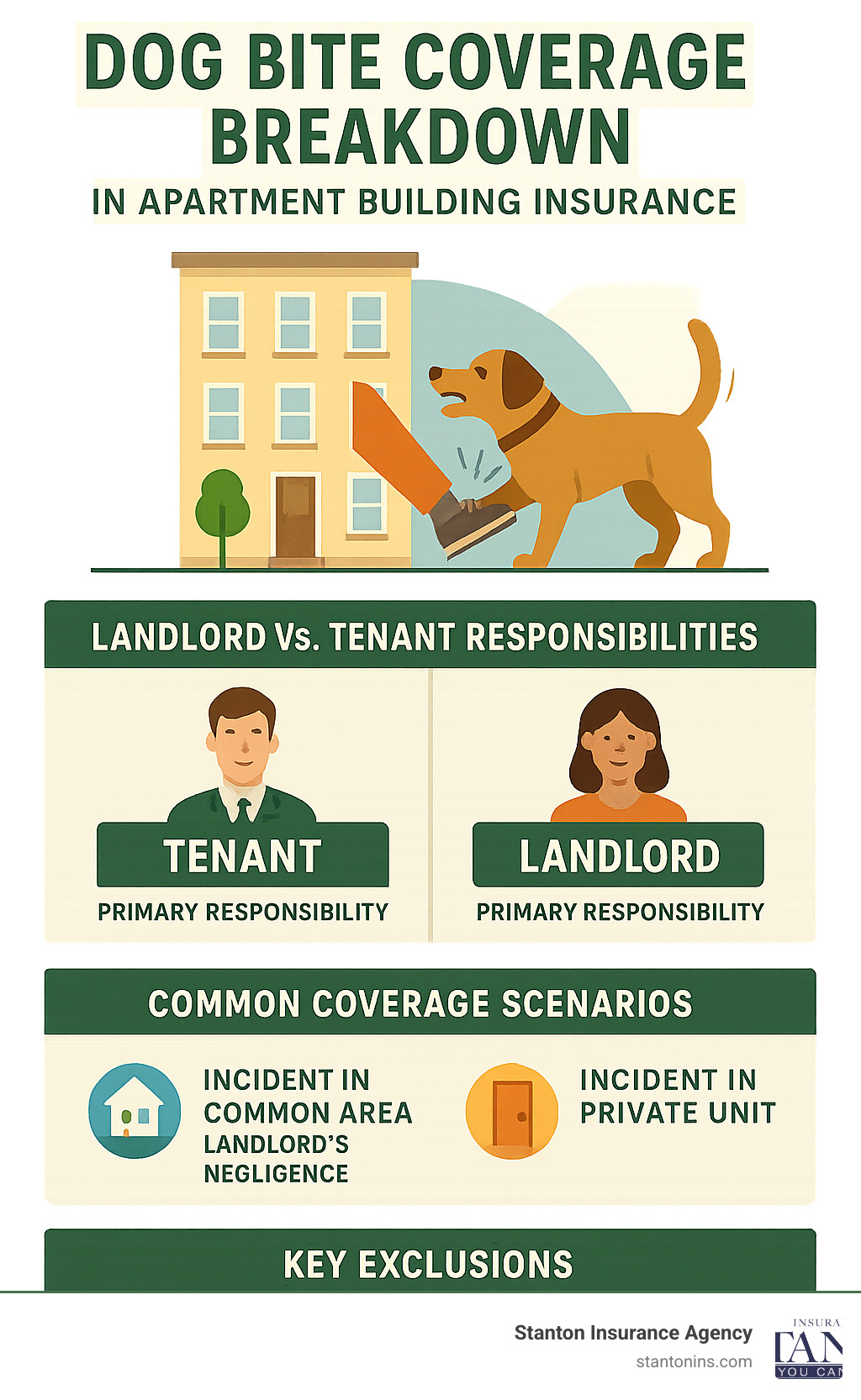
- General Liability Coverage: May cover dog bites in common areas if landlord negligence is involved
- Primary Responsibility: Usually falls on the tenant’s renters insurance, not the landlord’s policy
- Major Limitation: Many policies exclude certain “high-risk” dog breeds entirely
- Location Matters: Coverage depends on where the bite occurs (common area vs. private unit)
- Best Protection: Require tenants to carry renters insurance with pet liability coverage
The statistics paint a concerning picture. Liability claims related to dog bites and other dog-related injuries cost homeowners insurers over $1.1 billion in 2023, according to the Insurance Information Institute (Triple-I). The number of dog bite claims nationwide increased to 19,062 in 2023, and the average cost per claim rose to $64,555. These figures highlight the substantial financial risk involved. For apartment building owners, this represents a significant financial risk that requires careful planning and proper insurance coverage.
As Geoff Stanton, President of Stanton Insurance Agency, I’ve helped countless property owners steer the complex question of does apartment building insurance have dog bite coverage over my 25+ years in the industry. Understanding these coverage gaps and liability exposures is crucial for protecting your investment and avoiding costly surprises when claims arise.
The Landlord’s Shield: How Apartment Building Insurance Responds to Dog Bites
Picture this: You’re managing your apartment building when you get a call no landlord wants to receive. A dog bite incident just happened on your property, and someone’s heading to the emergency room. Your first thought? “Please tell me my insurance covers this.”
Here’s the reality: does apartment building insurance have dog bite coverage? The answer isn’t a simple yes or no. Your Apartment Building Insurance policy might step in to help, but coverage hinges on two crucial factors—where the bite occurred and whether you’re found negligent.
General Liability Insurance is your main defender here. This essential piece of your Commercial Property Insurance acts like a financial shield, protecting you when third parties get injured or their property gets damaged on your premises.
Think of it this way: if a dog bite happens in your lobby because a broken gate you forgot to fix allowed the animal to escape and attack someone, your general liability coverage will likely come to your rescue. It’s designed to handle exactly these kinds of “oops” moments that can turn expensive fast.
When your policy does respond to a dog bite claim, it typically covers three key areas: the victim’s medical bills (which can easily reach tens of thousands), your legal defense costs if you end up in court, and any settlements or judgments against you up to your policy limits. Without this coverage, you’d be paying these costs out of your own pocket—a financial nightmare that could threaten your entire investment.
What Landlords Need to Know: Does Apartment Building Insurance Have Dog Bite Protections?
While general liability insurance offers valuable protection, it’s not a magic wand that makes every dog bite claim disappear. Understanding its limitations could save you from some very unpleasant surprises.
Location makes all the difference. Your insurance primarily covers incidents in common areas where you have control and responsibility. If a tenant’s dog bites someone inside their locked apartment, your policy will likely stay on the sidelines. The reasoning is straightforward—that’s the tenant’s private space, not your responsibility zone.
Negligence is the key that open ups coverage. For your policy to respond, you typically need to be found legally at fault. Here in Massachusetts, we have what’s called a “strict liability” dog bite law, meaning dog owners are responsible for their pet’s actions even if Fido never showed aggression before. But here’s where it gets tricky for landlords: if you knew a tenant’s dog was dangerous and did nothing about it, you could still be held responsible.
Let’s say tenants repeatedly complain about an aggressive dog in 3B, but you ignore the complaints. If that dog eventually bites someone, you might find yourself sharing the legal hot seat with the pet owner. This is why having a solid pet policy and actually enforcing it isn’t just good management—it’s essential protection.
Breed exclusions are the biggest gotcha in apartment building insurance. Many insurers simply won’t cover incidents involving certain breeds they label as “high-risk.” We’re talking about Pit Bulls, Rottweilers, Doberman Pinschers, and German Shepherds—breeds that often end up on insurance company blacklists.
Here’s the harsh reality: if a bite involves an excluded breed, your insurer might deny the entire claim, leaving you personally responsible for potentially hundreds of thousands in damages. It’s not fair to the dogs (many are perfect angels), but insurance companies make decisions based on statistics and liability data, not individual pet personalities.
Some states are pushing back against breed discrimination—Michigan, for example, prohibits insurers from denying coverage based solely on dog breed. Unfortunately, Massachusetts doesn’t have these protections yet, so checking your specific policy’s breed restrictions isn’t just smart—it’s critical for avoiding nasty surprises when you need coverage most.
The Tenant’s Responsibility: Renters Insurance and Pet Liability
Here’s the reality that many tenants don’t realize: when it comes to does apartment building insurance have dog bite coverage for your pet, the answer is a clear no. Your landlord’s policy is designed to protect the landlord, not you or your furry friend.
The primary source of coverage for any incident involving a tenant’s dog is the tenant’s own Renters Insurance policy. This is exactly why savvy landlords now require their tenants to carry renters insurance. It’s not just about protecting your belongings from theft or fire—it’s about having that crucial liability protection when your dog decides to have a bad day.
A standard renters policy includes Personal Liability Insurance, and here’s what makes it so valuable: it follows you and your pets everywhere. Whether your dog bites someone inside your apartment, in the building’s lobby, or even at the local dog park, your renters liability coverage is designed to be the first line of defense.
This coverage typically handles legal expenses and medical costs for the injured party, up to your policy limits. Think of it this way—if your dog gets loose and injures a neighbor or damages their property, your liability coverage steps in to handle the financial fallout. Without it, you’re personally on the hook for potentially tens of thousands of dollars.
Most homeowners and renters insurance policies cover dog bite liability legal expenses up to the liability limits, which typically range from $100,000 to $300,000. This distinction is critical: the landlord’s policy protects the landlord’s interests, while your policy protects yours.

What Tenants Need to Know: Does Apartment Building Insurance Have Dog Bite Coverage for Me?
Let me be crystal clear about this: tenants should never assume their landlord’s insurance will cover incidents involving their pet. When someone asks “does apartment building insurance have dog bite coverage for my dog?” the answer is almost always no. You need your own protection.
When you’re securing Renters Insurance Quotes in Massachusetts or New Hampshire, being a dog owner requires some extra homework. Transparency is absolutely key—be upfront with your insurance agent about owning a dog, including its breed. Trying to hide this information will only hurt you if a claim arises.
You’ll want to verify that your policy includes liability coverage for pets and ask specifically about any breed exclusions. Many insurance companies maintain lists of breeds they consider high-risk, and these exclusions can leave you completely exposed. It’s better to know this upfront than to find it after an incident occurs.
Pay close attention to your liability limits too. Standard coverage often ranges between $100,000 and $300,000, but given that the average dog bite claim now exceeds $64,500—and severe cases can be much higher—you should consider the highest limit you can comfortably afford. We often recommend looking into umbrella policies for additional liability protection, especially if you have significant assets to protect.
If you find that standard policies exclude your dog’s breed, don’t panic. Specialized canine liability policies are available from insurers who focus on this niche. Yes, it’s an extra step and additional cost, but it’s far better than facing a lawsuit with no coverage at all.
The bottom line is simple: your landlord’s insurance protects the landlord. Your renters insurance protects you and your pet. Make sure you have the right coverage in place before you need it.
Proactive Protection: How Landlords Can Mitigate Dog Bite Risks
A reactive approach to dog bites is a recipe for financial disaster. As property owners, we’ve learned that preventing incidents is always more cost-effective than dealing with the aftermath. The best protection against does apartment building insurance have dog bite claims is creating an environment where incidents are far less likely to happen in the first place.
Smart landlords understand that risk management starts with the lease agreement. Crafting a strong pet policy isn’t just about setting rules—it’s about creating clear expectations that protect everyone. Your lease should include a detailed pet addendum that covers leash requirements in common areas, waste cleanup responsibilities, and designated pet areas. When tenants know exactly what’s expected, they’re much more likely to comply.

Enforcing breed and size restrictions is often a necessary step, even though it can be controversial. These restrictions aren’t arbitrary—they’re usually requirements from your insurance provider. Insurance companies often influence apartment breed restrictions by refusing coverage for properties that allow certain breeds on their “high-risk” lists. Banning these breeds is a direct way to maintain your coverage and keep premiums manageable. It’s not personal; it’s practical protection for your investment.
The most powerful tool in your risk management arsenal is mandating renters insurance. Require all tenants with pets to obtain and maintain a renters insurance policy with adequate liability limits—we typically recommend at least $100,000 to $300,000. Ask for proof of coverage when they sign the lease and at every renewal. This simple requirement ensures that the primary financial responsibility for a dog bite lies with the dog’s owner, where it belongs.
Understanding service animal laws is crucial for compliance and protection. Legitimate service animals are not considered pets and are exempt from breed and size restrictions under the Americans with Disabilities Act (ADA). You can ask for documentation verifying the animal’s status as a service animal. However, emotional support animals are treated differently under the Fair Housing Act. They require reasonable accommodation but don’t get the same blanket exemptions as service animals. When in doubt, consult with legal counsel to ensure you’re handling these situations properly.
Don’t overlook the basics of property maintenance. Promptly repair broken fences, gates, and doors in common areas to prevent animals from getting loose unexpectedly. A broken latch on a courtyard gate might seem minor, but it could allow a dog to escape and cause an incident. Regular inspections of common areas and keeping them well-maintained can significantly reduce your liability risks.
These proactive steps work together to create multiple layers of protection. When you combine a solid pet policy with proper insurance requirements and good property maintenance, you’re building a comprehensive defense against dog bite liability. It’s about being smart, not sorry.
When a Bite Happens: Financial and Legal Consequences
When a dog bite incident occurs on your property, the financial reality can be overwhelming for everyone involved. The numbers tell a sobering story: the average cost per claim nationally has more than doubled over the past decade. This dramatic increase stems from rising medical costs and larger settlements, judgments, and jury awards. Simply put, the stakes have never been higher.
Does apartment building insurance have dog bite coverage for these escalating costs? The answer depends heavily on who bears responsibility and whether adequate insurance coverage exists. When coverage falls short or gets denied entirely, both landlords and tenants face serious financial exposure.
For tenants who own the dog, the financial burden can be crushing. They’re typically responsible for the victim’s medical bills, lost wages, pain and suffering damages, and all legal fees. In states like Massachusetts and New Hampshire, dog owners face strict liability for injuries caused by their pets, regardless of the animal’s prior behavior. If a tenant lacks proper renters insurance coverage, they could face wage garnishment, asset seizure, and even bankruptcy. A single severe bite incident can financially devastate an unprepared dog owner.
Landlords face their own set of financial risks, even when they’re not the primary liable party. Legal defense costs alone can reach tens of thousands of dollars, even if you ultimately prevail in court. If you’re found negligent—perhaps you knew a dog was dangerous and failed to take action—you could be responsible for settlements that reach into the hundreds of thousands. The situation becomes even more dire if your claim gets denied due to a breed exclusion in your policy, leaving you to cover all costs out of pocket.
| Party | Potential Financial Responsibility |
|---|---|
| Tenant (Dog Owner) | Medical bills of the victim, lost wages, pain and suffering, legal fees. If uninsured, this could lead to wage garnishment, asset seizure, and bankruptcy. In states like Massachusetts and New Hampshire, for example, the dog owner is strictly liable for injuries caused by their dogs, regardless of prior behavior. |
| Landlord | Legal defense costs, settlements if found negligent, increased insurance premiums, policy non-renewal, and significant out-of-pocket costs if the claim is denied due to a breed exclusion. If we knew a dog was dangerous and failed to act, our liability increases. |
The long-term consequences extend far beyond the immediate claim costs. A single major liability claim can dramatically increase your Apartment Building Insurance Cost and flag your property as high-risk. Insurance companies may view your building as a liability magnet, making it difficult and expensive to secure coverage renewal.
In the worst-case scenario, your current insurer may choose not to renew your policy at all. This forces you into the specialty insurance market, where premiums can be two to three times higher than standard coverage. For property owners operating on thin margins, this increase alone can make a building unprofitable.
The ripple effects don’t stop there. Your property’s reputation may suffer, making it harder to attract quality tenants. You might need to implement stricter pet policies, potentially reducing your tenant pool and rental income. Some landlords find themselves having to sell properties they can no longer afford to insure adequately.
This is why we always emphasize prevention and proper insurance planning with our clients. The cost of comprehensive coverage and strict pet policies pales in comparison to the financial devastation a single uninsured dog bite can cause.
Frequently Asked Questions about Dog Bites and Apartment Insurance
When it comes to does apartment building insurance have dog bite coverage, property owners and tenants often have the same burning questions. Let’s address the most common concerns we hear at Stanton Insurance Agency.
Can a landlord be sued if a tenant’s dog bites someone?
Absolutely, and this reality keeps many property owners up at night. While the dog’s owner bears the primary responsibility, landlords can find themselves in legal hot water under certain circumstances.
The key factor is knowledge and action (or lack thereof). If you knew a tenant’s dog had shown aggressive behavior and you had the legal ability to require its removal but chose to ignore the situation, you could be held partially liable. This is exactly why we always stress the importance of documenting every complaint you receive about pets and taking swift action when problems arise.
For example, if multiple tenants report that a dog has lunged at them in the hallway, and you receive this information but don’t follow your lease terms to address the issue, you’re potentially opening yourself up to liability. It’s not just about being a good landlord—it’s about protecting your financial future.
Does a landlord’s insurance cover a dog bite that happens inside a tenant’s apartment?
This is where many property owners get a rude awakening. Generally, the answer is no. Your apartment building insurance is designed to protect you from incidents in common areas or situations where your negligence as a landlord contributed to the problem.
Think of it this way: if a dog bite happens entirely within a tenant’s private apartment—say, during a dinner party where a guest is bitten—that incident falls squarely on the tenant’s shoulders. The tenant’s renters insurance should be the first line of defense, not your policy.
This distinction is precisely why mandating renters insurance for all pet-owning tenants isn’t just smart business—it’s essential protection. When tenants understand they’re financially responsible for their pet’s actions, they tend to be more careful about training and supervision.
What is the difference between a service animal and an emotional support animal?
This question trips up even experienced landlords, but understanding the difference is crucial for both legal compliance and insurance considerations.
Service animals are the real deal under the Americans with Disabilities Act (ADA). These are typically dogs that have been individually trained to perform specific tasks for people with disabilities. Think guide dogs for the blind or seizure alert dogs. Service animals have broad legal protections and are exempt from your typical breed restrictions and pet policies.
Emotional support animals (ESAs), on the other hand, provide comfort simply by being present. They don’t require special training for specific tasks. While ESAs are granted reasonable accommodation in housing under the Fair Housing Act, you have more flexibility as a landlord. You can still require that the ESA be covered under the tenant’s insurance policy, and you may be able to deny the accommodation if the animal poses a direct threat to other residents.
The insurance implications matter too. Whether it’s a service animal or ESA, if an incident occurs, the same liability principles apply. The animal’s handler (your tenant) is typically responsible, but your does apartment building insurance have dog bite coverage could still come into play if your negligence contributed to the incident.
Understanding these distinctions helps you steer the delicate balance between following federal housing laws and protecting your property investment. When in doubt, consult with legal counsel—it’s far cheaper than dealing with a discrimination lawsuit or an uncovered dog bite claim.
Secure Your Investment with the Right Coverage
Understanding the nuances of dog bite liability is crucial for protecting your multifamily property. After 25+ years in the insurance industry, I’ve seen too many property owners find coverage gaps at the worst possible moment—when they’re facing a lawsuit.
The question does apartment building insurance have dog bite coverage isn’t one with a simple yes or no answer. It depends on your specific policy language, the circumstances of the incident, and whether your property allows breeds that insurers exclude. What I can tell you is that your Apartment Owner Insurance provides a critical layer of defense, but it works best as part of a comprehensive risk management strategy.
Your insurance is just one piece of the puzzle. The most effective protection combines proper coverage with strict pet policies and mandatory renters insurance requirements for all tenants with pets. This creates multiple layers of protection rather than leaving everything to chance.
Think of it this way: your apartment building insurance is like an umbrella—it covers you when it’s raining liability claims. But that umbrella has holes if you’re not careful about breed restrictions, if your tenants don’t have their own coverage, or if you haven’t documented your pet policies properly.
Don’t wait for an incident to find a gap in your coverage. The time to review your policy and strengthen your risk management approach is now, while you have options. A single dog bite claim can cost tens of thousands of dollars in medical bills, legal fees, and settlements. More importantly, it can make your property difficult and expensive to insure in the future.
We’ve helped countless Massachusetts and New Hampshire property owners steer these exact challenges. Every situation is unique, which is why we believe in taking the time to understand your specific property, tenant mix, and risk tolerance before making recommendations.
The experts at Stanton Insurance Agency can review your current policy, explain your exposures in plain English, and ensure your investment is protected. We’ll help you understand exactly what your coverage includes and what steps you can take to minimize your liability exposure. Contact us today to get a comprehensive quote for your Apartment Building Insurance.
Your peace of mind is worth the conversation.