
Why First-Time Renters Need Insurance Protection
First time renters insurance is an affordable policy that protects your belongings, covers your liability if someone gets hurt in your apartment, and pays for temporary housing if your rental becomes uninhabitable. Here’s what you need to know:
Quick Answer for First-Time Renters:
- What it costs: About $14/month on average
- What it covers: Your personal belongings, liability protection, and temporary living expenses
- What it doesn’t cover: The building structure (that’s your landlord’s responsibility), floods, or earthquakes
- Why you need it: Your landlord’s insurance doesn’t protect your stuff—only the building
- How to get it: Compare quotes, choose your coverage amount, and you can often be covered the same day
Moving into your first rental is exciting. You’re setting up your space, buying furniture, and making it your own. But here’s something many first-time renters don’t realize: if a fire breaks out or a pipe bursts, your landlord’s insurance won’t replace your laptop, TV, or furniture. That’s where renters insurance comes in.
Think of it this way—your landlord’s policy protects the building, but you need your own policy to protect everything inside it. As one insurance guide puts it, renters insurance is “a type of security blanket for your security blanket.” And at around the cost of a couple of coffees per month, it’s one of the smartest financial decisions a renter can make.
Many landlords now require tenants to carry renters insurance, and for good reason. It protects both you and them from financial disaster. Even if your landlord doesn’t require it, going without coverage means you’re gambling that nothing will go wrong—and if it does, you’ll be paying to replace everything out of pocket.
I’m Geoff Stanton, President of Stanton Insurance Agency, and I’ve helped countless first-time renters in Massachusetts and New Hampshire find the right coverage to protect their belongings and financial well-being. Understanding first time renters insurance doesn’t have to be complicated, and this guide will walk you through everything you need to know to make an informed decision.
What is Renters Insurance and Why Do You Need It?
Think of renters insurance (also known as an HO-4 policy) as a financial safety net for you and your belongings. It’s a common misconception that your landlord is responsible if your personal items are stolen or damaged in a fire. In reality, your landlord’s insurance policy only covers the building itself—the structure, the roof, the walls—not your personal property inside.
If a pipe bursts and ruins your laptop, or a kitchen fire destroys your furniture, you would be responsible for replacing everything out of your own pocket. With the number of renters in the U.S. growing, it’s more important than ever to understand this distinction. Recent housing trends show that the number of renters is growing significantly faster than the number of homeowners, making this protection increasingly relevant.
Even if your landlord doesn’t require it, getting a policy is one of the smartest financial decisions a renter can make. For a surprisingly low monthly cost, you protect your assets from unexpected disasters and accidents. In some cases, a landlord may legally require you to have a policy. For example, you may wonder, “can a landlord require renters insurance in massachusetts?” The answer is yes, they can include it as a term in your lease. While not legally mandated by the state of Massachusetts or New Hampshire, many landlords include this as a condition in their lease agreements to protect themselves from liability for tenant negligence.
Without first time renters insurance, you’re exposed to significant financial risk. Imagine losing everything you own in a fire—your clothes, furniture, electronics, sentimental items. Replacing all of that can cost thousands, if not tens of thousands, of dollars. Renters insurance provides the funds to help you get back on your feet without draining your savings. It’s a small monthly investment for immense peace of mind.
Decoding Your Policy: What’s Covered (and What’s Not)
A standard renters insurance coverage policy is built on three core types of protection. Understanding them is key to knowing how you’re protected.
The Three Pillars of Coverage
-
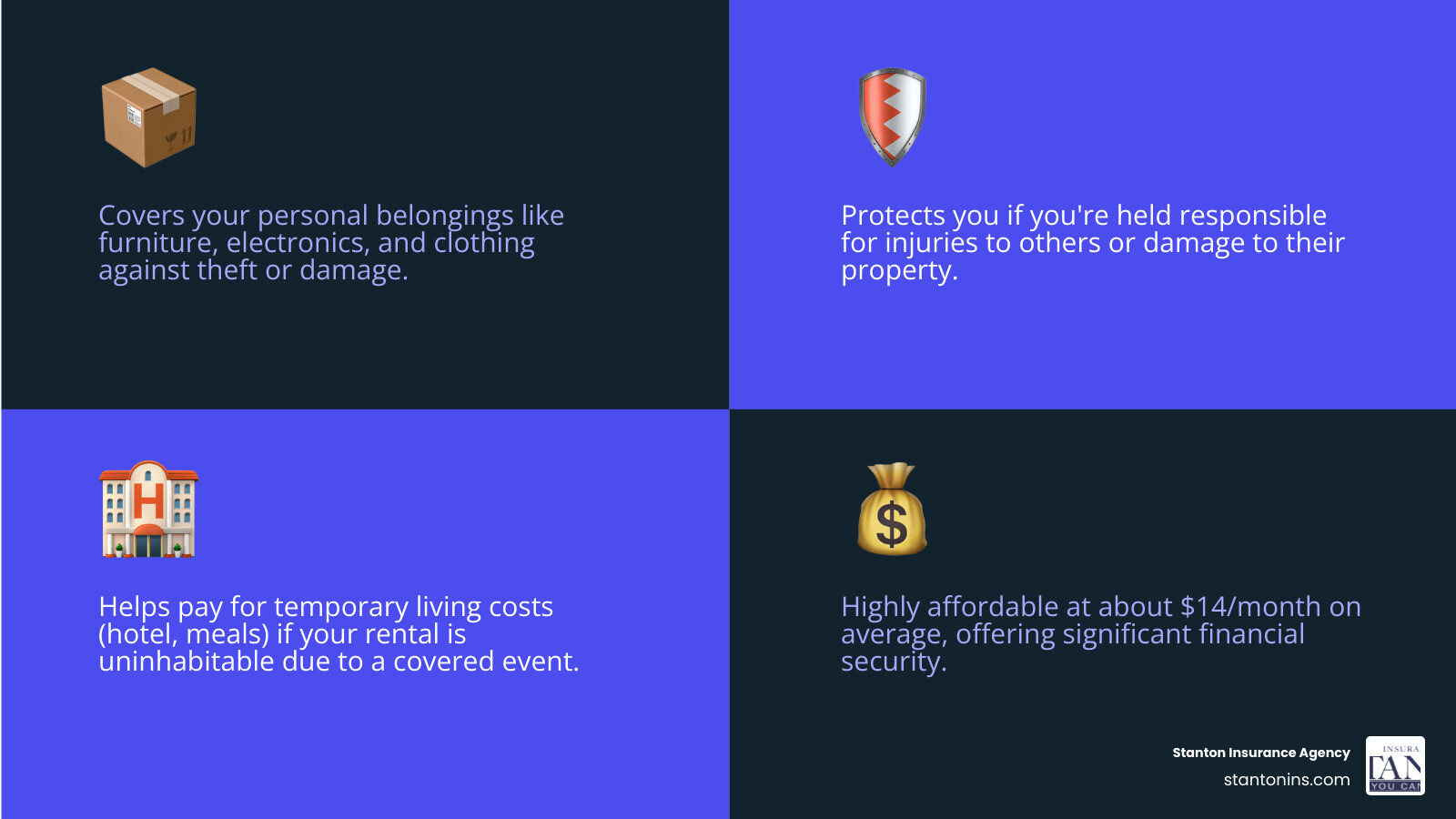
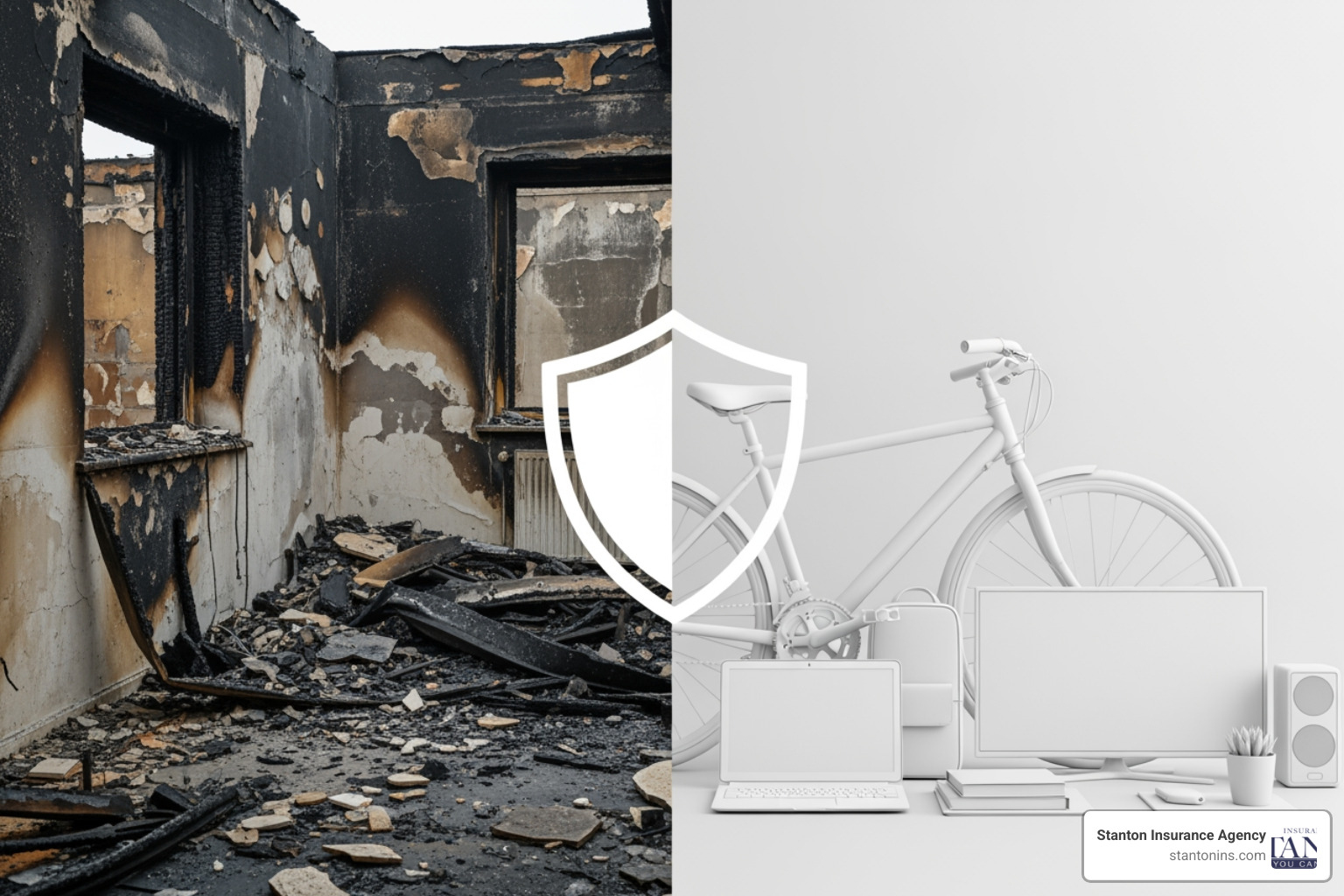
Personal Property Protection: This is the heart of renters insurance. It covers the cost to repair or replace your personal belongings if they are stolen or damaged by a covered event (like fire, theft, vandalism, or certain types of water damage). This includes everything from your furniture and electronics to your clothes and kitchenware. Your property is even typically covered when it’s outside your apartment, like if your bike is stolen from work (known as “off-premises coverage”). Most policies cover your belongings against common perils such as fire, smoke, lightning, windstorm, hail, explosion, theft, and vandalism.
-
Personal Liability Protection: Accidents happen. What is personal liability insurance for renters? It’s protection in case you are found responsible for injuring someone or damaging their property. For example, if a guest slips and falls in your apartment, or your overflowing bathtub damages the ceiling of the unit below you, liability coverage can help pay for their medical bills or repair costs, as well as your legal defense if you are sued. This can also extend to medical payments for guests injured on your property, regardless of fault, and even cover damage your pet causes to someone else’s property. We also offer specific guidance for pet owners with our apartment insurance dog bite guide.
-
Additional Living Expenses (ALE): If your apartment becomes uninhabitable due to a covered event like a fire, where would you go? ALE, or “loss of use” coverage, helps pay for the necessary increase in living costs. This can include hotel bills, temporary rent, and even restaurant meals while your home is being repaired. It covers the difference between your normal living expenses and the higher costs incurred due to displacement.
Common Exclusions to Be Aware Of
While renters insurance is broad, it doesn’t cover everything. Standard policies typically exclude damage from:
- Floods: Water damage from a burst pipe is usually covered, but damage from natural flooding is not. Separate flood insurance is available through the National Flood Insurance Program (NFIP) and some private insurers. You can often obtain this through the same agent who sold you your renters policy.
- Earthquakes: Similar to floods, damage from earthquakes requires a separate policy or an endorsement.
- Pest Infestations: Damage from rodents, bedbugs, or other pests is generally not covered.
- Your Roommate’s Property: Your policy only covers your belongings, not your roommate’s (more on that later).
- High-Value Items: Standard policies have limits on expensive items like jewelry, art, and collectibles. For instance, common limits for jewelry can be around $1,500. If your valuables exceed these limits, you may need to purchase an additional “floater” or “endorsement” to increase coverage for these specific items.
How Much First Time Renters Insurance Do You Really Need?
Determining your coverage needs is a critical step. You don’t want to pay for more than you need, but you also don’t want to be underinsured in a crisis.
Valuing Your Belongings: Creating a Home Inventory
The best way to figure out how much personal property coverage you need is to create a home inventory. It sounds daunting, but it’s simpler than you think.
- Go room by room and list your major possessions (furniture, electronics, appliances, clothing). Don’t forget items stored in closets, attics, or basements.
- Use your phone to take photos or a video of your belongings. This visual record is incredibly helpful.
- Note the approximate purchase date and cost for each item. For larger items, include serial numbers or model numbers if possible.
- Store this list and your photos in a secure digital location, like a cloud drive, away from your home.
This inventory will not only help you choose a coverage amount but will also be invaluable if you ever need to file a claim, speeding up the process significantly.
Choosing Your Coverage Type: Actual Cash Value vs. Replacement Cost
When you get a quote, you’ll be asked to choose between two types of personal property coverage. This choice significantly affects how much you’ll receive in a claim.
- Actual Cash Value (ACV): This coverage pays for the value of your item at the time it was damaged or stolen. It accounts for depreciation, so the three-year-old laptop you paid $1,200 for might only be valued at $400 today. ACV policies have lower premiums.
- Replacement Cost (RC): This coverage pays the full cost to replace your damaged item with a new, similar one, without deducting for depreciation. That same laptop would be replaced with a new, comparable model. RC policies cost slightly more (typically about 10% more) but provide much better protection, ensuring you can truly replace what you lost. For first time renters insurance accumulating new items, RC is often the recommended choice.
[TABLE]
| Feature | Actual Cash Value (ACV) | Replacement Cost (RC) |
|---|---|---|
| Payout | Pays for the item’s current, depreciated value. | Pays the cost to buy a new, similar item. |
| Premium Cost | Lower | Higher (typically about 10% more) |
| Example | A 5-year-old TV is destroyed; you get what a 5-year-old TV is worth. | A 5-year-old TV is destroyed; you get enough money to buy a new, comparable TV. |
| Best For | Renters on a very tight budget. | Renters who want to fully replace their items after a loss. |
Selecting Your Liability Limits
Standard renters policies often start with $100,000 in liability coverage. While this may seem like a lot, legal and medical bills can add up quickly. For instance, if a guest is seriously injured in your apartment, their medical expenses alone could easily exceed $100,000, not to mention potential legal fees. Many financial experts recommend at least $300,000 in coverage. Increasing your liability limit is usually very affordable and provides a significant boost in financial protection, safeguarding your assets in case of a major lawsuit.
The Price Tag: Understanding Costs, Deductibles, and Discounts
One of the best things about first time renters insurance is its affordability. According to the Insurance Information Institute, the average cost is about $14 per month, or $170 per year. That’s less than a few cups of coffee each month for protection worth thousands. This makes it an incredibly cost-effective way to protect your financial future, whether you’re looking for renters insurance quotes Massachusetts or NH renters insurance.
Several factors influence your final premium:
- Your Location: Rates can vary by ZIP code based on local risks like theft rates or the frequency of certain weather events.
- Coverage Amount: The more personal property and liability coverage you choose, the higher the premium will be.
- Deductible: This is the amount you pay out of pocket on a claim before your insurance kicks in. For example, if you have a $500 deductible and a $5,000 covered loss, you pay the first $500, and your insurer pays the remaining $4,500. A higher deductible (e.g., $1,000) will lower your premium, while a lower deductible (e.g., $500) will raise it. This is a key way to control your monthly cost.
- Claims History: A history of filing claims, even small ones, can sometimes increase your rate. Insurers view this as an indicator of higher future risk.
- Credit History: In many states, including Massachusetts and New Hampshire, your credit-based insurance score can influence your premium. A good credit history often leads to lower rates.
You can often find cheap renters insurance in Massachusetts or New Hampshire by taking advantage of common discounts:
- Bundling: Combining your renters and auto insurance policies with the same provider can lead to significant savings. Many insurers offer multi-policy discounts.
- Safety Devices: Installing protection devices like smoke detectors, fire extinguishers, deadbolt locks, or a monitored security system can earn you credits on your premium.
- Claims-Free: Maintaining a clean record without filing claims for a certain period can earn you a loyalty discount.
- Pay in Full: Paying your annual premium upfront, rather than in monthly installments, can sometimes save you money.
- Automatic Payments/Paperless Billing: Setting up automatic payments or opting for paperless billing can also lead to small discounts.
- Age: Some insurers offer discounts for those over a certain age, often 55 or older.
We always recommend you shop around for the best deal. Discounts may vary widely by insurance company and by state, so review your options carefully.
Navigating Your Policy: Roommates, Moves, Claims, and Cancellations
Once you have your policy, it’s important to know how to manage it through life’s changes.
Renting with Roommates: To Share or Not to Share?
While some companies allow roommates to share a policy, it’s usually recommended that each person gets their own. Sharing a policy means you also share the coverage limits. If you have $30,000 in personal property coverage and a fire destroys everyone’s belongings, that limit has to be split among all of you. Furthermore, a claim filed by one roommate goes on the policy record for everyone, potentially affecting future rates. Separate policies ensure everyone has adequate coverage for their own things and maintains their own claims history. This is particularly important for non-related roommates.
The Claims Process: A Step-by-Step Guide
Filing a claim doesn’t have to be stressful. If you experience a loss:
- Document the Damage: Take photos and videos of all damaged property. The more evidence you have, the better.
- File a Police Report: If the loss is due to a crime like theft or vandalism, contact the police immediately. Your insurer will need the report number for their records.
- Contact Your Insurer: Call your insurance agent or company as soon as possible. We are here to guide you through the process and provide you with the necessary claim forms. Do this promptly, as there are often time limits for filing claims.
- Provide Your Inventory: This is where your home inventory becomes a lifesaver. Provide the list to your adjuster to speed up the process of valuing your lost or damaged items.
- Keep Receipts: If you have to relocate due to a covered event, keep all receipts for hotel stays, meals, and any other additional expenses covered by ALE. Your policy will typically reimburse you for the difference between your normal living expenses and these increased costs.
Moving and Canceling Your Policy
Your renters insurance policy can move with you! Simply contact your agent before you move to update your address. Your premium may be adjusted based on your new location, as factors like local crime rates or weather risks can change. If you’re moving out of state (e.g., from Massachusetts to New Hampshire or vice versa), we’ll ensure your carrier offers coverage in your new location and adjust your policy accordingly.
If you decide to cancel, you can usually do so at any time. However, it’s crucial to have a new policy in place before your old one ends to avoid any gaps in coverage. We recommend discussing your plans with us to ensure a smooth transition and continuous protection.
Frequently Asked Questions About First Time Renters Insurance
Do I need renters insurance if my landlord doesn’t require it?
Yes, absolutely! While it might not be legally required by the state or mandated by your landlord, having first time renters insurance is a smart financial decision. Your landlord’s insurance covers the building, not your personal belongings. Without your own policy, you’d be responsible for replacing everything you own if a fire, theft, or other covered event occurred. Plus, it protects you from liability if someone gets injured in your home.
What is the difference between renters insurance and landlord insurance?
This is a critical distinction. Landlord insurance (also called dwelling fire insurance) protects the physical structure of the rental property itself—the building, its foundation, roof, and permanently attached fixtures. It also covers the landlord’s liability if someone is injured due to a maintenance issue on the property. However, it does not cover your personal belongings or your personal liability for incidents that happen in your unit. That’s where renters insurance steps in, exclusively protecting your possessions and personal liability.
Where can I buy renters insurance, and how do I choose the right company or agent?
You can buy renters insurance from various sources: directly from insurance companies online, through captive agents (who work for a single company), or through independent agents like us at Stanton Insurance Agency. We work with multiple carriers, allowing us to shop around for the best deal and find you the right coverage for your specific needs in Massachusetts or New Hampshire. When choosing, consider:
- Reputation: Look for companies with good customer service and claims handling. You can check online reviews and state insurance department complaint records to gauge customer satisfaction.
- Coverage Options: Ensure the company offers the types and amounts of coverage you need, including options for high-value items if applicable.
- Price: Compare quotes from several companies. Don’t just go for the cheapest, but weigh cost against coverage and service.
- Agent Support: An experienced agent can help you understand your policy, identify discounts, and assist with claims.
Does renters insurance cover dog bites?
In many cases, yes. The liability portion of your policy can cover injuries or property damage your pet causes to others. However, some policies exclude certain breeds or animals due to their perceived risk. It’s essential to be upfront with your insurer about any pets you have to ensure you have adequate coverage. For more details, check out this apartment insurance dog bite guide.
As a student living off-campus, am I covered by my parents’ insurance?
If you live in a dorm, you might have some coverage under your parents’ homeowners policy. However, once you move into an off-campus apartment or rental house, you are generally no longer covered and will need your own renters insurance policy. Policies can vary, so it’s always best to check with your parents’ insurance provider to be sure.
Can my landlord require renters insurance in Massachusetts?
Yes. While state law doesn’t mandate it, landlords in Massachusetts can legally require tenants to purchase and maintain renters insurance as a condition of the lease. This protects the landlord from liability claims related to the tenant’s negligence or property damage. Learn more about if an apartment renters insurance policy is required in Massachusetts. The same applies to renters in New Hampshire.
Your Next Step to Peace of Mind
Getting your first apartment is a huge accomplishment worth protecting. First time renters insurance is an affordable, powerful tool that shields your belongings and your financial future from the unexpected. By taking a little time to assess your needs and find the right policy, you can enjoy your new home with confidence.
The team at Stanton Insurance Agency is here to help you steer renters insurance and find a policy that fits your life and budget, whether you’re in Massachusetts or New Hampshire. We can answer your questions and provide you with a no-obligation quote to get you started.
Ready to get covered? Learn more about your options and get a personalized quote for renters insurance today. We’re committed to exceeding your expectations and providing trusted protection for your valuable assets.
