Premises liability insurance: 1 Crucial Protection
Why Property Owners Need to Understand Premises liability insurance
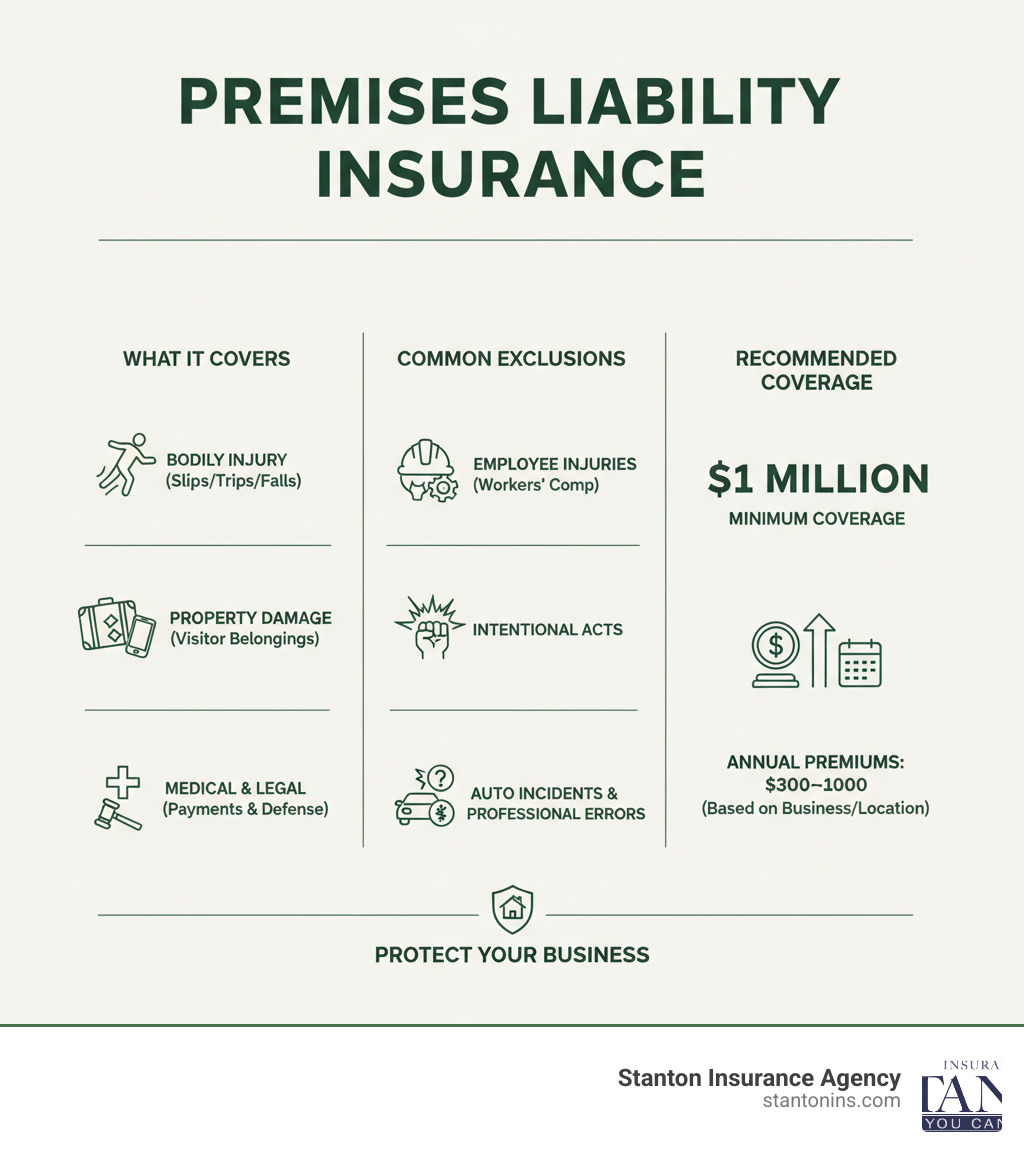
Premises liability insurance protects property and business owners from financial responsibility when someone is injured on their property due to unsafe conditions. Here’s what you need to know:
What It Covers:
- Slip, trip, and fall accidents
- Injuries from falling objects
- Inadequate security incidents
- Building defects and hazards
- Legal defense costs and settlements
Who Needs It:
- Retail stores and restaurants
- Office buildings
- Landlords and property managers
- Home-based businesses with client visits
- Any business with physical space accessible to others
Typical Costs:
- $1 million coverage: approximately $7/month (as part of overall policy)
- $2 million coverage: approximately $10/month
- Most experts recommend a minimum of $1 million in coverage
A customer tripping in your parking lot or slipping on a wet floor can lead to a financially devastating lawsuit. Yet, over a third of small business owners lack commercial insurance, underestimating the cost of a single claim. A serious injury can result in hundreds of thousands of dollars in medical bills, lost wages, and legal fees.
In Massachusetts and New Hampshire, property owners have a legal “duty of care” to maintain safe premises. If you fail, you can be held liable. Whether you own a retail store, manage an apartment building, or run a home-based business, this coverage is critical.
I’m Geoff Stanton, President of Stanton Insurance Agency in Waltham, Massachusetts. With over 25 years of experience, I’ve helped countless business owners in our community secure the right protection. This guide will walk you through what you need to know about premises liability insurance.
What is Premises Liability Insurance?
Imagine a customer slips on a wet floor in your shop. The result is a broken wrist and a claim against your business. This is where premises liability insurance becomes your financial lifeline.
Premises liability insurance protects property owners when someone is hurt on their property due to an unsafe condition. It’s a fundamental part of any Business Insurance Policy that you hope to never use but will be grateful to have if something goes wrong.
If you’re found legally responsible for an accident, this insurance covers the injured person’s medical expenses, your legal defense fees, and any court-awarded settlements. It’s based on your “duty of care”—the legal obligation to maintain a reasonably safe environment. Without it, you are personally responsible for the entire cost of a claim.
What Types of Incidents Does Premises Liability Cover?
This coverage applies to bodily injury or property damage to non-employees on your premises. (Your employees are covered by Workers’ Compensation). Common claims include:
- Slips, trips, and falls: Caused by wet floors, icy sidewalks, uneven carpets, poor lighting, or cluttered walkways. These are the most frequent claims we see in New England.
- Falling objects: Merchandise tumbling from a high shelf, a loose light fixture, or a tree branch falling on a visitor.
- Inadequate security: An assault or robbery occurring on your property due to poor lighting, broken locks, or insufficient security measures.
- Building or property defects: Injuries from broken stairs, loose handrails, crumbling sidewalks, or malfunctioning elevators.
- Dog bites: If a dog owned by your business bites a visitor on your property.
- Fires, floods, or toxic fumes: Injuries from hazardous conditions like smoke inhalation or carbon monoxide poisoning.
The High Cost of a Claim
The costs of a liability claim can be business-ending, often reaching hundreds of thousands of dollars for a serious injury. A plaintiff can seek compensatory damages for medical bills, lost wages, ongoing treatment, and pain and suffering. Without Commercial Insurance, you would face these costs out-of-pocket, potentially leading to bankruptcy. This is why robust premises liability insurance is not just a good idea—it’s essential for your business’s survival.
Understanding Your Legal Responsibility: Duty of Care
The concept of premises liability hinges on the “duty of care,” a legal principle requiring property owners to maintain a reasonably safe environment. The level of care you must provide depends on the visitor’s legal status, a key factor in any claim in Massachusetts and New Hampshire.

Visitor Status and Your Obligations
There are three main categories of visitors:
-
Invitees: Individuals on your property for your commercial benefit, like customers or clients. You owe them the highest duty of care, which includes regularly inspecting for hazards, making repairs, and warning of dangers.
-
Licensees: People on your property with permission but for their own purposes, such as social guests. You must warn them of known dangers but are not required to inspect for unknown hazards.
-
Trespassers: Individuals who enter without permission. Generally, you owe no duty to adult trespassers other than to not intentionally harm them. However, there is a major exception for children.
What is an ‘Attractive Nuisance’?
The “attractive nuisance” doctrine applies to things on your property that are likely to attract children, such as a swimming pool, trampoline, or construction site. If a child is too young to appreciate the danger and gets injured—even while trespassing—you can be held liable. Property owners have a duty to take reasonable steps, like installing a fence, to protect children from these hazards.
Premises Liability Insurance vs. Other Policies
It’s easy to confuse premises liability insurance with other types of Business Liability Insurance. Understanding the differences is key to avoiding coverage gaps.
Think of General Liability Insurance as a large protective umbrella. Premises liability is a crucial part of that umbrella, focusing specifically on injuries that happen on your physical property. A standard General Commercial Insurance policy automatically includes premises liability coverage, but it also covers much more.
For example, General Liability also includes:
- Products-Completed Operations: Protects you if a product you sell or work you complete causes an injury later on, away from your premises.
- Personal and Advertising Injury: Covers claims of libel, slander, or copyright infringement in your marketing.
Most businesses don’t buy premises liability insurance as a standalone policy; it’s included in a General Liability policy or a Business Owner’s Policy (BOP). The key is ensuring your policy limits are high enough for your specific risks.
What is the difference between premises liability and general liability insurance?
The simplest way to think about it is that premises liability insurance is a component of general liability insurance, not a separate policy you need to buy. Your General Liability policy provides broad protection for your business operations, which includes incidents on your property (premises liability) as well as incidents that happen off-site or relate to your products and advertising.
Common Exclusions from Coverage
Premises liability insurance doesn’t cover everything. Knowing the exclusions is vital for ensuring you’re fully protected. Common exclusions include:
- Employee injuries: Covered by a separate Workers’ Compensation policy.
- Intentional acts: Insurance is for accidents, not deliberate harm.
- Damage to your own property: Covered by Commercial Property Insurance.
- Auto-related incidents: Covered by Commercial Auto Insurance, even if they happen in your parking lot.
- Professional errors: Mistakes in professional services or advice are covered by Professional Liability (E&O) insurance.
- Contractual liability: Liability you assume in a contract may require a special endorsement.
- Pollution: Environmental contamination typically requires a specialized policy.
Who Needs Coverage and How Much?
If you own or lease a physical space accessible to others, you need premises liability insurance. This applies to nearly all businesses and property owners, including:
- Retail Stores and Restaurants
- Office Buildings
- Apartment Building and Condo Owners
- Medical and Dental Offices
- Warehouses and Manufacturing Plants
- Home-based businesses that clients visit
How does premises liability insurance apply to rented commercial spaces?
If you rent your commercial space, you are still responsible. Your lease typically makes you liable for the safety of the area you occupy, while the landlord is responsible for common areas like lobbies and parking lots. However, a lawsuit will likely name both you and the landlord, so both parties need their own premises liability insurance. As a tenant, you should get a Liability Insurance Quote for your specific space. Renters can also explore Personal Liability Insurance for Renters for their homes.
How Much Does Premises Liability Insurance Typically Cost?
The cost varies based on your business type, property size and location, claims history, and chosen coverage limits. A high-traffic retail store will pay more than a quiet office.
While costs differ, the protection is invaluable. Most experts recommend a minimum limit of $1 million. Increasing your limit from $1 million to $2 million might only add a few dollars per month to your premium but provides double the protection. Given that a severe claim can easily exceed $1 million, this is often a wise investment.

How to Mitigate Premises Liability Risks
The best claim is one that never happens. A proactive risk management program protects your visitors and your bottom line. While premises liability insurance is your safety net, preventing accidents should always be the primary goal.
Key steps to mitigate risks include:
- Regular inspections: Routinely walk your property to spot hazards like spills, clutter, or poor lighting. Keep a written log to document your diligence.
- Proper maintenance: Promptly fix broken steps, loose handrails, or uneven surfaces. In Massachusetts and New Hampshire, this includes diligent snow and ice management on walkways and parking lots.
- Adequate lighting: Ensure all areas, including parking lots, entrances, and stairwells, are well-lit to prevent falls and deter crime.
- Warning signs: Use “Wet Floor” signs, caution cones, and barriers for temporary hazards that can’t be fixed immediately.
- Documentation: Keep detailed records of inspections, maintenance, repairs, and any incidents. This paperwork is crucial evidence if a claim is filed.
- Employee training: Train your staff to recognize and respond to safety issues, from cleaning spills to reporting hazards.
- Security measures: Consider cameras, alarms, or security personnel where appropriate. Secure any “attractive nuisances” like pools to protect children.
Frequently Asked Questions about Premises Liability Insurance
At Stanton Insurance Agency, we answer questions about premises liability insurance every day. Here are answers to the most common ones.
What should I do if someone is injured on my property?
First, ensure the injured person gets medical attention; call 911 if necessary. Do not admit fault. Document the scene with photos, gather witness contact information, and write down a detailed account of the incident. Then, contact your insurance agent immediately to report the claim.
Is premises liability insurance the same as property insurance?
No. Premises liability insurance covers injuries to other people on your property. Commercial Property Insurance, on the other hand, covers damage to your own assets, like your building or inventory. You need both for complete protection.
Does my home insurance cover my home-based business?
Almost never. A standard Homeowners Insurance policy excludes business-related liability. If clients visit your home for business, you need a separate business policy or a specific endorsement to your home policy. This coverage is often very affordable.
What happens if a claim exceeds my policy limit?
If a judgment against you exceeds your policy limit, you are personally responsible for paying the difference. This could put your business and personal assets at risk. This is why it’s crucial to select adequate coverage limits. For greater protection, consider an umbrella liability policy, which provides an extra layer of coverage above your primary limits.
Secure Your Business with the Right Protection
A single accident on your property can have severe financial consequences, but premises liability insurance provides an affordable and essential safeguard. By understanding your legal duties, maintaining a safe environment, and securing the right coverage, you can operate with confidence.
You’ve worked hard to build your business. Don’t risk it all over a preventable accident. The cost of adequate coverage is a small price to pay for peace of mind and financial security.
An experienced Independent Insurance Agent can help you assess your unique risks in Massachusetts and New Hampshire and find a policy that fits your needs and budget.
The team at Stanton Insurance Agency is here to help you protect what matters most. We take the time to understand your business and find the right protection. To learn more, explore our Business Insurance solutions or contact us today for a personalized quote. Let’s work together to protect what you’ve built.