
Personal liability coverage: Top 3 Essential Tips
Why Personal Liability Coverage Matters for Every Homeowner and Renter
Personal liability coverage is a critical part of your homeowners or renters insurance that protects you financially if you’re found legally responsible for someone else’s injury or property damage. Here’s a quick overview:
- What it covers: Legal fees, medical bills, property damage, and settlements if you’re found liable.
- Standard coverage limits: Typically $100,000 to $500,000.
- Where it applies: On your property and often away from home.
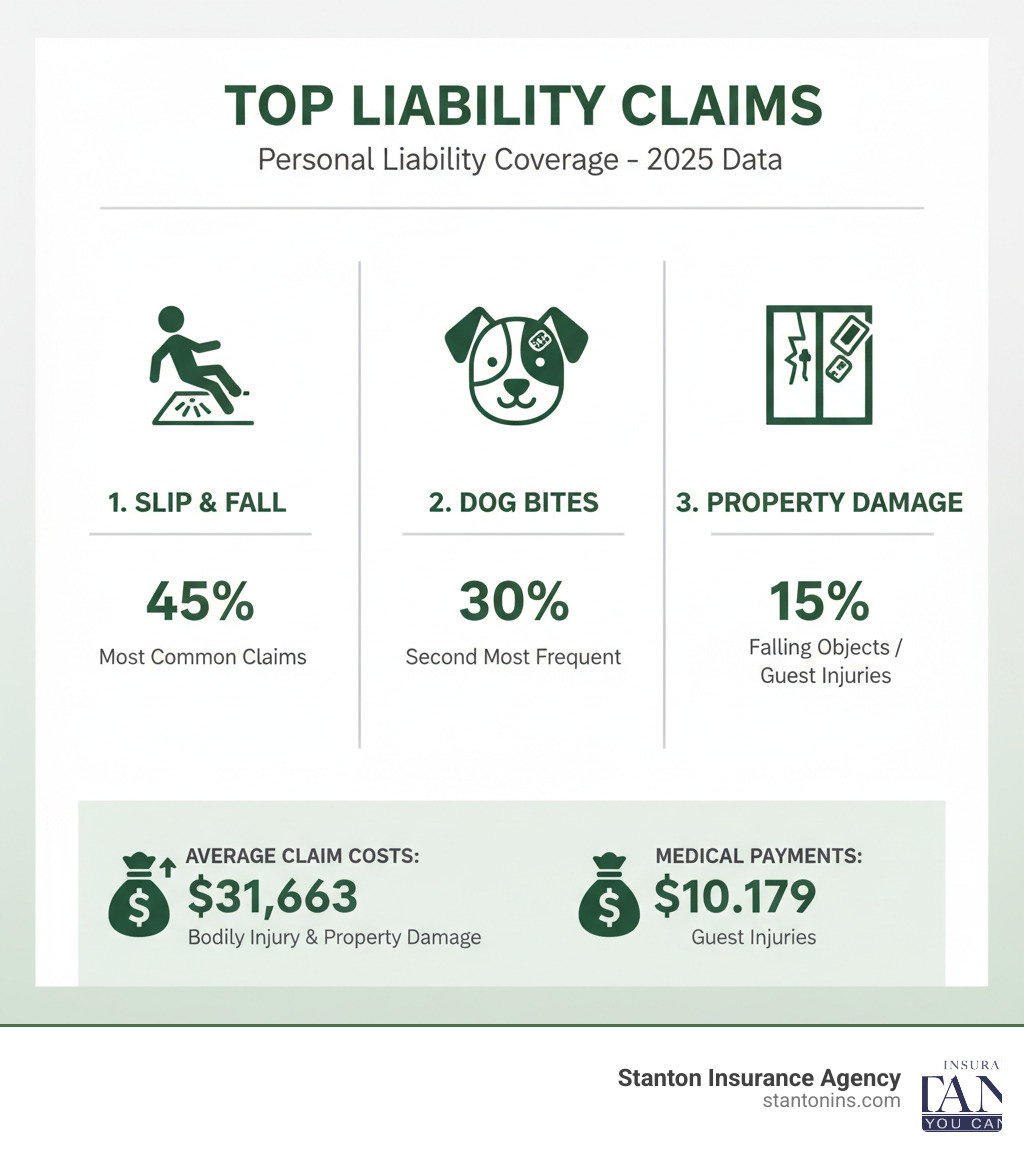
- Average claim cost: $31,663 for bodily injury or property damage (2017-2021 data).
- Common claims: Guest slip-and-falls, dog bites, and damage caused by children.
Accidents are unpredictable. A guest slips on your icy walkway, your child’s baseball breaks a neighbor’s window, or your dog bites a visitor. Without adequate personal liability coverage, you could face devastating financial consequences.
The stakes are high. If someone is injured on your property and sues for $250,000, but you only have $100,000 in coverage, you’re personally responsible for the remaining $150,000. Understanding your options is essential to protect everything you’ve built.
I’m Geoff Stanton, President of Stanton Insurance Agency in Waltham, Massachusetts. For over two decades, I’ve helped families in Massachusetts and New Hampshire make smart Personal liability coverage decisions. In this guide, I’ll explain what you need to know to protect your assets and gain peace of mind.
What Is Personal Liability Insurance and Why Is It Essential?
Think of personal liability coverage as your financial safety net. It’s the part of your homeowners or renters insurance that steps in when you’re legally responsible for injuring someone else or damaging their property. This third-party protection handles the financial fallout, so you don’t have to drain your savings to cover a lawsuit.
The numbers tell a sobering story. Between 2017 and 2021, the average liability claim for bodily injury or property damage was $31,663. For most families in Massachusetts and New Hampshire, that’s a significant expense. Understanding What is Personal Liability in Home Insurance? is essential for protecting what you’ve worked so hard to build.
Common Scenarios Where Coverage Applies
Accidents can happen in ordinary moments, which is when personal liability coverage is most valuable.

- Guest injuries from slip and fall accidents: These are the most common claims. A mail carrier slipping on your icy steps in Massachusetts or a guest tripping over a rug in your New Hampshire home can lead to a claim.
- Damage caused by children: If your son’s baseball breaks a neighbor’s window or your daughter knocks over an expensive vase at a friend’s house, your policy can help cover the repair costs.
- Dog bites: If your dog bites a visitor, you could face medical bills and legal action. It’s crucial to know your policy’s stance on pet-related incidents, as some exclude certain breeds.
- Damage you cause away from home: This protection often travels with you. If you accidentally break an expensive item in a store or damage property while helping a friend move, your coverage may apply.
What Personal Liability Insurance Typically Covers
When you’re found legally responsible for an accident, personal liability insurance acts as your financial shield, covering a range of costs:
- Legal defense costs: Attorney fees and court costs are covered, regardless of the lawsuit’s outcome.
- Court-awarded damages: Judgments against you for the injured party’s medical bills, property repairs, and other losses are covered up to your policy limit.
- Medical bills for others: This ensures someone injured due to your actions gets necessary treatment without you paying out-of-pocket.
- Lost wages for the injured party: If someone can’t work due to an injury you caused, your policy can cover their lost income during recovery.
- Pain and suffering settlements: Coverage extends to non-economic damages for emotional distress and reduced quality of life.
- Death benefits: In the tragic event of a death, your policy can help cover funeral expenses for the grieving family.
For a deeper dive, More info about personal liability can provide additional insights. We want you to have the full picture so you can feel secure.
Understanding Your Personal Liability Coverage Limits and Exclusions
Your personal liability coverage comes with a limit—the maximum amount your insurer will pay for a covered claim. Most homeowners and renters policies start with $100,000 in coverage, with options to increase to $300,000 or $500,000.
This limit is critical. If you face a $250,000 lawsuit but only have $100,000 in coverage, you are personally responsible for the remaining $150,000. This could come from your savings, retirement accounts, or the sale of your home. Your risk exposure increases if you have features like a swimming pool, a trampoline, or certain dog breeds, which could lead to claims exceeding standard limits.

What Is Typically Excluded from Personal Liability Coverage?
Knowing what your policy doesn’t cover is just as important as knowing what it does. Common exclusions include:
- Intentional acts: Insurance covers accidents, not deliberate harm or property damage.
- Business-related claims: If you run a home-based business, you need a separate business liability policy for client injuries or related incidents.
- Auto accidents: These are covered by your auto insurance policy, not your home or renters policy.
- Injuries to you or household members: This is third-party coverage. Your own health insurance would cover injuries to yourself or family members.
- Damage to your own property: Liability covers damage to others’ property. Damage to your own home or belongings falls under other parts of your policy.
- Certain dog breeds: Some insurers exclude breeds they deem higher risk or any dog with a bite history. Be upfront with your insurer about pets. For more on this, renters can read What is Personal Liability Insurance for Renters?.
What Is the Difference Between Personal Liability and Personal Injury?
Though they sound similar, these coverages protect against different types of harm.
Personal liability coverage is standard in homeowners policies and covers bodily injury (like a guest falling) and property damage (like breaking a neighbor’s window).
Personal injury coverage is an optional add-on that covers non-physical harm. This includes claims of:
- Slander (spoken defamation)
- Libel (written defamation)
- False arrest
- Invasion of privacy
- Wrongful eviction
So, a dog bite falls under personal liability. A lawsuit over a damaging social media post would require a personal injury endorsement. At Stanton Insurance Agency, we can help clarify which coverages are right for you.
How Much Personal Liability Coverage Do You Really Need?
This is one of the most important questions you can ask. While the answer is unique to your situation, a good rule of thumb is to ensure your personal liability coverage at least matches your total net worth.

Your net worth is your assets (home, savings, investments) minus your liabilities (mortgage, loans). If a lawsuit judgment exceeds your coverage, a court can go after your personal assets to pay the difference. Inadequate coverage can lead to selling your home, draining retirement accounts, or wage garnishment.
To determine how much protection you need, consider:
- Your Assets: If you own a $400,000 home in Massachusetts and have $200,000 in savings, you have $600,000 in assets at risk. A standard $100,000 policy is not enough.
- Future Earnings: Even without significant assets, a large judgment can lead to wage garnishment for years, impacting your financial future.
- Lifestyle Risks: Do you have a swimming pool, trampoline, or a dog? Do you host frequent parties? These factors increase your liability risk and your need for higher coverage.
- Children: Your children’s activities, from backyard sports to bicycle mishaps, can lead to accidents for which you are legally responsible.
Factors That Influence the Cost of Your Policy
The cost of personal liability coverage is built into your homeowners or renters premium and is influenced by several factors:
- Coverage Limit: Increasing your limit from $100,000 to $500,000 will raise your premium, but the increase is often surprisingly affordable.
- Deductible: A higher deductible on your policy can lower your overall premium.
- Claims History: A history of liability claims can increase your premium.
- Property Risks: Pools, trampolines, and certain dog breeds are seen as higher risk and can affect your rate.
- Credit Score: In both Massachusetts and New Hampshire, a credit-based insurance score can be one of the factors used to determine your premium, though state regulations place limits on how it is applied.
- Location: Local lawsuit rates and other regional factors can impact insurance costs.
To see what your coverage would cost, request a Liability Insurance Quote from our team.
How to Increase Your Personal Liability Coverage
If you realize your current coverage is insufficient, you have a few options:
- Request higher limits on your existing homeowners or renters policy, often up to $500,000 or more.
- Bundle your policies (home and auto) with one insurer to earn discounts that can offset the cost of higher limits.
- Purchase umbrella insurance for the most comprehensive protection. This separate policy provides at least $1 million in additional liability coverage over your existing policies.
At Stanton Insurance Agency, we specialize in Personal Insurance solutions and can help you find the right fit.
How Personal Liability Works with Other Insurance Policies
Your personal liability coverage is part of a layered safety system that works with your other insurance policies. Your homeowners or renters policy provides the primary layer of liability protection, typically from $100,000 to $500,000. Your auto policy’s liability component covers you specifically for car accidents.
Umbrella insurance acts as the final safety net, providing an additional layer of protection that kicks in when a claim exceeds your home or auto policy limits. For example, if a $2 million lawsuit exhausts your $500,000 homeowners limit, your umbrella policy would cover the remaining $1.5 million. This layered approach ensures you’re protected from multiple angles. Massachusetts residents can learn more at Understanding Home Insurance | Mass.gov.
Personal Liability vs. Umbrella Insurance: What’s the Difference?
While both protect against liability claims, they serve different functions. Your standard personal liability coverage is your primary protection, included in your home or renters policy. Umbrella insurance is a separate, secondary policy that provides much higher limits and broader coverage.
| Feature | Personal Liability Coverage | Umbrella Insurance |
|---|---|---|
| Coverage Limits | $100,000 – $500,000 | $1,000,000 – $10,000,000+ |
| Scope of Coverage | Bodily injury and property damage | Bodily injury, property damage, plus libel, slander, false arrest, invasion of privacy |
| Cost | Included in home/renters premium | Separate, affordable premium |
| Underlying Policy Requirements | None beyond your home/renters policy | Requires minimum liability limits on home and auto policies |
To buy an umbrella policy, you typically need to have at least $250,000 to $500,000 in liability coverage on your home and auto policies. The good news is that $1 million in umbrella coverage is often very affordable. For more details, see Personal Umbrella and Excess Liability Insurance – Mass.gov.
The Consequences of Being Underinsured
Imagine a guest suffers a serious injury on your property and sues for $1 million. If your personal liability coverage is only $300,000, you are personally responsible for the $700,000 difference.
This isn’t just a hypothetical scenario. When you’re underinsured, the consequences are severe: depleting your savings, liquidating assets like your home or retirement funds, wage garnishment, and even bankruptcy. The relatively small cost of increasing your coverage or adding an umbrella policy is insignificant compared to the financial devastation of being underinsured.
Frequently Asked Questions about Personal Liability Coverage
Clients in Massachusetts and New Hampshire often ask the same important questions about personal liability coverage. Here are the answers you need to know.
Does personal liability insurance cover dog bites?
Yes, personal liability coverage typically covers dog bites, including medical expenses for the injured person and your legal defense costs. However, some policies exclude certain breeds considered higher risk (like Pit Bulls or Rottweilers) or any dog with a documented history of aggression. It is crucial to be transparent with your insurer about any pets you own to ensure you are covered.
Is personal liability insurance necessary for renters?
Absolutely. Many renters mistakenly believe they don’t need this protection because they don’t own the building. If a guest is injured in your apartment, or if your overflowing bathtub damages the unit below, you could be held liable for thousands in damages. Many landlords now require tenants to carry renters insurance with liability coverage. For more information, see What is Personal Liability Insurance for Renters?.
Are my family members and roommates covered by my policy?
Your personal liability coverage generally extends to relatives who live with you, such as your spouse and children. However, roommates who are not related to you are typically not covered. Each unrelated person in the household should have their own renters insurance policy to be properly protected. Always review your policy’s specific terms to confirm who is considered an “insured” person.
Secure Your Financial Future with the Right Coverage
If there’s one key takeaway from this guide, it’s that personal liability coverage is not just another policy detail—it’s your financial safety net in an unpredictable world.
Accidents happen. An icy walkway, an excited dog, or a stray baseball can lead to expensive legal issues without the right protection. Protecting your assets isn’t about pessimism; it’s about smart planning. It ensures that the home, savings, and future you’ve worked hard to build aren’t wiped out by one unfortunate event. With the average liability claim over $31,000, the question isn’t whether you can afford adequate coverage—it’s whether you can afford not to have it.
At Stanton Insurance Agency, we’ve helped families across Massachusetts and New Hampshire steer these decisions for over 20 years. Our approach is simple: we listen to your concerns and provide expert guidance to create custom-fit policies that protect what matters most.
You’ve taken an important step by educating yourself. Now, let’s take the next one together. Get a comprehensive home insurance quote today and find how affordable true peace of mind can be. Our team is ready to help you build an insurance plan that lets you sleep soundly at night. Your financial future is too important to leave to chance.
