
Landlord Kitchen Appliance Cover: Top 2025 Protection
Why Landlord Kitchen Appliance Cover Matters
Landlord kitchen appliance cover is specialized insurance or warranty protection that covers repair and replacement costs for kitchen appliances in rental properties when they break down due to mechanical failure or normal wear and tear.
Quick Coverage Overview:
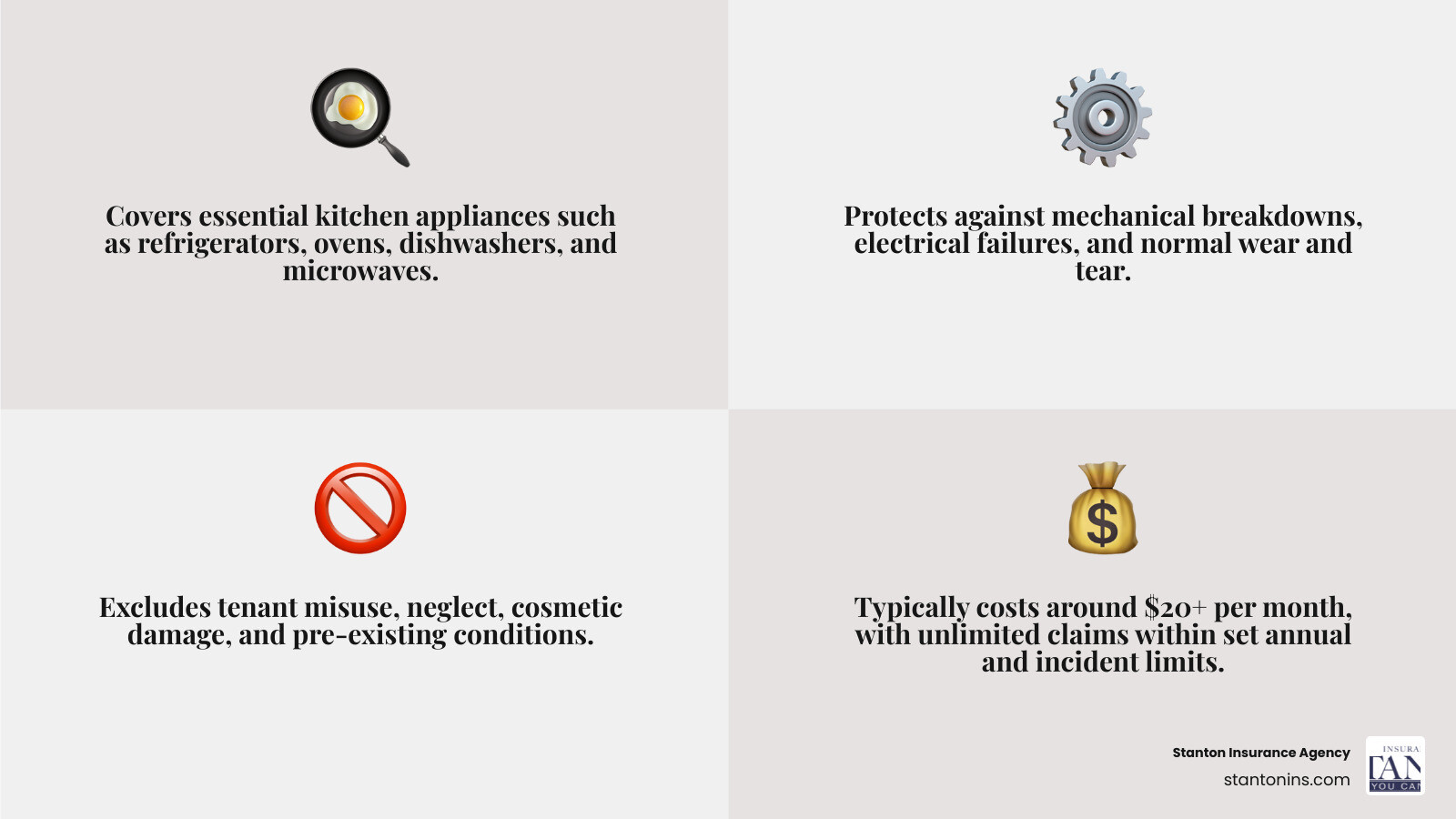
- What it covers: Refrigerators, ovens, dishwashers, microwaves, garbage disposals
- What it protects against: Mechanical breakdowns, electrical failures, wear-and-tear-related breakdowns (for warranty/service plans)
- What it excludes: Tenant damage/misuse, neglect, cosmetic issues, pre-existing problems, improper installation
- Cost: Typically starts around $20–$40 per month per unit, depending on coverage level and appliance age; pricing varies in MA/NH based on provider and limits
- Claims: Multiple service calls allowed, subject to per-incident and annual limits
As one landlord in a recent forum discussion put it: “I really don’t like being in the appliance business. What I mean by that is that providing appliances for tenants is expensive and time consuming.” This sentiment captures a common frustration among property owners who find themselves constantly dealing with broken refrigerators, faulty dishwashers, and malfunctioning ovens.
When you rent out a property with kitchen appliances, you’re essentially running two businesses – real estate and appliance maintenance. Research shows that landlord insurance policies cost about 25% more than standard homeowner policies, but they can save thousands when things go wrong. A typical 2-bedroom rental in Massachusetts or New Hampshire might bring in $2,500 monthly—or much more in metro Boston—so if repairs make a unit unlivable for three months, that’s $7,500 in lost income, not including the actual repair costs.
Your standard homeowner’s insurance won’t cover rental properties, and while it may protect appliances from specific perils like fire or theft, it typically excludes mechanical breakdowns that happen during normal use. This leaves a significant gap in protection that specialized appliance coverage is designed to fill.
I’m Geoff Stanton, President of Stanton Insurance, and I’ve helped countless landlords steer the complexities of protecting their rental property investments, including finding the right landlord kitchen appliance cover solutions. With over two decades in the insurance industry, I understand how unexpected appliance failures can impact both your budget and tenant relationships.
Understanding Your Appliance Coverage Options
When that refrigerator starts making strange noises at 2 AM or the dishwasher suddenly stops mid-cycle, guess who gets the panicked call? That’s right – you, the landlord. The responsibility for fixing or replacing broken appliances in your rental property typically falls squarely on your shoulders. This isn’t just common courtesy; it’s usually a legal requirement. In Massachusetts, the State Sanitary Code requires landlords to maintain properties “in a good state of repair and fit for habitation.” Similarly, New Hampshire law (RSA 48-A:14) mandates that landlords ensure their properties meet minimum housing standards, which includes functional appliances if they are provided.
But here’s the thing – how you handle these inevitable repair costs can make or break your rental business budget. Your regular Homeowners Insurance policy? It’s not going to help you here. These policies are designed for owner-occupied homes, not rental properties, and will likely deny any claim related to a tenant-occupied unit faster than you can say “broken garbage disposal.”
Landlord Insurance vs. Tenant Insurance vs. Appliance Cover
Let’s clear up some confusion that trips up even experienced property owners. There are three distinct types of insurance floating around rental properties, and mixing them up can leave you with costly gaps in coverage.
Landlord insurance (sometimes called dwelling fire insurance) is your foundation policy. It’s specifically designed for rental properties and covers the building structure, your liability as a property owner, and loss of rental income if the property becomes uninhabitable. Think of it as your safety net for the big stuff – fires, storms, and liability lawsuits. However, when it comes to appliances, landlord insurance only steps in for dramatic events like fires or theft, not the everyday mechanical breakdowns that actually happen most often.
Tenant insurance protects your renters, not you. While it’s smart to require tenants to carry this coverage, it only protects their personal belongings and covers their liability for accidental damage they might cause. Your tenant’s policy won’t pay a dime toward fixing your broken oven or replacing your old refrigerator.
Landlord kitchen appliance cover fills the gap that standard policies leave wide open. This specialized coverage is designed specifically for those frustrating mechanical failures that happen during normal use – the kind that can cost hundreds or thousands of dollars and leave your tenants without essential kitchen functions.
| Feature | Landlord Insurance | Renters Insurance | Landlord Appliance Cover |
|---|---|---|---|
| Who it Protects | The property owner (landlord) | The occupant (tenant) | The property owner (landlord) |
| Primary Coverage | Dwelling, liability, loss of rent | Tenant’s personal belongings, personal liability | Repair/replacement of landlord-owned appliances |
| Covers Appliances? | Only for specific perils (e.g., fire, theft), not mechanical breakdown. | No, does not cover landlord’s appliances. | Yes, for mechanical failure and breakdowns. |
What Types of Kitchen Appliances Are Typically Covered?
When you’re evaluating landlord kitchen appliance cover options, you’ll find most policies focus on the heavy-duty workhorses that tenants use daily and expect to function properly. These are the appliances that can make or break a tenant’s satisfaction with your rental property.
The coverage typically includes refrigerators – because nobody wants to explain to tenants why their food spoiled over the weekend. Ovens, stoves, and cooktops are standard inclusions since cooking is pretty essential to daily life. Built-in microwaves often make the list, especially the over-range models that can be expensive to replace and tricky to install properly.
Dishwashers are usually covered because let’s face it – modern tenants expect this convenience, and hand-washing dishes gets old fast. Garbage disposals might seem minor, but when they break, they can create quite a mess (and quite a few complaints). Many policies also extend to washers and dryers if you provide them with the unit, which makes sense since these appliances work hard and can be costly to replace.
Don’t expect coverage for small countertop appliances like toasters or coffee makers – those are typically considered the tenant’s responsibility or easily replaceable items that don’t warrant insurance coverage. The focus stays on the big-ticket items that are built into your rental property and essential for basic living functions.
Key Benefits and Features of Landlord Kitchen Appliance Cover
Opting for dedicated appliance coverage isn’t just an added expense; it’s a strategic tool for managing your rental business more effectively. The benefits extend beyond simple financial reimbursement, impacting everything from your budget to tenant retention.

The Core Benefits for Property Owners
Think of landlord kitchen appliance cover as your financial safety net. When that refrigerator suddenly stops cooling or the dishwasher starts leaking all over the kitchen floor, you won’t feel that familiar knot in your stomach wondering how much this repair will cost.
Budget protection is perhaps the most immediate benefit. Few things sting more than an unexpected $1,200 bill for a new refrigerator or $800 for oven repairs. With predictable monthly or annual premiums, you can plan ahead instead of scrambling to cover surprise expenses. This proactive approach keeps your emergency fund intact for true emergencies.
Peace of mind comes next, and it’s worth its weight in gold. When an appliance breaks down, the usual scramble begins – finding a reputable repair service, getting quotes, coordinating schedules with your tenant, and hoping the technician actually shows up on time. Appliance cover eliminates this headache by having your insurance provider handle all the logistics. They dispatch qualified, vetted technicians directly to your property.
Your tenants will notice the difference too. Tenant satisfaction improves dramatically when repairs happen quickly and professionally. In competitive rental markets like Greater Boston or Southern New Hampshire, a tenant stuck without a working stove for two weeks isn’t just inconvenienced—they may start looking for a new apartment. Quick resolution shows you’re a responsive landlord who cares about their living conditions. Happy tenants stay longer, which means fewer vacancy periods and less turnover costs.
For landlords managing multiple properties, simplified management becomes a game-changer. Instead of juggling repair companies across different locations, a single policy can often cover appliances in all your units. Some policies cover up to 10 properties under one standard arrangement, making your administrative life much easier. This is especially valuable if you’re dealing with Insurance for Multifamily Properties where coordination becomes even more complex.
What is Included in a Landlord Kitchen Appliance Cover Policy?
Not all appliance policies are created equal, so understanding the details makes all the difference when you actually need to file a claim.
Coverage limits work on two levels – per incident and annually. You might see a policy offering $500 per claim with a $2,500 annual maximum. Make sure these numbers align with your appliance values. A high-end refrigerator replacement could easily hit $1,500, so that $500 per-claim limit might leave you with a substantial gap to cover.
Deductibles or service fees represent your out-of-pocket cost for each service call. This creates a balancing act – lower deductibles mean higher premiums, while higher deductibles keep your monthly costs down but increase what you pay when something breaks. Consider how often you typically deal with appliance issues to find the right balance.
The repair or replace guarantee deserves careful attention. If your dishwasher can’t be fixed, will the policy provide a comparable replacement or just pay toward one? Some policies offer unlimited claims per appliance within your annual limits, which provides excellent value if you’re dealing with older appliances that might need multiple repairs.
Behind every good policy is a network of qualified technicians. The best coverage means nothing if you can’t get someone to your property quickly. Look for providers with extensive, vetted networks who can respond promptly to minimize your tenant’s inconvenience and protect your landlord-tenant relationship.
Navigating Costs, Exclusions, and Limitations
While landlord kitchen appliance cover offers significant protection, it’s not a magic wand that fixes everything. Think of it more like a safety net with some holes in it—you need to know where those gaps are before you need to use it.
Understanding what drives the cost and what’s specifically excluded is critical to avoiding that sinking feeling when you file a claim and hear “sorry, that’s not covered.” Landlord policies already cost about 15-25% more than standard homeowner policies due to the increased risk of rental properties. For context, landlord insurance for a single-family rental in Massachusetts or New Hampshire can range from $800 to over $2,000 annually, while condo policies might be $500–$1,000, depending heavily on location, building age, and coverage limits.
Factors Influencing the Cost of Landlord Kitchen Appliance Cover
Your premium isn’t pulled out of thin air—insurers use a formula based on real risk factors. The more risk they see, the more you’ll pay. It’s that simple.
Number of appliances is the most obvious factor. If you’re covering a basic setup with just a refrigerator and stove, you’ll pay less than someone protecting a fully loaded kitchen with a dishwasher, garbage disposal, built-in microwave, and high-end range. More appliances mean more potential headaches for the insurance company.
Age and type of appliances matter significantly. That 10-year-old refrigerator is much more likely to break down than a brand-new one, so older units cost more to insure. High-end, complex appliances also drive up costs because they’re expensive to repair and often require specialized technicians. In practice, dishwashers often last 7–10 years, while refrigerators and ranges commonly last 10–15 years; heavy rental use can shorten these timelines by a few years.
Number of properties can actually work in your favor. Many insurers offer bulk discounts when you’re covering multiple rental units under one policy. This makes portfolio management easier and often more cost-effective than insuring each property separately.
Your chosen coverage level and deductible directly impact your premium. Higher coverage limits and lower deductibles mean higher monthly costs, but less financial pain when something breaks. It’s a classic trade-off between paying now or paying later.
Property location also plays a role. Repair costs are higher in metro Boston than in rural New Hampshire. Furthermore, much of Massachusetts and New Hampshire has hard water, which causes mineral buildup that can shorten the lifespan of dishwashers, washing machines, and water heaters, potentially influencing policy pricing or terms.
Common Exclusions and Limitations to Be Aware Of
Here’s where many landlords get caught off guard. No insurance policy covers everything, and landlord kitchen appliance cover has its own set of “not our problem” situations.
Wear and tear vs. breakdowns: Coverage depends on the product. Home warranty-style plans typically cover failures due to normal wear and tear (subject to caps and service fees). Insurance-style equipment breakdown endorsements generally exclude ordinary wear and tear and cover sudden, accidental mechanical or electrical breakdowns. Always check your specific contract.
Cosmetic damage won’t trigger a payout either. Dents, scratches, rust spots, or discoloration that don’t affect how the appliance works are considered aesthetic issues, not functional failures. Your refrigerator might look terrible, but if it’s still keeping food cold, you’re on your own for making it pretty again.
Tenant misuse or neglect is where things get tricky. If your tenant never cleans the dishwasher filter and it breaks down, or leaves the stove so dirty it stops working properly, that’s not mechanical failure—that’s poor maintenance. While landlord insurance might cover accidental damage (like a kitchen fire), it won’t cover problems caused by tenants who don’t take care of your appliances.
Pre-existing conditions are automatically excluded. If that oven was already making weird noises when you bought the policy, don’t expect coverage when it finally breaks. Providers want to cover new, unexpected breakdowns, not problems you already knew about.
Improper installation can also void coverage. If an appliance fails because it wasn’t installed correctly in the first place, that’s a contractor issue, not an insurance claim. This is why investing in professional installation for major appliances is always worth the extra cost—it protects both your warranty and your insurance coverage.
Understanding these limitations helps you maintain realistic expectations and take proper care of your property to keep coverage valid when you actually need it.
Choosing the Right Policy and Making a Claim
Selecting the right coverage and knowing how to use it are the final, crucial steps. A thoughtful approach ensures you get the best value and a smooth experience when things go wrong.

How to Choose the Right Appliance Cover
The key to finding the right landlord kitchen appliance cover starts with knowing exactly what you’re protecting. Walk through each of your rental units and create a detailed inventory. Write down every appliance you provide – from the refrigerator to the garbage disposal. Note their age, current condition, and what it would cost to replace them today.
This exercise often reveals surprises. You might find that 10-year-old dishwasher is worth more to replace than you thought, or realize that ancient refrigerator might be better replaced now rather than insured.
Once you know what you’re working with, it’s time to shop around. Don’t accept the first quote that lands in your inbox. Different providers offer vastly different coverage details, limits, and customer service experiences. What looks like a great deal on paper might have exclusions that make it useless when you actually need it.
The devil is always in the details, so read every word of that fine print. Pay special attention to what voids your coverage and what your maintenance responsibilities are. Some policies require regular professional servicing to remain valid, while others are more flexible.
If you own multiple rental properties, ask about multi-property options. Many insurers offer streamlined policies designed specifically for Apartment Building Insurance that can cover appliances across your entire portfolio. This approach often saves money and makes managing claims much simpler.
Don’t forget to consider home warranties as an alternative to traditional insurance. These service contracts work differently but might offer better value for your specific situation. They typically cover major systems and appliances for a fixed annual fee plus a service call charge.
The Claims Process: A Step-by-Step Guide
When disaster strikes and your tenant calls about a broken refrigerator, the claims process should be your lifeline, not another headache. Most reputable providers have designed their systems to get your tenant back to normal as quickly as possible.
Your first step is contacting your provider through their claims hotline or online portal. Have your policy number ready along with the property address and a clear description of what’s wrong. Saying “the refrigerator is broken” isn’t helpful – “the refrigerator isn’t cooling and there’s water pooling underneath” gives the technician a head start.
The provider will then coordinate with their network to schedule a service appointment. This is where having a policy with a robust technician network pays off. You want someone available quickly, not next week when your tenant’s food has spoiled and they’re considering breaking their lease.
When the technician arrives, you’ll pay your deductible or service fee directly to them. This is usually the most expensive part of the process for you, so factor this into your budgeting when choosing your coverage level.
The technician will either repair the appliance on the spot or determine it needs replacement. If repair isn’t feasible or cost-effective, your provider will start the replacement process according to your policy terms. Some will send you a check toward a new appliance, while others handle the replacement directly.
The entire process typically takes just a few days from initial call to resolution. This speed is crucial for maintaining good tenant relationships and avoiding bigger problems down the road.
Frequently Asked Questions about Landlord Appliance Cover
When you’re considering landlord kitchen appliance cover, it’s natural to have questions about how it actually works in practice. Let me address the most common concerns I hear from property owners who are weighing their protection options.
Does landlord appliance cover protect against damage caused by my tenant?
Here’s the short answer: generally, no. These policies are specifically designed to handle mechanical or electrical failures that happen during normal, everyday use of your appliances. Think of a refrigerator compressor that suddenly stops working or a dishwasher pump that burns out after years of faithful service.
What these policies don’t cover is damage from tenant behavior. If your tenant leaves the stove so dirty it can’t be cleaned, clogs the garbage disposal with inappropriate items, or accidentally damages an appliance through misuse, that falls outside the scope of coverage. This type of situation becomes a matter between you and your tenant.
You’ll want to address tenant-caused damage through their security deposit first. If the damage is significant and was caused accidentally (not through neglect), their renters insurance liability coverage might apply. This is a key reason why landlords in Massachusetts and New Hampshire should require tenants to carry renters insurance, though coverage specifics vary by policy.
Pro tip: Document the condition of all appliances with photos or videos during move-in and move-out inspections. This creates a clear record that protects you in any disputes about who’s responsible for damage.
What’s the difference between appliance insurance and a manufacturer’s warranty?
This is where things can get confusing, but the distinction is actually quite important for your wallet and peace of mind.
A manufacturer’s warranty is essentially a promise from the company that made your appliance. They’re saying, “If this breaks due to a defect in materials or workmanship within the first year (or sometimes longer for major components), we’ll fix it for free.” It’s their guarantee that they built a quality product.
Landlord kitchen appliance cover or a home warranty picks up where that manufacturer’s warranty leaves off. Once that initial warranty period ends, you’re on your own for mechanical breakdowns—unless you have this additional protection. These policies cover the normal wear-and-tear failures that happen as appliances age, which is exactly when landlords typically face their biggest repair bills.
Think of it this way: the manufacturer covers “oops, we made a mistake,” while appliance insurance covers “your appliance lived its life and something finally wore out.”
Can I get a single policy to cover appliances in multiple rental properties?
Absolutely, and this is one of the smartest moves you can make as a landlord with multiple properties. Many providers who understand the rental market offer portfolio coverage that can protect appliances across your entire investment collection.
This approach offers several advantages beyond just convenience. You’ll often see cost savings compared to insuring each property separately. The administrative burden drops significantly—one policy, one renewal date, one contact for all your claims. When you’ve got a tenant calling about a broken refrigerator at 7 PM on a Friday, having a single point of contact for all your properties is invaluable.
This type of consolidated coverage is a key feature of comprehensive Homeowners Insurance for Multi-Family homes. The goal is creating a unified protection strategy that makes managing your rental business simpler, not more complicated.
If you own multiple rental units, definitely ask potential providers about their multi-property options. The savings and simplified management often make this the most practical choice for serious real estate investors.
Secure Your Investment with the Right Protection
The appliances in your rental properties are essential assets that contribute directly to your rental income and tenant satisfaction. A breakdown is not a matter of if, but when. Every experienced landlord knows that sinking feeling when a tenant calls about a dead refrigerator on a hot summer weekend or a broken oven right before Thanksgiving.
Think about it this way: these aren’t just machines sitting in your rental units. They’re the backbone of what makes your property livable and desirable. A functional kitchen can be the difference between a tenant who renews their lease and one who starts looking elsewhere. When appliances work seamlessly, tenants barely notice them. When they break down, suddenly they become the most important thing in the world.
Landlord kitchen appliance cover represents one of several smart approaches to protecting your investment. Whether you choose specialized appliance insurance, a comprehensive home warranty, or even maintain a dedicated emergency repair fund, the key is having a plan before something goes wrong. Each approach has its merits, and the right choice depends on your specific situation, budget, and risk tolerance.
Some landlords prefer the predictability of insurance premiums, knowing exactly what they’ll pay each month. Others feel more comfortable setting aside money in a dedicated savings account, earning interest while building a repair fund. There’s no universally “right” answer – just the right answer for your particular circumstances and peace of mind.
What matters most is that you’re not caught off guard. The landlords who struggle are often the ones who haven’t planned ahead, finding themselves scrambling to cover unexpected repair costs while dealing with frustrated tenants. By contrast, landlords with solid protection strategies can handle breakdowns calmly and professionally, often turning a potential crisis into a demonstration of their reliability and responsiveness.
Navigating the complexities of landlord insurance doesn’t have to be overwhelming. The experts at Stanton Insurance Agency understand that every rental property situation is unique, and we’re here to help you find the perfect blend of coverage to protect your entire investment – from the foundation to the refrigerator. We work with landlords throughout Massachusetts and New Hampshire, and we understand the specific challenges and regulations that affect rental properties in our region.
Whether you’re managing your first rental property or overseeing a portfolio of units, we’ll take the time to understand your needs and explain your options in plain English. Contact us today to discuss a comprehensive Multi-Family Insurance plan custom to your unique situation. We’re committed to providing the trusted protection your valuable assets deserve, so you can focus on what you do best – being a successful landlord.
