
Insulate garage for winter: Smart Comfort 2025
Why Winter Garage Insulation is Essential for New England Homeowners
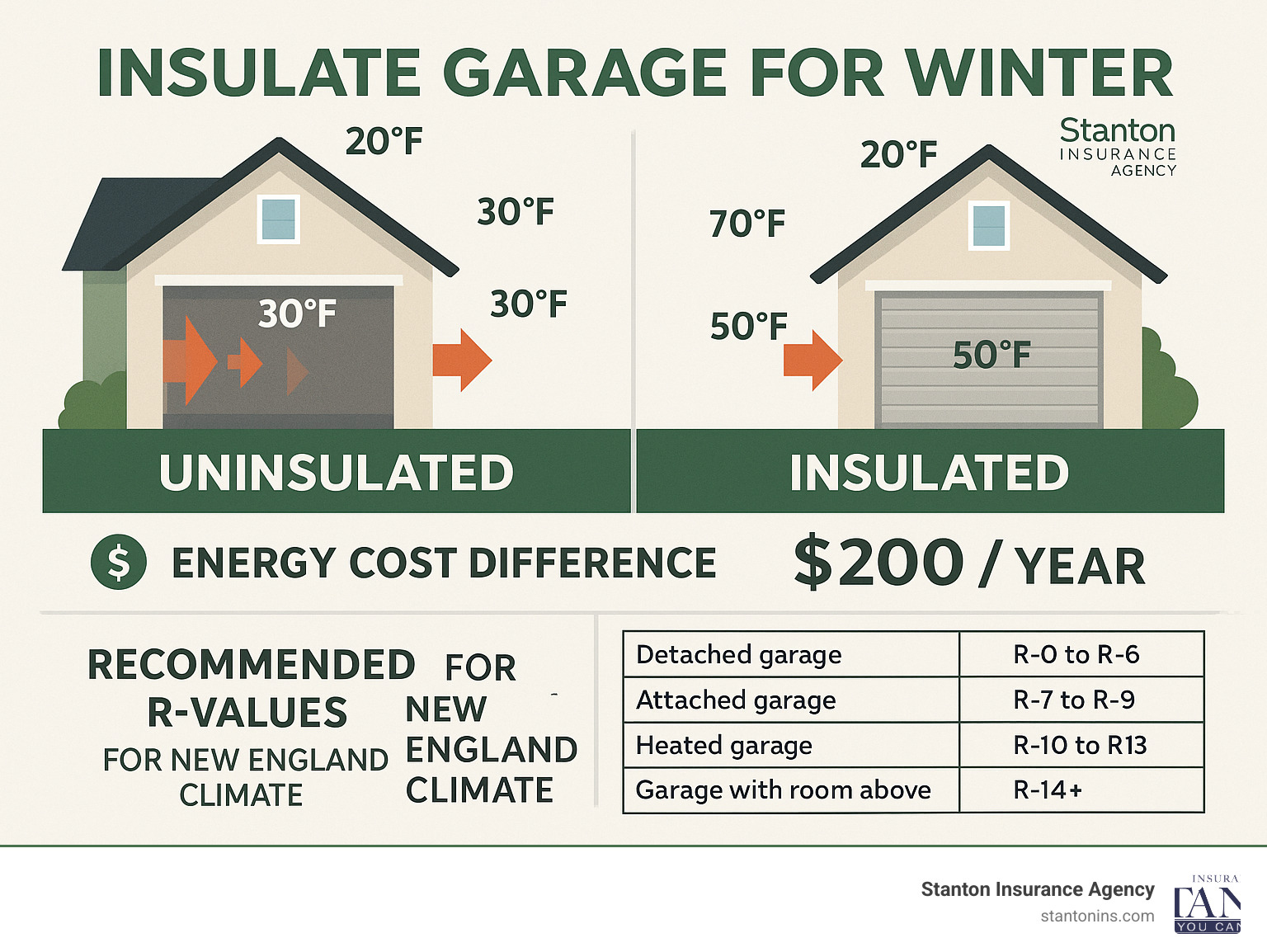
Insulate garage for winter and you’ll transform one of your home’s biggest energy drains into a comfortable, functional space. When New England winter hits, an uninsulated garage becomes a massive heat sink, allowing cold air and drafts to creep into your home and drive up heating bills.
Quick Winter Garage Insulation Guide:
- Detached garage: R-0 to R-6 insulation
- Attached garage: R-7 to R-9 insulation
- Heated garage: R-10 to R-13 insulation
- Garage with room above: R-14+ insulation
- Average cost: $338-$845 for a two-car garage
- Temperature gain: 10-12°F warmer with an insulated door alone
Garage insulation is a cost-effective home improvement, with upgrades yielding an 83% return on investment while cutting energy waste by up to 45%. You’ll create a warmer space for your vehicles, protect stored belongings, and make adjacent rooms more comfortable. Whether you DIY or hire a pro, the payoff is immediate.
I’m Geoff Stanton, President of Stanton Insurance Agency. I’ve seen how proper winterization, like insulating a garage, prevents costly damage and improves daily comfort for New England homeowners. This project boosts both your home’s comfort and its value.
Why Insulating Your Garage is a Smart Winter Upgrade
When winter winds howl across New England, your garage can be your home’s worst enemy for energy loss. When you insulate garage for winter, you transform it into a protective barrier that keeps your home comfortable and your wallet happy.
The benefits are immediate and wide-ranging. Energy efficiency improves dramatically as an insulated garage no longer acts like a giant refrigerator attached to your home. This leads to lower heating costs, with some homeowners reducing energy waste by up to 45%. Home comfort is improved, as rooms next to or above the garage stay warmer. Your vehicles benefit from easier starts and longer battery life, and stored items are protected from extreme temperature swings. Insulation also provides sound dampening, reducing noise from the garage door opener and outside traffic. Financially, it’s a smart move, delivering an impressive 83% return on investment. For more tips, see our guide to Prepare Home for Winter.
Signs Your Garage Needs Insulation
Your garage might be costing you money and comfort. Look for these red flags:
- Cold drafts around the door connecting the garage to your home.
- High energy bills that seem disproportionate to your usage.
- Uncomfortable adjacent rooms, especially those with cold floors above the garage.
- Frozen pipes in or near the garage, which can lead to costly water damage.
- Difficulty starting your car on frigid mornings.
- Damaged stored items like cracked paint cans or warped wood.
- Pest issues, as gaps that let in cold air also welcome unwanted visitors.
How Garage Insulation Impacts Home Energy Efficiency
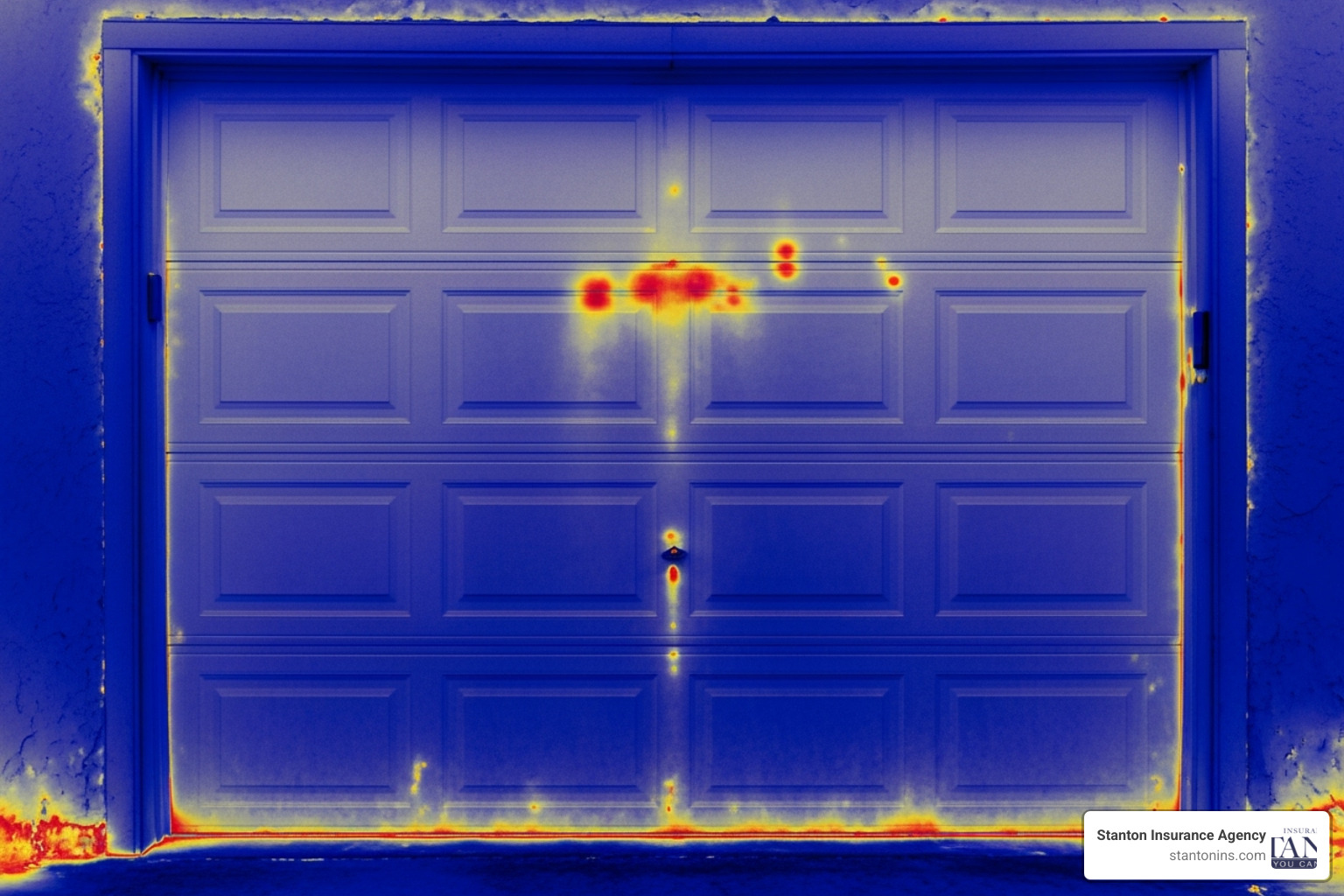
An attached garage without insulation creates a thermal boundary nightmare. It acts as a heat sink, constantly drawing warmth from adjacent rooms and forcing your heating system to work harder. By insulating the walls and ceiling that border your living space, you create a buffer zone that reduces the HVAC workload.
The impact is especially noticeable in rooms above the garage. Without ceiling insulation, cold air radiates upward, making floors perpetually chilly. Proper insulation with an R-value of 14 or higher transforms these problem areas. Sealing small air leaks around outlets and light switches further improves your home’s energy performance. The thermal camera image above shows it all: uninsulated areas are cold spots representing massive heat loss. Insulation stabilizes these temperatures, creating a more comfortable and efficient home.
Understanding Insulation: R-Values and Materials
Before starting your insulate garage for winter project, understanding the basics will ensure a successful upgrade.
What is R-Value and Why Does it Matter?
R-value measures a material’s resistance to heat flow—the “R” stands for resistance. The higher the R-value, the better the insulation’s performance. In New England’s cold climate, a higher R-value is crucial for keeping your garage warmer. You can layer different insulation types to achieve a higher total R-value. The ideal R-value depends on how you use the space and whether it’s attached to your home. For more technical details, the U.S. Department of Energy’s guide to insulation is a helpful resource.
Recommended R-Values for Garages
| Garage Type | Recommended R-Value |
|---|---|
| Detached, non-heated | R-0 to R-6 |
| Attached, non-heated | R-7 to R-9 |
| Heated Garage | R-10 to R-13 |
| Garage with Living Space Above | R-14 or higher |
Best Insulation Materials for Garage Walls and Ceilings
Choosing the right material is key to an effective insulation job.
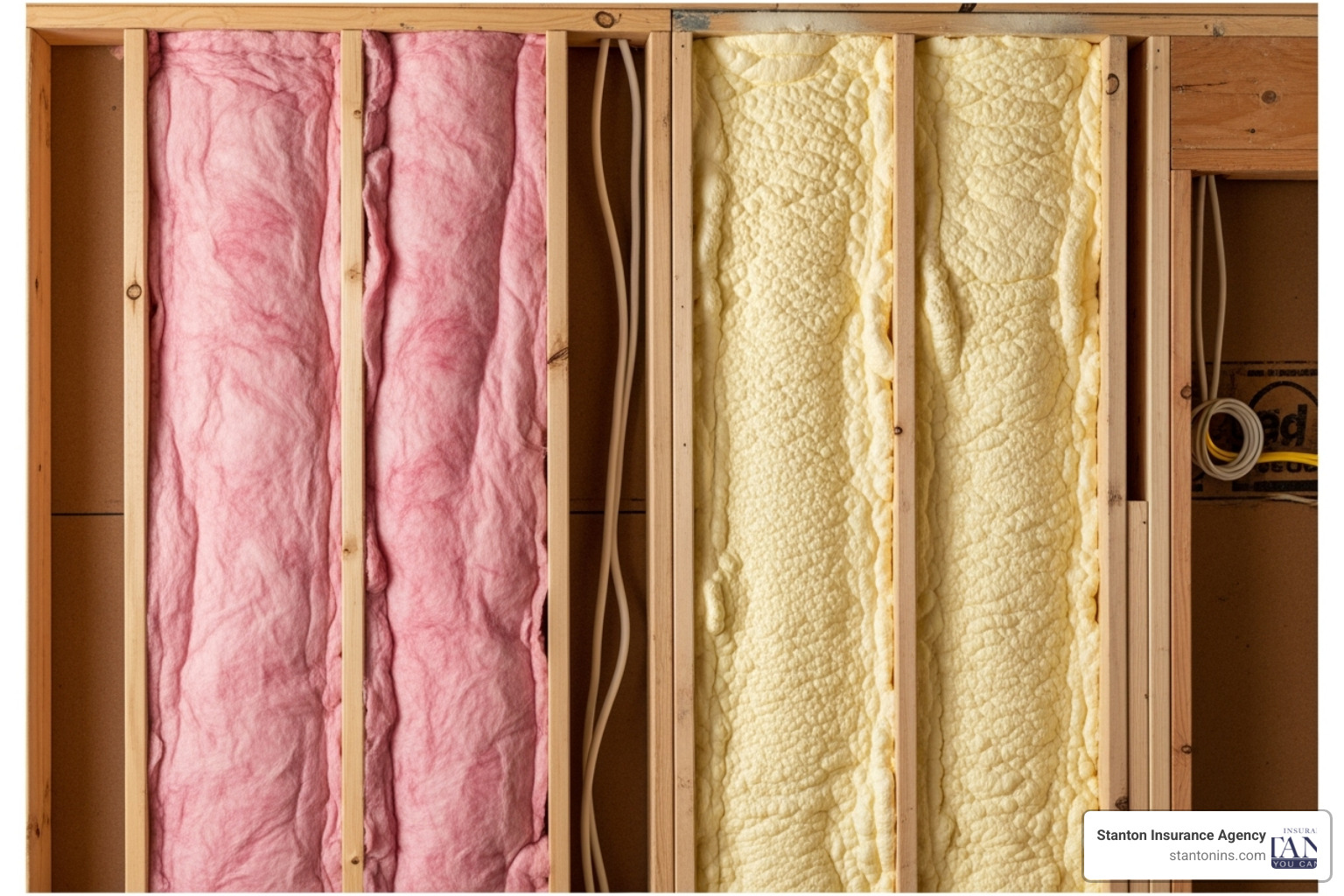
- Fiberglass Batts: These familiar pink or yellow rolls are budget-friendly and easy for DIY installation in open stud bays. They often include a paper or foil vapor barrier. Always wear protective gear (gloves, long sleeves, mask, safety glasses) to avoid skin and lung irritation from the fine glass fibers.
- Blown-in Cellulose: Made from recycled paper, this material is blown into wall cavities, making it ideal for existing walls without removing drywall. It’s eco-friendly but requires special equipment and can settle over time.
- Spray Foam Insulation: This provides a superior airtight seal by expanding to fill every gap. Closed-cell spray foam offers the highest R-value per inch and adds structural rigidity. However, it is the most expensive option and typically requires professional installation.
- Rigid Foam Board: These panels offer high R-values in a compact, easy-to-cut form. They are DIY-friendly and fit well in stud bays. Ensure you use fire-rated products, as some foam boards can be flammable.
For most New England garages, aim for R-13 insulation for 2×4 walls and R-21 for 2×6 walls. For ceilings with rooms above, R-30 to R-40 is recommended.
Best Insulation Types for Garage Doors
Your garage door is a major source of heat loss. Insulating it can make the space 12 degrees warmer in winter.
- Garage Door Insulation Kits: The easiest DIY option, these kits come with pre-cut panels (rigid foam or reflective insulation) and all necessary hardware.
- Rigid Foam Panels: You can cut your own panels from expanded polystyrene (EPS) or polyisocyanurate boards. Foil-faced versions provide a clean, finished look.
- Reflective Insulation: This lightweight, foil-faced material is effective at blocking radiant heat and is easy to install.
- Batt Insulation: Thinner, foil-faced batts (like HVAC duct wrap) can work for some metal doors with channels designed to hold insulation, but avoid compressing it.
Steel doors are often easier to insulate due to built-in channels, while wooden doors require more precise cutting to fit panels into the frame.
Your Step-by-Step Guide to Insulate Your Garage for Winter
Ready to transform your garage? A DIY insulate garage for winter project is highly rewarding. With the right tools and a methodical approach, you can achieve significant gains in comfort and energy savings.
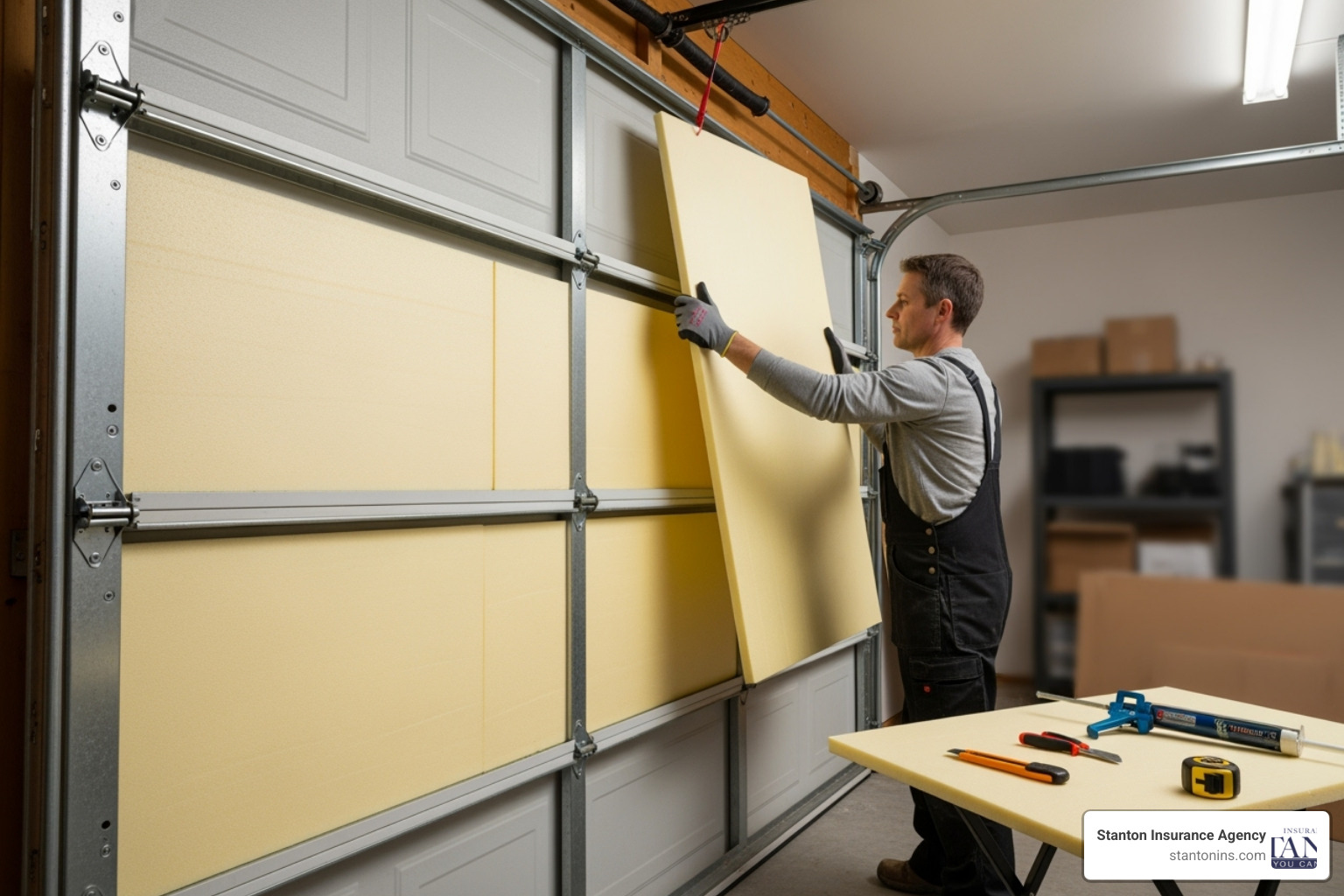
Before starting, gather your safety gear (gloves, safety glasses) and tools (utility knife, tape measure, staple gun, caulk gun, expanding foam).
Step 1: Seal Air Leaks and Gaps
Insulation works best when air leaks are sealed first. Think of this as plugging holes in a bucket.
- Weatherstripping: Check the rubber weatherstripping around the garage door frame and the bottom seal. Replace any material that is cracked, flattened, or damaged.
- Threshold Seal: Add a threshold seal to the concrete floor to block gaps under the door.
- Windows and Cracks: Use exterior-grade caulk to seal gaps around window frames and visible cracks in walls. Learn how to apply window caulk for a lasting seal.
- Larger Gaps: Use expanding foam spray for gaps around pipes and conduit. Fill gaps only about halfway to allow for expansion.
- Electrical Outlets: Install foam gaskets behind outlet covers on walls shared with the house to block drafts. See these 7 ways to weatherize your home’s outlets.
Step 2: How to Insulate Garage Walls
Insulating walls creates a crucial thermal barrier, especially for walls shared with living spaces.
- Prepare the Area: Clear walls and clean out stud bays. Remove old drywall if necessary.
- Measure and Cut: Measure each stud bay and cut fiberglass batts about an inch wider for a snug, friction fit.
- Install Insulation: Gently push batts into the cavities without compressing them, as compression reduces R-value. The vapor barrier (paper or foil facing) should face the heated side of the wall (your home’s interior).
- Secure and Cover: Staple the paper flanges to the sides of the studs. Always cover exposed insulation with drywall for fire safety and a finished look.
Step 3: How to Insulate Your Garage Door for Winter
Insulating the large surface of your garage door can raise the garage’s temperature by 10-12 degrees.
- Clean the Door: Thoroughly clean and degrease the interior door panels so adhesives will stick.
- Measure and Cut: Measure each door panel. If using a garage door insulation kit, the panels may already be sized. If cutting your own rigid foam board, aim for a snug fit.
- Install Panels: Follow the kit’s instructions, using the provided retainer clips or adhesive. If using your own foam board, a friction fit may be enough, but foam-safe construction adhesive adds security.
- Check Door Balance: After installation, check that the door operates smoothly. The added weight is usually minor, but if the door struggles to open or close, call a professional to adjust the torsion springs. This is not a DIY task due to the extreme tension in the springs.
DIY Project or Call a Pro? Cost and Considerations
Deciding whether to insulate garage for winter yourself or hire a professional depends on your budget, time, and the project’s complexity.
The Cost of Insulating a Garage
For a typical two-car garage, expect to spend between $338 and $845. The final cost depends on:
- Garage size: More square footage requires more materials.
- Insulation type: Fiberglass batts are the most budget-friendly, while spray foam is a premium option.
- Labor costs: Hiring a pro adds to the total but ensures expert installation. Professional drywall installation can add over $1,000.
This is a smart investment, yielding an 83% return on investment. Homeowners in Massachusetts and New Hampshire can often find rebates to help offset the upfront cost. Check with programs like Mass Save in Massachusetts or NHSaves in New Hampshire for current offers.
When to DIY vs. Hire a Professional
Many garage insulation tasks are well-suited for DIYers.
Good DIY Projects:
- Installing fiberglass batts or rigid foam board in open walls.
- Using garage door insulation kits.
- Air sealing with caulk, weatherstripping, and expanding foam.
When to Call a Pro:
- Spray foam insulation: This requires specialized equipment and expertise for proper, safe application.
- Complex structural issues: If you find mold, water damage, or other problems, a contractor should assess and repair them first.
- Adjusting garage door torsion springs: If the added insulation weight affects the door’s balance, never adjust the springs yourself. They are under extreme tension and can cause serious injury. This task, much like professional Roof Ice Dam Removal, is best left to experts.
Frequently Asked Questions about Garage Insulation
Here are answers to the most common questions New England homeowners ask about garage insulation.
Why is the room above my garage so cold?
This is a common issue caused by a lack of insulation in the garage ceiling. Your unheated garage acts like a cold box directly beneath the room, allowing cold air to radiate upward through the floor. The most effective solution is to insulate the garage ceiling, preferably with spray foam, to create an airtight barrier that stops the cold transfer and dramatically improves the comfort of the room above.
Does insulating just the garage door make a difference?
Yes, absolutely. The garage door is often the largest uninsulated surface. Insulating it alone can make the garage 10 to 12 degrees warmer, reduce drafts, and dampen sound. While a whole-garage approach is best for maximum energy savings, insulating the door is a great first step with a noticeable impact.
Can I insulate my garage myself?
Yes, most garage insulation projects are perfect for DIY. Installing fiberglass batts, fitting rigid foam board, and using garage door insulation kits are all manageable weekend tasks that save on labor costs. However, you should leave certain jobs to professionals. Spray foam application requires special equipment, and adjusting garage door torsion springs is dangerous and should only be done by a qualified technician.
Protect Your Home and Boost Your Comfort This Winter
When you insulate garage for winter, you make a smart investment in your New England home’s comfort, value, and efficiency. You’ll stop heat loss, lower energy bills, and create a more functional, protected space for your vehicles and belongings.
With an 83% return on investment, this project pays for itself. Your heating system works less, rooms adjacent to the garage stay warmer, and your car starts easier on frigid mornings. It’s a practical upgrade that transforms an energy drain into a valuable extension of your home.
At Stanton Insurance Agency, we know that protecting your home goes beyond a policy. A well-maintained, energy-efficient property is easier to protect. When you invest in your home’s infrastructure, you’re safeguarding your most valuable asset. To learn more about comprehensive protection, explore our Home Insurance options.
