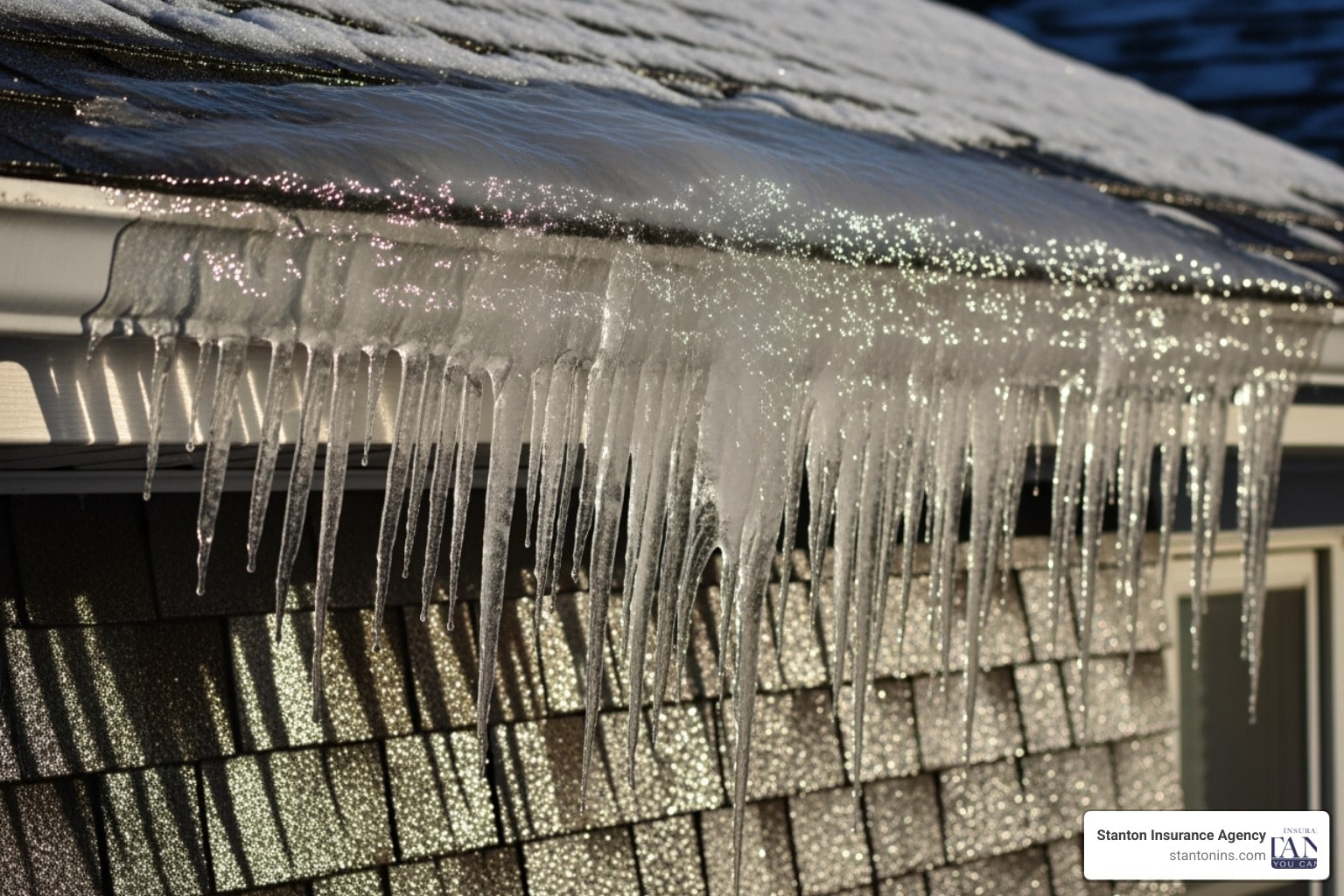
Ice dam prevention tips 2025: Ultimate
Why Ice Dams Are a Serious Threat to New England Homes
Ice dam prevention tips are essential for Massachusetts and New Hampshire homeowners who want to protect their property from costly winter damage. Here are the most effective strategies to stop ice dams before they start:
Quick Prevention Checklist:
- Seal air leaks around attic penetrations (pipes, wires, lights)
- Add insulation to achieve R-50 in your attic
- Install balanced ventilation (soffit and ridge vents)
- Clean gutters before winter arrives
- Remove snow from roof edges after storms
- Consider heated cables for problem areas
Ice dams form when heat escaping from your home melts snow on the upper roof, causing water to refreeze at the colder eaves. This creates a dam that forces water under shingles, potentially causing thousands of dollars in damage to ceilings, walls, and insulation.
As an insurance professional with over two decades of experience helping Massachusetts homeowners protect their properties, I’ve seen the devastating effects ice dams can have on families. Through my work at Stanton Insurance, I’ve developed expertise in ice dam prevention tips that can save homeowners from expensive claims and repairs.
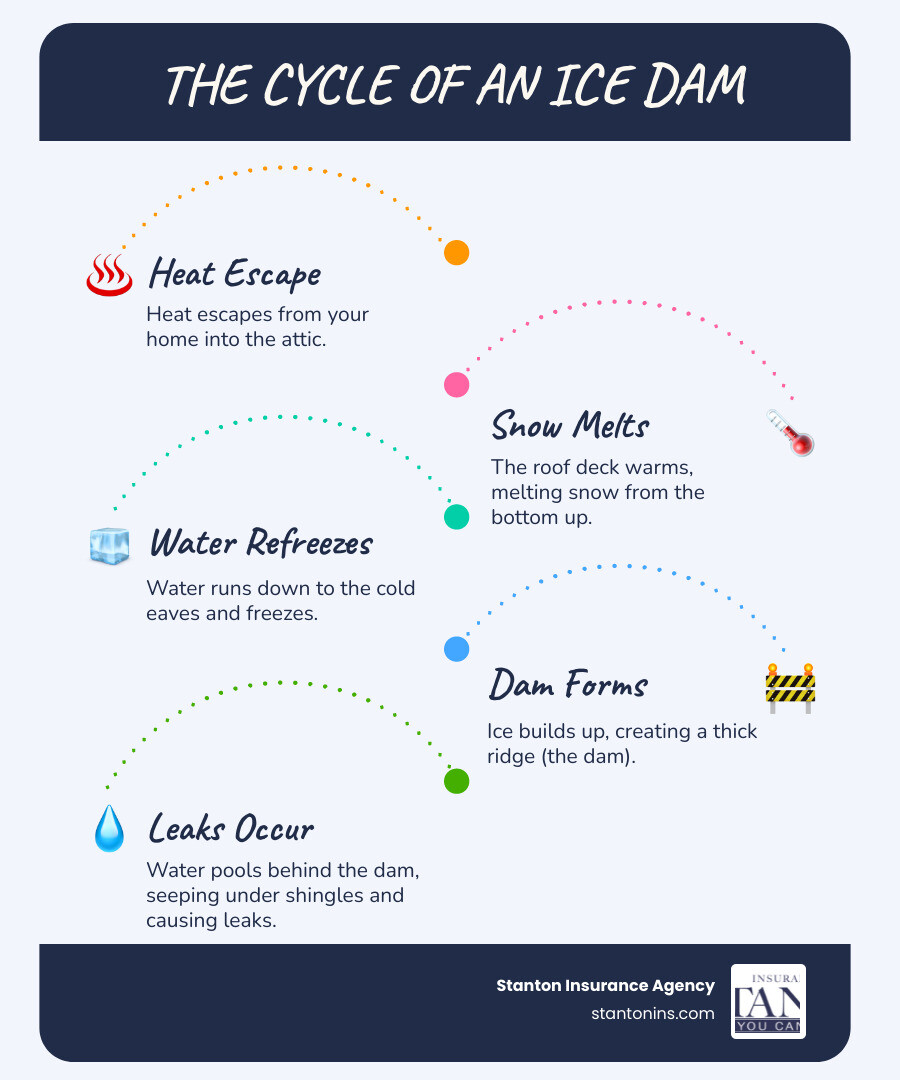
Ice dam prevention tips terms at a glance:
What Causes Ice Dams and Why Are They So Destructive?
In Massachusetts and New Hampshire, winter snow can lead to ice dams—thick ridges of ice at your roof’s edge. These aren’t just winter features; they’re serious problems that block melting snow, causing water to back up and leak into your home.
An ice dam forms when three conditions align: snow on your roof, outdoor temperatures below freezing, and a roof surface temperature that’s above 32°F over the main part of your house.
The process starts when warm air from your home escapes into the attic, heating the roof and melting snow from below. This meltwater flows down the roof until it reaches the colder eaves, where it refreezes. As more water flows and freezes, it builds an ice barrier. Trapped water then backs up under your shingles and can leak into your home. Understanding this cycle is the first step in effective ice dam prevention tips.
Here’s a closer look at the main causes and the damage they inflict:
Heat Loss
Heat loss is the primary cause of ice dams. When heat from your living space escapes into the attic, it warms the roof deck. This happens through air leaks around pipes, wires, light fixtures, and attic hatches, or by radiating through the ceiling. This escaping warmth melts snow from below, starting the ice dam process.
Uneven Roof Temperature
Ice dams form at the roof’s edge because of uneven temperatures. The roof over the attic is warm (above freezing), while the eaves are cold (below freezing). This difference causes meltwater to refreeze at the edge, building the dam. The sun can also contribute by melting snow that later refreezes in shaded areas.
Freeze-Thaw Cycle
The freeze-thaw cycle builds the ice dam. Snow melts, flows down to the cold edge, and refreezes. This process repeats, creating a thick, strong ice wall that blocks drainage.
Water Intrusion
When an ice dam traps a pool of water, it has nowhere to go but under your shingles. Shingles are designed to shed water, not to be submerged. The trapped water can seep through seams and nail holes into your attic and home.
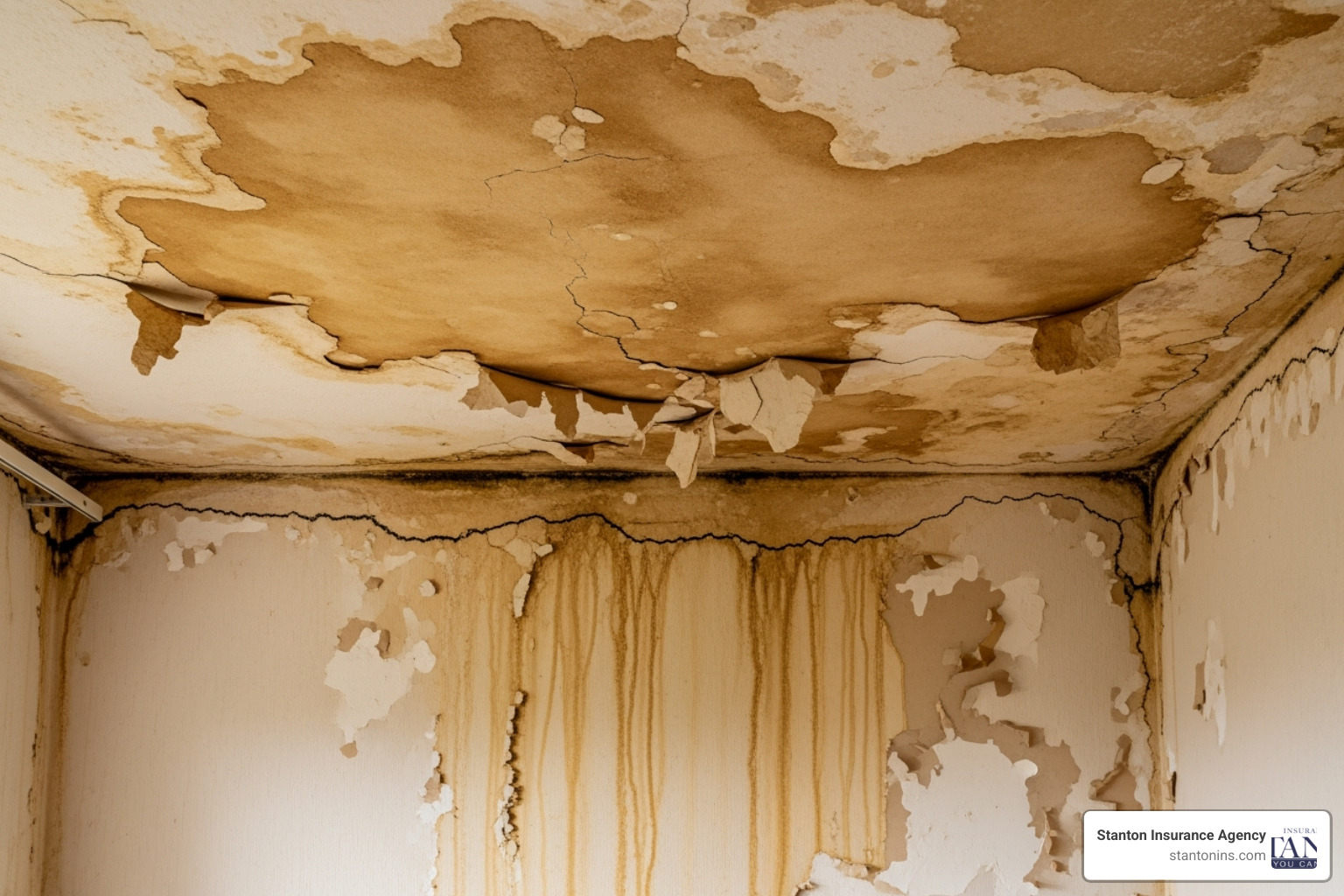
This water damage on an interior ceiling and wall was caused by an ice dam.
Once water gets inside, the damage multiplies:
Structural Damage
The weight of an ice dam, trapped water, and snow stresses your roof structure, potentially rotting the deck, damaging walls, and compromising framing. Your gutters and downspouts are especially vulnerable; the weight of ice can bend, detach, or tear them from the house, leading to costly repairs.
Mold and Mildew
Water leaks create a damp environment perfect for mold and mildew. Mold isn’t just unsightly; it can cause health risks like allergies and respiratory issues. Drying affected areas quickly is crucial to prevent its growth.
Damaged Insulation
Wet attic insulation loses its R-value and can’t prevent heat loss, which can lead to more ice dams. It also becomes a breeding ground for mold and pests. Wet insulation often requires complete replacement.
Ruined Gutters
Gutters are often the first victims of an ice dam. The weight of ice can twist, crack, or detach them. The freeze-thaw cycle also shortens their lifespan, causing premature wear.
For more detailed information on what causes ice dams and how to address them, these resources can be very helpful:
Identifying the Telltale Signs of an Ice Dam Problem
Your home often shows warning signs before an ice dam becomes an emergency. Early intervention can prevent major damage. Look for large, thick icicles along the eaves, which indicate a melt-and-refreeze cycle. Also, check for water stains or moisture on exterior walls below the roofline, which can mean water is overflowing from gutters or backing up from a dam.
Inside, look for subtle clues like faint water stains on ceilings or around the frames of windows on your top floor. Other red flags include peeling paint, sagging sheetrock, or any visible moisture around interior windows and doors. Recognizing these signs early allows you to act before the problem becomes a costly repair.
The Permanent Fix: Long-Term Ice Dam Prevention Tips
The most effective way to prevent ice dams is to keep your entire roof cold by addressing heat loss into the attic. A cold roof prevents the melt-and-refreeze cycle at the eaves. These long-term strategies are the best ice dam prevention tips for lasting peace of mind.
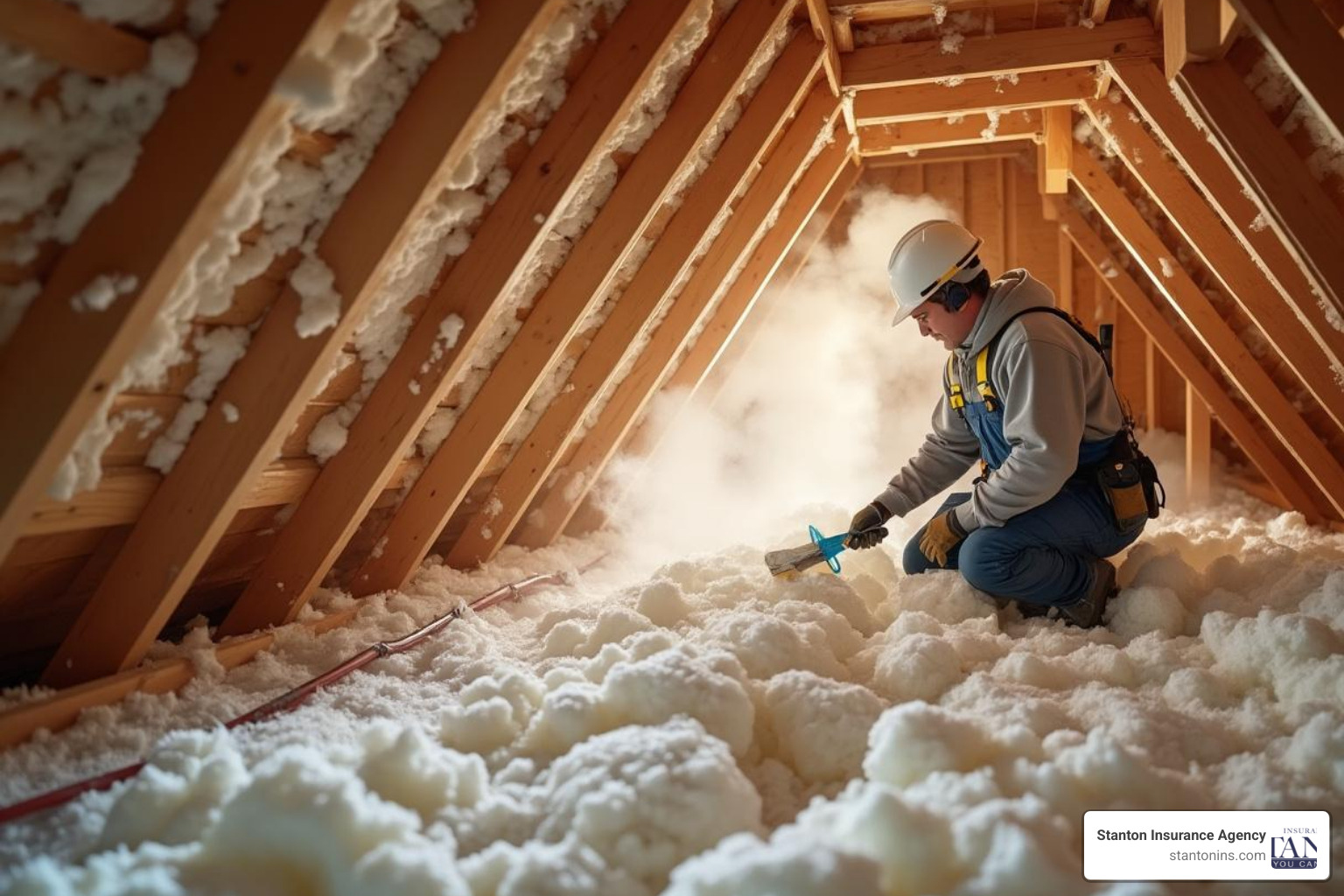
Boost Your Attic Insulation to the Right R-Value
Proper insulation is your primary defense against heat escaping into the attic. For northern climates like Massachusetts and New Hampshire, attics should be insulated to a minimum of R-50, which is roughly 15 inches of blown-in insulation.
We recommend an R-value of R-40 to R-60 for attics in our region. If your current insulation is less than eight inches thick, adding more will significantly reduce heat loss and lower energy bills. This keeps the roof deck colder. Ensure insulation stays dry, as wet insulation loses its R-value.
Seal Air Leaks Between Your Home and Attic
Even with great insulation, warm air can find its way into the attic through small gaps and cracks, a process called convection. These “attic bypasses” are common around plumbing vents, electrical wiring, recessed lighting fixtures, and attic access hatches.
Sealing air leaks is one of the most critical and cost-effective ice dam prevention tips. Use caulk, spray foam, and weatherstripping to seal gaps. Pay special attention to recessed lights; they may need to be replaced with sealed, “IC” (insulation contact) rated fixtures that can be covered with insulation. Sealing these penetrations prevents warm air from reaching the roof deck.
Ensure Your Attic Has Balanced Ventilation
A well-ventilated attic flushes out any warm air that does manage to escape, keeping the roof deck cold. This is achieved with a balanced system of intake vents (at the lowest point of the roof, in the soffits) and exhaust vents (at the highest point, like a ridge vent).
The general rule for ventilation is one square foot of vent area per 300 square feet of attic floor, split evenly between intake and exhaust vents. We recommend a 50/50 balance to ensure proper airflow from the soffits to the ridge.
It’s also crucial that insulation does not block these airflow channels. Use baffles at the eaves to maintain at least 3 inches of air space between the insulation and the roof sheathing. If your soffit vents are plugged, a blast of air can often clear them. Proper attic ventilation is key to keeping the attic air cold and preventing ice dams.
For more detailed guidance on proper attic insulation and ventilation, check out this valuable resource: Preventing Roof Ice Dams.
Seasonal Maintenance and Short-Term Solutions
While long-term improvements are the best solution, seasonal maintenance and immediate actions are crucial for unpredictable New England winters. These hands-on ice dam prevention tips can protect your home when snow starts piling up.
Keep Gutters and Downspouts Clear
Before the first snowfall, thoroughly clean your gutters and downspouts of leaves, sticks, and other debris. Clogged gutters can’t drain melting snow, which contributes to ice buildup at the roof’s edge. Check them throughout the winter, clearing any accumulated snow or ice. While gutters don’t cause ice dams, clogged ones make them worse by trapping water at the roof’s edge.
Safely Remove Snow from Your Roof’s Edge
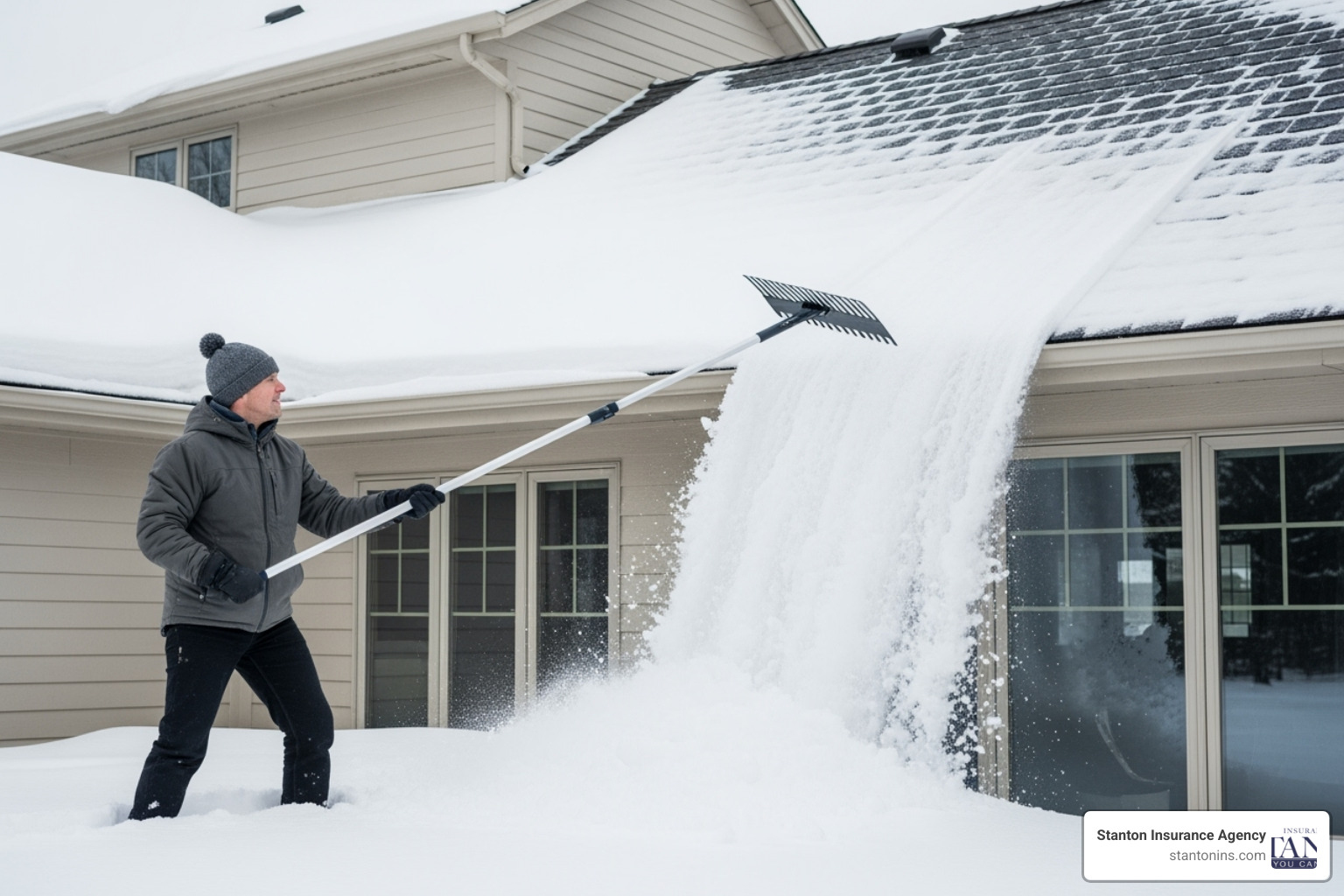
After a heavy snowfall, a proactive ice dam prevention tip is to remove snow from your roof’s edge. Use a long-handled roof rake to gently pull snow from the first 3 to 4 feet of the roof. This removes the “fuel” for an ice dam.
Always use a roof rake from the ground—never get on a snowy or icy roof. Rakes with wheels or bumpers help prevent shingle damage. This regular task can make a huge difference, but be careful to avoid overhead power lines.
Consider Heated Cables for Problem Spots
For homes with features prone to ice dams, like valleys or dormers, heated cables can be a temporary solution. Installed in a zigzag pattern on the eaves and through downspouts, they create heated channels for meltwater to drain.
Heated cables are not a substitute for proper insulation and ventilation. They are a tool for managing ice in trouble spots and work by preventing water from refreezing, not by melting large existing dams. For best results, use them with a thermostat. We recommend them as a last resort since they use energy and don’t fix the root cause.
To ensure your home is fully prepared for the challenges of winter, make sure to review our comprehensive guide on how to Prepare Home for Winter.
Emergency Response: How to Safely Handle an Existing Ice Dam
If an ice dam has formed and water is leaking into your home, your first instinct might be to attack the ice. Stop. Taking matters into your own hands can turn a manageable problem into a roofing disaster.
Hacking at ice with sharp tools can severely damage your roof and gutters and is dangerous. Using rock salt (sodium chloride) will corrode gutters, damage roofing, and kill plants below. Using a propane torch is extremely dangerous, creating a severe fire hazard.
Unsafe removal methods to avoid at all costs:
- Hacking at ice with sharp tools (shovels, axes, picks)
- Using open-flame torches to melt ice
- Applying rock salt (sodium chloride) to the roof
- Getting on the roof to remove the dam yourself
These methods often cause more damage than the ice dam itself, leading to costly repairs, injury, or fire. The temporary satisfaction isn’t worth the risk.
When to Call a Professional for Roof Ice Dam Removal
The safest, most effective approach is hiring a professional ice dam removal service. They use high-temperature, low-pressure steam to cut through ice without damaging your roof structure.
Professionals have the right equipment, training, and insurance to work safely on icy roofs without causing more damage or injury.
If water is actively leaking into your home, call a professional for Roof Ice Dam Removal immediately. While you wait, you can try a temporary fix: aim a box fan at the underside of the roof where the leak is. The cold air may refreeze the water and temporarily stop the leak.
Ice dam prevention tips are always more effective than emergency removal, but when you’re facing an active leak, professional intervention is your safest bet for protecting both your home and your family.
Frequently Asked Questions about Ice Dam Prevention
Here are answers to common questions we receive about ice dam prevention tips.
What is the recommended R-value for attic insulation in New England?
For New England winters, proper attic insulation is key. The U.S. Department of Energy suggests an R-value between R-49 and R-60. Aiming for at least R-50 is a great goal, which is about 15-16 inches of blown-in cellulose or fiberglass insulation.
This thick layer of insulation creates a thermal barrier, preventing heat from escaping into your attic. A cold attic significantly reduces the chance of ice dams forming and is one of the most effective ice dam prevention tips.
Do gutters cause ice dams?
This is a common misconception. The short answer is: No, gutters do not cause ice dams, but they can make them much worse.
The real culprit is heat escaping from your home, which warms the roof deck. However, clogged gutters prevent meltwater from draining. This trapped water pools at the eave, contributing to the dam’s size and increasing the risk of water backing up under your shingles. Keeping gutters clean is a crucial part of your ice dam prevention tips strategy.
Are metal roofs better for preventing ice dams?
Metal roofs can help reduce the severity of ice dams, but they aren’t a guaranteed solution. Their smooth surface sheds snow more easily than asphalt shingles, meaning less snow is available to form a dam.
Metal also transfers heat quickly, which can help prevent sharp temperature differences. However, if your attic is poorly insulated and ventilated, heat can still escape and cause an ice dam, even on a metal roof. The ultimate goal for effective ice dam prevention tips is always a cold roof, regardless of the material!
Protect Your Home This Winter
Winter weather doesn’t have to be a source of dread for Massachusetts and New Hampshire homeowners. With the right ice dam prevention tips and a proactive approach, you can enjoy those beautiful snowy landscapes without worrying about costly damage to your home.
The key to success lies in understanding that preventing ice dams is truly a multi-faceted approach. It combines long-term home improvements like proper insulation and air sealing with diligent seasonal maintenance like cleaning gutters and removing snow from roof edges. By focusing on the root cause—heat escaping into your attic—you can keep your roof cold and stop ice dams before they have a chance to form.
The beauty of this approach is that it delivers double benefits. Not only does it protect your home from costly water damage, but it also improves your home’s energy efficiency. When you seal air leaks and add proper insulation, you’re essentially giving your heating system a break. This translates directly to lower heating bills throughout the winter months.
Think of it as an investment that pays dividends in multiple ways. You’re protecting your property, saving money on energy costs, and gaining peace of mind during those heavy snowstorms that are so common in our region.
Proper maintenance isn’t just about preventing ice dams—it’s a key part of responsible homeownership that can impact your insurance coverage as well. Insurance companies appreciate homeowners who take proactive steps to protect their property. It shows you’re serious about preventing claims and maintaining your home’s value.
At Stanton Insurance Agency, we’ve been helping families in our community protect their most valuable assets for years. We understand the unique challenges that New England winters bring, and we’re here to help you steer both the weather and the complexities of proper insurance coverage.
Whether you’re implementing these ice dam prevention tips for the first time or you’re a seasoned homeowner looking to review your coverage, we believe in providing trusted protection that gives you confidence. For a comprehensive review of how well your current policy protects against winter weather damage, explore our Home Insurance options.
The best time to prepare for ice dams is before they form. Start with the long-term solutions we’ve outlined, maintain good seasonal habits, and make sure your insurance coverage matches your needs. Your future self will thank you when you’re watching the snow fall outside your warm, dry, well-protected home.